TL;DR
If your dog is suddenly not eating hard treats, first check whether they still eat regular food, drink, and accept softer foods. Then watch how they pick up food, chew, and respond when you gently look at the outside of their mouth. A change limited to hard treats may be a preference change, but a sudden pattern involving eating, comfort, or facial swelling deserves a veterinary conversation.
A home check can organize what you notice, but it cannot identify the cause.
Is your dog refusing only hard treats?
Start with the simplest comparison: what else will they eat?
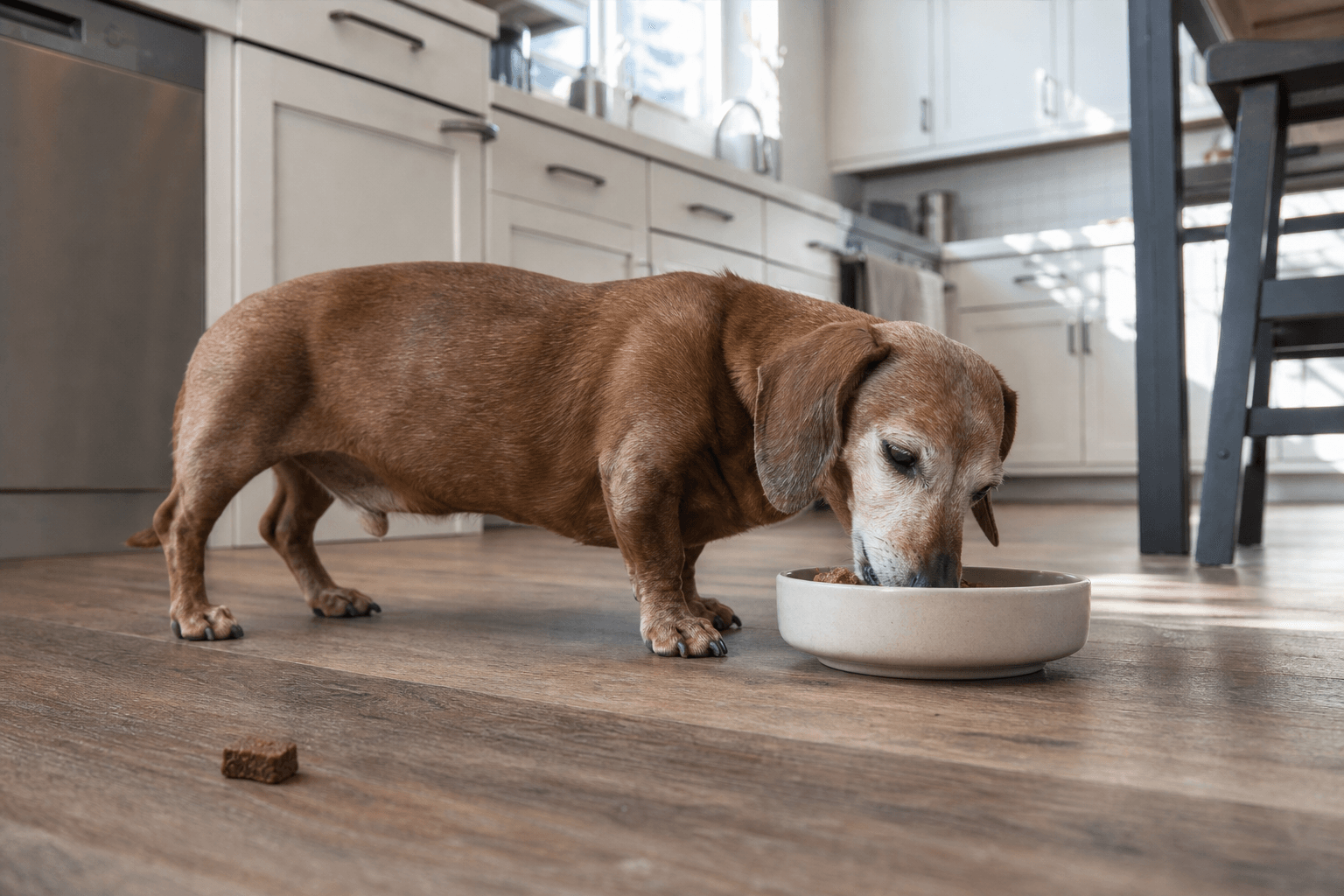
Offer their usual meal as normal, without pressuring them to finish. Notice whether they:
- Eat their regular food in the usual way
- Accept a softer treat but leave a hard one
- Take food and then drop it
- Sniff food, turn away, or seem interested but unable to continue
- Drink normally
- Show a change in energy or routine
Do not keep testing with a series of hard treats. Repeated attempts can make the moment confusing and may encourage your dog to swallow something they are avoiding. Write down what happened, including the treat type, time of day, and what they accepted instead.
If they are eating regular food comfortably and the refusal is limited to one hard treat, preference becomes a reasonable possibility to keep observing. If they are also refusing normal food or water, make a prompt veterinary call rather than treating the issue as simple pickiness.
What should you look at around the mouth?
Choose a calm moment and let your dog move away. You can lift the lips gently to look at the outside surfaces of the teeth and gums, but do not force their mouth open or put your fingers between their teeth.
Look for changes you can describe, such as:
- A tooth that looks chipped, loose, unusually dark, or different from its neighbors
- Redness, bleeding, swelling, or a new lump around the gums
- Food or saliva collecting on one side
- A new odor from the mouth
- Pawing at the face or rubbing the muzzle on furniture
- Flinching, pulling away, or becoming tense when the area is approached
These observations do not tell you exactly what is happening. They do give a veterinarian a clearer starting point. A photo taken in good light can also help you remember what you saw, especially if your dog will not hold still for a second look.
For broader senior-dog observation ideas, the Dogevera senior-dog care blog can sit alongside your notes, but online information should not replace an oral examination when your dog seems uncomfortable.
Could the jaw or chewing pattern be involved?
Hard treats require a firm bite and a particular chewing motion. Watch the process rather than focusing only on whether the treat disappears.
Place the treat down and observe from the side. Does your dog pick it up normally? Do they chew on both sides, carry it away, drop it, or abandon it after trying? Does the jaw seem stiff, uneven, or difficult to open? Avoid asking them to bite harder so you can test the movement.
A useful comparison is to record three ordinary eating moments:
1. What happened with the hard treat 2. What happened with a familiar soft food 3. What happened at the next regular meal
Keep the foods familiar and avoid introducing several new treats at once. The goal is not to challenge your dog’s mouth. It is to see whether the change follows texture, chewing effort, or eating more generally.
If your dog repeatedly drops food, avoids chewing, or reacts when the jaw area is approached, share that pattern with your veterinarian. The behavior is more useful than a guess about which tooth might be involved.
When might it be a preference change?
Dogs can change their interest in a particular treat for ordinary reasons. The treat may smell different, have become stale, or simply lose its appeal. A change in household routine can also alter when and how eagerly they take snacks.
Preference is more plausible when your dog:
- Eats their regular meals in the usual way
- Accepts other familiar foods without hesitation
- Shows no visible mouth changes during a calm look
- Picks up and chews other items normally
- Returns to their usual energy and routine
Even then, avoid turning the refusal into a contest. Put the hard treat away and offer the usual meal at the normal time. If you want to replace the snack, choose a softer, familiar option and check the package label for ingredients your dog already tolerates. The Dogevera store may be useful for comparing product labels, but no treat can explain why a sudden eating change occurred.
A simple decision aid for the next day
Use this short sequence instead of repeatedly offering treats:
| Observation | Practical next step | |---|---| | Only one hard treat is refused, while meals and normal chewing continue | Stop testing that treat and observe the next meal and snack opportunity | | Hard treats are refused, but soft food is accepted | Record the texture difference and watch for dropping food, one-sided chewing, or mouth sensitivity | | Regular food or water is also refused | Contact your veterinarian promptly for guidance | | You see swelling, bleeding, a broken-looking tooth, marked discomfort, or trouble breathing | Seek veterinary advice promptly and do not manipulate the mouth | | The change continues or keeps returning | Keep your notes and arrange a veterinary conversation |
This checklist is for organizing observations, not for ruling out a mouth problem at home. Do not scrape tartar, pull at a loose-looking tooth, give human pain medicine, or force a dental inspection.
FAQ: sudden refusal of hard treats
Should I give a harder treat to test my dog’s teeth?
No. A harder test can add discomfort and will not identify the cause. Observe how your dog handles familiar food instead, then report the pattern.
My dog eats soft treats but refuses crunchy ones. Is that dental disease?
Not necessarily. Texture preference, treat freshness, and mouth or jaw comfort can all be possibilities. The pattern is worth noting, especially if it is new or continues.
Should I switch to a soft treat right away?
You can pause the hard treat and use a familiar soft option if your dog is otherwise eating comfortably. Do not use the switch to dismiss other changes, such as dropping food, mouth sensitivity, or refusal of regular meals.
How long should I watch before calling the veterinarian?
If the change is sudden and affects regular food, water, comfort, or energy, call promptly. If it is limited to one hard treat, record what happens at the next ordinary meal and snack opportunity, then contact your veterinarian if the pattern continues or returns.
For individual health questions, your veterinarian remains the best partner.