TL;DR
How long for a dog joint supplement to work depends on the product and the dog, so there is no fixed answer for every situation. A more reliable approach is to record getting up, walking, and resting on Day 0, then compare those same observations on Days 14 and 28 instead of judging by one day’s behavior.
This is a way to observe your dog at home, not a diagnosis or a guarantee of results. If they show significant discomfort, suddenly become less active, or have trouble with everyday activities, contact your veterinarian promptly.
How Long for Dog Joint Supplements to Work? Start With the Product and Evidence
“Joint supplement” does not refer to one standardized formula. The ingredients, product label, your dog’s baseline activity level, and any simultaneous changes to exercise, diet, or pain-management plans can all affect what you observe. Results from one product study therefore cannot be applied directly to every product.
One randomized, placebo-controlled study of dogs confirmed to have osteoarthritis evaluated a combination supplement containing eggshell membrane, krill powder and its omega-3 fatty acids, an astaxanthin source, hyaluronic acid, and frankincense extract. The study included 52 dogs and lasted 90 days. Owners completed relevant questionnaires every 15 to 30 days, while researchers assessed posture, gait, discomfort during joint palpation, and range of motion monthly.
This shows why researchers generally use a sustained observation period to assess change instead of treating “how many days the dog has taken it” as the answer. When choosing a product, check the ingredients, feeding directions, and precautions on the label. If you need to compare options, you can review the Dogevera Dog Products Store, rather than relying only on claims such as “works quickly.”
Why Do Many People Give Up by the Second Week?
The second week can feel disappointing for reasons that have little to do with your dog having no change at all. Often, the observation method is simply too vague. “They seem okay today” is difficult to compare accurately with two weeks earlier. If you also reduced walks, changed the flooring, or your dog happened to sleep more, it becomes even harder to interpret the results.
Another common mistake is treating “no obvious improvement” as proof that the supplement cannot help. Your dog’s activity can naturally vary with the weather, rest, excitement, and the day’s schedule. A single day when they walk faster also does not show that the change will continue.
A more practical approach is to watch the same types of everyday movements, use simple descriptions, and avoid chasing a precise score. Record any unusual circumstances that day as well. By Day 14, you will be comparing a set of observations rather than relying on one overall impression.
Three Everyday Signs to Record Starting on Day 0
Record things your dog already does as part of their normal routine. There is no need to arrange extra tests.
- Getting up: When they rise from a bed or the floor, do they stand in one motion, or pause and adjust their position? After getting up, do they want to keep walking?
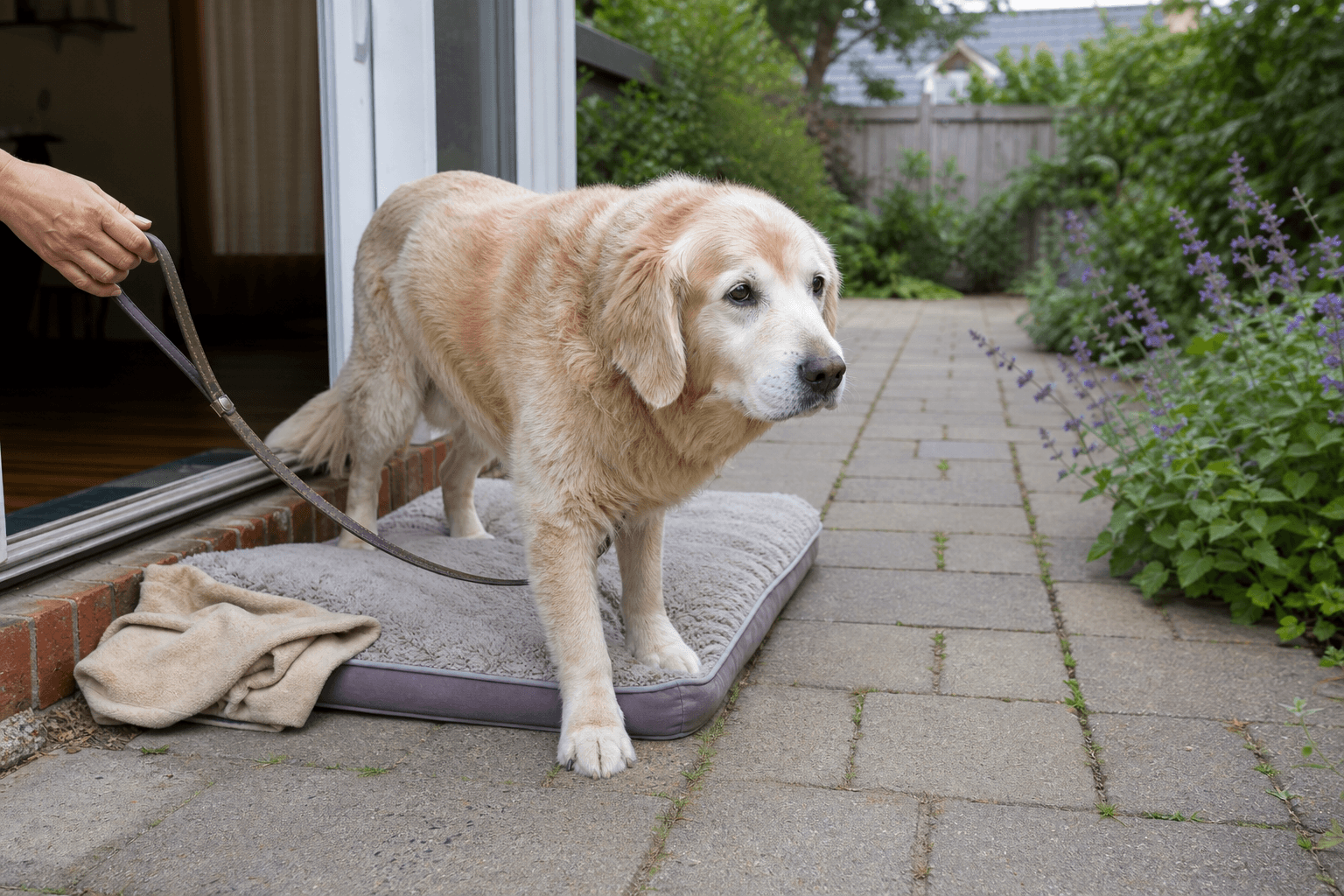
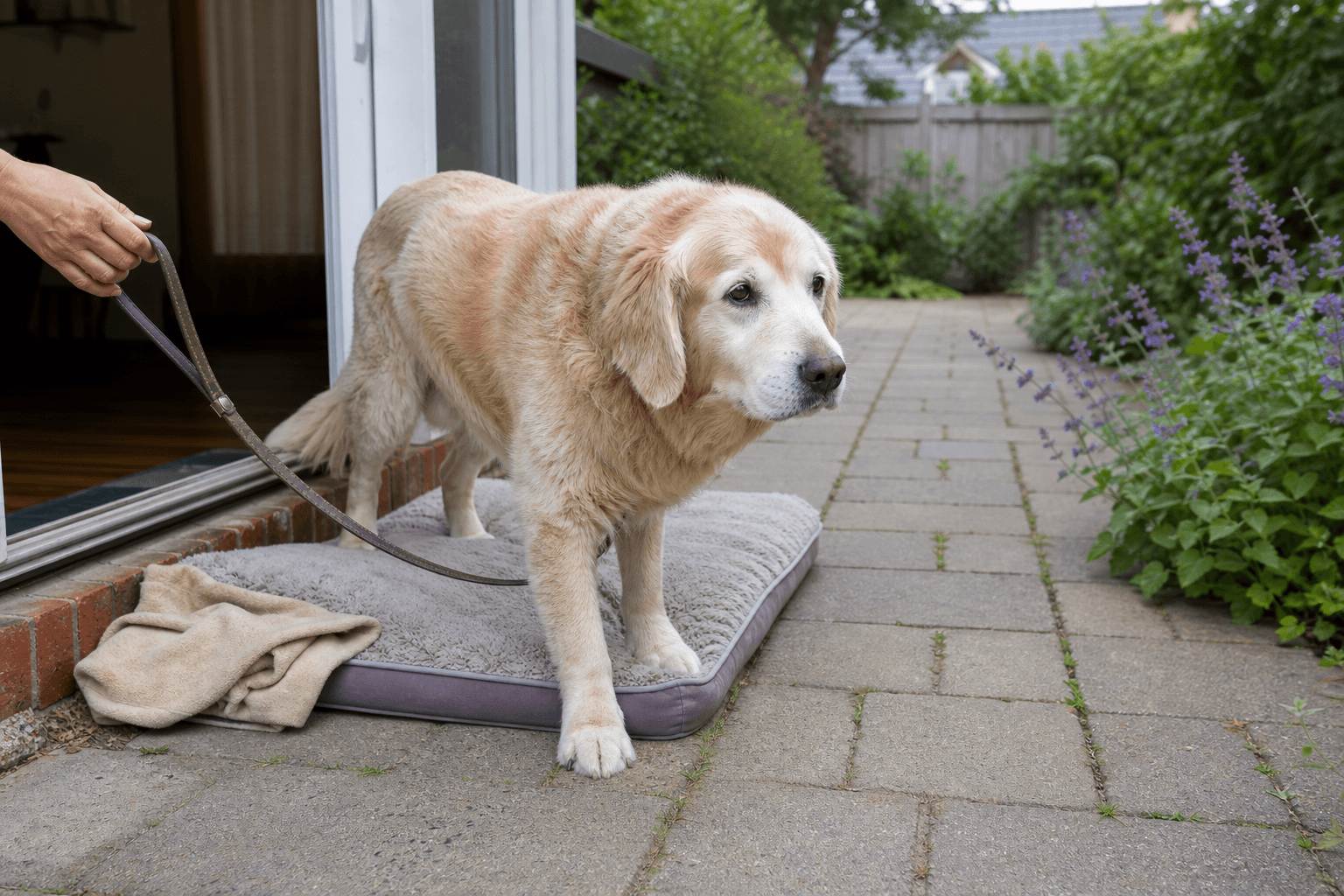
- Walking: On a familiar, level route, do their steps look fluid? Do they avoid part of the route, stop often, or clearly lose interest in continuing afterward? Do not increase the distance or speed just to collect a record.
- Resting: Do they repeatedly change position before lying down? After resting, do they get up more cautiously than usual? Record “slept more than usual” separately from how they move when getting up, so rest time is not treated as a direct measure of joint comfort.
One or two sentences a day are enough. For example: “Paused once while getting up, walked to the door on level ground, stopped midway, and changed position twice during an afternoon rest.” If your dog had a long car ride, played more than usual, or experienced another unusual activity, record that too.
Day 0: Establish Your Own Starting Point
Day 0 is not about proving how uncomfortable your dog feels. It is a record of their usual state. Choose a familiar time and setting, observe one natural instance of getting up and a short stretch of everyday walking, then note whether they repeatedly adjust position while resting.
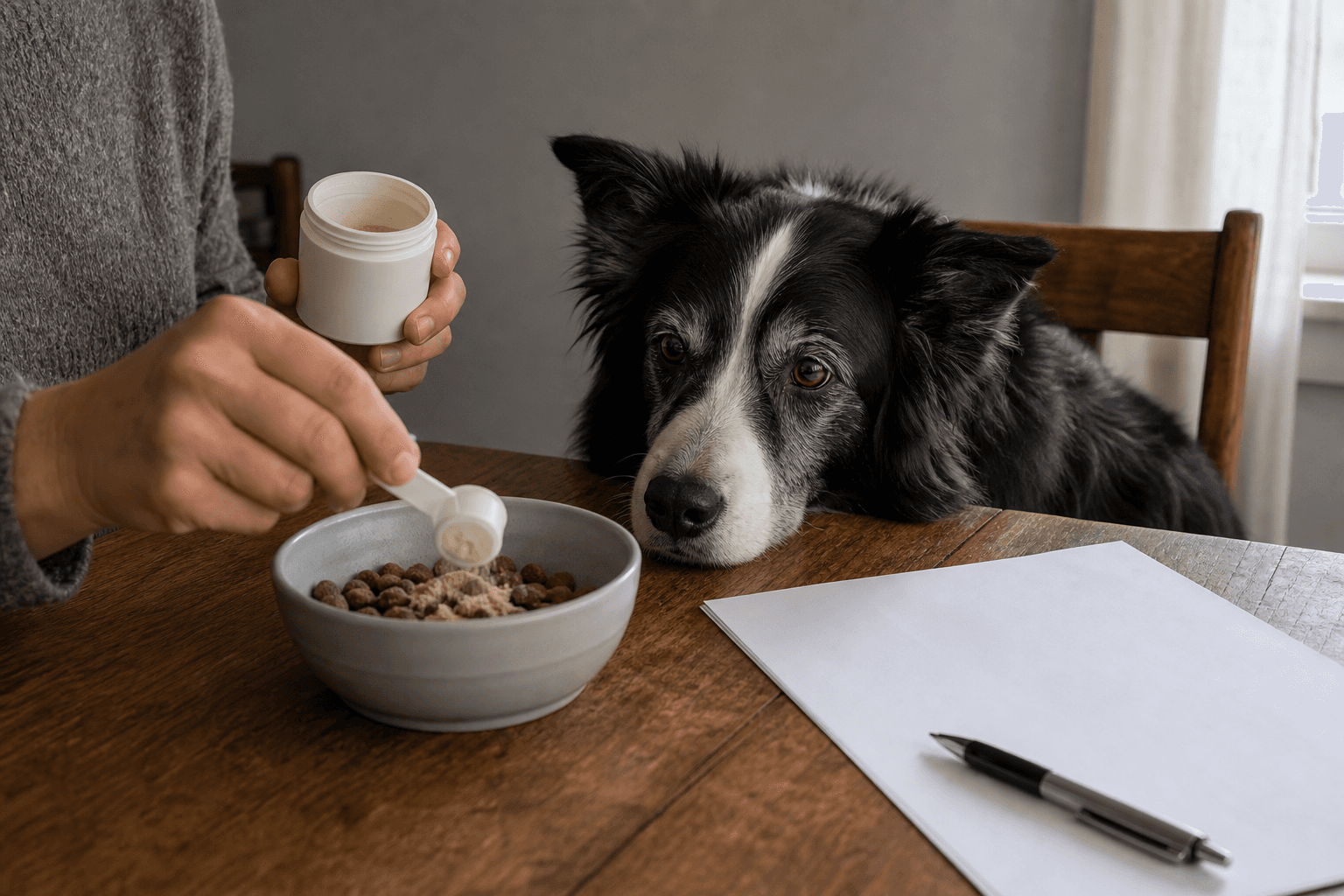
Also record the product name, main ingredients, start date, and any other changes that day. Do not suddenly increase exercise to “test the results,” and do not add multiple joint products on your own. If you decide to use a supplement, follow the product label and your veterinarian’s recommendations. For background on the evidence for specific ingredients, read What Can Studies of Green-Lipped Mussels for Dogs Tell Us?.
The value of this first record is that it gives later comparisons a reference point. Without a starting point, owners often remember only the most unusually good or unusually difficult day.
Day 14: Compare the Trend Instead of Looking for a Dramatic Turnaround
On Day 14, observe the same three signs in settings similar to those on Day 0. The question is not whether your dog suddenly moves like they did when they were young. Focus on whether a pattern is moving in the same direction across several ordinary days.
You can describe each sign as “smoother,” “about the same,” or “more effortful,” then add the specific movement you saw. For example, “usually gets up in one motion” is easier to review than “seems much better.” If the three signs point in different directions, record that honestly instead of forcing them into one conclusion.
In the study, owners evaluated their dogs at 15- to 30-day intervals, which is another reminder that home observations are better suited to tracking a trend over time. The study reported improvement over time in the supplement group’s primary measures. However, those findings applied to the specific formula and dog population in that study; they cannot promise that every dog will show the same change on Day 14.
Day 28: Use a Simple Table to Decide What Comes Next
By Day 28, place your three records side by side:
| Date | Getting up | Walking | Resting | Special circumstances | |---|---|---|---|---| | Day 0 | | | | | | Day 14 | | | | | | Day 28 | | | | |
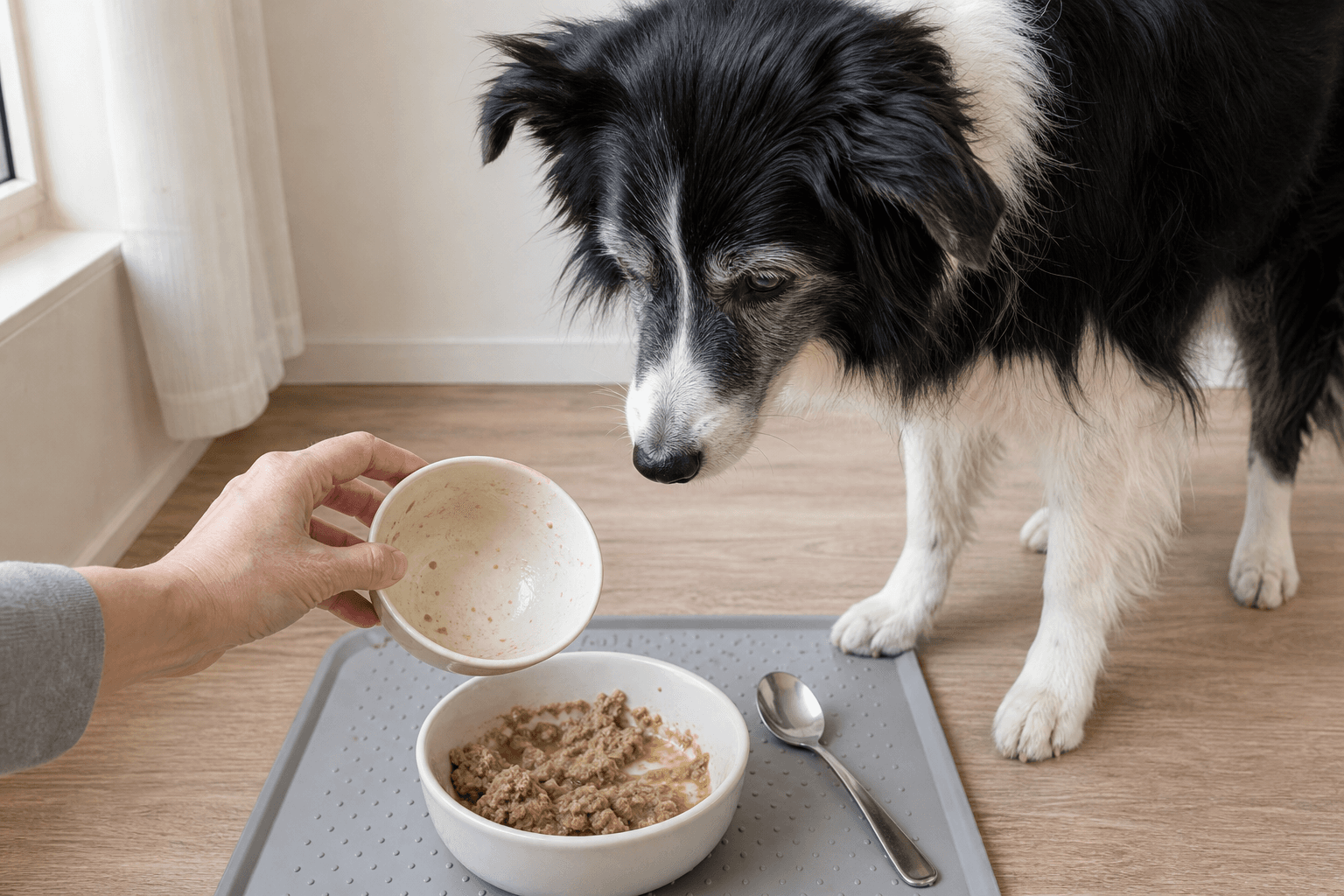
If one or two of the three signs become consistently smoother on ordinary days, you can continue following the label while keeping other parts of your dog’s routine as consistent as possible. If there is no clear trend, first check whether your dog actually finished each serving and whether their activity routine changed. Then bring the records to your veterinarian instead of increasing the dose yourself.
If your dog suddenly refuses to walk, consistently avoids being touched, has clear difficulty eating or resting, or shows a marked change from their usual behavior, do not wait for the observation period to end. Long-term study follow-ups do not mean a household should ignore an immediate change in their dog’s condition.
The study report also found a between-group difference between the supplement and placebo groups for pain interfering with daily activity, with p=0.009. That number belongs to the specific comparison in that trial. It cannot be converted into a prediction of how many days it will take for one dog at home to improve.
Frequently Asked Questions
What if there is no change on Day 14? Should I continue?
Do not decide based on a single day. Compare your Day 0 notes and check whether the three signs are moving consistently on ordinary days. Also confirm that your dog is finishing the servings and that no other aspects of their routine changed. If their condition worsens or affects daily life, contact your veterinarian promptly.
Can I change the exercise routine at the same time to help assess the supplement?
If your goal is to observe the supplement itself, avoid making major changes to exercise volume, routes, or intensity during the same period. Keep daily activity familiar and moderate, and record any adjustments in the “Special circumstances” column so the comparison remains clearer.
Does the 90-day study mean every product needs that long?
No. The 90 days was the observation period for the study described above. It is not a fixed waiting period for every product or a guaranteed-results deadline. Formulas and dogs differ, so the label, your ongoing records, and your veterinarian’s advice should guide the next step.
For individual health questions, your veterinarian remains the best partner.