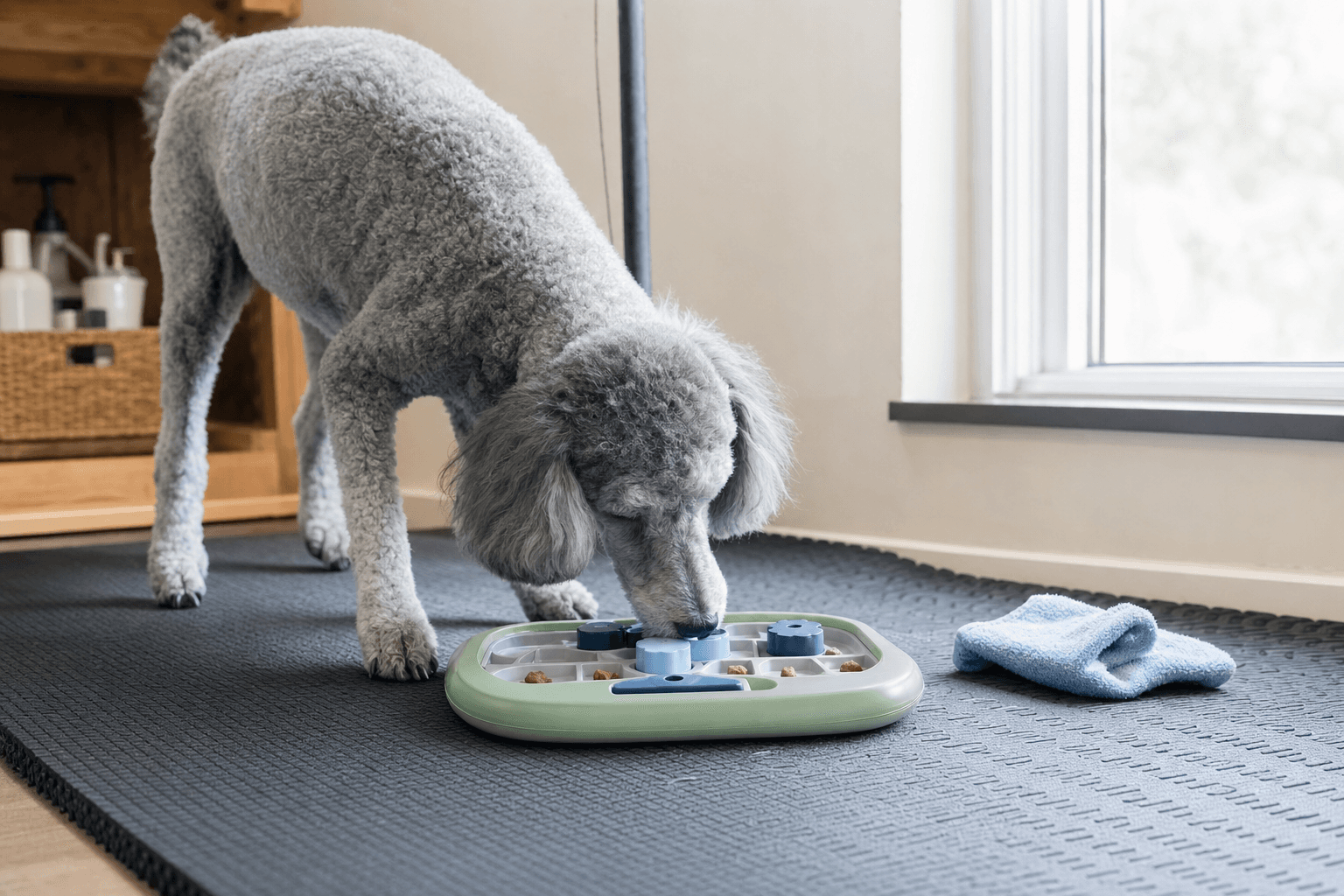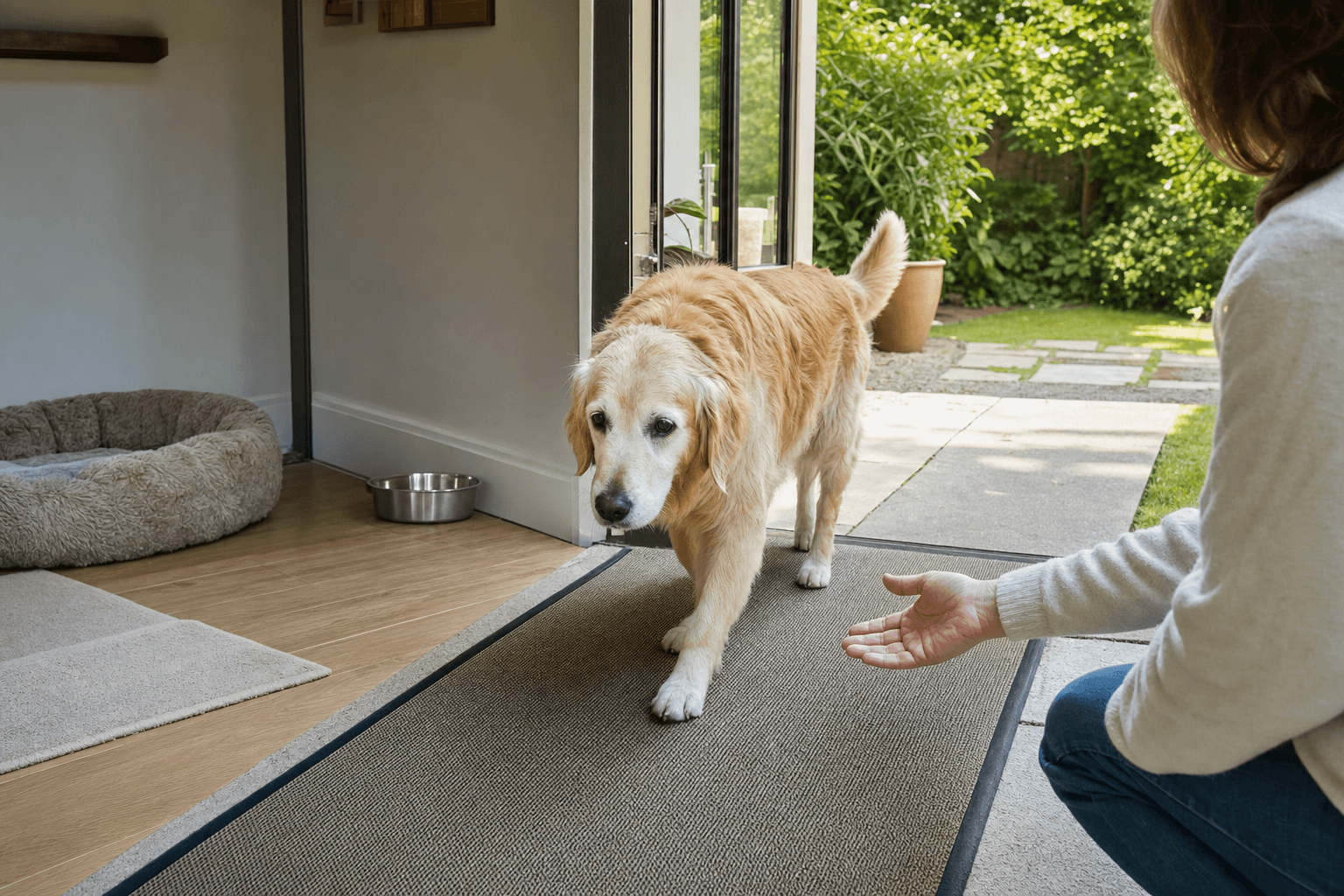
When a dog no longer chases a ball the way they once did but still sniffs around corners after meals or watches the treat cabinet, a puzzle toy can offer a quiet daily activity. What matters is not how many mechanisms a toy has, but whether a dog can get started easily, use it without straining, and stay interested for a short period.
Choose What They Want to Play With Before Raising the Difficulty
A senior dog's activity pace, oral condition, and interests may all change. A toy they used for a long time when younger may be abandoned as they age because it is too hard, too slippery, has an opening that is too small, or requires frequent bending.
When choosing, first observe which approach they prefer:
- Sniffing before finding food: Try sniff mats, fabric hide-and-seek food toys, or shallow foraging trays.
- Nudging with the nose: Look for food-hiding toys with a stable base that can move with a gentle push.
- Slow licking: Choose lick mats or shallow trays with flat surfaces and rounded edges.
- Gentle chewing: Consider chew toys made from a more flexible material, in an appropriate size, and used under owner supervision.
Research summaries on chewing indicate that dogs' preferences for chew items are related to scent, flavor, and texture. Rather than buying many different types at once, begin with the kind of interaction your dog already enjoys.
Use This Guide to Narrow Down the Options
When browsing everyday supplies in the Dogevera store, use the guide below to rule out unsuitable options instead of relying only on a package's “puzzle” label.
| What you observe at home | Toy features to prioritize | Features to avoid for now | |---|---|---| | Enjoys smelling food and moves slowly | Shallow food hiding, fabric with fewer folds, and an easy-to-find first bite | Deep openings or containers that need to be flipped repeatedly | | Does not want to lower their head often or chase | Lick or foraging toys that stay in place on the floor | Small balls that roll away easily or toss toys that require chasing | | Spends less time chewing | Gentle textures and toys suited to brief interaction | Very hard items, sharp edges, or items that require forceful tearing | | Loses interest quickly | Simple designs with visible or noticeable food cues | Fully enclosed mechanisms from the start that may feel frustrating | | Carries toys away without working on them | Lightweight options that are easy to pick up and can be used on a mat | Toys that are too large or have overly slippery surfaces |
If you are unsure about the difficulty, choose the level your dog can begin using quickly. Once they can complete it successfully and remain interested, add a small additional search step gradually. This is more practical than starting with a complicated mechanism.
Types of Senior Dog Puzzle Toys for a Slower Pace
Sniff Mats and Shallow Food-Hiding Toys
These toys let dogs use their noses to find food and usually do not require jumping or quick turns. Prioritize options with fabric strips that do not come loose easily, a base that does not slide around, and clear washing instructions.
At first, place food where your dog can find it easily. After they become familiar with the toy, put a small amount of food in deeper fabric layers. If they only sniff and walk away, reduce the difficulty before hiding the food deeper.
Lick Mats and Shallow Tray Toys
Lick mats work well during quiet rest periods and for dogs who do not enjoy chasing toys. Check whether the edges are rounded, whether the mat can be secured easily, and whether the grooves can be thoroughly cleaned.
Food does not need to be spread on thickly. Using a small portion of your dog's regular food for interaction and setting aside that amount from their main meal can make the daily feeding plan clearer.
Stable Food-Dispensing Push Toys
Toys with a stable base that require only a gentle nudge from the nose or front paw are more dog-friendly for dogs who are not suited to chasing a ball around the house. Start with an option that has a larger opening and releases food easily. Once your dog can use it consistently, consider a narrower opening or a slower food-release style.
Gentle Chew Toys
Some dogs still enjoy carrying or gently chewing objects. A chew toy should fit your dog's mouth size: avoid one small enough to be swallowed whole, and do not use toys that are cracked, shedding pieces, or have loose parts. When offering a new chew toy for the first time, stay nearby and observe whether your dog chews gently, tears at it, or tries to swallow large pieces of material.
Do a Quick Safety Check Before Each Use
A puzzle toy's safety depends on more than the material information provided at purchase. It also depends on whether the toy is still intact and appropriate for the way this particular dog uses it.
Before each use, check four things:
- Whether the surface has cracks, sharp points, loose threads, or detached small parts.
- Whether the toy is still larger than what your dog could swallow whole.
- Whether food residue has been removed and the grooves and fabric layers are dry.
- Whether the floor is non-slip and your dog can use the toy in a comfortable position.
When using a new toy for the first time, set it up where you can see your dog. If they repeatedly scratch at it, shake it forcefully, bite off large pieces of material, or seem irritated, put it away and switch to an option with a simpler design and more suitable material.
Find Toys They Truly Like With a Three-Day Observation Method
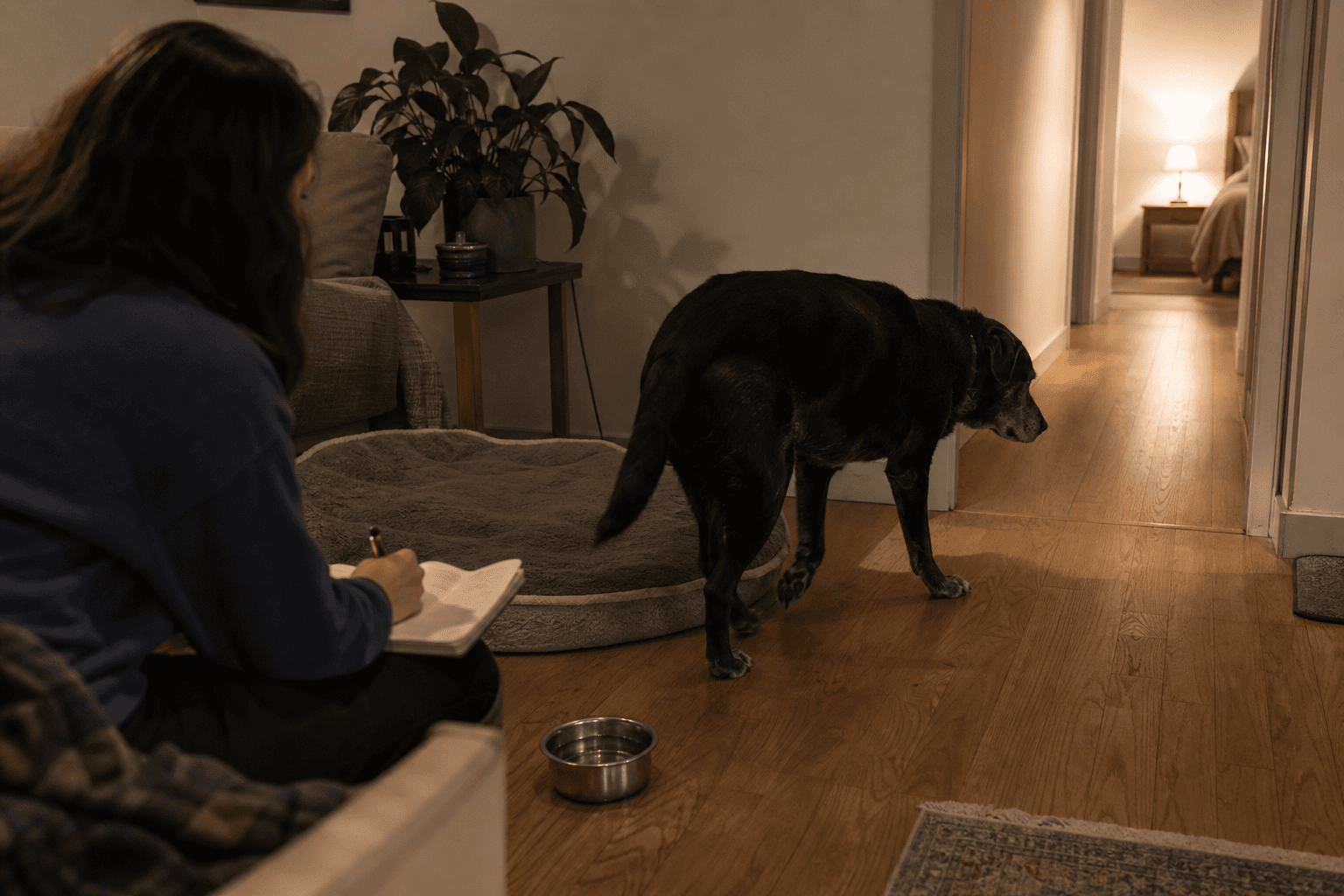
Instead of deciding whether a toy is good based on one response, keep notes for three consecutive days. Offer only one main interactive toy each time so too many new choices are not mixed together.
In your phone notes, record:
1. How long it takes your dog to approach the toy. 2. Whether they mainly use their nose, tongue, front paws, or mouth. 3. Whether they explore calmly or quickly walk away, scratch, or seem impatient. 4. Whether the toy remains intact after use and is easy to clean.
These notes can help you tell the difference between unsuitable difficulty and a format your dog simply does not like. For example, if your dog keeps sniffing but cannot find the food, reduce the amount of coverage first. If they are interested in the food but do not want to touch a certain material, switch to another type of toy. You can also organize these day-to-day changes alongside senior dog care observation guidance to help keep daily routines consistent.
Keep Toys Fresh Without Complicated Mechanisms
Senior dogs do not necessarily need increasingly difficult toys. Small changes in placement, food format, or the order of interaction are often enough.
Rotate two or three easy-to-use toys rather than bringing out every toy each day. Use a sniff mat today, a lick mat tomorrow, and a stable food-dispensing push toy the following day, while keeping the location familiar and the environment quiet each time. This rotation gives your dog variety without requiring them to relearn the rules every time.
If your dog suddenly no longer wants to engage with a familiar toy, their way of eating changes noticeably, or changes in daily behavior continue, it is more prudent to contact a veterinarian for discussion.
Frequently Asked Questions
My senior dog is not interested in puzzle toys. Does that mean the toy is not difficult enough?
Not necessarily. First check the food scent, material, placement, and method of use. For dogs with a slower pace, a toy that is too difficult may cause them to give up right away. It is better to begin with a design that makes the first bite easy to get.
Can I put an entire meal into a puzzle toy?
Start with a small portion of the meal and observe whether your dog can complete it easily, wants to keep eating, and whether the toy is easy to clean. If they spend a long time without being able to get the food, use less food or switch to a simpler format.
Do toys need to be disinfected every day?
Follow the product's cleaning instructions and remove visible food residue after each use. For toys with seams, fabric layers, or grooves, thorough washing and drying are especially important to keep residue from building up inside over time.
For individual health questions, your veterinarian remains the best partner.