
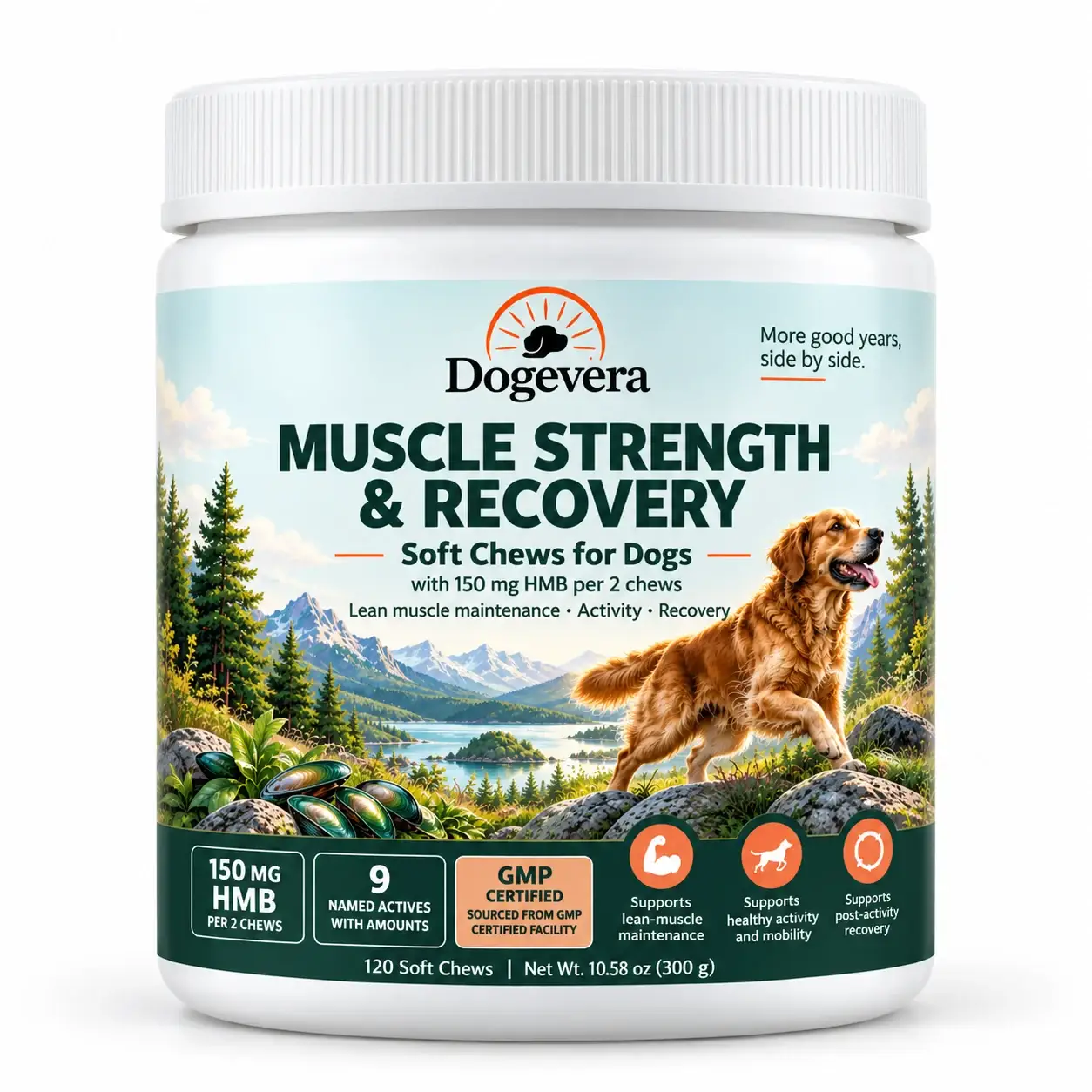
Muscle Strength & Recovery Soft Chews for Dogs
150 mg calcium HMB per 2-chew reference serving, with leucine, amino acids, salmon oil and green-lipped mussel.
$63.84
Choose their daily care
Muscle support involves more than a chew. Appropriate food intake and activity suited to the dog matter too. Visible thinning, weakness or a sudden change in movement needs a veterinary assessment before it becomes a supplement-shopping question.
01
Choose a label that names each active ingredient and its amount. HMB research in dogs is still developing; evidence from people does not establish a benefit in every older dog, and research on one formula does not prove a different finished product.
02
Follow the product label and keep the rest of the routine stable when introducing it. Record appetite, usual activity and body changes, and ask your veterinarian about suitable exercise and individual nutritional needs.
Supplements support everyday nutrition. They do not diagnose, treat, cure or prevent disease, or replace veterinary care. New, sudden or worsening signs need a veterinarian.
Why an old dog's back legs get weak or collapse: arthritis, muscle loss, disc disease, degenerative myelopathy, emergency signs, and exercises that help.
Why most healthy older dogs need more protein, not less, whether it harms the kidneys, and how to compare foods by grams of protein per 1,000 kcal.
What helps a dog keep or regain muscle: protein, exercise and treating pain first, then what the evidence says about HMB, omega-3, amino acids and creatine.
Why an older dog's back legs shake when standing, from arthritis pain and muscle loss to disc disease and degenerative myelopathy, and when to see a vet.
Essential cookies run the shop. Google Analytics, Clarity analytics and Google/Meta ads load only if you accept. Cookie Policy / Privacy Policy