
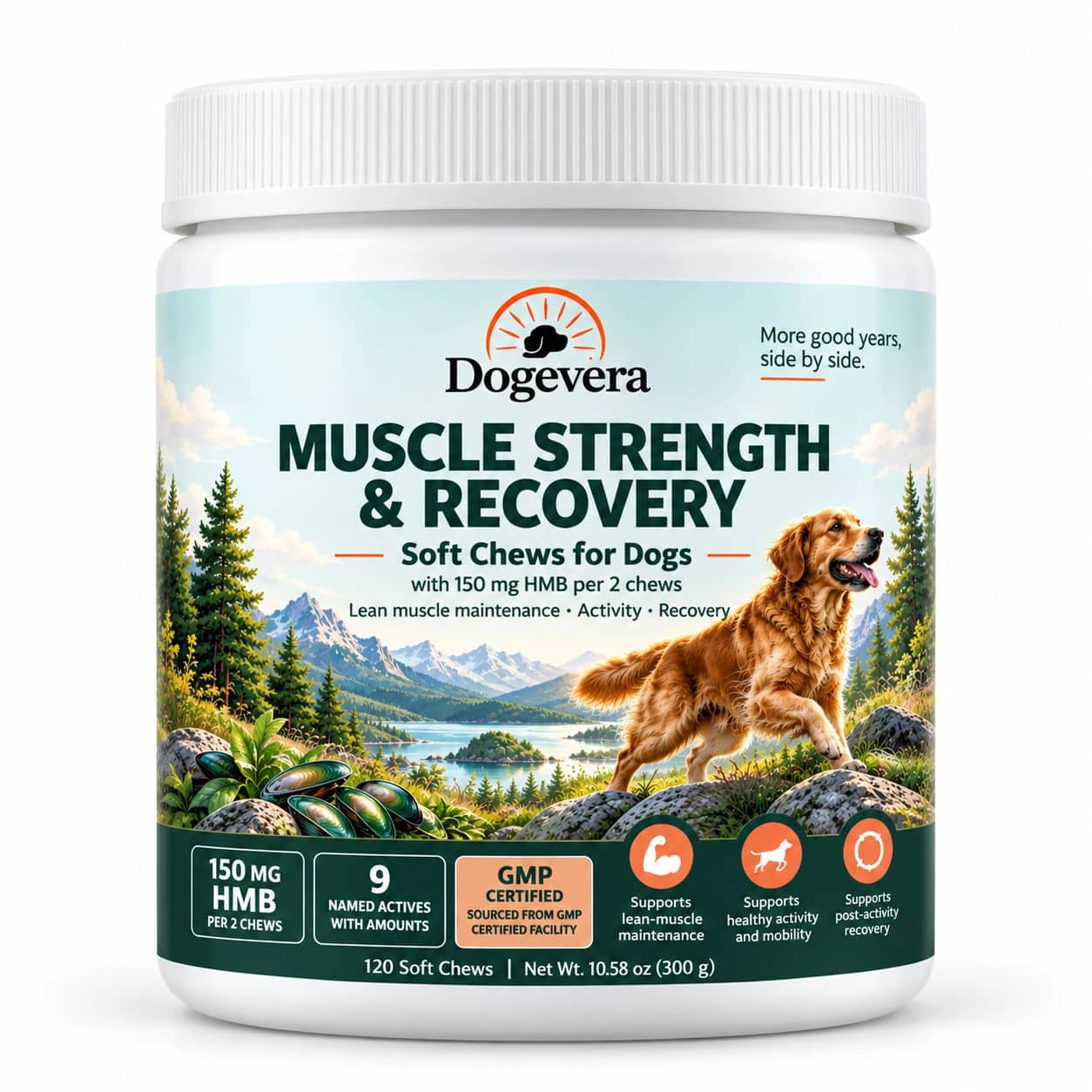
Muscle Strength & Recovery Soft Chews for Dogs
150 mg calcium HMB per 2-chew reference serving, with leucine, amino acids, salmon oil and green-lipped mussel.
¥6,510
Choose their daily care
Muscle support involves more than a chew. Appropriate food intake and activity suited to the dog matter too. Visible thinning, weakness or a sudden change in movement needs a veterinary assessment before it becomes a supplement-shopping question.
01
Choose a label that names each active ingredient and its amount. HMB research in dogs is still developing; evidence from people does not establish a benefit in every older dog, and research on one formula does not prove a different finished product.
02
Follow the product label and keep the rest of the routine stable when introducing it. Record appetite, usual activity and body changes, and ask your veterinarian about suitable exercise and individual nutritional needs.
Supplements support everyday nutrition. They do not diagnose, treat, cure or prevent disease, or replace veterinary care. New, sudden or worsening signs need a veterinarian.
When a dog needs a run-up to jump on the couch, make the favorite resting spot easier to reach with a stable route, better footing, and a simple observation log.
Back-leg shaking while standing can have several patterns. Use a simple triage order to spot urgent changes, make standing safer, and record useful details.
When a dog's back legs get skinny, you are seeing muscle shrink, not body fat disappear. Learn how to feel the difference at home and why weight loss is not the same thing.
Older dogs often lose muscle. Sometimes the change is gradual: the thighs look narrower, the spine feels more prominent, or climbing into the car becomes harder. Sometimes it follows illness, restricted activity, pain, or surgery.