TL;DR
Does dental powder remove tartar on dogs? Do not assume it does. A powder mixed into food may be a maintenance choice, but it is not the same as physically removing a hard, bonded deposit from a tooth. Read the product evidence for what was actually measured, and arrange a veterinary oral exam if you notice pain, bleeding, swelling, loose teeth, or a major change in breath.
A veterinary professional should assess ongoing dental concerns, especially when your dog seems uncomfortable or cannot eat normally.
What does “remove tartar” actually mean?
Tartar, also called dental calculus, is the hard material that forms when dental deposits become firmly attached to the tooth surface. That wording matters. “Supports dental hygiene,” “helps freshen breath,” and “reduces buildup” do not automatically mean “removes existing tartar.”
A powder added to a meal is convenient, but convenience does not explain what happens to a deposit that is already stuck to a tooth. Before treating any product as a removal method, ask three separate questions:
- Was the product tested for existing tartar removal?
- Was it tested for reducing new buildup over time?
- Were other outcomes measured instead, such as breath or the appearance of the gums?
Those are different claims. A result in one category does not establish a result in the others. If the packaging uses broad language, check the ingredient panel, directions, and any study description rather than reading “dental” as “tartar remover.”
What were brown-algae powders actually tested for?
When you see a brown-algae powder discussed in canine dental care, focus on the study’s measured outcome—not just the ingredient name or the product’s headline claim. A useful description should tell you what dogs received, how the product was used, what comparison was made, and what researchers looked for afterward.
The key distinction is maintenance versus removal. A maintenance study might ask whether a product is associated with less new buildup during the observation period. That does not show that the product removed deposits already attached before the study began. A study that measures breath does not, by itself, show tartar removal. A change in the visible gums does not answer every question about the tooth surface.
This is also why a product page should not be the only basis for deciding what your dog needs. You can review Dogevera’s dog-care articles for practical observation ideas, then write down the exact wording used for the dental product. Look for a clearly named outcome, not a promise inferred from the presence of algae.
How can you tell maintenance from removal at home?
Use a simple repeatable check instead of relying on a single glance after starting a powder. Your goal is not to diagnose your dog. It is to record what you can see and share a clearer description if an exam becomes appropriate.
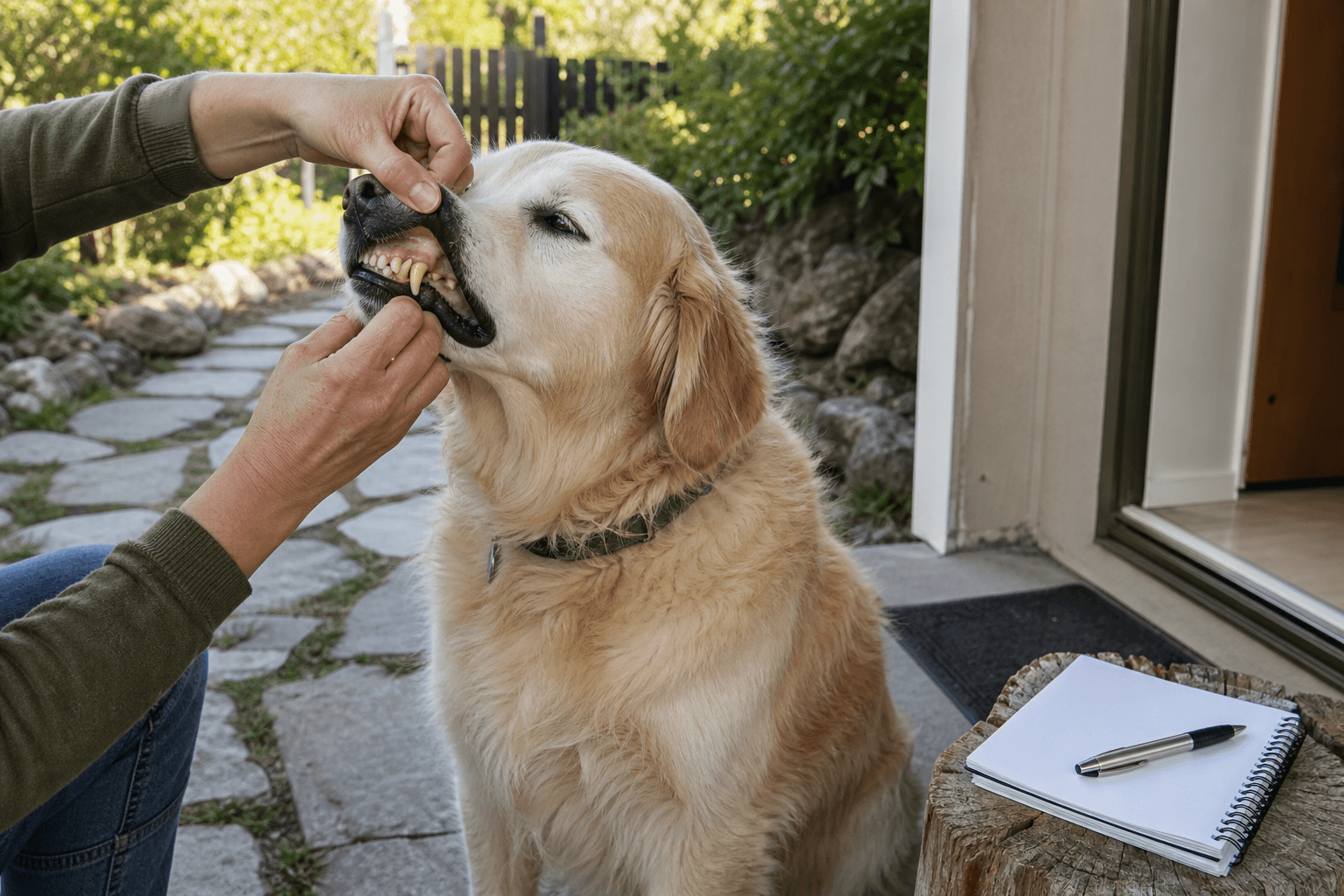
A three-part mouth observation
1. Choose a calm moment. Let your dog stay in a comfortable position. Do not force their mouth open or continue if they resist. 2. Look at the same areas. Note visible yellow-brown or dark material on the outer surfaces of the teeth, gum color, swelling, and whether your dog pulls away. 3. Record function as well as appearance. Write down changes in chewing, dropping food, appetite, breath, pawing at the mouth, or willingness to accept normal handling.
Take a dated note once a week if your dog is comfortable with this routine. A written record is more useful than trying to remember whether a patch looked different several weeks ago. Do not scrape the teeth with a fingernail, tool, or household object. That can make the mouth harder to assess and may cause injury.
If you are comparing products, make a small table with four columns: claim, measured outcome, directions, and what it does not establish. For example, “supports daily dental care” is a broad claim; it does not answer whether existing tartar was removed. This comparison keeps a maintenance product in its proper place.
When should a dental concern move beyond a powder?
A home-care product is a poor substitute for an oral examination when your dog has signs that the mouth may be uncomfortable or changing. Arrange veterinary advice if you notice bleeding, swelling, a loose or broken tooth, repeated pawing at the mouth, reluctance to chew, dropping food, a strong new odor, or a clear change in eating.
Also seek an exam when visible deposits are extensive, when you cannot safely see the mouth, or when your dog will not allow gentle handling. A powder cannot tell you what is happening below the visible surface, and a change in breath alone cannot identify the cause.
The practical decision is straightforward:
- No obvious concern and your dog accepts the routine: a powder may be considered as one maintenance option, following the package directions.
- Visible hard buildup but no obvious discomfort: do not label the powder a remover; ask what level of dental care is appropriate.
- Pain-related behavior, bleeding, swelling, loose teeth, or eating changes: prioritize a veterinary oral assessment over experimenting with products.
This approach avoids both extremes: expecting a scoop to undo established dental problems, or dismissing everyday dental maintenance because it cannot replace an exam.
How should you judge a dental powder before buying?
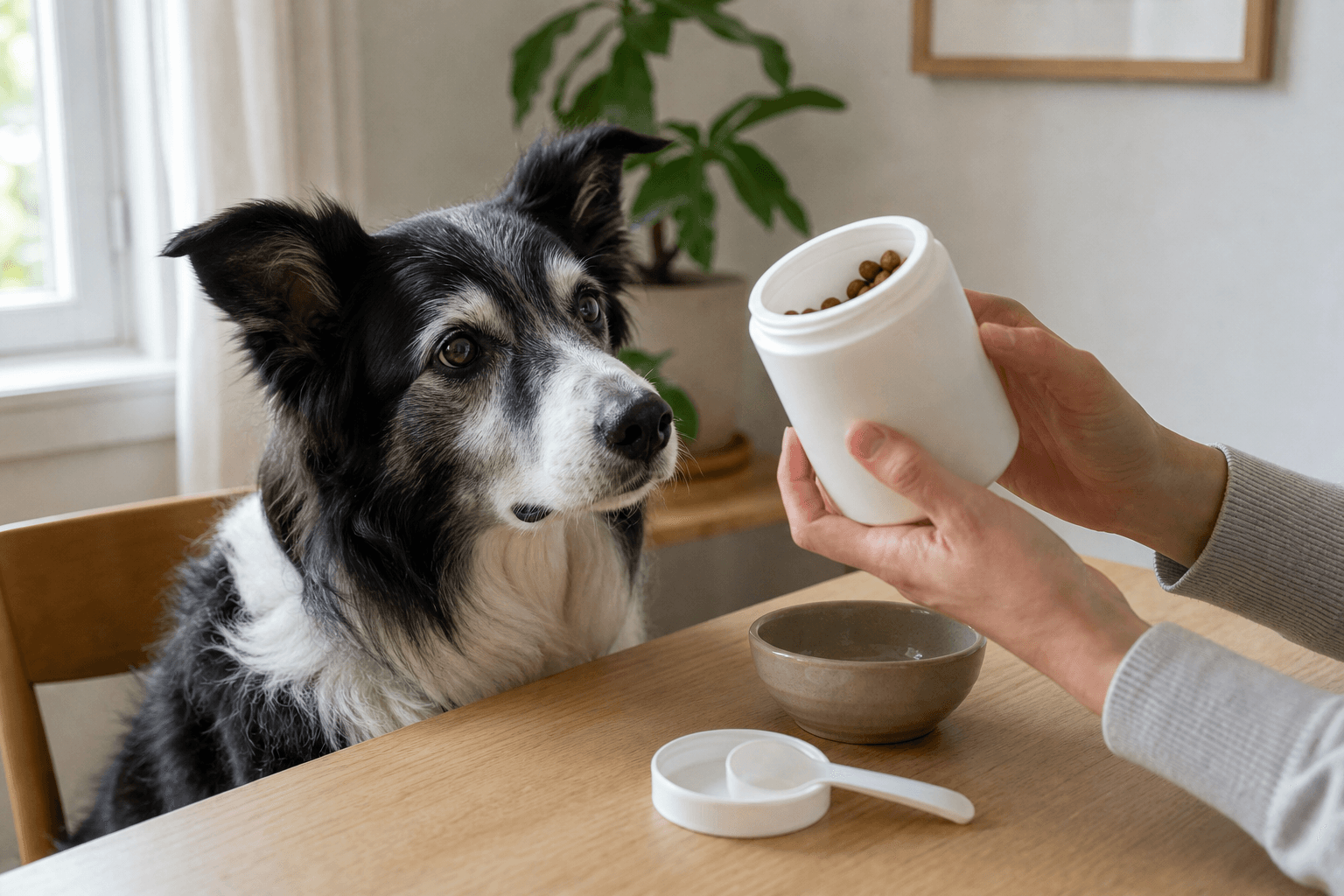
Start with the label rather than the front-of-package promise. Confirm the full ingredient list, feeding directions, storage instructions, and any statement about what the product was tested to measure. If your dog has known food sensitivities, review every ingredient and contact the manufacturer or your veterinarian about questions the label does not answer.
You can compare current options in the Dogevera store, but treat a listing as product information—not as proof that a powder removes established tartar. Keep the decision tied to your goal:
- For daily maintenance, ask whether the routine is easy for your household and acceptable to your dog.
- For existing deposits, ask whether the evidence specifically concerns removal, rather than a different dental outcome.
- For a worrying mouth change, pause product comparisons and organize the observations for a veterinary conversation.
If you use a powder, follow its package directions and introduce it in a way that lets you tell whether your dog actually eats the intended food. Keep notes on acceptance and visible changes, but do not use a lack of obvious improvement as a reason to delay an exam.
FAQ: Dental powder and dog tartar
Can dental powder dissolve tartar already on a dog’s teeth?
Do not assume so. The relevant evidence would need to measure removal of existing, attached deposits. A general dental-care claim or a result involving another outcome does not establish that.
Is brown algae the same as a professional dental cleaning?
No. An ingredient category and a professional dental service are not interchangeable. A powder is a home-care choice; it does not replace an oral assessment when your dog has visible or behavior-related concerns.
Should I scrape tartar off my dog’s teeth at home?
No. Avoid using tools or household objects. Make a gentle visual observation instead and record what you see for a veterinary discussion.
What is the best next step if my dog has brown buildup but seems fine?
Record where you see it and whether it changes, then ask your veterinarian whether an oral exam is appropriate. You can consider maintenance products separately, but do not describe them as removing the buildup unless their evidence specifically supports that claim.
For individual health questions, your veterinarian remains the best partner.