TL;DR
When a senior dog starts struggling with stairs, record exactly what happens rather than guessing why. Note the timing, direction, footing, pace, and what changes afterward. Improve safety around the route, keep activity comfortable, and treat daily nutrition as support for overall nourishment—not as a substitute for finding out what changed.
Why do stairs reveal a mobility change so clearly?
You may first notice it when your dog pauses at the bottom, takes each step slowly, refuses the usual route, or needs more encouragement than before. A dog who still walks across a level floor can appear very different on stairs because stairs require a series of controlled movements in a small space.
That does not tell you the cause. It does tell you that a familiar task has changed. A veterinarian should assess a new or worsening mobility change, especially if your dog cannot safely use the stairs or the change appeared suddenly.
Before the appointment, focus on details you can see:
- Do they hesitate before starting, or stop partway up or down?
- Is going up different from going down?
- Do they use the same pace on every visit?
- Do their paws slip, or do they simply avoid the steps?
- Do they seem different after the attempt, such as resting longer or avoiding another activity?
- Does the change happen at a particular time of day or after a particular activity?
A short video from a safe distance may help show the pattern. Never create a difficult stair challenge just to record one.
What should you record before the veterinary visit?
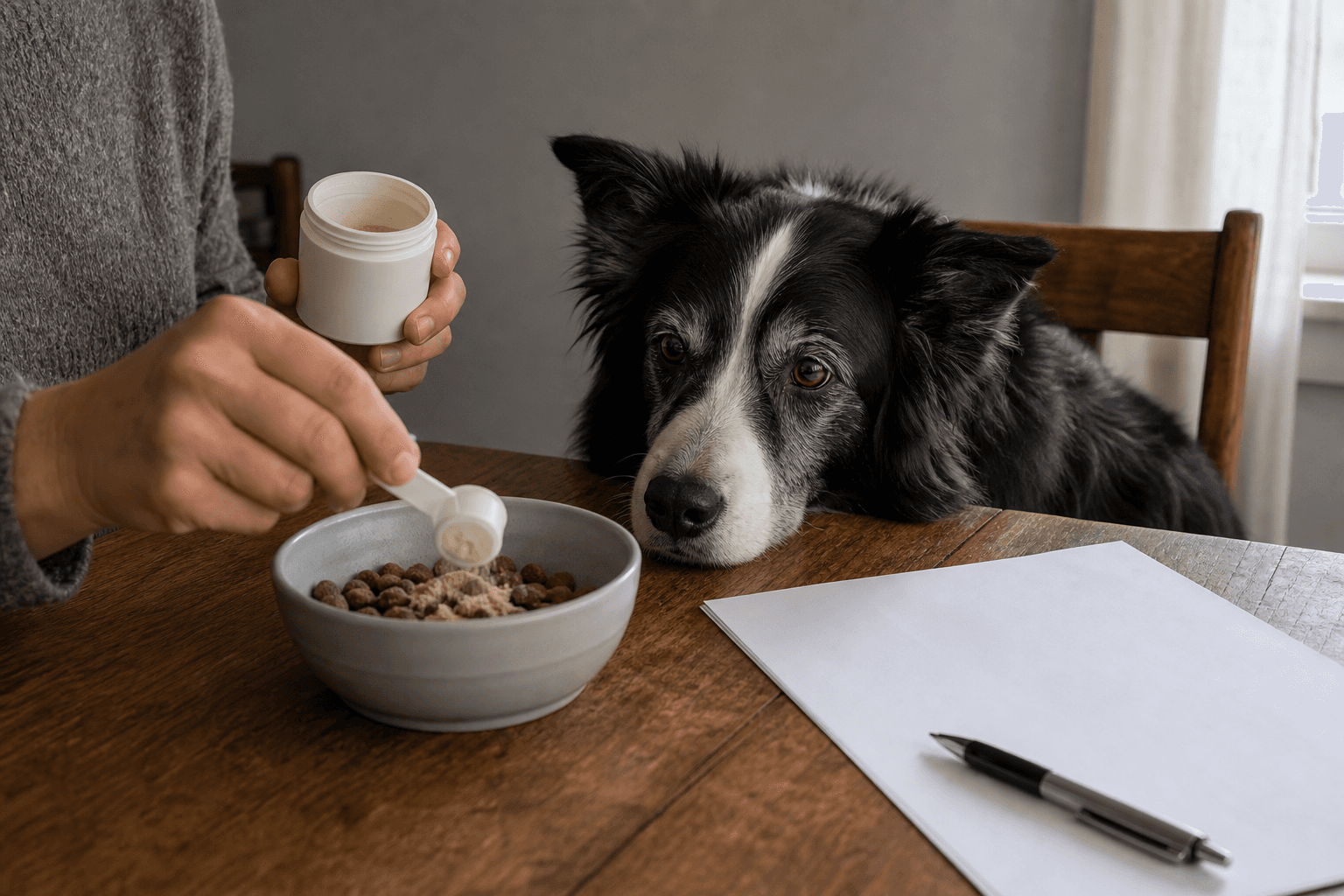
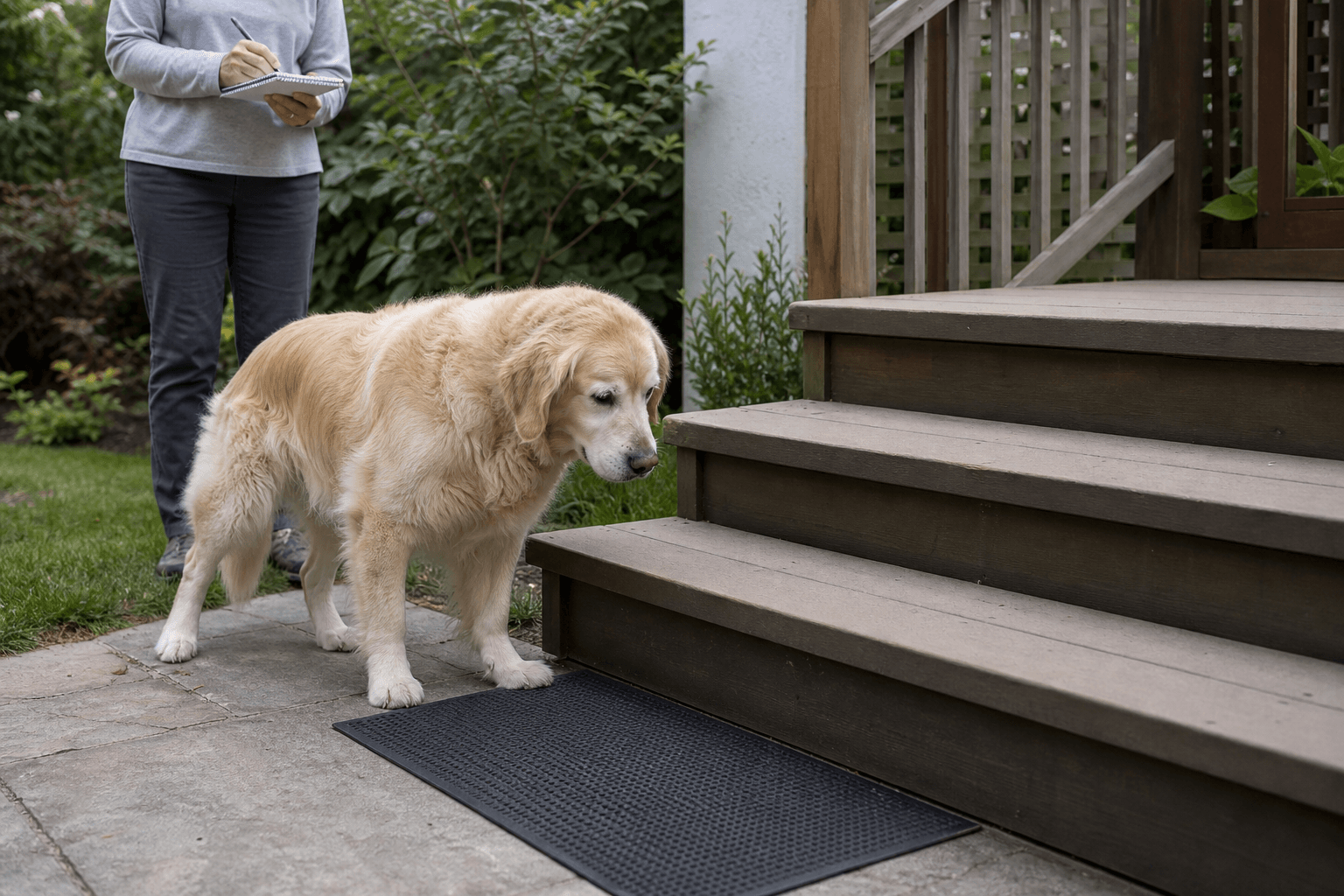
Use one page or a note on your phone. Record observations for three days if your dog can move through their ordinary routine safely. The goal is consistency, not a perfect measurement.
| What to note | Example of a useful entry | | --- | --- | | Route | Back steps, indoor staircase, or porch steps | | Direction | Up, down, or both | | Start | Walked over, paused, or turned away | | Movement | Smooth, slow, uneven, or needed support | | Surface | Dry, wet, carpeted, or slippery | | Context | After resting, after a walk, or late in the day | | Afterward | Returned to normal activity or rested longer |
Also write down any related changes in ordinary routines: getting up, walking to the water bowl, entering the car, settling on a bed, or joining the family. Keep the wording descriptive. “Paused for a long time at the bottom” is more useful than “seems worse.”
Bring the food label, treat list, and supplement labels to the appointment if nutrition is part of your question. The Dogevera senior dog care guide can also serve as a place to organize broader home observations, but your own notes about the stairs are the most useful starting point.
How can you make stairs safer today?
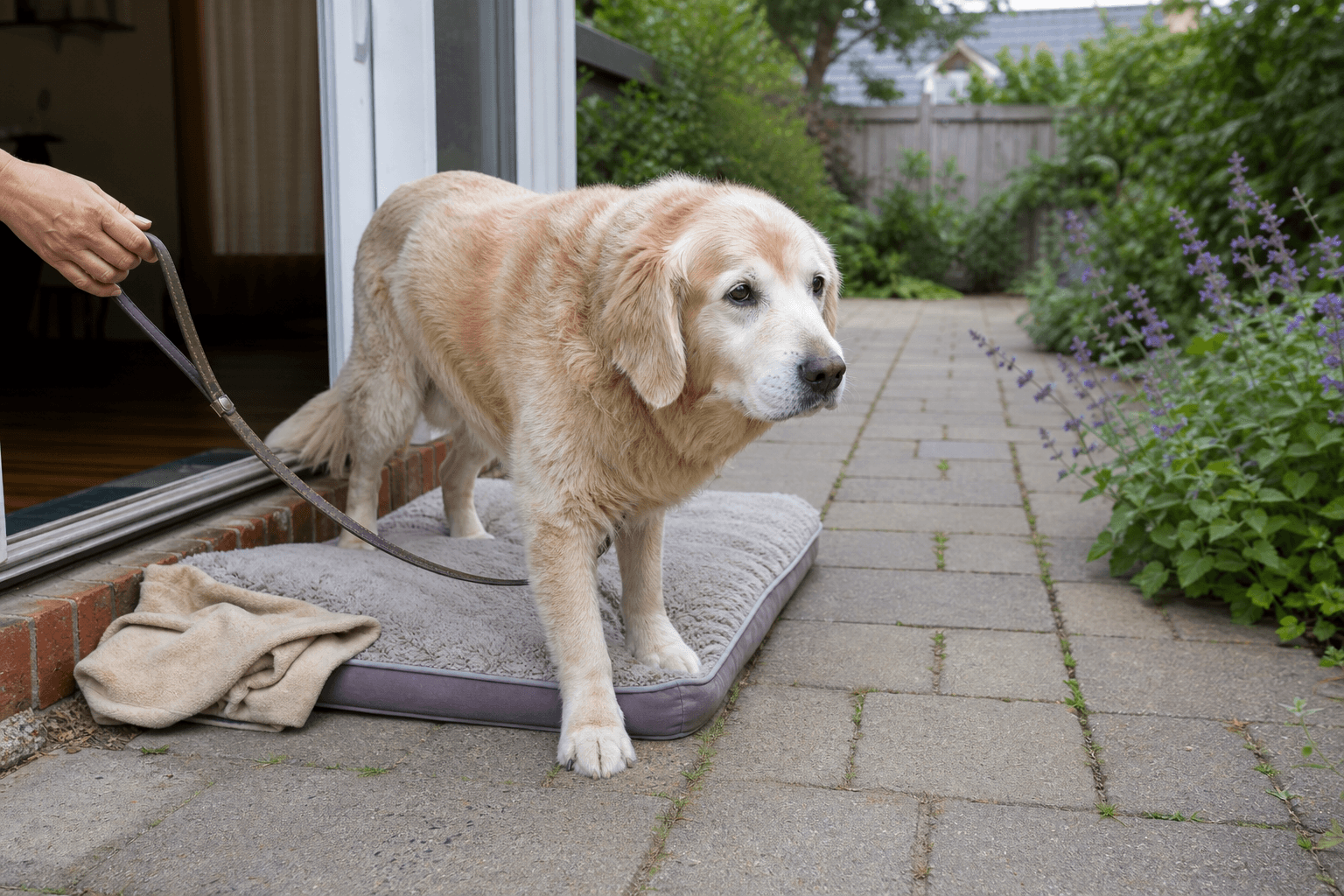
Start with the route your dog uses most. Keep the steps dry and free of objects. Check whether rugs, runners, or mats stay flat instead of shifting underfoot. Improve lighting where shadows make the edges difficult to see, and keep the top and bottom landing clear.
If your dog is hesitant, avoid pulling them by the collar or urging them to hurry. Give them room and time. When possible, choose a level route for routine trips and arrange food, water, and rest areas to reduce unnecessary stair use.
A gate can prevent unsupervised access when you are not able to watch. It should not trap your dog away from water, a comfortable resting place, or the people caring for them. If you use a harness or other support, ask your veterinarian or veterinary team how to handle it safely for your dog and staircase.
Stop the attempt if your dog slips, loses balance, appears distressed, or cannot continue safely. Do not test the staircase repeatedly for comparison. One careful observation is enough; your log can compare ordinary attempts across days.
What is worth comparing: the stairs or the whole routine?
Stairs are a useful signal, but they are only one part of the picture. Use this simple comparison:
| If you notice… | Record this next | | --- | --- | | Stairs are difficult but level walking looks unchanged | Direction, surface, pauses, and whether the difficulty is worse up or down | | Several familiar movements have changed | The time of day, activity beforehand, and how your dog settles afterward | | The change varies from day to day | Sleep, weather or surface conditions, route, and the exact task | | Your dog cannot complete the route safely | Stop using that route and contact your veterinary team for guidance |
This comparison helps separate a single environmental problem, such as a slippery surface, from a broader change in daily movement without trying to diagnose either one at home.
You can also take one short video of an ordinary, safe movement on level ground and one of the stair hesitation if it happens naturally. Label each recording with the date and situation. Avoid filming from directly in front of your dog if that makes them nervous or blocks their path.
Where does daily nutrition fit?
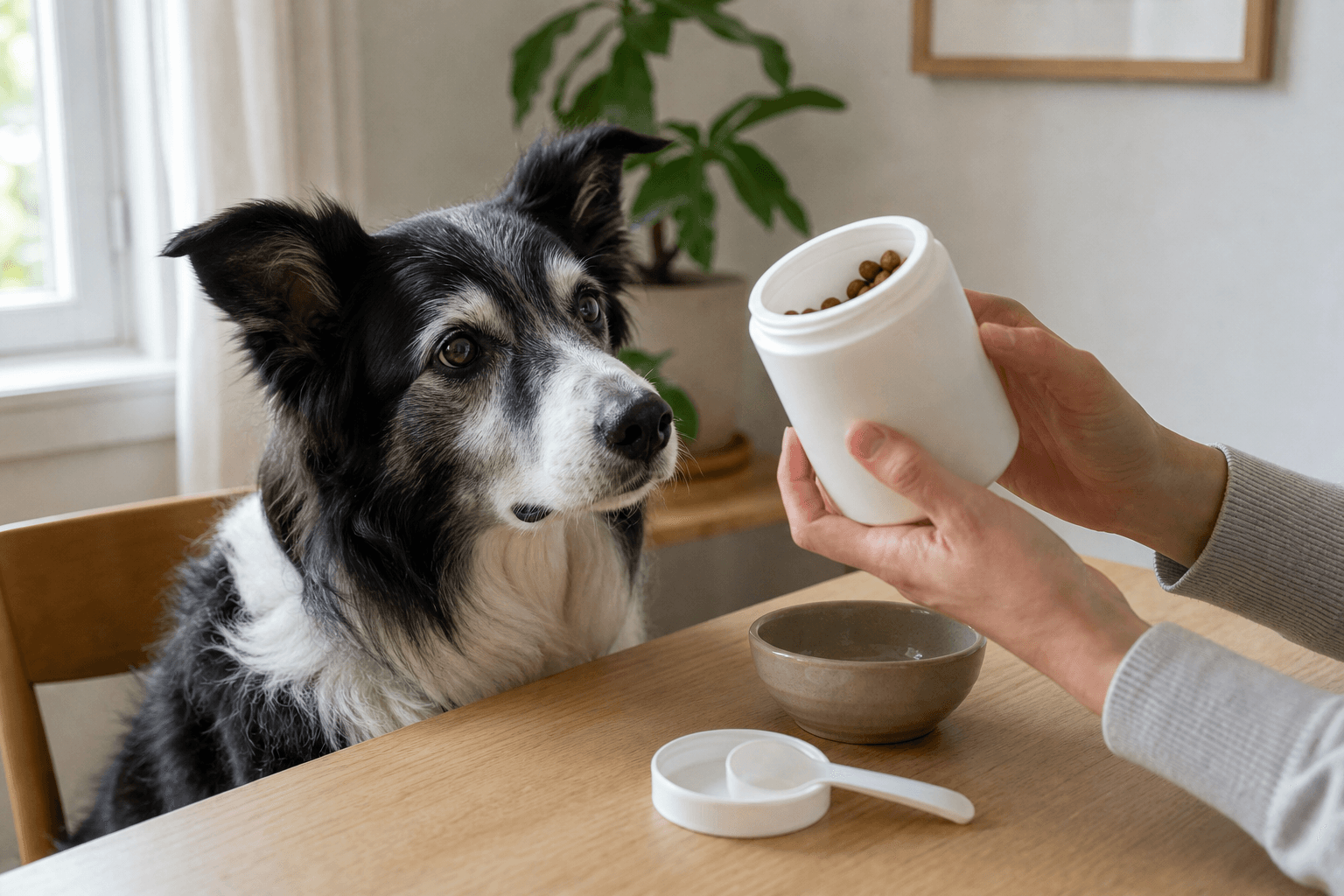
Nutrition matters as part of the everyday care plan, but a food change or supplement should not be used to explain away a new stair problem. A complete feeding routine should provide nourishment that suits your dog’s life stage, eating habits, and broader needs. The right choice depends on details such as what they already eat, how much they finish, and what your veterinarian recommends.
Keep nutrition questions separate from the mobility observation:
- Record what your dog actually eats, including treats and food used with medication.
- Note changes in appetite, drinking, or body condition in plain language.
- Avoid starting several new foods or supplements at once; doing so makes later observations harder to interpret.
- Read the full ingredient panel and package directions before buying or feeding a product.
- Ask whether a proposed product fits your dog’s existing diet and health plan.
If you are comparing products, the Dogevera store is a place to review available options and their package information. A nutrition product may fit a veterinarian-guided plan, but it cannot tell you why your dog is struggling with stairs or replace an evaluation.
When should you contact the veterinary team?
Arrange a veterinary conversation about a new, repeated, or worsening stair change. Share your log, videos, food information, and a clear description of what your dog can and cannot do safely.
Contact the veterinary team promptly if your dog suddenly cannot use the stairs, falls, collapses, or seems unable to move safely. Until you have guidance, prevent unnecessary stair trips and use a level area for normal daily needs when possible.
FAQ
Is struggling with stairs always a sign of a joint problem?
No single stair observation identifies the cause. Record the pattern and discuss it with your veterinary team rather than labeling it at home.
Should I carry my senior dog?
Only if you can do so securely for both of you and your dog tolerates it. Avoid forcing a frightened or painful-looking dog into your arms; ask the veterinary team about safer handling for your dog’s size and situation.
Should I start a joint supplement right away?
Not automatically. First document the change, review the full diet and ingredient labels, and ask whether any supplement fits your dog’s individual plan. Do not use it as a substitute for evaluating a new mobility change.
What is the most useful thing to bring to the appointment?
Bring a concise stair log, a naturally occurring video if you have one, a list of food and treats, and the labels of any supplements your dog receives.
For individual health questions, your veterinarian remains the best partner.