
TL;DR
Dog teeth cleaning cost is shaped less by the word “cleaning” than by what the appointment includes: the examination, anesthesia or monitoring, dental imaging, and any treatment the veterinarian finds necessary. A daily dental powder may be useful as a routine between visits, but it does not replace an oral examination, professional cleaning, or treatment for problems already present.
A veterinarian is the right person to explain what your dog’s estimate means and which parts of care are appropriate for them.
What does dog teeth cleaning cost include?
When a clinic gives you an estimate, look beyond the total. “Dental cleaning” can refer to several parts of a visit, and clinics may group or list them differently.
Ask whether the estimate includes:
- An oral examination before the procedure
- Anesthesia and monitoring, if the clinic uses them for the cleaning
- Dental imaging, such as X-rays, when the veterinarian considers it necessary
- Scaling and polishing
- Blood work or other pre-procedure checks
- Medication or take-home care
- Possible extractions or other treatment if the examination reveals a problem
The estimate may be presented as a range because the final plan can depend on what the veterinary team finds once they can examine the teeth and gums closely. Geography, the clinic’s pricing structure, your dog’s age and general health, and the complexity of the dental work can also affect the quoted amount.
The most useful question is not simply, “How much is a dog dental cleaning?” Ask: “What is included in this estimate, and what could add to it?”
Why can the estimate change after the appointment begins?
A home look at your dog’s teeth shows only what is visible and what your dog allows you to see. It may not show every area that needs attention. A professional appointment can involve a more complete examination, cleaning below the visible gumline, or imaging that changes the recommended plan.
That is why a low advertised starting price may not match the final estimate. It may cover only the basic cleaning, while additional services are listed separately.
Before scheduling, ask the clinic to explain:
1. Which services are included in the quoted range. 2. Which services would require your approval before they are added. 3. How the clinic contacts you if the plan changes. 4. Whether the estimate separates routine cleaning from treatment such as extractions. 5. What follow-up care is included and what would be billed separately.
Writing these answers down can make it easier to compare estimates without comparing incomplete packages.
Can a daily dental powder replace professional cleaning?
No. A daily dental powder is best understood as a between-visit routine, not as a substitute for professional dental care.
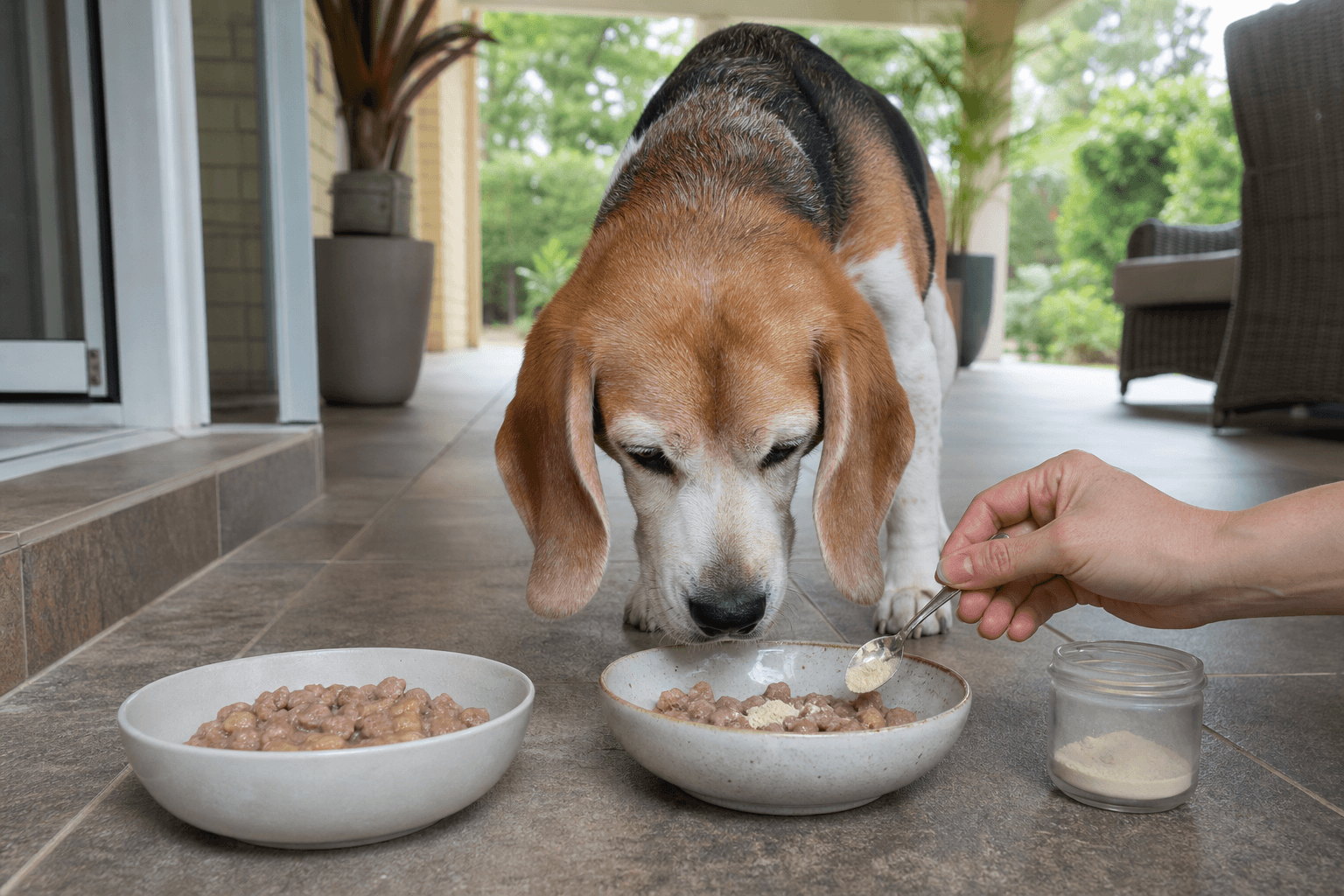
A powder may be appealing because it can be mixed into food and may be easier to use consistently than brushing for some dogs. Its role is limited by what it can physically do. A powder does not examine your dog’s mouth, identify a painful tooth, take dental images, remove established deposits through a professional procedure, or perform treatment when a tooth needs attention.
It also does not turn an estimate into an unnecessary expense. If a veterinarian has recommended an examination or professional cleaning, using a powder should not be treated as a reason to delay that conversation.
For owners comparing options, this distinction helps:
| Option | What it can do in a home routine | What it cannot replace | |---|---|---| | Daily dental powder | Add a repeatable care step to meals | An oral examination or professional cleaning | | Tooth brushing | Physically clean accessible tooth surfaces when your dog accepts it | A complete veterinary dental assessment | | Professional dental care | Allow the veterinary team to examine and clean the mouth more thoroughly | Ongoing home care between visits |
The practical goal is not to choose one option forever. It is to match each option to its job.
A simple dog dental estimate checklist
Use this checklist before agreeing to care or choosing a home product:
- Start with the reason for the visit. Is this a routine assessment, a recommended cleaning, or a concern about odor, chewing, drooling, or visible buildup?
- Request an itemized estimate. A total without line items makes comparisons difficult.
- Ask about the “if needed” items. Find out how the clinic handles imaging, extractions, medication, or other changes to the plan.
- Set your communication preference. Ask when and how the clinic will seek approval if the estimate changes.
- Separate immediate care from maintenance. A powder or brushing routine belongs in the maintenance category, not as a replacement for a recommended procedure.
- Record what you notice at home. For three days, note eating, chewing, breath odor, drooling, and whether your dog resists having their mouth handled. Bring those observations to the appointment.
This process gives you a clearer basis for questions and helps prevent a home product from being judged against a job it was never designed to do. You can also browse Dogevera’s dog-care articles for practical routines that support everyday observation.
When is a dental powder worth considering?
A powder may be worth considering when you want a simple, repeatable addition to your dog’s daily routine and you understand its limits. Look for a product with clear package directions, ingredients you are comfortable discussing with your veterinarian, and a feeding method your dog will reliably accept.
Introduce any new routine in a way that lets you observe your dog’s response. Mix it into a small portion of food first, make sure they finish that portion, and follow the product’s package directions. If your dog refuses the food or the routine creates a new concern, stop and reassess rather than forcing it.
A powder is less useful when it becomes a way to postpone care your dog may need now. It is also not a good fit if you cannot tell whether your dog is receiving the intended amount because they leave part of the meal behind. For more information about available products, you can review the Dogevera store, then discuss the choice with your veterinarian.
FAQ: dog dental cleaning and powder routines
Can a dental powder remove tartar that is already there?
Do not rely on a powder to remove established tartar or to resolve a dental problem. Ask a veterinary team to assess visible buildup and any other changes you have noticed.
Why might a professional cleaning cost more than the advertised starting price?
The starting price may not include every service. Ask whether the estimate covers examination, anesthesia or monitoring, imaging, polishing, medication, and possible treatment.
Should I use a powder instead of brushing my dog’s teeth?
A powder and brushing are different home-care options. Choose the routine your dog can tolerate consistently, but do not treat either one as a replacement for professional assessment when that has been recommended.
What should I ask before approving a dental estimate?
Ask what is included, what could change the price, which additions require your approval, and how the clinic will contact you if the plan changes.
For individual health questions, your veterinarian remains the best partner.