TL;DR
A serving on the label does not equal the amount your dog actually consumed if a few pieces of kibble remain after dinner or powder settles at the bottom of the bowl. Follow the feeding directions on the final package in your hand, and check whether all food, powder, or soft chews were consumed. If your dog leaves some behind, adjust how you offer the supplement instead of guessing how much more to give.
Why the Recommended Dog Supplement Dosage May Differ From What They Consume
When giving your dog a supplement, measuring the serving is only part of the process. You also need to confirm that they swallowed it. If powder is sprinkled over dry kibble, your dog may pick out the familiar pieces and leave powder-coated crumbs behind. A soft chew placed beside the bowl could be carried away, hidden, or dropped in a corner. You may have offered the supplement without knowing how much your dog actually consumed.
This also matters when keeping daily records. If powder remains at the bottom of the bowl today but none remains tomorrow, writing only “given daily” leaves out important information. Record whether your dog finished it and where any leftovers were found. If you later need to review how they responded to the flavor or feeding method, your notes will more accurately reflect what happened.
Check the Bowl to Confirm Each Serving
Turn each feeding into a simple, repeatable routine:
- Check the final package first to confirm the product name, intended user, and feeding directions for that day.
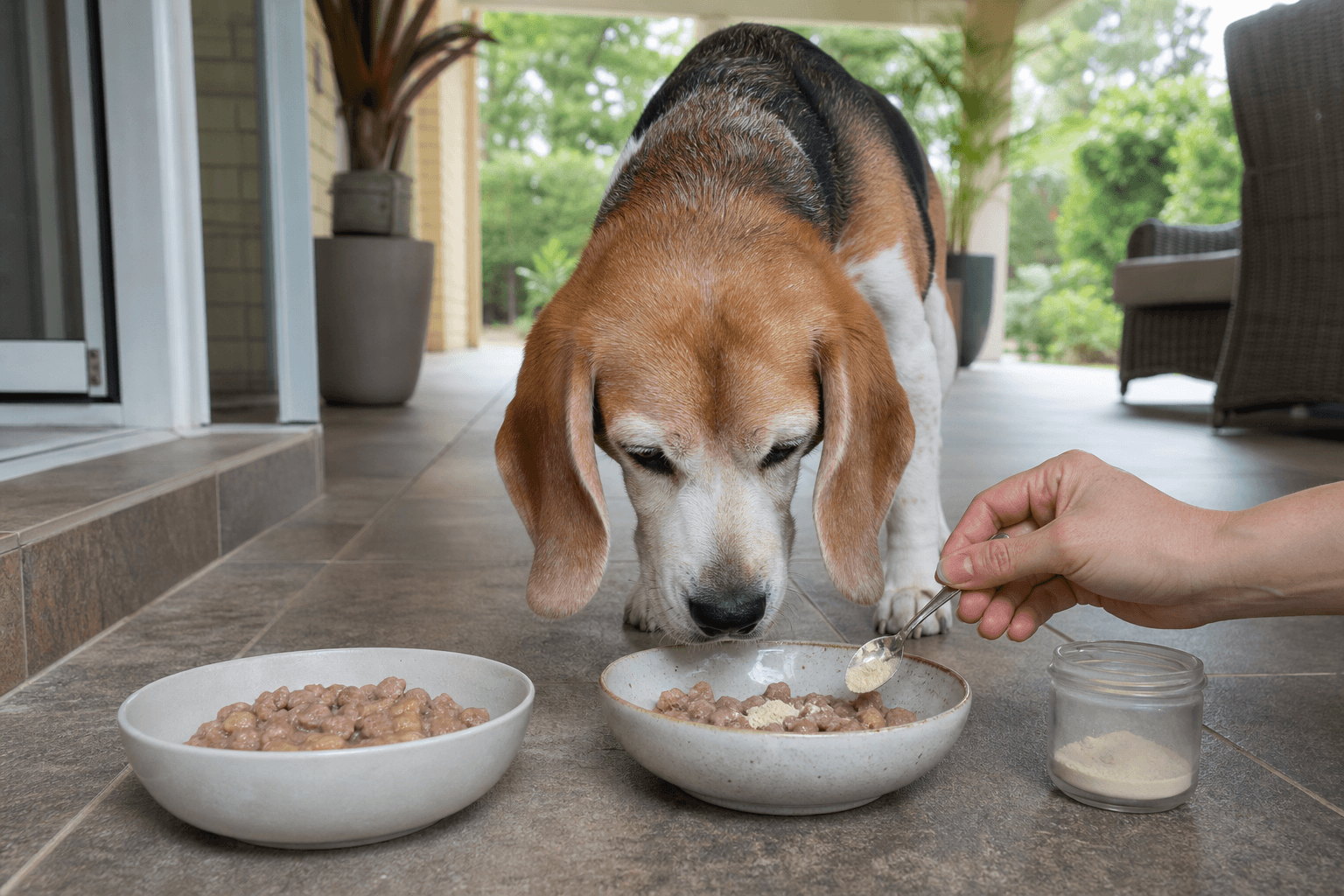
- Do not sprinkle powder over the entire bowl of kibble right away. Mix it into a small portion of food your dog usually finishes first.
- After your dog finishes that portion, offer the rest of their meal.
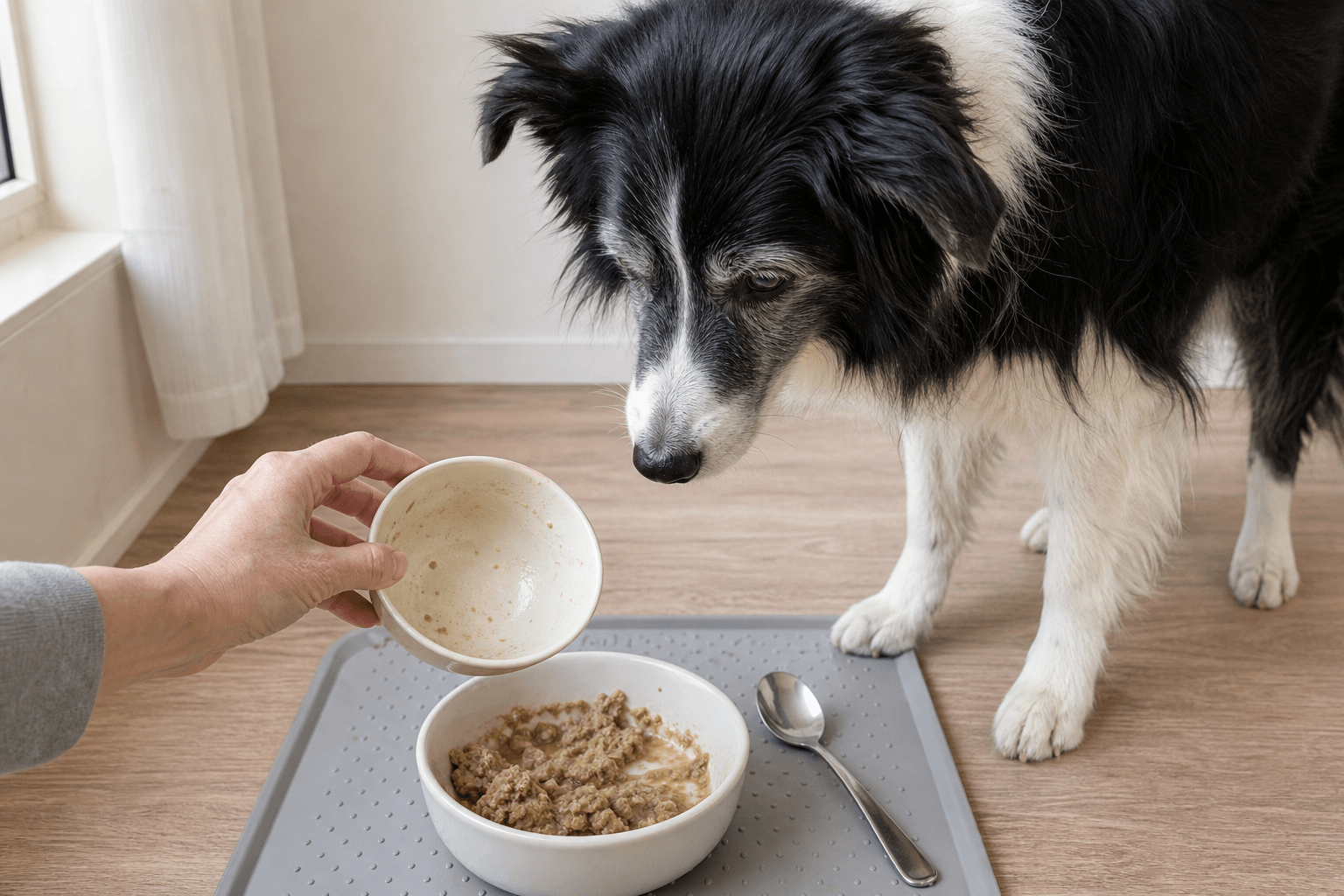
- When they are done, inspect the bottom and sides of the bowl and the feeding mat for dry powder, clumps of food, or soft chews that were pushed aside.
- If anything remains, note whether your dog “sniffed and walked away,” “ate part of it,” or “left powder at the bottom.” Do not record the serving as fully consumed.
You do not need special tools for this check. Consistently using a light-colored small bowl, a clean spoon, and a similar mixing method usually makes changes easier to spot than switching foods or containers every day.
Powder or Soft Chews: Which Is Easier to Track?
The best form is the one that lets you clearly confirm whether your dog consumed the full serving.
Powder can work well for dogs who enjoy moist food and do not mind mixed-in supplements. The challenge is that powder may stick to the bowl, sink beneath liquid, or collect under food crumbs. This can be especially difficult to assess when powder is served over kibble. If your dog regularly licks the bowl clean, checking is relatively straightforward. If they tend to pick through their food, mix the powder into a smaller portion and offer that first.
Soft chews are easier to spot in the bowl or on the floor, but taking one from your hand does not guarantee that your dog swallowed it. Some dogs carry a chew away in their mouth and spit it out later. Offer the chew in a quiet, easy-to-observe area, and wait until your dog finishes before cleaning up nearby.
When choosing a form, consider how your dog normally eats. Do they finish quickly, pick at their food slowly, or carry treats away? The form you can consistently confirm they consumed is more suitable for a daily routine.
How to Serve Powder So Your Dog Is More Likely to Finish It
When using powder, focus on getting it to cling to food your dog will finish instead of letting it settle at the bottom of a large bowl. Mix the daily serving listed on the package into a small amount of wet food or another moist, unseasoned food that is already suitable for your dog’s regular diet. Stir until no obvious dry powder remains, then offer it to your dog.
Avoid adding sauces with unclear ingredients, bouillon made for people, or large amounts of unfamiliar food simply to cover the powder’s flavor. These additions can make it harder to tell what your dog accepted and more difficult to identify the cause if they later become selective or leave food behind. If you want to use liquid to help mix the powder, first confirm that it is a familiar food your dog can normally have and that its ingredients are clear.
Powder can be mixed with kibble when your dog reliably empties the entire bowl. If powder regularly remains at the bottom, mixing the daily serving into a small amount of moist food first is usually easier to monitor than repeatedly shaking it through a full bowl of kibble.
Use the Final Package as Your Daily Reference
An online product page, an old photo, information from a friend, or a container you purchased previously may not show the current information for the product in your hand. Before feeding, read the product name, form, feeding directions, and storage instructions directly from the final package. If the package is damaged, the text is unclear, or the information differs noticeably from the purchase page, pause use and contact the seller for clarification.
Do not apply the scoop size, chew size, or feeding directions from one product to another. Similar-looking products do not necessarily have equivalent servings. Keep the box or take a photo of the label so everyone caring for your dog can follow the same directions. This also helps you accurately explain what your dog consumed if needed.
Frequently Asked Questions
Does half a bowl of food mixed with powder count as a full serving?
Do not assume your dog consumed the full serving. Check the remaining food and the bottom of the bowl. If you cannot tell how much powder remains, record the serving as “not confirmed finished.” Next time, mix the powder into a smaller amount of food first.
Can I mix the powder into a full day’s food?
This may be easier to track if your dog always finishes all of their food for the day. If they eat in several sessions, pick through their food, or share a home with other pets who can reach the bowl, you may not know who consumed the supplement or how much your dog received. Mixing the powder into a small, observable portion of food is usually clearer.
What should I do if my dog suddenly refuses a supplement they used to eat?
Avoid repeatedly covering the supplement with more food or treats. Check the package condition, look for any changes in the food, and see whether your dog is also refusing their usual meals. Contact your veterinarian if your dog’s eating habits change suddenly, they continue refusing food, or you notice other unusual signs.
For individual health questions, your veterinarian remains the best partner.