TL;DR
If your dog won’t eat a supplement, don’t rush to switch products. Start by adjusting the feeding method, smell, and amount mixed into food. You can turn the package’s recommended full serving into a gradual process: add one-third during the first week, one-half during the second week, then try the full serving during the third week. If refusal occurs alongside ongoing refusal to eat, vomiting, or other noticeable changes, stop and call your veterinarian.
Why Won’t a Dog Eat a Supplement?
Your dog may be reacting to the smell, texture, temperature, or sudden appearance of something new. The product itself may not be the main issue. If you add a supplement directly to your dog’s usual meal, an unfamiliar smell may lead them to avoid the entire bowl. They may then temporarily lose interest in food they normally enjoy.
Start by watching three details: Do they walk away as soon as they smell the food, or do they spit the supplement out after eating it? Do they refuse the entire mixed meal, or only a small amount served on its own? At other times, are they still willing to eat familiar foods? Writing down these details can make it easier to identify the problem than switching through several products in quick succession.
Why Do Ocean-Sourced Ingredients Have a Strong Smell?
Ingredients from fish, shellfish, or other marine sources may have a noticeable ocean, fishy, or savory-salty smell. To people, that may be just a scent. To a dog with a highly sensitive sense of smell, it can be enough to change their interest in the entire bowl.
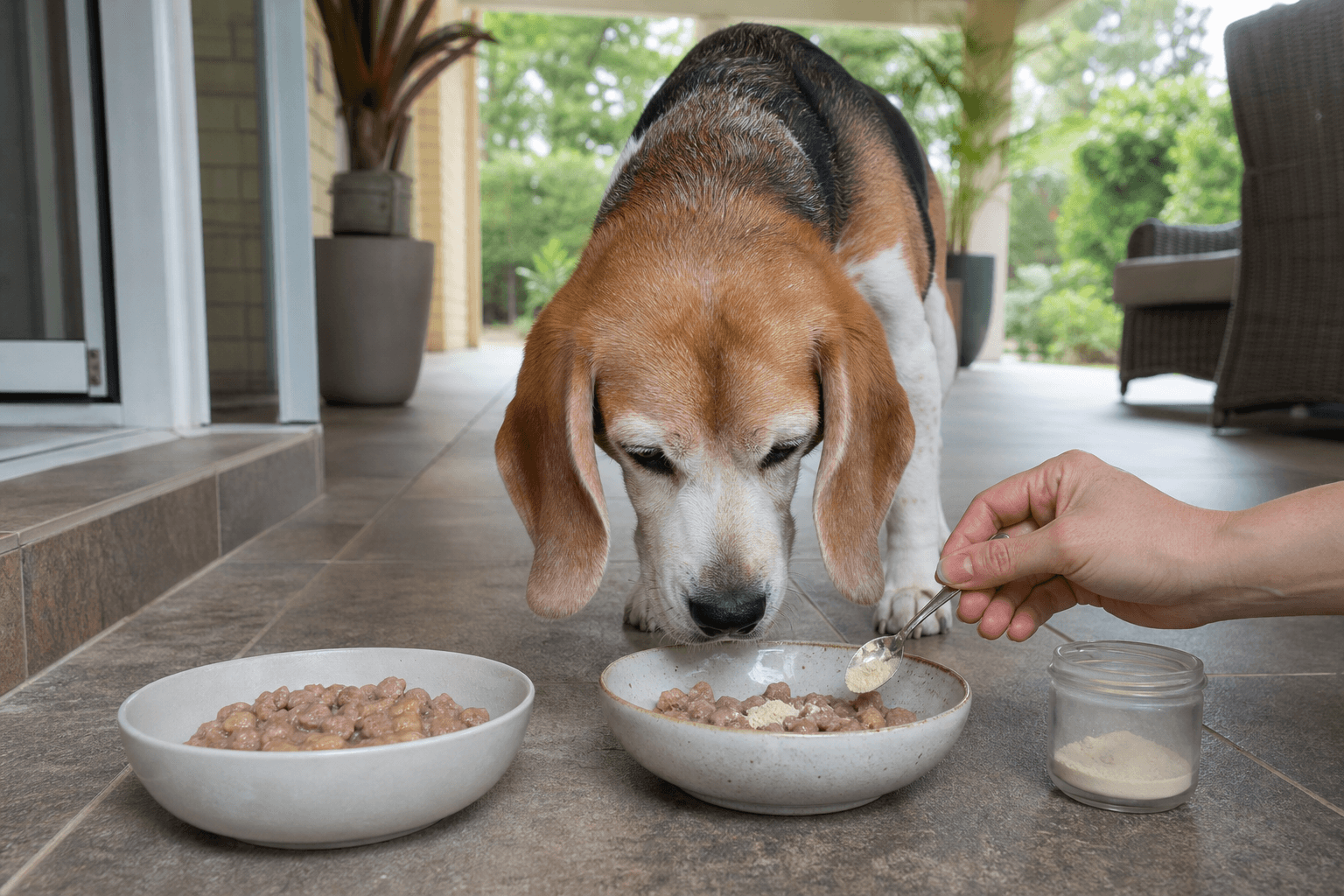
Avoid covering the smell with a large amount of new food, and don’t force the supplement into a main food your dog especially values. Start with a small bite of wet food or a little broth, mixing in a very small amount of the supplement separately. Once your dog has experienced the new flavor, you can decide whether to continue. Choose broth your dog already tolerates and avoid strongly seasoned options. If your dog does not usually eat wet food, don’t suddenly change their entire diet just to give a supplement.
Gradual Addition Is More Manageable Than Starting With a Full Serving
Break the adjustment process into steps. The goal is to reduce a sudden change, not to make your dog finish the full serving immediately. Try this three-week progression:
- Week one: Mix one-third of the package-recommended serving into wet food or a small amount of broth.
- Week two: If your dog is still eating normally, increase the amount to one-half.
- Week three: Try the full serving only if the first two steps have gone smoothly.
When you make an adjustment, change only one variable at a time. For example, don’t switch the main food, treats, bowl, and supplement all at once. If your dog refuses the supplement again at a certain step, return to the last amount they accepted or pause to observe. Continuing to increase the amount can make the next attempt harder.
How Can You Choose a Feeding Method Your Dog Is More Likely to Accept?
Use this quick checklist:
Start With Smell and Texture
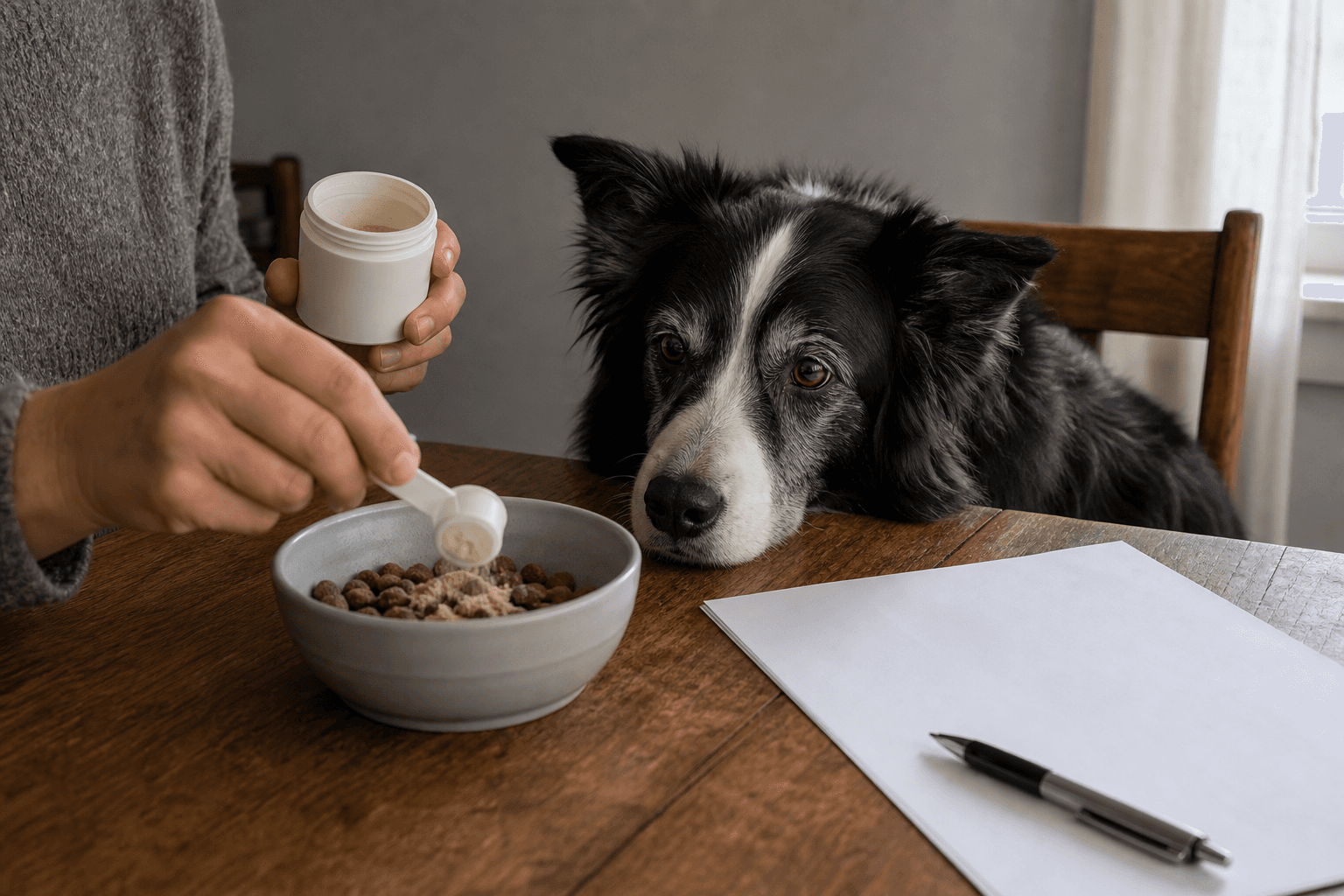
Mix the supplement into a small portion of wet food instead of the entire meal. This lets you check whether your dog accepts the taste without risking the whole meal after one refusal. Mix powder as evenly as possible so one bite does not contain an especially strong flavor.
Check Temperature and Freshness
Serve food at the temperature your dog normally prefers. There is no need to heat it deliberately to release more aroma. Offer the mixture promptly, and don’t leave food containing the supplement in the bowl for a long time.
Use a Food Your Dog Already Likes
Start with wet food or a small amount of a familiar food your dog normally eats willingly. Avoid foods that make them overly excited or encourage them to swallow too quickly. If you’re comparing different dog supplements, you can first review dog supplement options, then choose based on the ingredient form and your dog’s eating habits.
Keep the Process Simple
Give the supplement with one regular meal, in one familiar place, using a calm voice. Don’t chase your dog, pry open their mouth, or repeatedly hold the food under their nose. If they refuse, take the food away and try again later with a smaller amount.
When Should You Stop and Call the Vet?
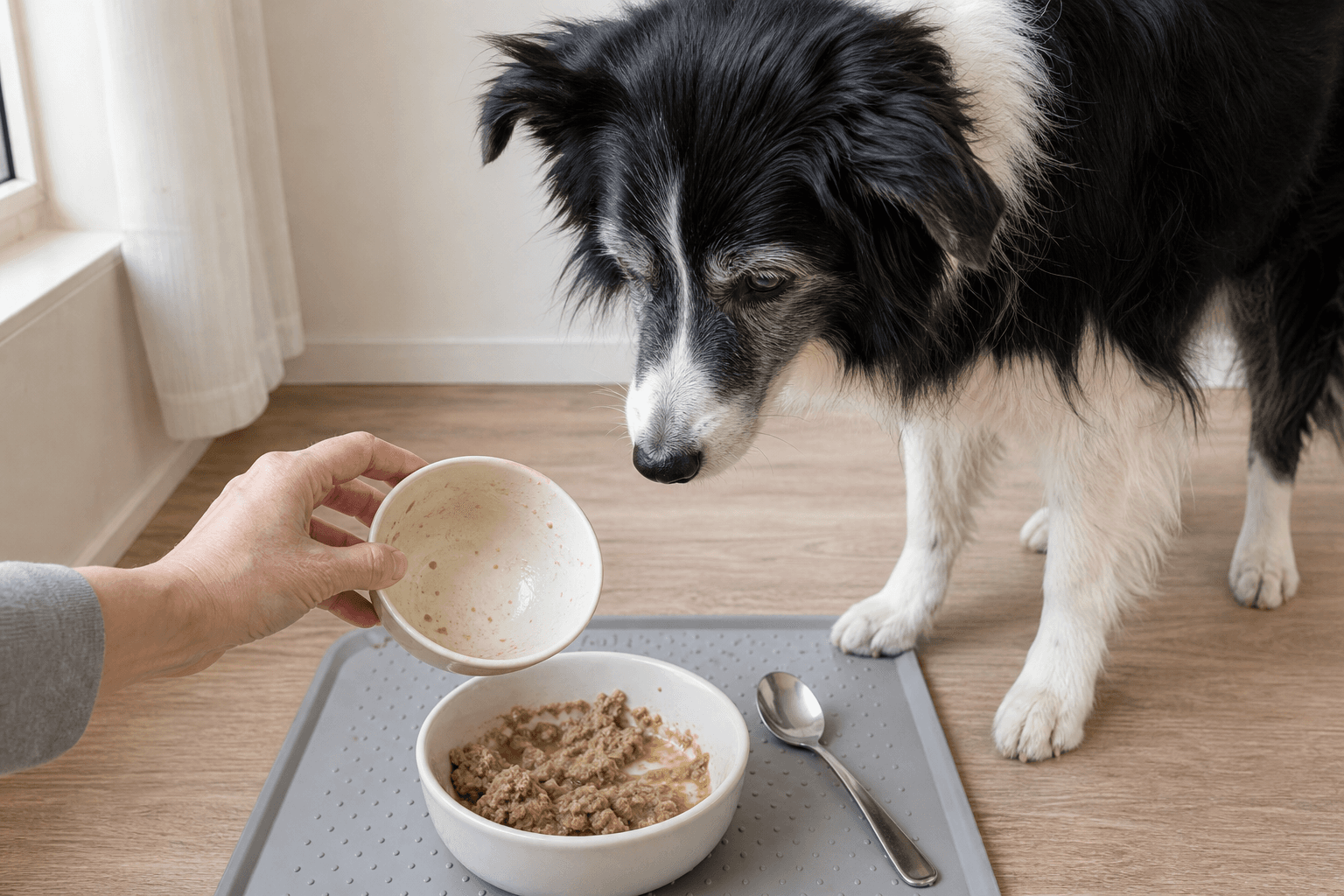
If your dog only sniffs the supplement and walks away while continuing to eat familiar foods and showing no noticeable changes in energy or daily behavior, you can pause and adjust the feeding method while recording what happens. If refusal occurs alongside ongoing refusal to eat, vomiting, diarrhea, a noticeable change in energy or behavior, or a health condition that already requires management, stop and call your veterinarian. Don’t increase the serving on your own or treat the supplement as a medical treatment.
Also pay attention to the difference between refusing the supplement and refusing all food. The first is more consistent with a reaction to smell or texture. The second should not be handled only by changing the feeding method. Record when the issue started, what your dog ate, whether they drank water, and any other unusual signs. These details can make a follow-up conversation more specific. For more everyday care and observation guidance, see the dog care articles.
FAQ: Common Questions When a Dog Refuses a Supplement
Can I Mix the Supplement Into a Full Bowl of Food?
It’s better to start with a small portion of wet food or another familiar food. Once your dog accepts the supplement, gradually work it into a normal meal. This lowers the chance that they will reject the entire bowl.
If My Dog Dislikes the Ocean Flavor, Does That Mean They Can’t Take the Supplement?
Not necessarily. Lower the amount, use a familiar food as the carrier, and watch whether your dog continues eating. If they clearly refuse every exposure, don’t force the supplement. Pause and call your veterinarian or reassess whether the product is a good fit.
How Long Does It Take for a Dog to Accept a Supplement?
There is no set timeline that works for every dog. Follow the gradual process of one-third, one-half, and a full serving. Increase the amount only after the previous step is consistently accepted. If refusal returns, go back to the previous step or pause.
For individual health questions, your veterinarian remains the best partner.