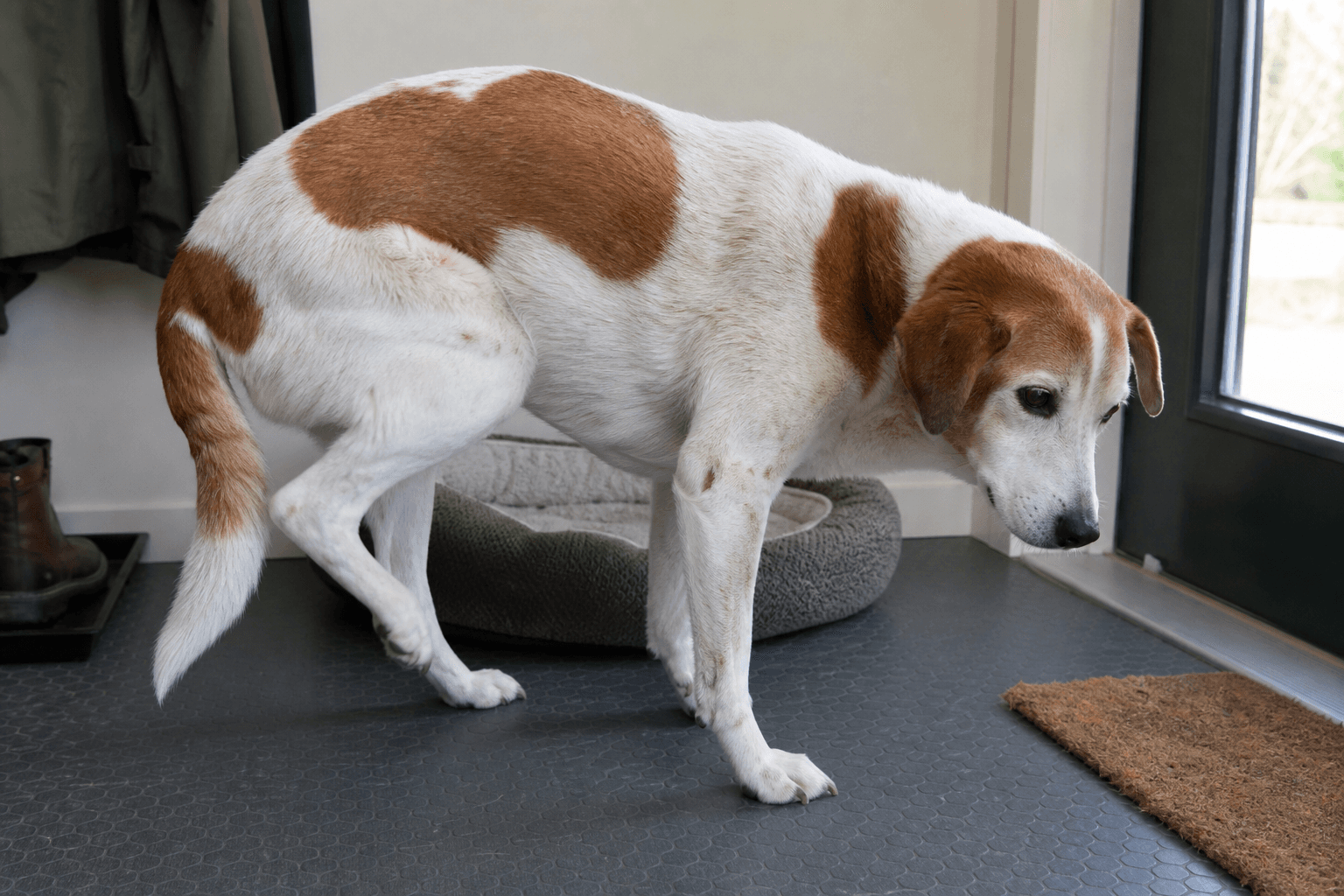
TL;DR
When a dog is falling behind on walks, use the same short, familiar stretch as a baseline rather than judging one difficult outing by memory. If they are slower, pause more, turn back sooner, or seem less willing to continue on that route, shorten the outing and record the change.
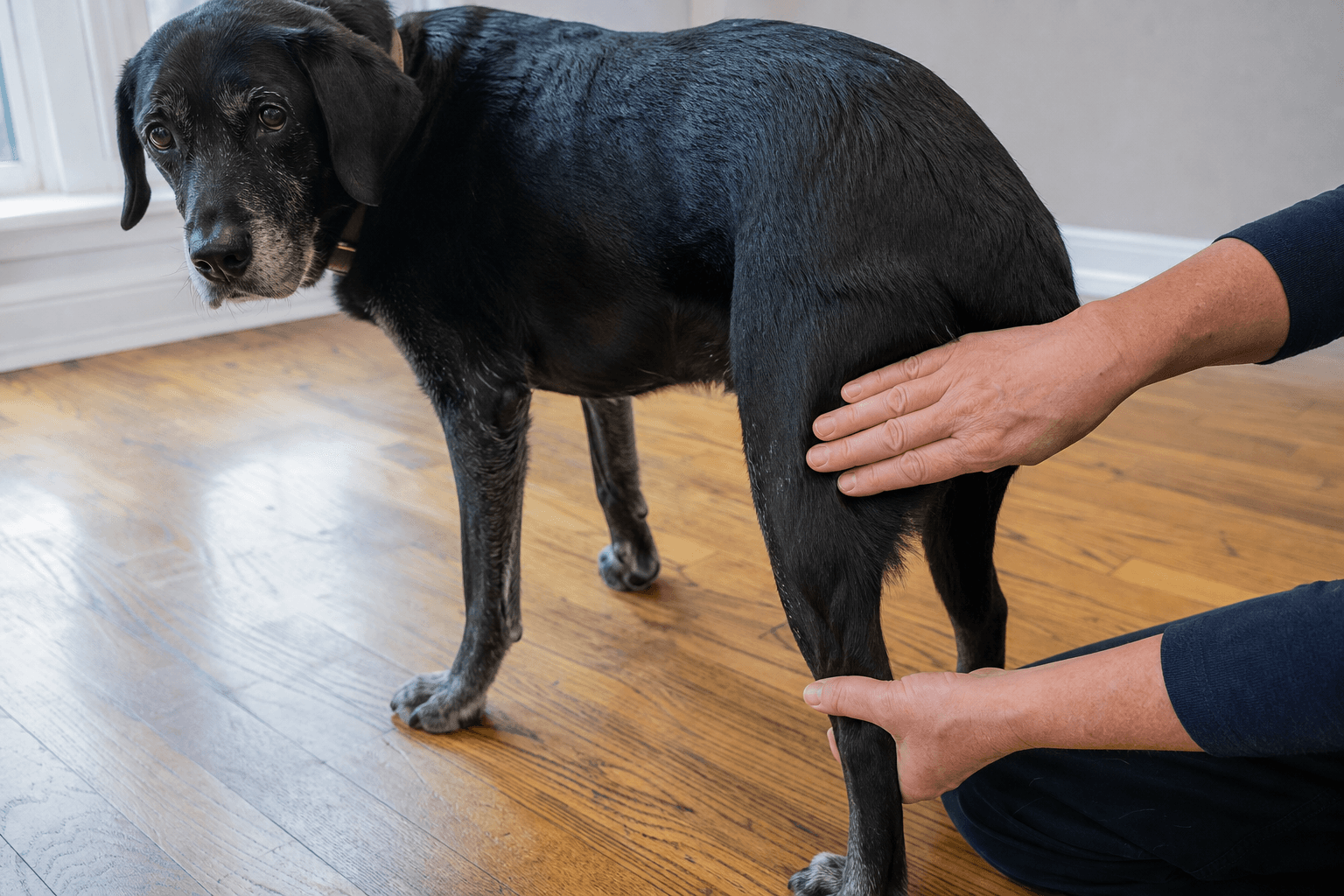
A veterinarian can assess a new or worsening change in walking, especially if it appears suddenly.
Is dog falling behind on walks a reason to shorten the route?
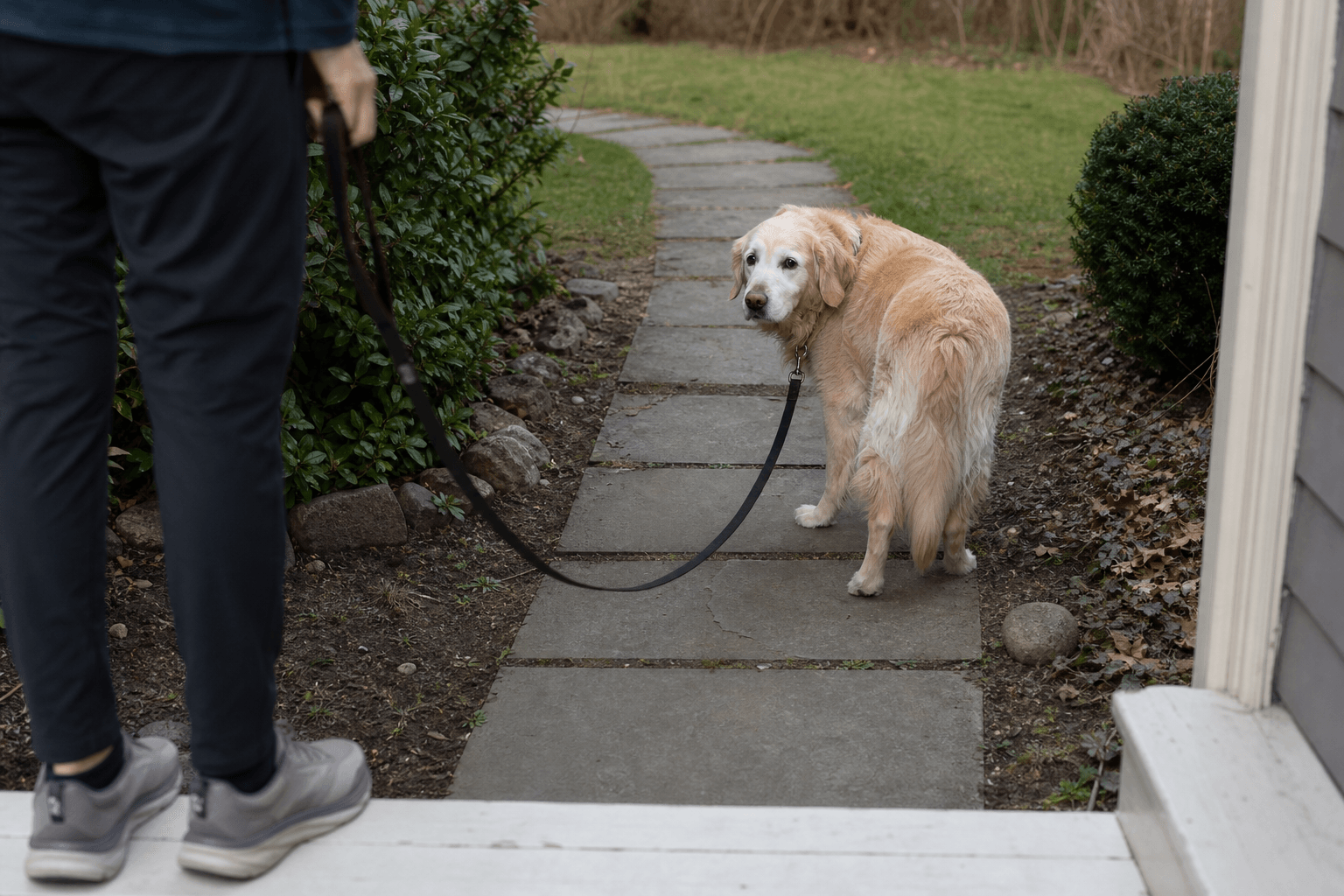
Yes. A shorter walk is a practical adjustment when your dog is no longer keeping their usual pace on a route they know well. There is no prize for reaching the old turnaround point if your dog is hanging back, stopping repeatedly, or looking toward home.
Choose a route that is easy to repeat: the same block, park path, or section of sidewalk at roughly the same time of day. Keep the surface and hills as consistent as you reasonably can. This makes the comparison about your dog’s response, not whether today’s walk included a steep hill, loose gravel, or a crowded corner.
A familiar route can offer a clearer comparison than the vague feeling that a walk was harder than usual. It is not a diagnosis, but it gives you useful specifics: where your dog slowed down, how often they stopped, and whether the return trip looked different from the outward trip.
Build a one-route walking baseline
For a few ordinary walks, use the same route without trying to push distance. Your goal is to notice your dog’s usual pattern when conditions are fairly similar.
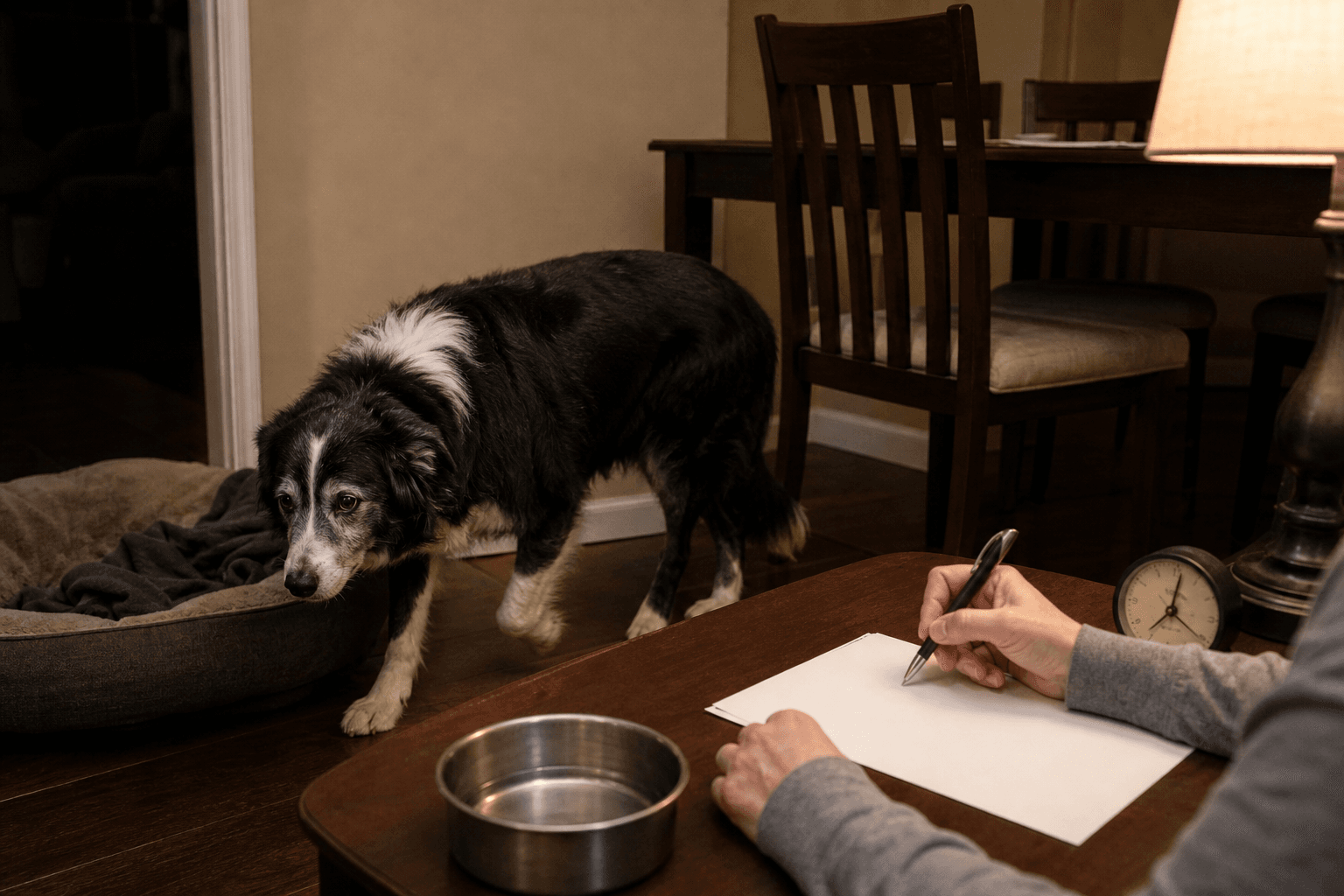
Write down these details after each walk:
- The route and turnaround point
- Whether your dog walked beside you, behind you, or pulled ahead
- The first place they slowed or paused
- Whether they needed encouragement to continue
- The surface, weather, and any hills or curbs
- How they moved when you arrived home, including whether they settled normally or kept changing position
Use plain descriptions rather than labels. “Paused at the driveway before the hill” is more useful than “seemed sore.” A phone note is enough. After three walks on the same route, look for a repeated change rather than treating one off day as the whole story.
Dogevera’s senior-dog care articles can also help you build simple notes around other daily routines, such as getting up, using stairs, and resting.
The route should fit the dog, not the old routine
Research involving owners of dogs diagnosed with osteoarthritis found that, before the diagnosis, walking distance, speed, and location were often chosen around the needs and enjoyment of the person and dog together. After the diagnosis, owners changed the walks they took with their dogs.
The owners commonly described walks becoming slower and shorter. They also chose locations with surfaces, gradients, and physical features they felt their dogs could navigate. That does not mean a dog who slows down has osteoarthritis. It does show why adapting the route can be a thoughtful response to a dog’s changing abilities rather than a failure to maintain an old routine.
Look at the route itself before asking your dog to do more. A low-traffic sidewalk with even footing may be easier to repeat than a trail with roots, stairs, slippery leaves, or a long incline. A shorter loop close to home also makes it simple to turn back when your dog’s body language changes.
When should you turn around instead of encouraging them onward?
Turn around when your dog’s behavior says the walk is becoming work rather than a comfortable outing. Useful signs include repeatedly lagging behind, stopping without interest in sniffing, choosing to sit or stand still, avoiding a familiar slope, or needing repeated verbal encouragement.
You do not need to wait until your dog refuses to move. On the next outing, make the turnaround point earlier than the place where the change began. Keep the pace easy and let sniffing be part of the walk rather than trying to maintain a previous speed.
A simple decision guide can keep the choice consistent:
- Usual pace and interest: Continue the planned short route.
- A few brief pauses, then normal movement: Finish early if needed and note where the pauses occurred.
- Repeated lagging or reluctance on the familiar route: Turn back, choose a shorter route next time, and record the pattern.
- A sudden, marked change from normal walking: End the walk and contact your veterinarian promptly.
Avoid testing whether your dog can still manage the former distance. A baseline is for observing change, not proving endurance.
Shorter walks can still make room for companionship
When walks change, owners can feel disappointed or guilty. In the osteoarthritis research, many owners said they did not take extra walks without their dog because they felt guilty, and because walking alone was less enjoyable. Some also described less enjoyment of walking and negative effects on their own physical health.
It can help to separate your dog’s outing from your own activity. Give your dog the route that suits them, then take another walk on your own if you want one. At home, offer calm shared time such as sitting outside together, a gentle sniff around the yard, or a food-free visit to a familiar quiet spot.
The goal is not to replace every former walk. It is to protect a pleasant routine that your dog can still participate in. For more everyday ways to adjust routines without making each day feel medical, browse the Dogevera care library.
FAQ
Should I time my dog’s walks?
You can time the same short route if it helps you notice a change, but do not focus only on minutes. Where your dog slows, how often they pause, and whether they want to turn home may be more informative than finishing at a particular speed.
What if my dog walks normally on the way home?
Record that detail. Some dogs move differently once they are headed toward home, so note whether the slowing happened before or after the turnaround point. Repeat the same route on another day before drawing conclusions.
Should I stop walks completely if my dog falls behind?
Not necessarily. Start by shortening the familiar route and choosing easier footing. If the change is sudden, continues, or becomes more pronounced, share your route notes with your veterinarian.
For individual health questions, your veterinarian remains the best partner.