TL;DR
Senior dog pacing at night is not automatically “just old age,” especially when it is new, repeated, or paired with other changes. For one week, record when your dog settles, wakes, paces, and returns to rest, then share the pattern and any accompanying signs with your veterinarian.
A brief veterinary disclaimer: home observations can organize the conversation, but they cannot identify the reason for a behavior change.
Is this pacing, or ordinary nighttime waking?
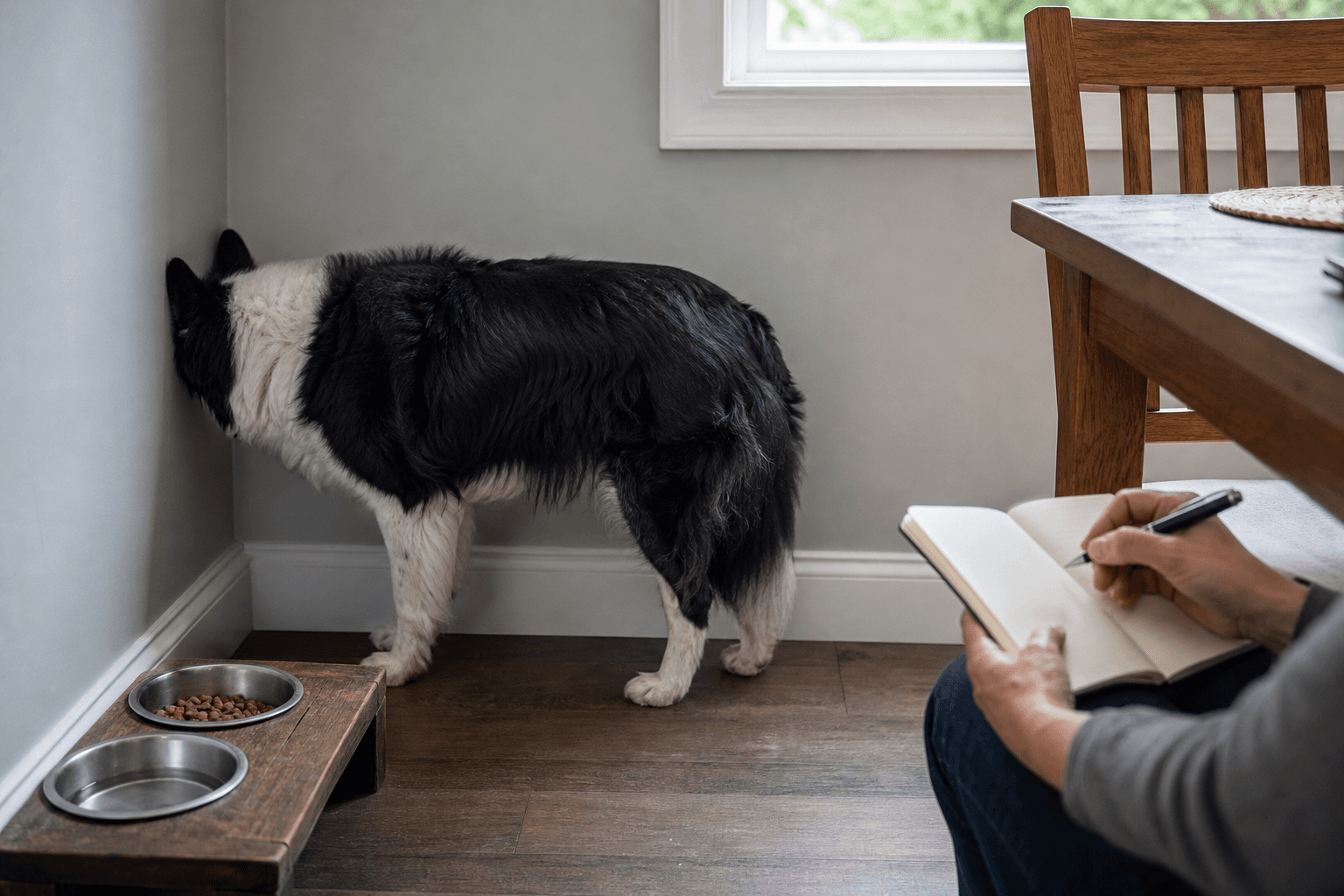
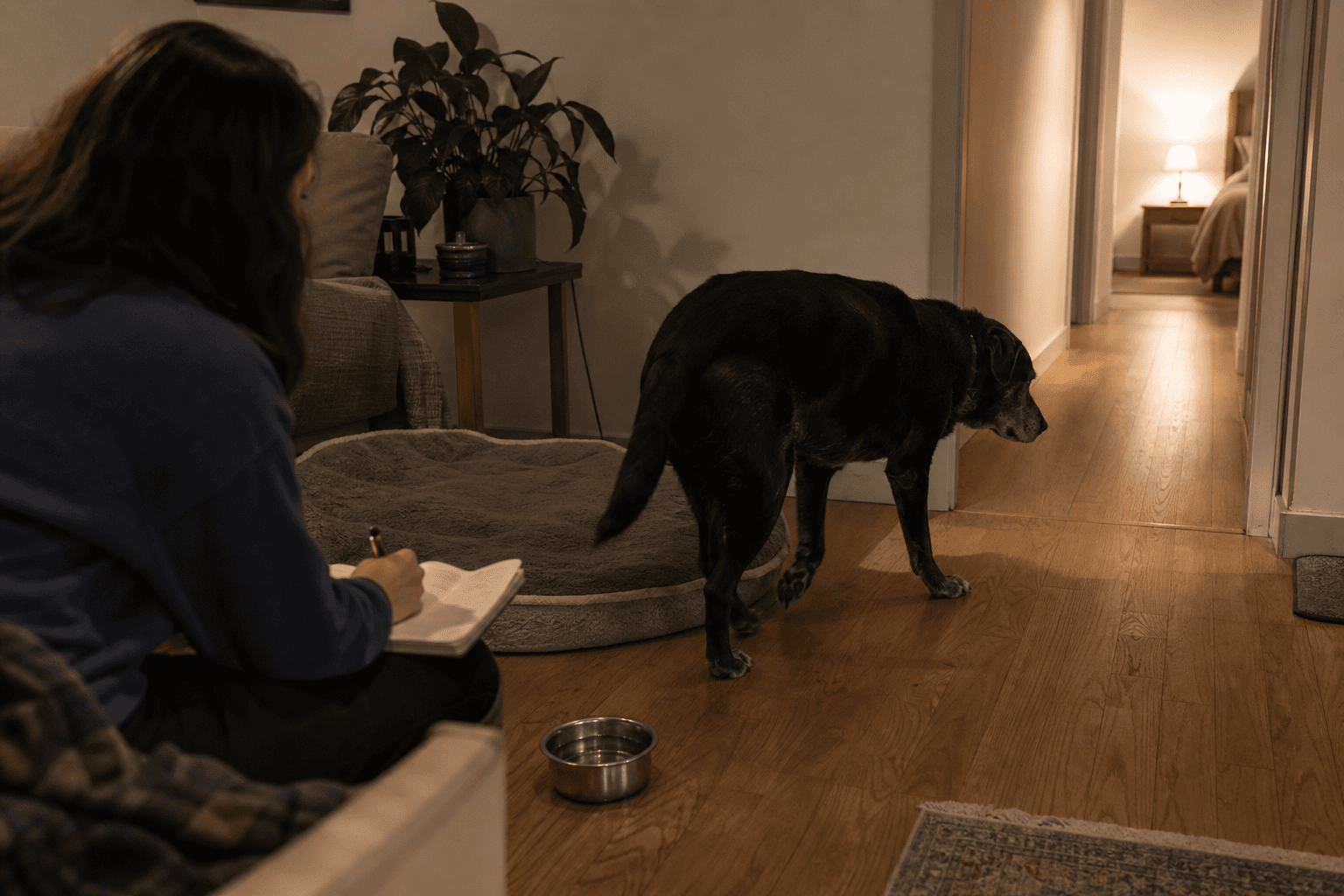
A dog who wakes, changes position, drinks, or briefly walks to another resting place may return to sleep without much disruption. Pacing is more notable when your dog walks repeatedly, follows the same circuit, seems unable to settle, or keeps restarting after lying down.
Look for the pattern rather than judging one restless night. Ask yourself:
- Did your dog wake once or several times?
- Did they walk with a clear destination, or continue moving without settling?
- Could they return to bed after a quiet invitation?
- Did they seem comfortable, confused, worried, eager to go outside, or interested in food or water?
- Was the behavior different from their usual bedtime routine?
Do not force a conclusion from one observation. A new behavior that repeats across several nights gives you more useful information than a single unusual wake-up.
What should you record for seven nights?
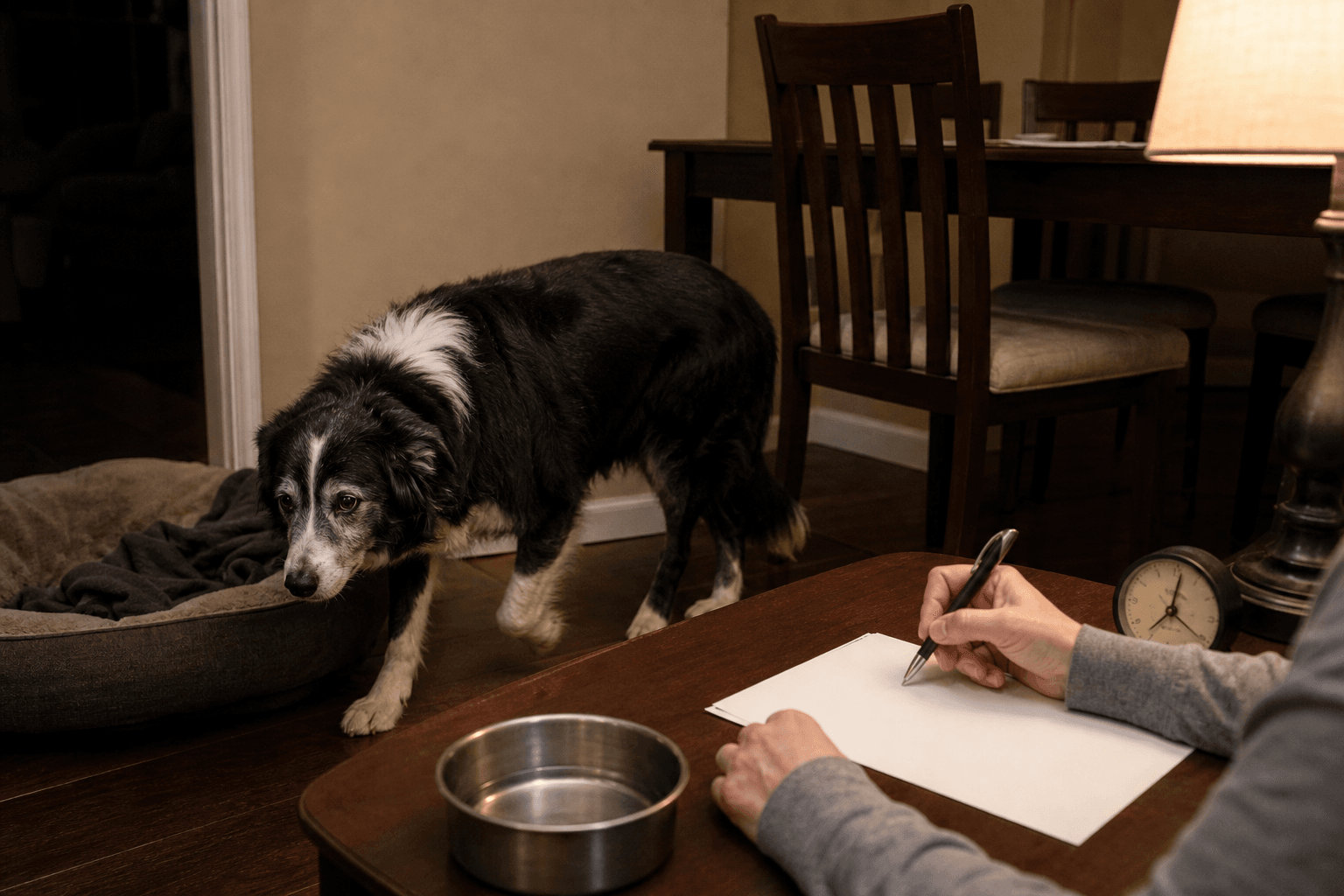
Keep the log simple enough to complete when you are tired. Use the same notes app or a sheet of paper each morning. Record the date and these observations:
1. Bedtime: When did your dog settle for the night? 2. First wake-up: When did pacing or other movement begin? 3. Duration: About how long did the episode last? Use a clock estimate rather than trying to be exact. 4. Pattern: Did your dog circle, walk between rooms, stand, vocalize, scratch at a door, or repeatedly lie down and get up? 5. Response: What happened after you offered a quiet cue, opened the door, provided water, or guided them back to bed? 6. Return to rest: Did they settle again, and for how long before the next episode? 7. Daytime comparison: Note appetite, drinking, bathroom habits, movement, naps, interaction, and any behavior that seemed different.
A short video can also help show the pattern, provided recording does not disturb your dog. Do not stay awake all night solely to collect data. Write down what you notice naturally and bring the log to the appointment.
For other practical ways to organize changes in appetite, movement, rest, and behavior, the Dogevera senior-dog care resources can help you build a consistent home-observation routine.
Which accompanying signs deserve a veterinary question?
Contact your veterinarian about the nighttime pacing when it is new, keeps returning, or affects your dog’s ability to rest. It is especially useful to mention other changes that appear at the same time, such as:
- A noticeable change in appetite or drinking
- New accidents, difficulty going outside, or a change in bathroom routine
- Trouble getting comfortable, repeated rising, limping, or reluctance to move
- New vocalizing, clinginess, withdrawal, or agitation
- Changes in awareness, responses to familiar people, or navigation around the home
- Scratching, licking, coughing, panting, vomiting, diarrhea, or other new physical behaviors
- A recent change in food, medication, supplement, household routine, sleeping location, or activity
These details do not tell you the cause by themselves. They help your veterinarian decide which questions to ask and what information matters most.
If your dog has severe breathing difficulty, collapses, cannot stand, has repeated vomiting, or appears to be in immediate distress, seek urgent veterinary help rather than waiting to complete the seven-day log.
How can you compare nighttime pacing with daytime behavior?
Nighttime behavior is easier to interpret when you compare it with a familiar daytime baseline. During the day, note whether your dog can settle comfortably after eating, walking, toileting, or brief interaction. Notice whether they repeatedly change position, wander without settling, or seem unable to find a comfortable place.
Also check the setting without rearranging everything at once. Is the sleeping area easy to reach? Is the floor slippery? Has furniture, lighting, noise, or another pet changed the route your dog normally takes? Make one low-risk adjustment at a time, such as adding a nonslip path or keeping the route to the door clear, and record whether the nighttime pattern changes.
Keep the bedtime routine predictable. A calm final bathroom opportunity, a familiar sleeping place, and reduced household activity can make your notes easier to interpret. Avoid introducing several new products or major routine changes during the observation week, because you may no longer know which change affected the pattern.
What should you bring to the appointment?
Bring the seven-day log, a current list of food and supplements, medication details, and a short description of your dog’s normal sleep routine. If you recorded a video, show the clearest short example rather than several long clips.
Prepare direct questions:
- Does this pattern look different from ordinary waking for my dog?
- Which accompanying changes should I monitor next?
- Could the timing, location, or response to comfort provide useful clues?
- What should I do if the pacing becomes more frequent or intense?
- Which home changes are reasonable while we investigate it?
If you are already tracking several senior-dog changes, keep them in one place. The Dogevera blog offers additional observation-focused reading that can help you prepare concise notes without trying to diagnose your dog at home.
FAQ
Should I wake my senior dog if they are pacing?
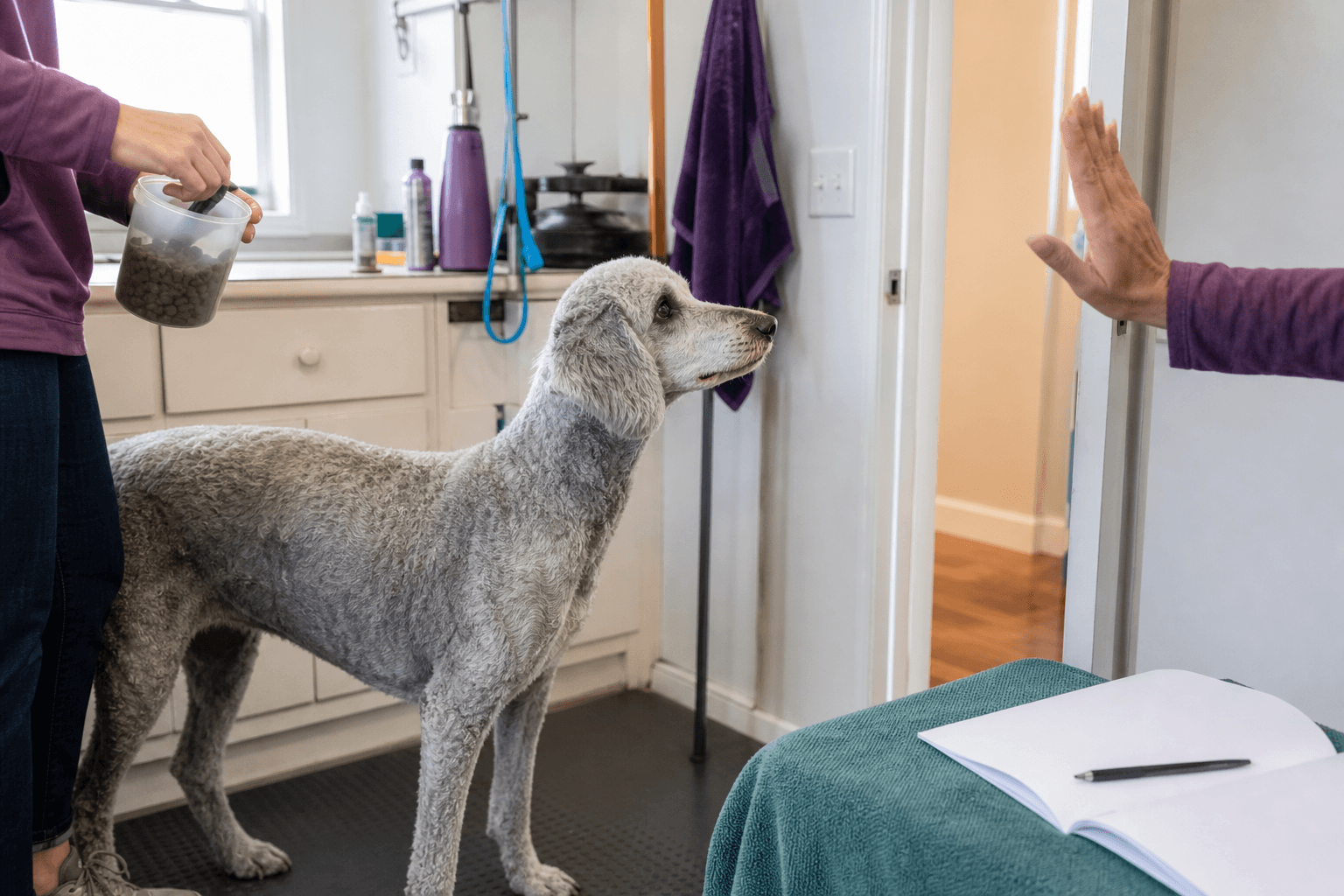
Use a calm voice and avoid startling or restraining them. Check whether they need a safe, familiar route to the door, water, or their usual resting place, then record what happened. If they cannot settle or seem distressed, contact your veterinarian.
Is nighttime pacing always a sign of cognitive decline?
No conclusion should be made from pacing alone. Record the behavior alongside sleep, awareness, movement, bathroom habits, appetite, and other changes, then discuss the complete pattern with your veterinarian.
How long should I track senior dog pacing at night?
A seven-night log can show whether the behavior repeats and what happens before and after each episode. Contact your veterinarian sooner if the change is sudden, worsening, paired with other concerning signs, or causing clear distress.
What if my dog only paces occasionally?
Record the date, time, setting, and what helped them settle. Occasional episodes still become more useful to discuss when you can describe what was different about that night.
For individual health questions, your veterinarian remains the best partner.