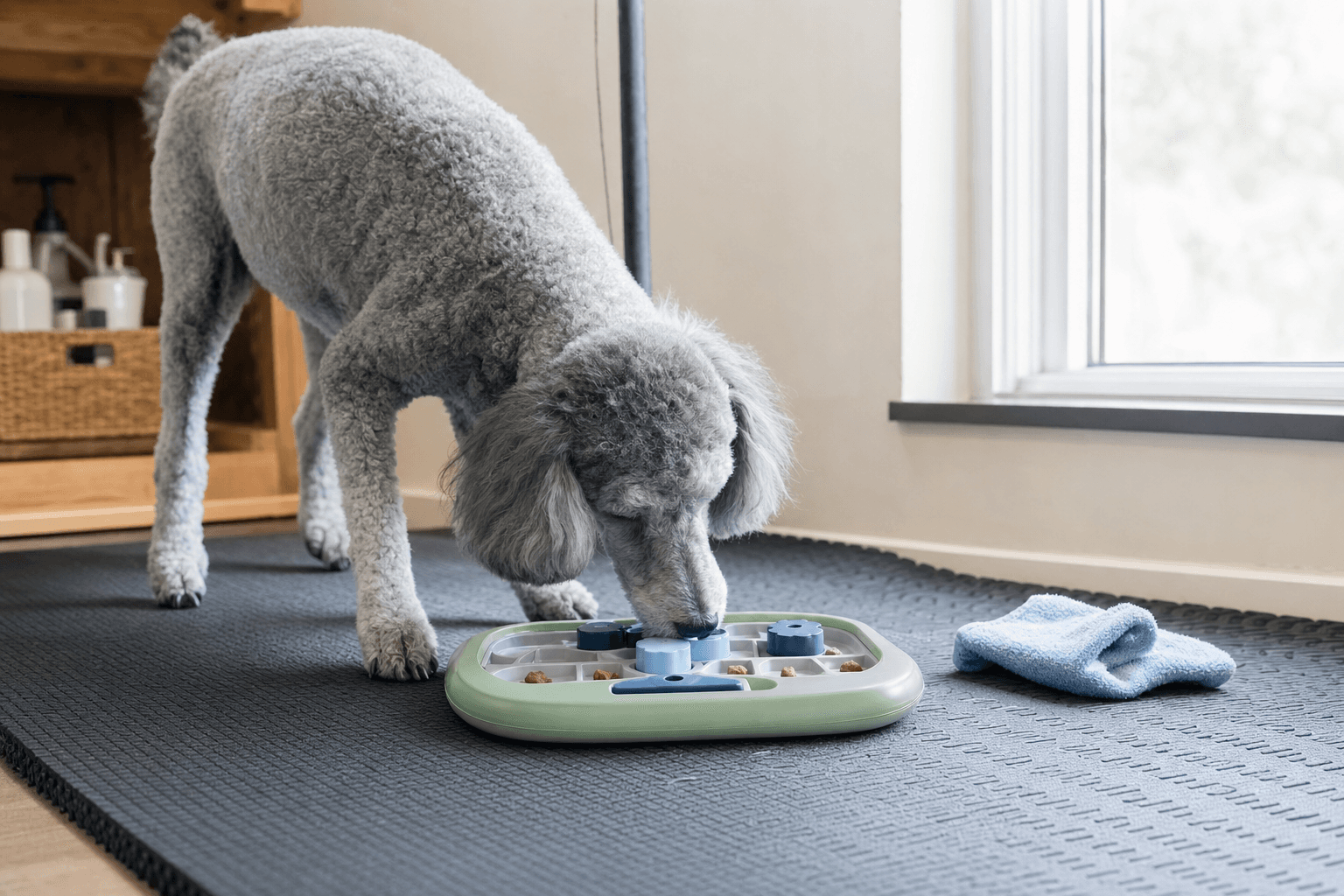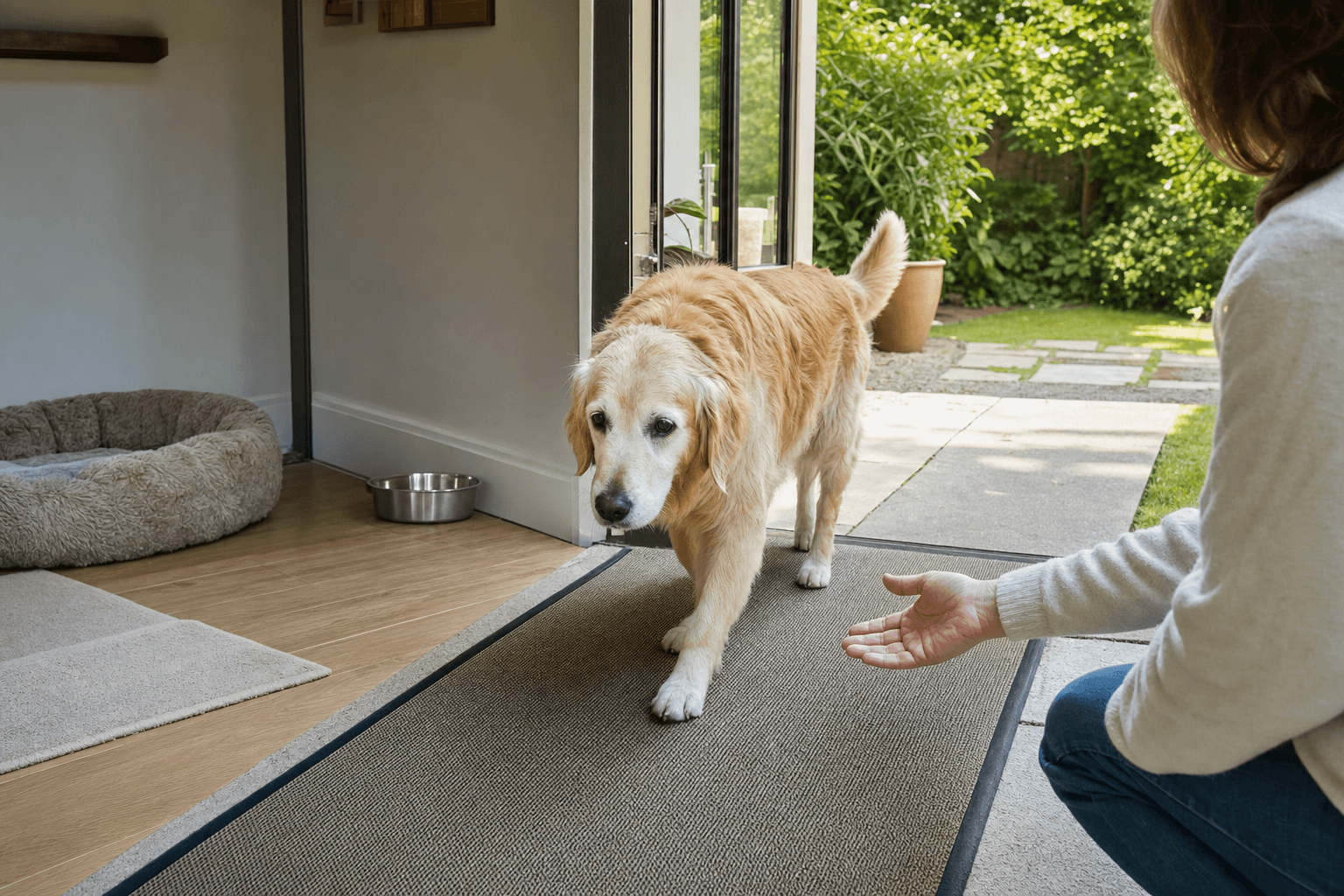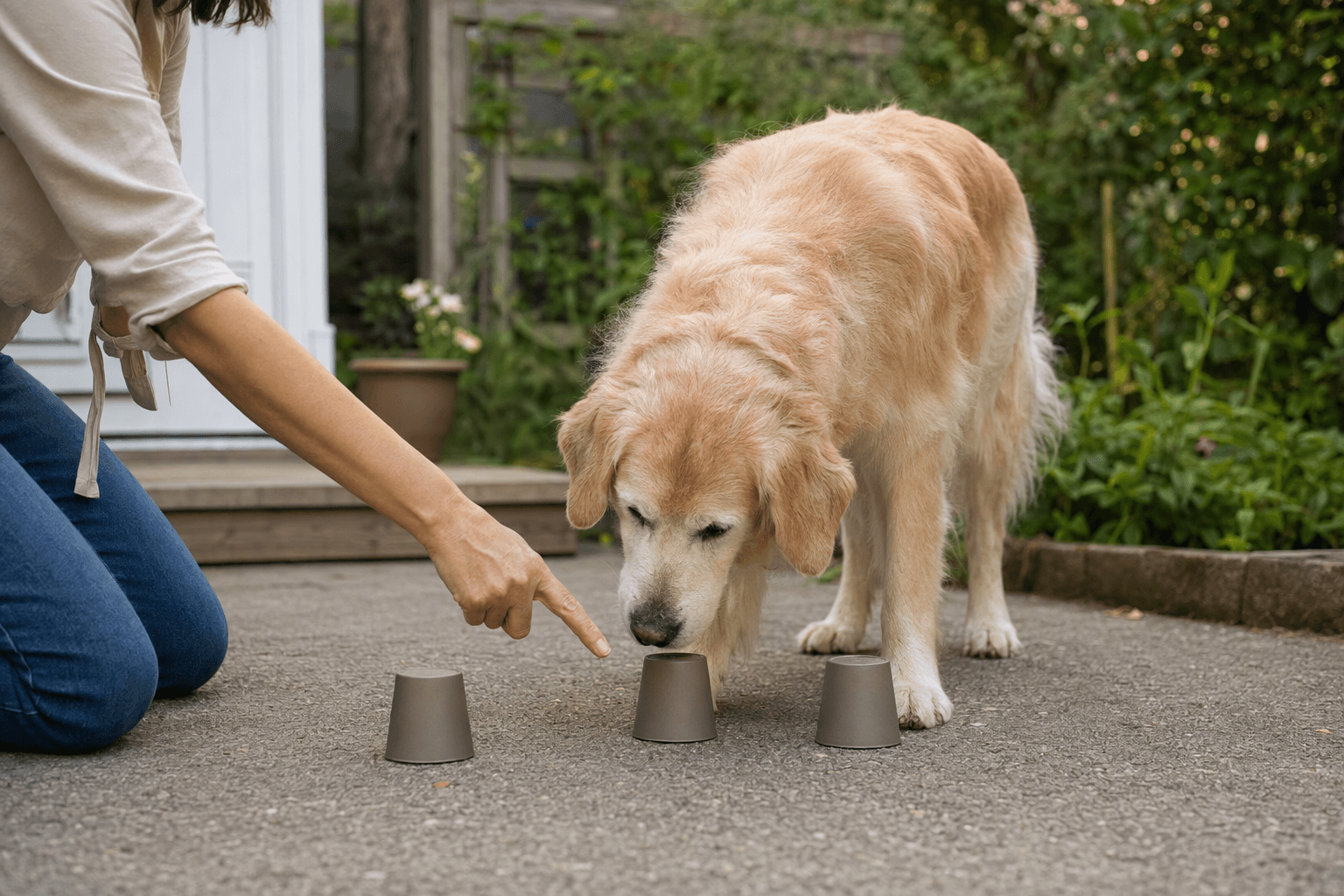
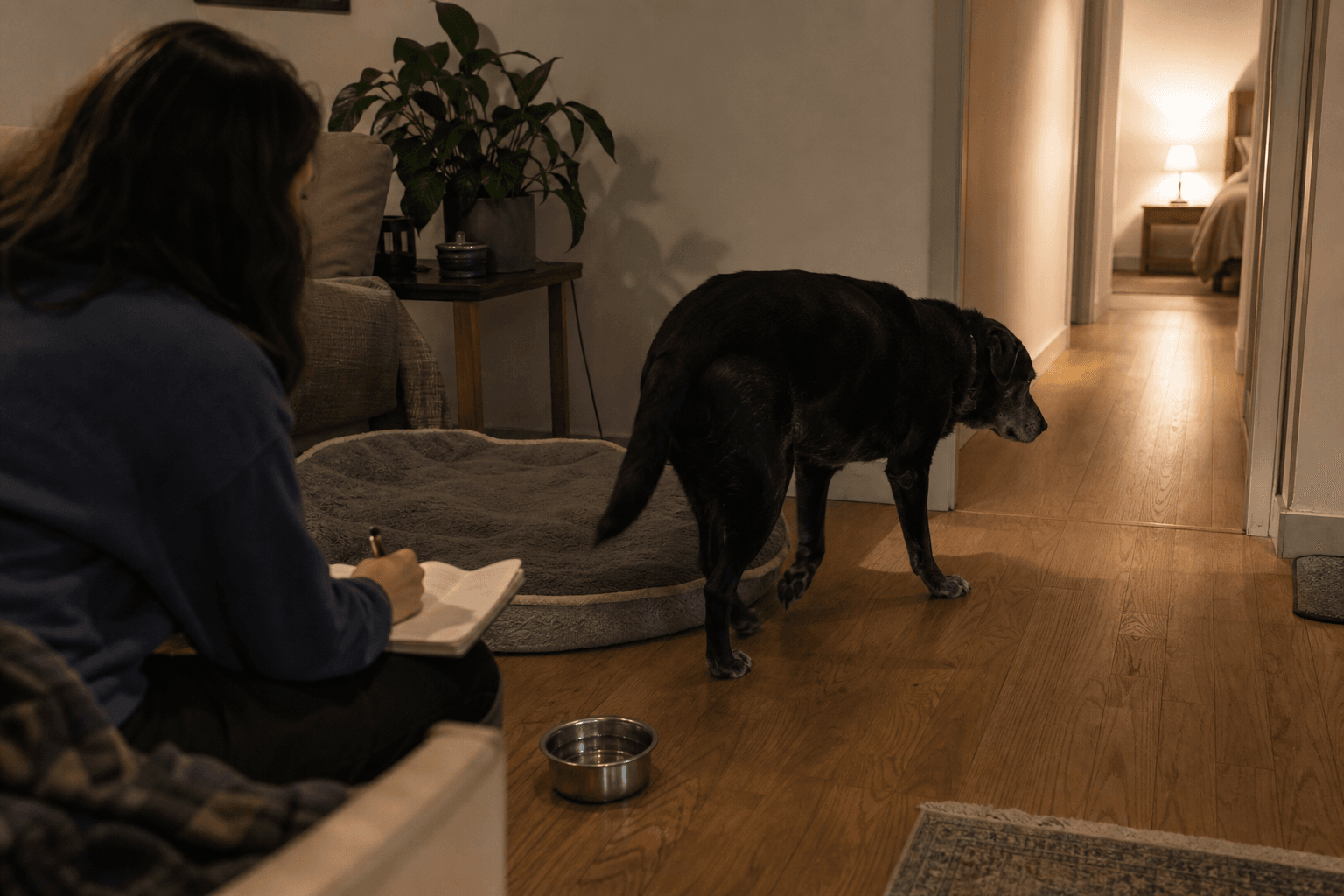
After the house quiets down in the evening, an older dog who would normally lie down to rest may begin pacing back and forth through the living room. Or perhaps they once came over whenever they heard you pick up the leash, but now stop at the door instead. Behavior changes in senior dogs should not be written off as normal aging alone: first note when and where the change occurs, along with what happened before and after. Then make small adjustments to their environment, routine, and interactions. If a change comes on suddenly, clearly interferes with eating, toileting, walking, or resting, or seems to leave your dog very uncomfortable, contact a veterinarian promptly.
Break down “something has changed” into things you can record
“It seems like something is off lately” is a very real feeling, though it can be difficult to compare over time. Try replacing that overall impression with observable actions.
For example, writing “paced in the hallway at night and stopped outside the bedroom door” is more useful than writing “they seem anxious.” Writing “turned away when touched on the left side of their body” is more specific than writing “they have become grumpy.”
When keeping notes, focus on these points:
- When it happens: Does it occur only at night, before going out, before meals, or throughout the day?
- Where it happens: Is it concentrated around stairs, thresholds, dimly lit hallways, or near their bed?
- Specific actions: Do they stop, take a detour, avoid something, vocalize, follow you, pull away, or struggle to settle?
- What changed before or after: Were there visitors, moved furniture, a new walking route, or changes to feeding and rest times?
- Daily abilities: Have their habits around eating, drinking, toileting, getting up, walking, and sleeping changed as well?
Avoid rushing to interpret these actions as stubbornness, defiance, or intentional disobedience. Preserve the facts first, and your next choices will become clearer.
For senior dog behavior changes, look for everyday clues by situation
The same behavior can mean different things in different settings. The table below is not meant to identify a cause. It can help you find clues worth observing first.
| Change you notice | Clues to compare at home | Low-risk steps to try first | |---|---|---| | They respond less often when called by name or are easily startled when someone comes close | Does this happen only when you call from behind them, through a door, or in a noisy setting? | Approach from the front, let them see you first, then use familiar gestures or voice cues | | They stop at stairs, doorways, or before getting into the car | Is the floor slippery, is the threshold pronounced, or is the route crowded? | Clear frequently used paths, reduce clutter, and add stable footing in areas where they may slip | | They walk around at night, change resting spots, or frequently call for family members | Is their sleeping area too bright, noisy, or cold? Is the water bowl or toileting route inconvenient? | Keep the sleep area quiet, leave a clear path, and maintain soft lighting in commonly used areas | | They resist being picked up, brushed, or touched | Does this happen only around a certain body part, in a certain position, or at a certain time? | Approach more slowly, do not force the interaction to continue, and switch to brief care sessions they can end at any time | | They follow people more than before or withdraw more often | Have routines, household members, other pets, or furniture placement changed? | Make feeding, walks, rest, and companionship more predictable, and keep a quiet resting corner where they will not be disturbed |
The goal is not to find an answer all at once. First confirm whether the change has a consistent setting. A consistent setting is often easier to address than a general sense that “they have been different lately,” and it is also easier to explain to a veterinarian.
Use a three-day observation log to decide what to do next
Record observations for three consecutive days. You do not need to write a long diary. A few lines each day are enough:
1. Setting: For example, “After dinner, with half the living room lights turned off.” 2. Action: For example, “Walked back and forth between the sofa and the door several times without lying down.” 3. What happened before and after: For example, “Visitors came during the day, and their bed was moved by the window.” 4. What you did: For example, “Turned on the hallway light and moved the bed back to its original spot.” 5. Their response afterward: For example, “Returned to the bed to rest” or “Kept pacing.”
This record can help you make a simple choice:
- The change is mild, the conditions are clear, and daily activities are not noticeably affected: Keep the routine stable, make one environmental adjustment, and continue observing.
- The change happens repeatedly and affects more than one part of daily life: Avoid changing too many things at once. Keep your notes and prepare to consult a veterinarian.
- The change suddenly worsens, or your dog clearly struggles to rest, walk, eat, or toilet: Prioritize speaking with a veterinarian rather than repeatedly trying different methods at home.
Start with these measured daily adjustments
Many senior dogs are more affected by environmental details. The purpose of these adjustments is to make daily choices easier and more predictable for them.
Keep familiar pathways in place
Keep the water bowl, bed, and usual resting areas in relatively consistent locations. Clear boxes, cords, and small rugs that can slide from walkways, and avoid frequently making major furniture changes. If you would like to continue organizing your living space, see Dogevera’s senior dog daily care article.
Make cues clearer
Before approaching, move into their line of sight and slow your movements. When guidance is needed, use the same words, gestures, and routes each time whenever possible. Do not suddenly touch them while they are deeply asleep or facing away from you.
Break activity into gentler pieces
Instead of planning many especially new activities on a single day, keep walks and interactions familiar and shorter. Observe how they seem before going out, during the outing, and after returning home, then decide whether to maintain the current pace.
Change one thing at a time
If you plan to replace their bed, adjust the lighting, change the walking route, or add a new care product, begin with one change and leave several days for observation. This makes it easier to see which change suits them better. If you are considering adding daily care supplies, you can also review product information in the Dogevera store first to make sure the instructions for use will not make the existing routine overly complicated at the same time.
When to bring your notes to a veterinarian
You do not need to wait until every behavior seems impossible to explain before asking. The following situations are worth discussing with your observation notes, photos, or safely recorded short videos:
- Their behavior becomes clearly different from usual over a short period of time;
- Previously stable eating, drinking, toileting, sleeping, or walking habits change at the same time;
- Your dog repeatedly avoids touch, has trouble getting up, walks unsteadily, or seems unable to find a comfortable position;
- Nighttime behavior continues to disrupt their rest or the family’s rest;
- You have made simple environmental adjustments and the changes continue or expand.
When you speak with a veterinarian, it can help to state directly “when it started,” “what time of day it is most noticeable,” and “what changed before and after,” then bring your three-day log. Specific descriptions are more helpful than guessing at a particular cause.
Frequently Asked Questions
My senior dog sleeps more. Does that count as a behavior change?
A change in sleep duration alone does not necessarily indicate a problem. More useful comparisons include whether they still want to eat, move around, and respond to you after waking, as well as whether their new sleep habits also include frequent nighttime waking or difficulty settling down.
They hear their name but do not respond. Are they doing it on purpose?
Avoid drawing a conclusion too quickly. Observe whether their response differs only when they are facing away from you, farther away, in a noisy environment, or in dim light. Approaching from the front and pairing that with a consistent hand signal is gentler than repeatedly raising your voice.
Their behavior has changed. Do I need to rearrange the entire house?
Usually, no. Start with the path they use most often, one resting corner, or one place where they tend to stop. Small-scale adjustments are easier to evaluate and will not leave your older dog suddenly facing too many new changes.
For individual health questions, your veterinarian remains the best partner.