TL;DR
Cognitive decline in older dogs is a real condition, canine cognitive dysfunction syndrome, but it cannot be confirmed by a checklist or single test, so a veterinary work-up is needed to rule out causes like pain, hearing loss, or urinary disease before settling on a diagnosis.
The DISHAA signs
The 2026 Canine Cognitive Dysfunction Syndrome Working Group organizes common signs under the acronym DISHAA:
- Domain: Disorientation; Changes an owner might notice: Getting stuck behind furniture, staring at walls, seeming lost in familiar rooms, or going to the wrong side of a door
- Domain: Social interaction; Changes an owner might notice: Less interest in family members, unusual clinginess, irritability, or a different response to familiar animals
- Domain: Sleep-wake cycle; Changes an owner might notice: Sleeping more during the day, waking at night, pacing, or vocalizing after bedtime
- Domain: House soiling and learned behavior; Changes an owner might notice: Indoor accidents, forgetting familiar cues, or losing previously learned routines
- Domain: Activity; Changes an owner might notice: Less purposeful activity, repetitive movement, wandering, or unexplained restlessness
- Domain: Anxiety; Changes an owner might notice: New fears, separation distress, increased startle, or nighttime unease
A checklist can help an owner describe a pattern, but it cannot establish a diagnosis. A dog that stops greeting the family may be painful. A dog that urinates indoors may have kidney, bladder, endocrine, or mobility problems. A dog that ignores cues may no longer hear them.
When to make a veterinary appointment
Book an examination when a change is new, worsening, or affecting sleep, safety, toileting, appetite, or relationships. Seek prompt care for sudden disorientation, circling, seizures, collapse, head tilt, marked weakness, or a rapid personality change. Those signs do not fit a slow "wait and see" approach.
A CCDS work-up usually starts with a detailed history and physical, orthopedic, and neurological examination. Bloodwork, urinalysis, blood pressure, vision and hearing assessment, or imaging may be appropriate depending on the dog. The aim is not merely to attach a dementia label. It is to find problems that can be treated or made more comfortable.
What nutrition studies have found
Medium-chain triglycerides, or MCTs, have the most developed canine research among commonly discussed cognitive-support nutrients.
In a controlled study of aged laboratory beagles, a diet containing 5.5% MCT improved performance on several cognitive tasks over eight months. The study measured learning and attention in a research colony. It did not enroll household dogs diagnosed with CCDS.
A later double-blind trial enrolled 87 client-owned dogs with cognitive signs. Dogs received a control food or one of two therapeutic diets for 90 days. The diet containing 6.5% MCT plus a broader "Brain Protection Blend" improved more owner-assessed behavioral domains than the control diet. The blend also differed in omega-3 fatty acids, B vitamins, antioxidants, and other nutrients, so the result cannot be assigned to MCT alone. The 9% MCT group had more acceptance and dropout problems and did not consistently outperform the control.
Both studies had strong Nestlé Purina involvement. Commercial funding is common in pet-nutrition research because feeding trials are expensive, but readers should still know who designed and paid for the work.
Other small canine trials have reported signals for SAMe, DHA, or formulas containing phosphatidylserine, ginkgo, vitamin E, and vitamin B6. Most have one or more limitations: small samples, a proprietary blend, an open-label design, or results limited to certain cognitive tasks. A 2025 systematic review found that enriched diets generally had better methods than stand-alone nutraceutical studies, while sample sizes remained small overall.
There are no qualifying canine clinical trials showing that lion's mane or reishi treats CCDS. Human and laboratory findings cannot fill that gap.
Why a soft chew is not the same as a therapeutic diet
A diet containing 5.5% or 6.5% MCT provides a substantial daily amount as part of the dog's calories. A small chew that lists MCT somewhere on the label may deliver a very different exposure. The same issue applies to DHA and multi-ingredient blends.
For that reason, "contains an ingredient that has been studied" and "matches the clinically studied formulation" are separate claims. The second requires evidence about the actual form, amount, duration, and finished product.
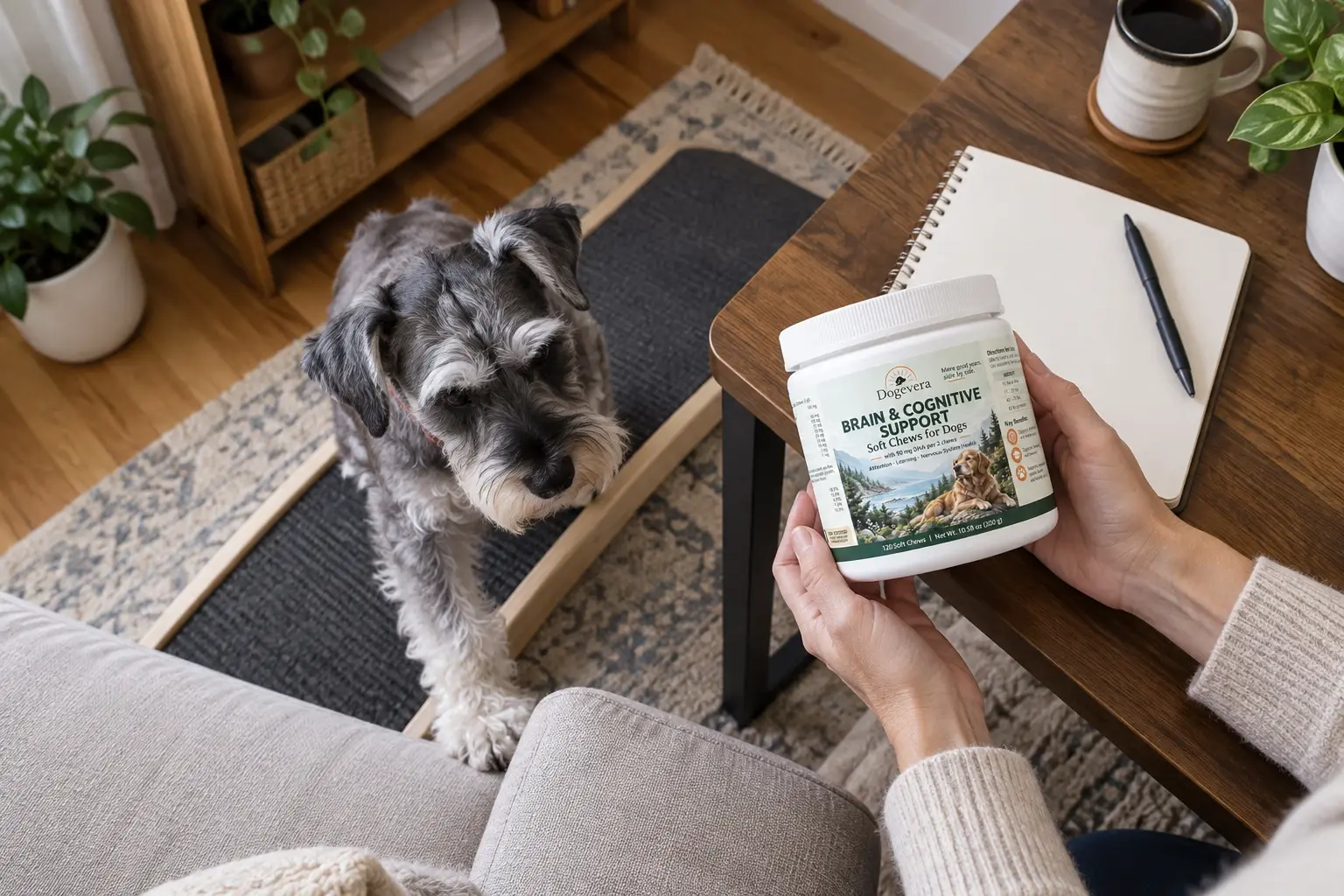
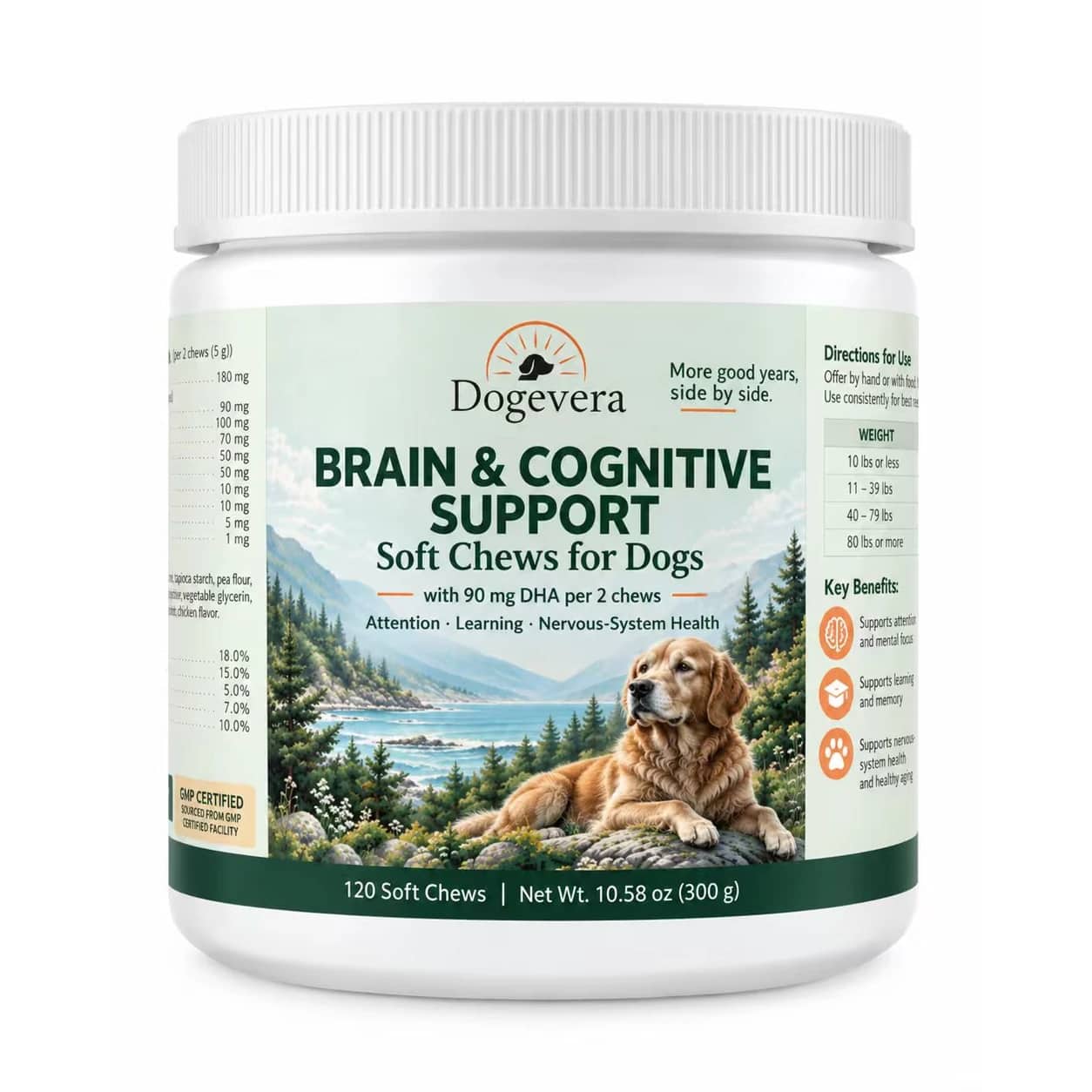
Dogevera does not describe its brain-support soft chew as a treatment for CCDS or as a substitute for selegiline or other veterinary care. Nutritional support and disease treatment are not the same promise.
Daily life still matters
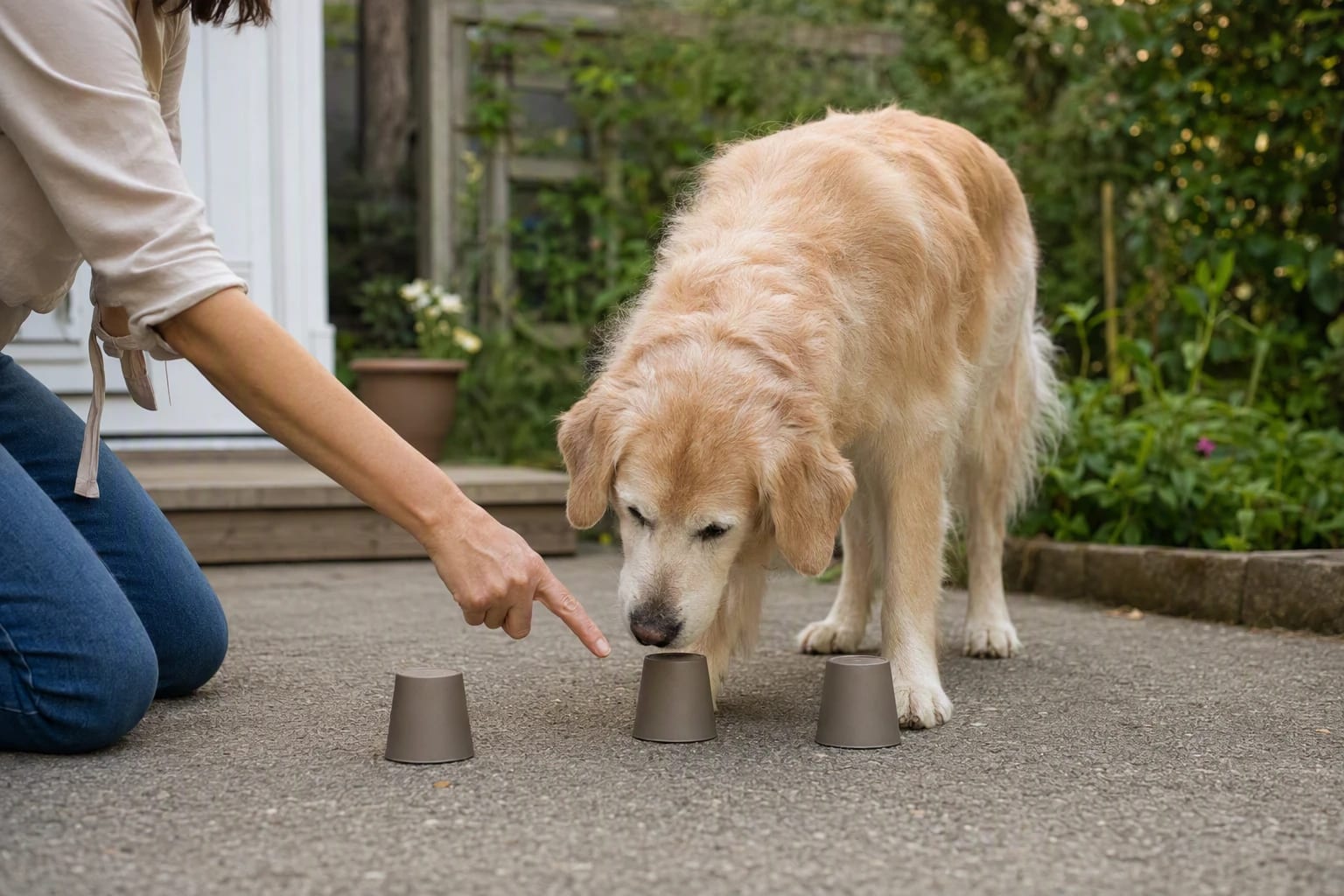
An older brain benefits from a life the dog can still participate in. Keep routines predictable, but do not let them become empty. Short sniffing walks, gentle food-search games, simple cues, and calm social contact can provide stimulation without asking an arthritic dog to perform like a puppy.
Home adjustments often help immediately. Add night-lights, block unsafe stairs, use non-slip runners, keep water easy to reach, and give the dog more frequent toilet opportunities. If nighttime pacing begins, note the time, duration, appetite, toileting, and any signs of pain. A simple log gives the veterinarian better information than "he seems off."
Research in aged beagles found that environmental enrichment and an antioxidant-fortified diet each improved some learning measures, with the combined approach producing the most consistent results. That does not prove a particular home game will slow CCDS, but it supports a broader point: care should not begin and end with a jar.
A practical conclusion
Progressive DISHAA changes deserve a veterinary work-up. Complete diets containing MCT and broader nutrient blends have produced encouraging canine results, but they have not proved that a single ingredient or low-dose chew treats CCDS.
Use nutrition as one part of senior care. Keep the dog's environment navigable, protect sleep and mobility, continue manageable engagement, and record changes early. Those steps are less dramatic than a cure claim. They are also more useful.
Keep therapeutic diets and commercial chews separate
The diet studies discussed here concern their studied formulations and populations. They do not prove that a separately sold cognitive-support chew treats cognitive dysfunction or improves sleep. New behavior changes may have other causes, and an individual care plan starts with an assessment.
Related reading
- Senior Dog Care: A Practical Guide to Home Setup and Daily Activities
- Normal Aging vs Dog Dementia: What to Notice
- Senior Dog Staring at Wall or Standing in Corner
- Mental Stimulation for Senior Dogs: Gentle Games You Can Do at Home
References
- The Canine Cognitive Dysfunction Syndrome Working Group guidelines for diagnosis and monitoring of canine cognitive dysfunction syndrome. Journal of the American Veterinary Medical Association. 2026. PMID: 41442884. DOI: 10.2460/javma.25.10.0668.
- Dietary supplementation with medium-chain TAG has long-lasting cognition-enhancing effects in aged dogs. The British journal of nutrition. 2010. PMID: 20141643. DOI: 10.1017/s0007114510000097.
- Efficacy of a Therapeutic Diet on Dogs With Signs of Cognitive Dysfunction Syndrome (CDS): A Prospective Double Blinded Placebo Controlled Clinical Study. Frontiers in nutrition. 2018. PMID: 30619873. DOI: 10.3389/fnut.2018.00127.
- Cognitive enhancement in old dogs from dietary supplementation with a nutrient blend containing arginine, antioxidants, B vitamins and fish oil. The British journal of nutrition. 2018. PMID: 29316985. DOI: 10.1017/s0007114517003464.
- Cognitive dysfunction syndrome: a disease of canine and feline brain aging. The Veterinary clinics of North America. Small animal practice. 2012. PMID: 22720812. DOI: 10.1016/j.cvsm.2012.04.003.
- Blanchard T, et al. Systematic review of enriched diets and nutraceuticals for cognitive function in aged dogs and cats. GeroScience. 2025.
For individual health questions, your veterinarian remains the best partner.