TL;DR
Training a dog with treats can work well for a senior dog when rewards are small and easy to chew, cues are comfortable for their body, and practice stays brief. Reward the behavior you want, pause before your dog gets tired, and adapt the setup when a position or movement seems difficult.
How do you train a senior dog with treats?
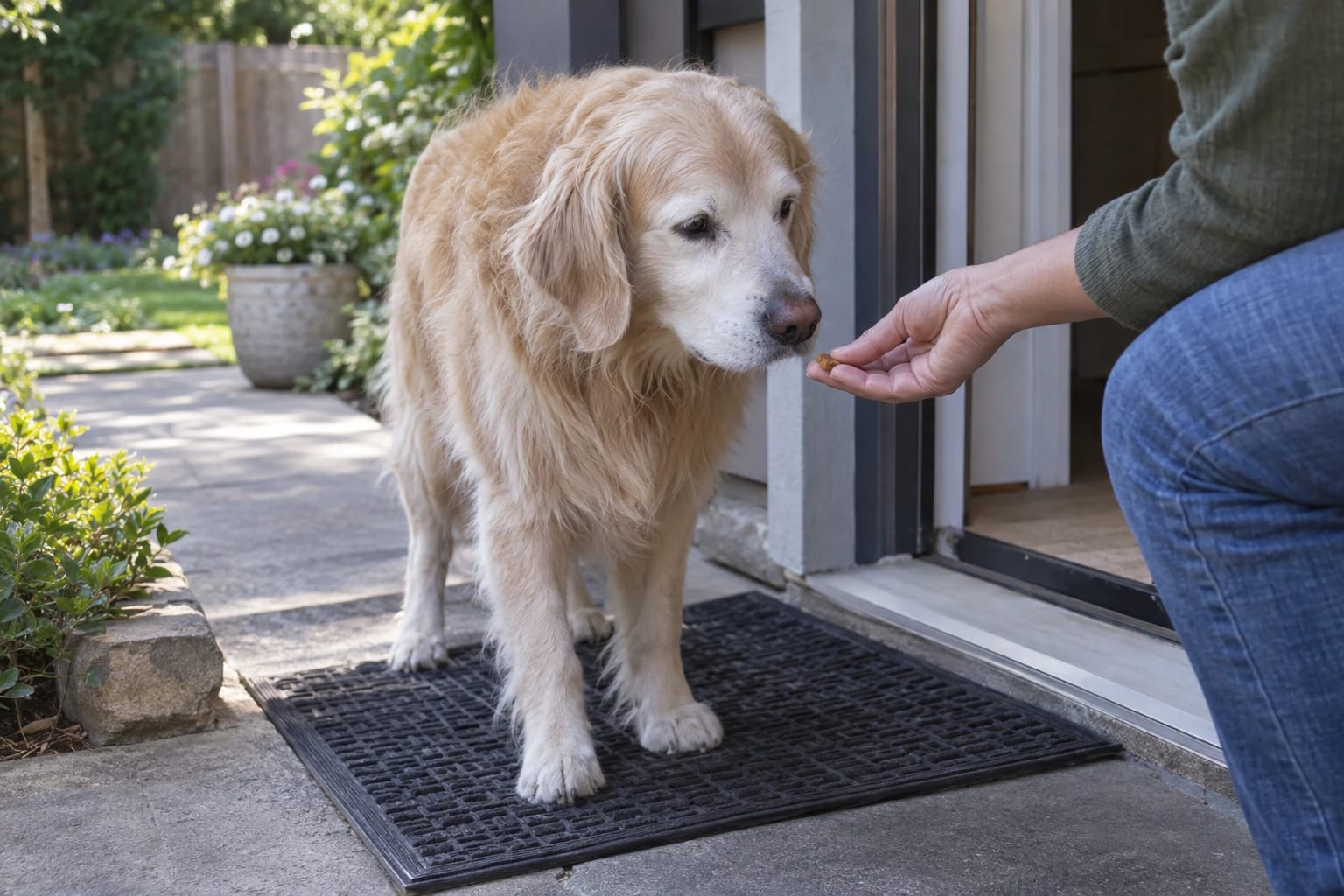
Choose one simple behavior, make it easy for your dog to succeed, and give a tiny treat right after the behavior. For example, say their name once and reward them for looking toward you, or reward them for standing calmly on a nonslip surface. Use a quiet, familiar space so the lesson is not competing with distractions.
Keep your hands low and close to your body, and use a clear cue each time. If you want your dog to come closer, reward a step toward you rather than requiring a fast approach. If you want them to settle on a mat, reward looking at or stepping toward it before asking for more. Small steps let you teach a useful skill without insisting on a big movement.
A treat can be food and a moment of connection at once. In a voluntary survey of 716 dog caregivers, predominantly from Canada and the United States, most respondents said making their pet happy and strengthening their bond were reasons for offering treats. Nearly 40% frequently offered treats to show love. These are caregivers’ reported reasons, not evidence that a particular treat or training method produces a specific result.
Which treats suit an older dog?
Pick a treat your dog can take comfortably and quickly. Soft, small pieces are often practical during practice because they are easy to offer without asking for extended chewing. Break a larger treat into smaller pieces if it is easy to handle and your dog can eat it comfortably. A treat does not need to be large to mark a successful response.
Notice how your dog takes it. Do they chew comfortably, drop pieces, turn away, or seem to struggle? If hard treats have become difficult, compare their eating with other foods and note when the change began. The guide to soft dog treats for older dogs can help with choosing a texture, while a new or repeated change in eating is worth recording and discussing with your veterinarian.
Keep training rewards in context with the rest of your dog’s food routine. You can set aside a portion of their usual food as practice rewards if they are interested in eating it that way. If you use treats, keep track of how many you offer and what else your dog eats that day. Follow package guidance for packaged treats, and ask your veterinarian how rewards fit if your dog has a prescribed diet or specific food restrictions.
Which cues and setups are easier on older bodies?
Choose cues that do not require jumping, repeated stairs, or quick turns. Useful options include responding to their name, touching a hand held near their nose, standing calmly for a harness, or walking to a mat at their own pace. You can reward a comfortable position instead of asking for a sit or down when getting into or out of that position appears difficult.
Use a stable surface with good footing, and keep the practice area clear. Place a mat where your dog already likes to rest rather than asking them to cross a slippery room. For a hand target, offer your hand at a height that lets them stay balanced. If your dog uses visual or hand cues more readily than spoken ones, keep the signal easy to see; supporting a senior dog with hearing loss includes practical ways to make everyday cues clearer.
A cue should invite a behavior, not force it. If your dog hesitates, changes direction, or repeatedly shifts their weight, make the task easier or stop for now. Do not pull or push them into position. A sudden change in movement is a reason to pause training and seek veterinary guidance rather than treating the response as a training problem.
A simple treat-training routine
Use this repeatable check to shape each session:
1. Choose one behavior. Pick a cue your dog can try without a jump, a slippery turn, or a long hold. 2. Set the scene. Use a familiar, nonslip spot and have small, soft rewards within reach. 3. Make the first step easy. Reward an approach, glance, or other small movement toward the behavior you want. 4. Mark and reward promptly. Use the same short word, such as “yes,” then offer the treat while your dog is still in a comfortable position. 5. Check their response. Notice whether they take the treat comfortably and stay interested. If not, pause, change the setup, or finish for the day. 6. Write down one observation. Record the cue, what your dog did, and anything that seemed uncomfortable or especially easy.
Keep sessions short enough that your dog can finish while still comfortable. End on a behavior they can do readily, then offer a rest. At the next practice, repeat an easy success before making the task more challenging. You can also use gentle enrichment ideas for senior dogs when your dog enjoys food-based activities but needs a change from cue practice.
What should you notice and adjust?
Watch your dog’s whole response, not just whether they take the reward. Note their footing, willingness to approach, ability to chew, and how they move afterward. If the same cue gets harder across several sessions, reduce the movement or change the location. A comfortable hand target can replace a longer recall across the room; rewarding a stand can replace repeated sit-to-stand practice.
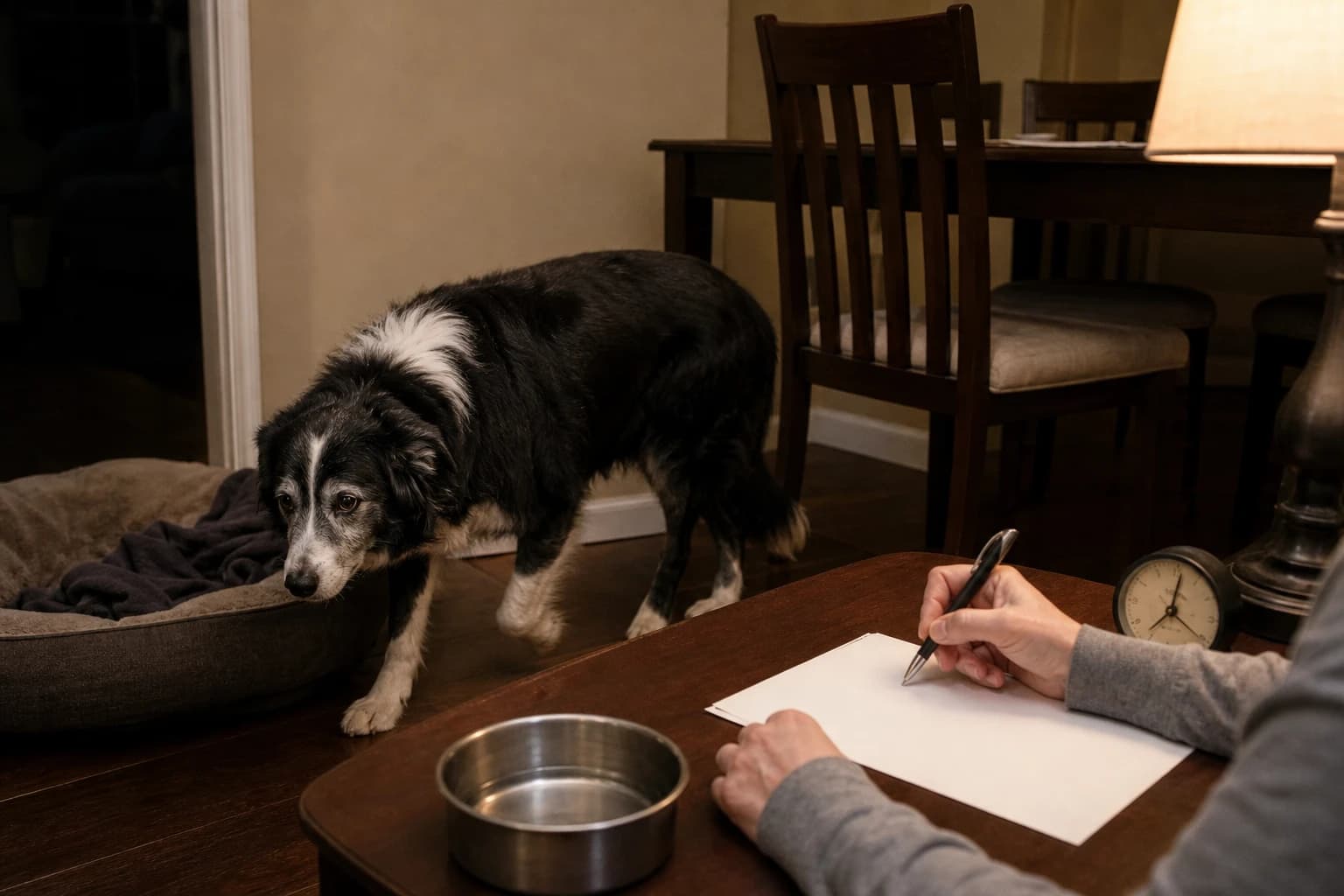
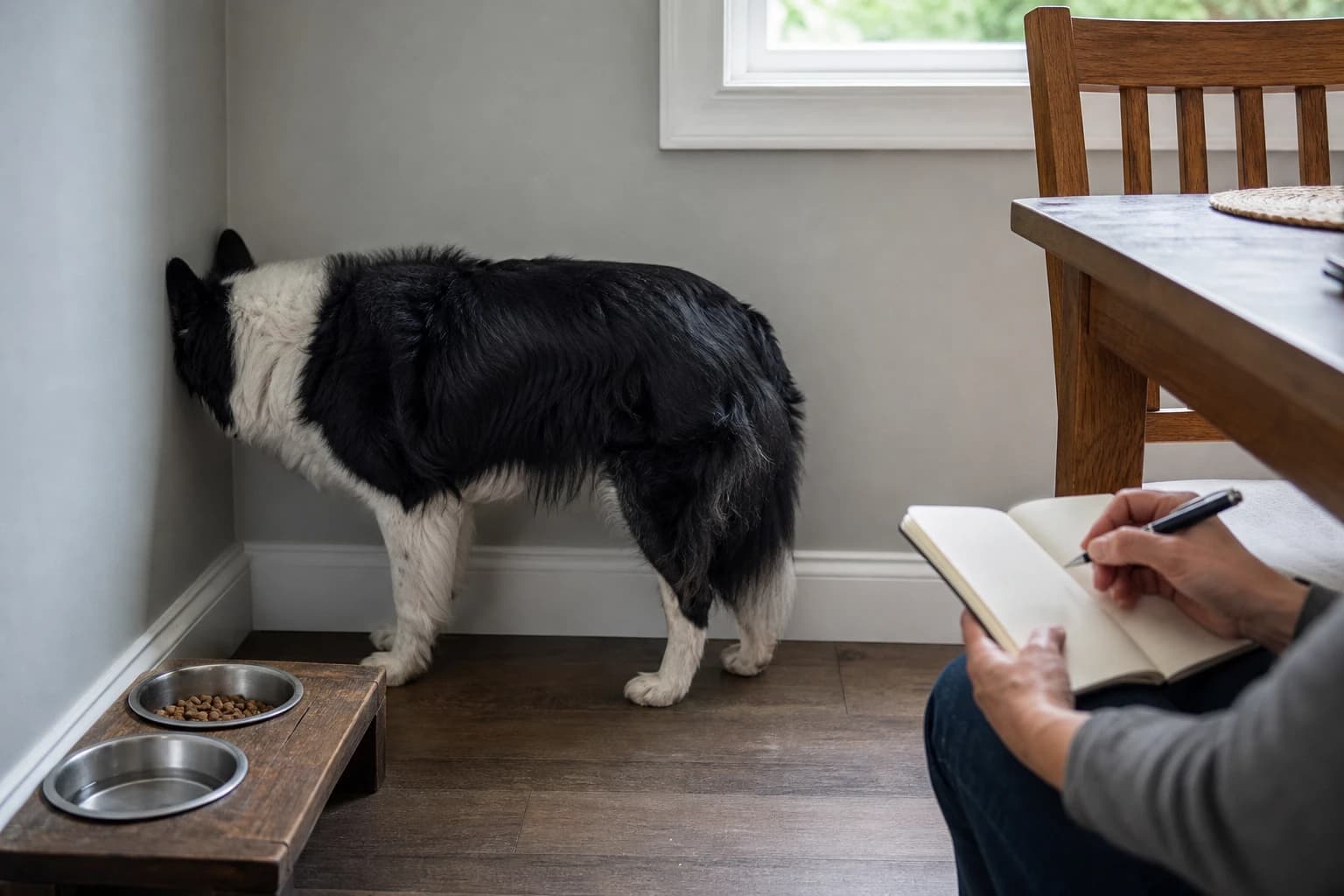
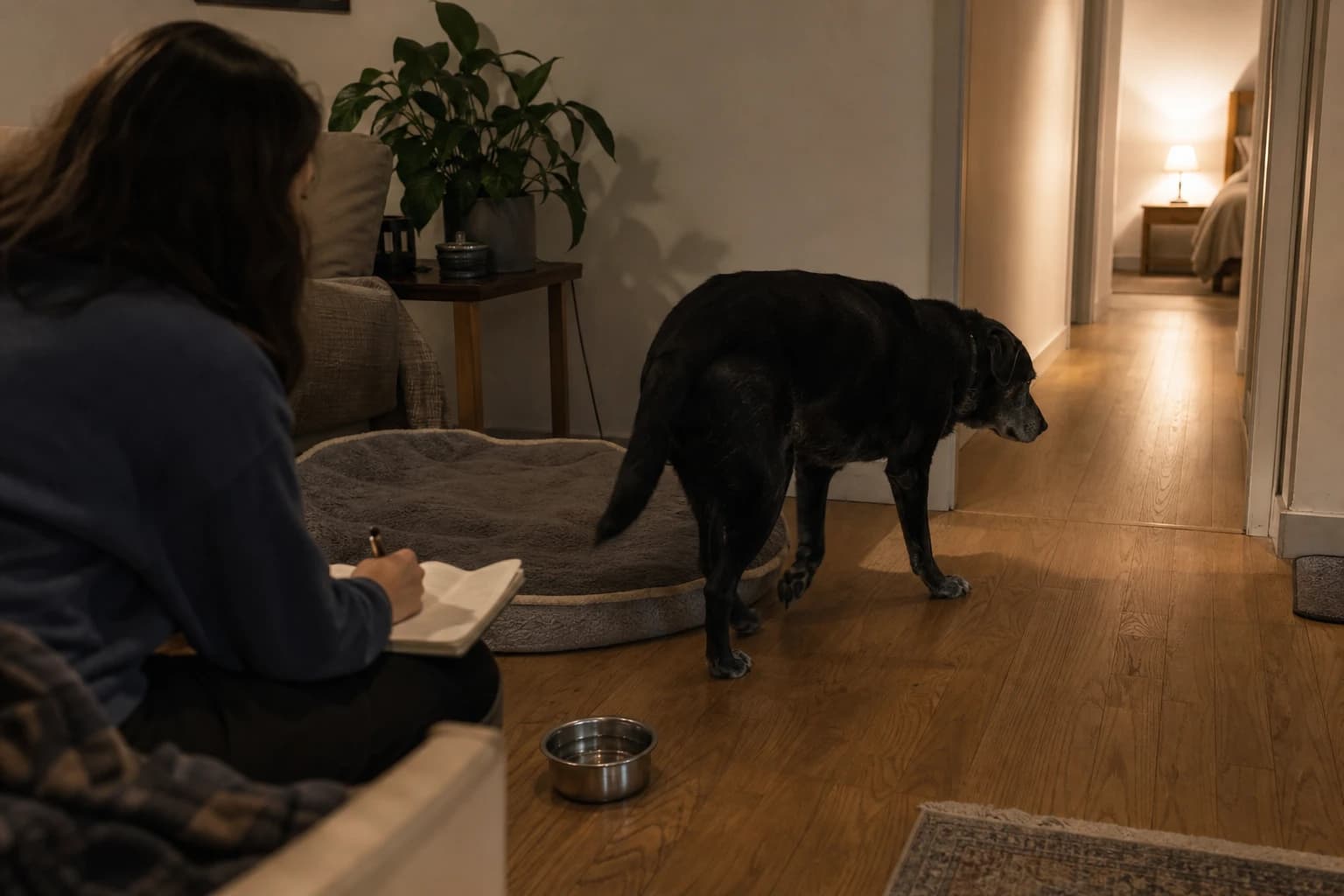
A brief log can make patterns easier to spot. Write the date, cue, setup, response, and any change you made. If your dog is less willing to eat, moves differently, or seems unsettled beyond training, pause the exercise and record what you noticed in daily life. Observing behavior changes before adjusting routines offers a broader way to track when and where changes happen.
Training should stay optional and pleasant. If your dog walks away, let them rest rather than calling them back repeatedly. You can try again later with an easier cue or a different reward they already enjoy.
FAQ
Can you teach an old dog new cues with treats?
Yes, you can offer rewards for simple behaviors at any age. Choose a comfortable movement, build it in small steps, and adapt the session to your dog’s pace.
How small should training treats be?
Use pieces small enough for a quick reward and comfortable chewing. There is no single piece size that suits every dog, so watch how easily your dog takes and eats each reward.
What if my dog does not want treats during practice?
Pause and check the setting, reward texture, and your dog’s interest. Try a quieter spot or an ordinary food they already enjoy. If their appetite or ability to eat has changed outside training, record the change and contact your veterinarian.
For individual health questions, your veterinarian remains the best partner.