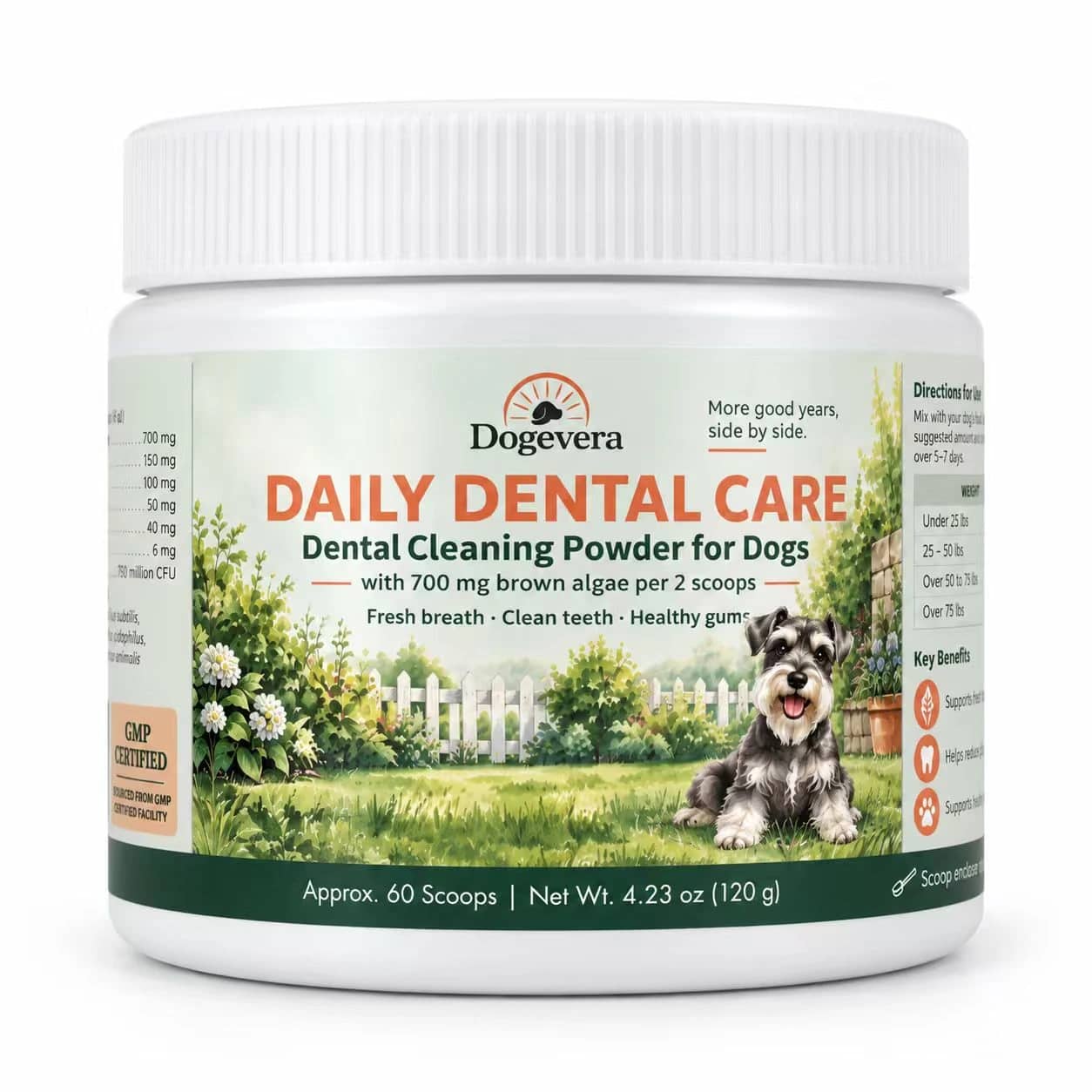

We sell this powder. It was not the product tested in the studies discussed here.
TL;DR
Behavior changes in a senior dog are rarely "just old age". VCA Animal Hospitals' veterinary behaviorists point out that healthy older dogs keep their interest in people and play, so every change in behavior deserves a look. The usual causes are pain (especially arthritis), vision or hearing loss, illnesses such as kidney disease, diabetes and hormone disorders, cognitive dysfunction (dog dementia), and changes at home. A new grumpiness, clinginess, night waking or accidents can be the first sign of a treatable problem, so tell your vet early.
Is it normal for an old dog's behavior to change?
Some slowing down is normal: more sleep, shorter walks, less interest in rough play. But VCA warns against the idea that older pets stop playing or interacting "because they are old". Though they may have physical limits, healthy older pets stay interested in social activities, and changes in behavior patterns should be investigated. A change in behavior can be the first sign of pain, illness or degenerative disease.
Why is my senior dog acting differently?
VCA groups the causes into four:
1. Pain and loss of mobility
Arthritis and other painful conditions are the most overlooked cause. Veterinary behaviorists estimate that, conservatively, around a third of dogs referred for behavior problems have a painful condition, and in some caseloads nearly 80%. Pain can show up as:
- Growling or snapping when touched, lifted or disturbed while resting
- Avoiding being petted, or hiding
- Restlessness, pacing at night, trouble settling
- Refusing stairs, the car or jumping onto furniture
- Accidents indoors because squatting or getting outside hurts
VCA notes that pets can feel anxious or frustrated when their physical limits stop them reaching favorite resting spots or getting away from a child's sudden approach. See arthritis in dogs: treatment.
2. Vision and hearing loss
Older dogs with reduced vision or hearing may not notice a person or pet approaching and startle more easily, and they may scan their surroundings more often to avoid being caught off guard, according to VCA. Merck notes that deaf dogs startle more easily, which can increase the risk of biting. Not responding to their name is often hearing loss rather than stubbornness. See dog hearing loss and old dog going deaf.
3. Illness
VCA lists:
- Diseases that increase thirst, such as diabetes and kidney disease, leading to more urination and house soiling
- Diseases of the thyroid and pituitary glands, often linked with behavior changes including anxiety
- Neurologic disease
4. Cognitive dysfunction (dog dementia)
The aging brain can develop changes, including amyloid deposits, that resemble Alzheimer's disease in people. In a US study, 28% of 11 to 12 year old dogs and 68% of 15 to 16 year old dogs showed at least one group of signs. See dog dementia: signs and stages.
And changes at home
Older dogs used to a predictable routine may struggle with change, VCA notes: losing or gaining a family member, moving house, or a new work schedule can cause anxiety or frustration.
Common senior dog behavior changes and what they may mean
- Grumpy, growling or snapping: pain first; also sight or hearing loss (startling) and cognitive dysfunction.
- Clingy, following you everywhere: anxiety, cognitive dysfunction, or sensory loss making the dog feel insecure.
- Withdrawn, resting in secluded spots: pain, illness or cognitive dysfunction.
- Waking and pacing at night: pain, needing to urinate, cognitive dysfunction. See dog pacing at night.
- Accidents indoors: increased thirst from kidney disease or diabetes, loss of bladder control, arthritis, or cognitive dysfunction. See house training an older dog.
- Barking or whining more: anxiety, pain, hearing loss, cognitive dysfunction.
- New fears of noises, the dark or being alone: anxiety, sensory loss, cognitive dysfunction, hormone disease.
- Staring at walls, getting stuck in corners: cognitive dysfunction, vision loss, focal seizures. See why dogs stare at walls.
- Less interest in play or walks: pain, illness, or cognitive dysfunction; not something to accept as normal aging.
Signs to tell your vet about
VCA lists these physical changes, which often explain a behavior change:
- More or less urination, or dribbling urine and bed-wetting
- Changes in stool
- Lameness, trouble standing or lying down, reluctance to jump
- Excessive panting or coughing
- Tremors or shaking
- Weight loss or gain
- Changes in skin or coat, new lumps
- New odors from the mouth, ears or rear end
What your vet will do
VCA recommends a physical examination for any behavior change, whatever the pet's age. Your vet may add:
- Blood and urine tests to screen for illness
- A pain assessment, sometimes a trial of pain relief
- An eye and ear check
- A questionnaire to score signs of cognitive dysfunction
- Referral for advanced tests, such as brain imaging, or to a veterinary behaviorist
VCA's answer to "is there any point testing an old pet?" is yes: once the cause is found, medication, behavior modification and changes at home can improve behavior at any age, and physical and behavioral problems need treating together.
How to help at home
- Keep a log. Note each change, when it started and how often it happens. A short video helps.
- Keep routines steady: meals, walks and bedtime at the same times.
- Make moving easier: non-slip rugs, ramps or steps, a supportive bed.
- Approach so they can see you, and touch gently before lifting or moving them.
- Give your dog a quiet retreat away from children and other pets.
- Keep the mind and body busy: daily walks at their pace, sniffing, food puzzles, short training sessions. In 72 older pet dogs, three months of physical training improved behavioral flexibility and social behavior. See mental stimulation for dogs.
- Do not punish accidents, growling or night waking; they usually have a cause, and punishment adds anxiety.
For brain aging, our Brain & Cognitive Support Soft Chews provide 90 mg of algal DHA in 180 mg of total omega-3 per 2-chew serving, with ginkgo and antioxidants, alongside your vet's plan.
FAQ
Why is my old dog suddenly aggressive?
Pain is the first thing to check, followed by vision or hearing loss (startling) and cognitive dysfunction. Sudden aggression in an older dog warrants a vet visit.
Why is my senior dog so clingy?
Clinginess can come from anxiety, cognitive dysfunction or failing sight and hearing. VCA lists following or clinging to family members among signs to discuss with your vet.
Do dogs' personalities change with age?
Dogs often become calmer and sleep more, but marked changes such as irritability, withdrawal or new fears usually have a medical or cognitive cause worth investigating.
Is my senior dog depressed?
Withdrawal and loss of interest in play can look like depression but are often caused by pain, illness or cognitive dysfunction. Start with a vet check.
References
- VCA Animal Hospitals. Behavior Counseling: Senior Pet Behavior Problems.
- Mills DS, et al. Pain and problem behavior in cats and dogs. Animals. 2020. PMID: 32085528
- Neilson JC, et al. Prevalence of behavioral changes associated with age-related cognitive impairment in dogs. Journal of the American Veterinary Medical Association. 2001. PMID: 11394831
- Merck Veterinary Manual. Deafness in Dogs.
- Fefer G, et al. Relationship between hearing, cognitive function, and quality of life in aging companion dogs. Journal of Veterinary Internal Medicine. 2022. PMID: 35932193
- Bognár Z, Szabó D, et al. The behavioural effect of short-term cognitive and physical intervention therapies in old dogs. GeroScience. 2024. PMID: 38568435
For individual health questions, your veterinarian remains the best partner.