TL;DR
Older dogs can stay mentally engaged through gentle sniffing, searching, and interaction games woven into everyday life. What matters isn't speed, it's that your dog happily joins in and stays relaxed. Keep tasks simple, watch their interest, movement, and need for rest, and dial back the difficulty or wrap up whenever needed.
What kind of mental stimulation suits older dogs?
Activities that work well for senior dogs usually share three traits: they put little strain on the body, their rules are easy to understand, and the dog can stop at any time. Instead of elaborate toys or long training sessions, ground-level sniffing games, searching for familiar objects, and calm one-on-one interaction often work best.
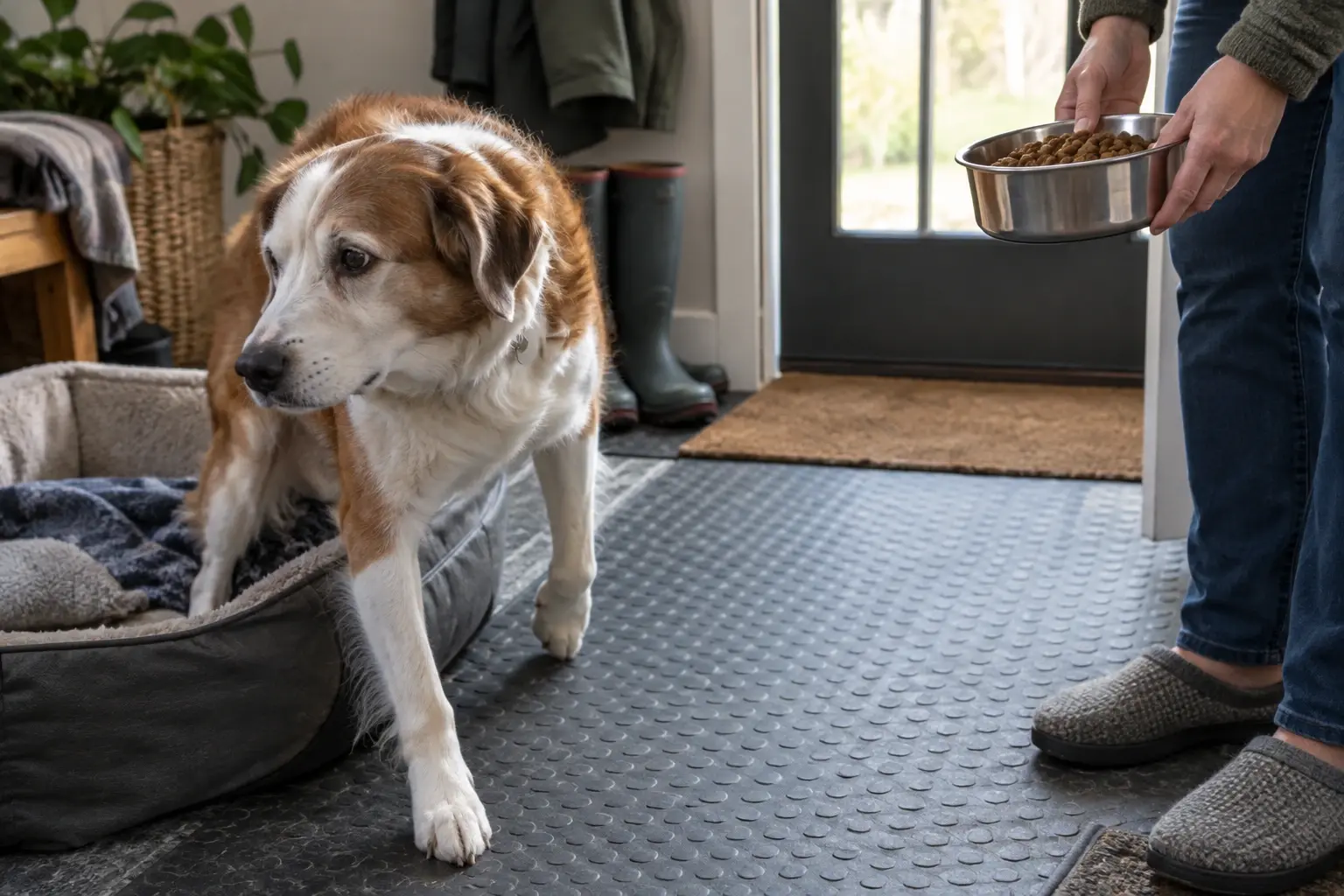
Pick a quiet, level area of your home. Clear away anything your dog could trip over, and place the task where it's easy to reach. If your dog prefers standing, they shouldn't have to lie down. If they're quietly observing at first, extra encouragement or rushing won't raise their engagement.
Jot down a few quick notes before and after each activity, for example, the date, the type of activity, your dog's willingness to take part, how steady their movements were, and whether they settle down on their own afterward. After a few days, patterns often emerge showing which tasks are a good fit. These notes can also help you keep track of important observations in your senior dog's daily life.
Which sniffing games work without any running?
Place familiar scents within easy reach
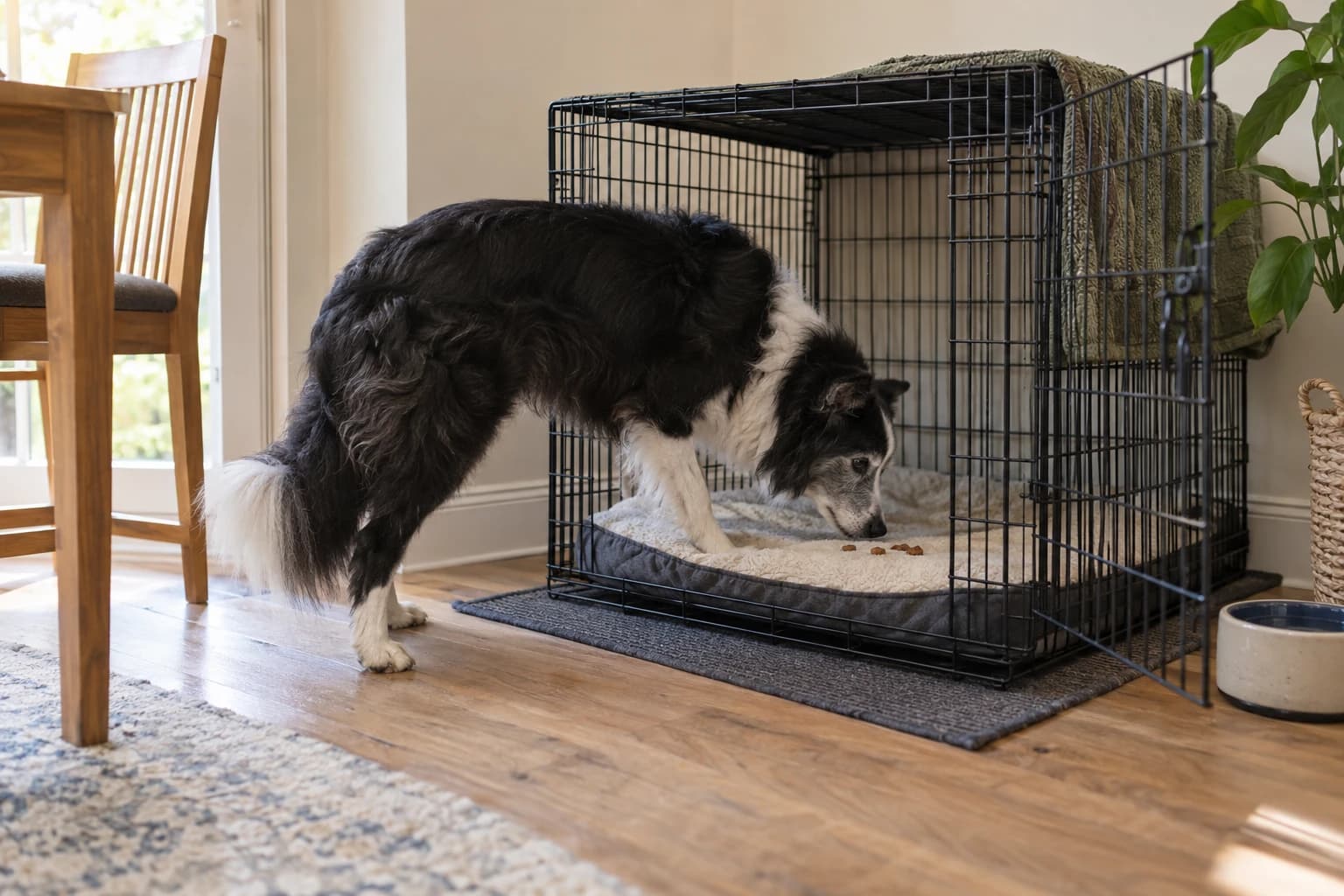
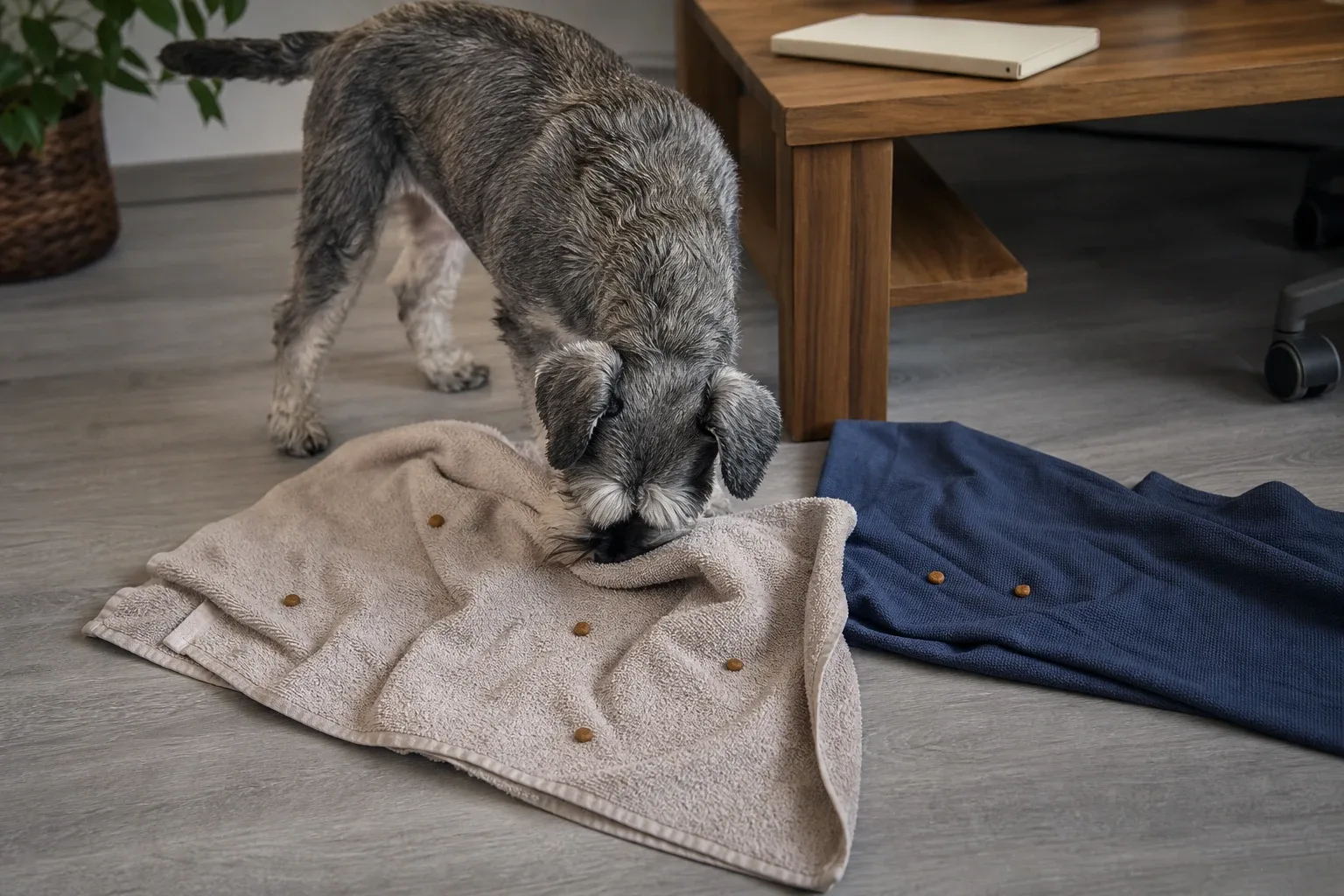
Set a familiar piece of fabric or a safe object somewhere in the room and let your dog sniff it freely at first. You can also scatter small amounts of their regular food in a few easily visible or smellable spots. That way your dog searches with their nose instead of chasing a moving object. Keep hiding places low and open, no jumping, squeezing through gaps, or climbing stairs required.
Adjust the search task step by step
The first time, the target can be found almost instantly. Once your dog gets the idea, you can add light cover, next to an open container, say, or under the edge of a towel. Don't hide the target too deeply, and skip extra hints once their interest fades. After a successful find, your dog is free to end the activity calmly or take a break.
Slow walking, pausing to sniff, and glancing back at you all count as taking part. The right difficulty level isn't just about how long the search takes: if dogs explore willingly and move calmly, the task is probably well chosen.
How can you set up simple search games?
A short "find it" can turn into a nice little activity around the house. Always use the same cue word at first and place the target in a familiar area, a safe object held in a family member's hand, or food on the floor. Change only one variable per round: the location, the type of cover, or the cue. Adding several new challenges at once makes the task unnecessarily hard.
If your dog can't find the target, place it somewhere more obvious rather than repeating the cue louder. Turning away, stopping to sniff, sitting down repeatedly, or looking elsewhere can all be signs it's time to stop. Next time, start with an easier version or switch to an activity that only requires sniffing.
A simple three-step routine you can repeat
1. Prepare: Choose a level surface and remove anything that could slide or become a tripping hazard. 2. Start: Let your dog explore freely first, then give one simple cue. 3. Wrap up: Praise calmly after the find, put the object away, and let your dog return to their resting spot.
This routine is easy to repeat and compare. If your dog walks away from a game quickly several times in a row, there's no need to keep offering it, a more familiar form of interaction may be a better fit.
Quiet togetherness counts as mental stimulation, too
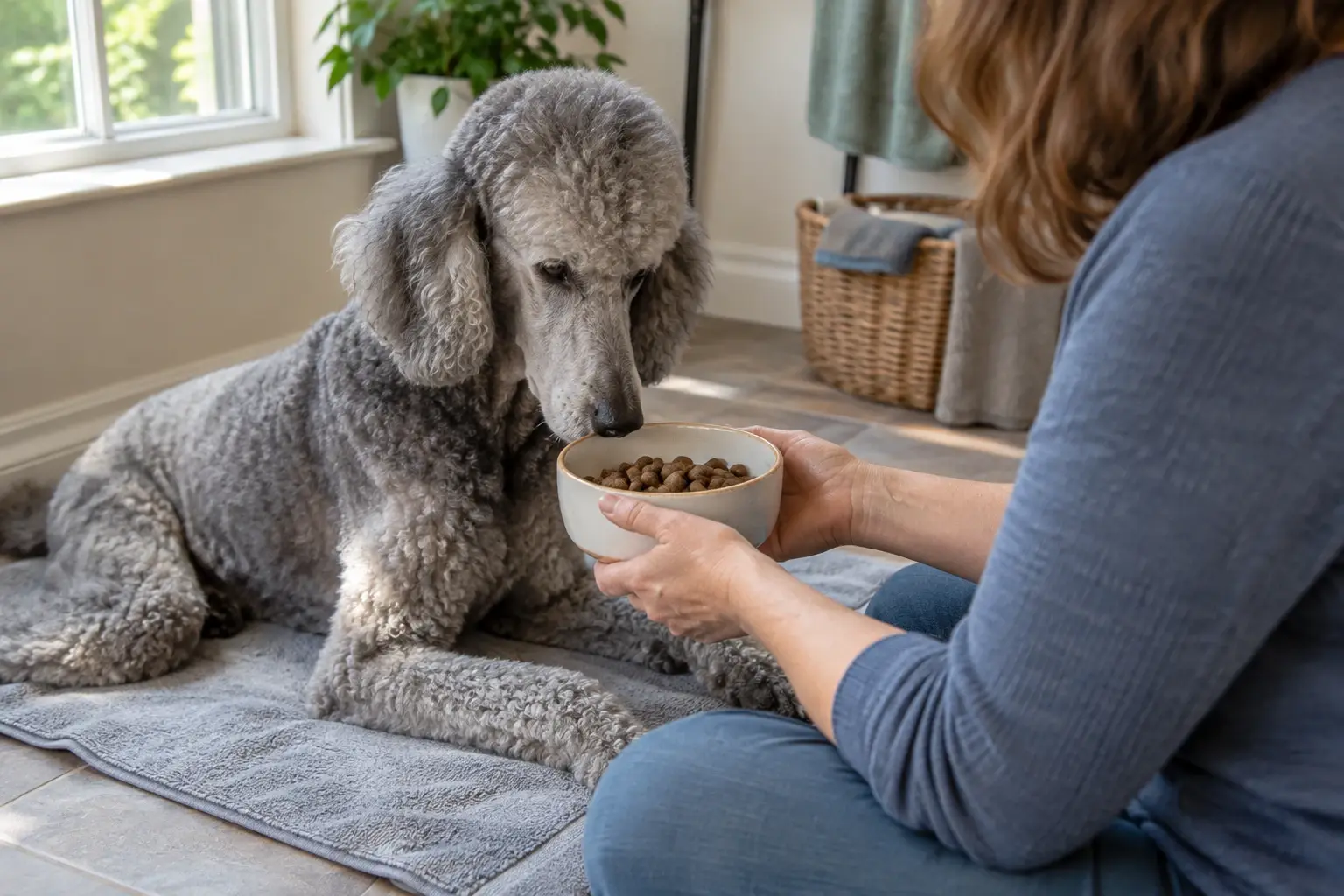
Not every activity needs a toy. Sit down near your dog and let them decide whether to come closer, sniff, or accept gentle touch. Speaking softly, a hand signal for a familiar behavior, or choosing between two familiar objects can all make for a relaxed shared moment.
Always leave room for a "no." If your dog turns their head away, backs off, lies down, or closes their eyes to rest, pause the touching and cues. If they come back on their own later, a short interaction can continue. That usually keeps things far more relaxed than calling them over repeatedly, and it shows you how much they want to engage that day.
For practical home adaptations, see the senior-dog care guide. Select equipment for the individual dog's comfort and safety; a product purchase does not explain a new health change.
How do you know when the difficulty needs adjusting?
Three checkpoints, "participation, movement, finish", let you size things up quickly:
- Participation: Does your dog come closer on their own, sniff, or focus on the target?
- Movement: Can they move in their usual way without jumping, turning abruptly, or holding one position for long?
- Finish: Do they return calmly to their resting spot afterward?
If one of these clearly isn't working, lower the difficulty first: bring the target closer, reduce the cover, shorten the interaction, or switch to sniffing while seated. The activity doesn't have to look the same every day, on good days a simple search game may fit, while quieter days call for nothing more than calm company.
If your senior dog shows sudden behavior changes, or unusual reactions during activities keep interfering with daily life, bring your notes along to a conversation with your vet. A single play session isn't enough to pinpoint the cause.
Frequently asked questions
My senior dog doesn't want to play. Is the activity wrong for them?
Not necessarily. They may just want to rest right now, or they're not interested that day in the scent, the setting, or the type of interaction. Skip the pressure, switch to familiar sniffing or quiet companionship, and note when your dog tends to join in on their own. If they repeatedly turn down this kind of game, it can simply be set aside for now.
Does my dog need special puzzle toys?
No. Safe, easily reachable household items and familiar sniffing games are enough to start. If you do use toys, pick ones with an easily accessible opening that don't require strong tugging or biting, and no jumping or complicated steps. Put them away as soon as interest fades.
A low-pressure activity card
Place a familiar reward where your dog can reach it on a secure surface, invite exploration and let them stop. Use an activity that does not require jumping, forceful biting or a painful posture. End when they withdraw or seem uncomfortable. For equipment choices, see choosing a puzzle toy; this guide focuses on how to offer an activity.
Related reading
References
- Associations between physical activity and cognitive dysfunction in older companion dogs: results from the Dog Aging Project. GeroScience. 2023. PMID: 36129565. DOI: 10.1007/s11357-022-00655-8.
- Attitudes of Australian Veterinary Professionals to Diagnosing and Managing Canine Cognitive Dysfunction. Veterinary sciences. 2025. PMID: 40266994. DOI: 10.3390/vetsci12030272.
- AAHA: evaluating the unhealthy senior pet.
For individual health questions, your veterinarian remains the best partner.