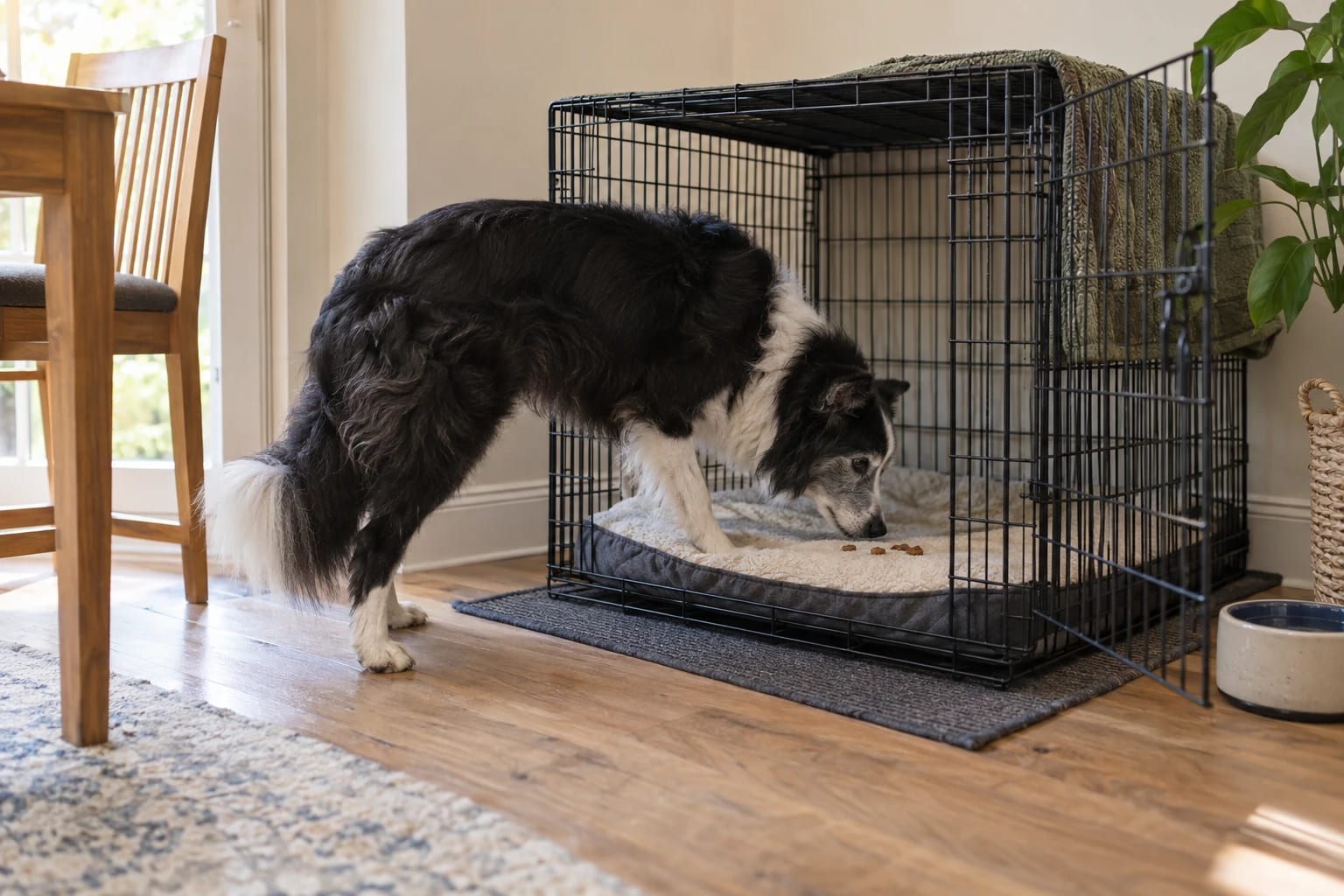
TL;DR
Dog crate training can work well for an older dog when the crate is treated as an optional rest space, not a place to shut them away. Choose an easy-entry setup, add supportive bedding, and let your dog build comfort through short, calm visits at their own pace.
Watch how your dog approaches, turns around, lies down, and gets back up. Those details will tell you more about whether the crate suits them than whether they go inside on the first day.
Is dog crate training right for a senior dog?
A crate can be useful for an older dog who likes a predictable, quiet place to nap, settle during household activity, or travel. It may be especially welcome in a busy home when it is positioned as a private retreat with an open door.
The best starting question is not, "Will my dog stay in a crate?" It is, "Can my dog enter, rest, turn around, and leave comfortably?"
A crate may not be the right resting option if your dog hesitates at the doorway, struggles to lower themselves onto the bedding, cannot turn easily, or seems uneasy when enclosed. A low-sided bed, open pen, or gated quiet corner may suit them better.
If getting up after rest has become noticeably harder, note when it happens and what surfaces seem difficult. Our guide to a senior dog slow to get up after lying down can help you organize those everyday observations.
Set up the crate for comfortable resting
Start with the largest practical crate rather than trying to make the space feel den-like by making it tight. Your dog should be able to stand without ducking, turn without bumping the sides, and stretch out in their usual sleeping position.
Choose a location with a clear walking path, away from drafts, loud appliances, and places where people may step over your dog. Keep water nearby but outside the crate so a spill does not soak the bedding.
A simple senior-dog crate checklist
Before inviting your dog inside, check these details:
- The entrance has no high lip that requires an awkward step.
- The crate floor does not slide on hard flooring.
- Bedding is cushioned enough for rest but not so deep that your dog sinks or stumbles.
- The door can stay fully open and cannot swing toward your dog.
- The route to the crate has good footing and is free of cords, toys, and clutter.
- Your dog can leave the crate without needing to back out or squeeze past furniture.
For a dog who is hesitant on steps or uneven ground, avoid placing the crate at the top or bottom of a staircase. Record any change in stair use separately with this guide to a senior dog struggling with stairs.
How do you introduce a crate without forcing it?
Leave the door open and place the crate in its final location before asking your dog to use it. Add familiar bedding that smells like home, then sit nearby and let them investigate without calling them in repeatedly.
You can place a few pieces of their usual food or a small, familiar reward just inside the entrance. Let your dog choose whether to take it. If they step in, resist the urge to close the door or make a big event of it. A calm exit is part of learning that the crate remains their choice.
Repeat short invitations during quiet parts of the day. Move the food farther inside only when your dog looks relaxed entering and leaving. Signs of comfort may include choosing to go in without being prompted, lying down voluntarily, or returning after a brief look around the room.
Keep other routine changes separate while you are introducing the crate. For example, if you already serve New Zealand Green Lipped Mussel Powder for Dogs, continue giving it with your regular meal rather than making the crate session part of a new feeding routine.
Make the crate a choice, not a trap
Once your dog is resting inside comfortably, keep the door open for several days of ordinary naps. This gives you time to see whether they use the space when no reward is involved.
Only consider closing the door briefly if your dog is already calm inside and there is a practical reason to do so, such as preparing for a car ride or creating quiet during a short household task. Stay nearby at first. Open the door before your dog becomes restless, and return to open-door rest if they seem concerned.
Avoid using the crate after scolding, during noisy gatherings, or as the default place for a dog who is asking to move around. The crate should predict comfort and rest, not isolation or loss of choice.
Common crate comfort mistakes to avoid
A crate can look cozy to us while being awkward for an older dog. Watch for these common problems:
- Bedding that shifts: A loose blanket can bunch under paws or make standing less steady. Use a fitted pad or secure the bedding so it stays flat.
- A narrow entrance: Some dogs can lie down comfortably but hesitate to step over a raised threshold. Try a different crate style or an open resting area.
- A crowded location: A crate tucked into a corner may leave no room for your dog to approach and turn naturally.
- Closing the door too early: Going from sniffing the crate to being enclosed can make the space feel unpredictable.
- Ignoring a change in use: A dog who once loved the crate but suddenly avoids it may be reacting to the setup, bedding, temperature, or a change in comfort.
Write down the pattern for three days: when your dog uses the crate, how they enter, how long they settle, and whether they leave easily. A veterinarian can help with a new or persistent change in mobility, comfort, or behavior.
FAQ
Should a senior dog sleep in a crate at night?
They can if they already choose the crate, can move comfortably inside, and have an easy route to water and a nighttime bathroom break. Keep the door open when possible, especially while you are still learning whether the setup suits them.
What bedding is best for an older dog’s crate?
Choose bedding that lies flat, provides cushioning, and does not slide when your dog steps on it. Check it after each wash or rearrangement, since a familiar bed can feel different once it has shifted or compressed.
What if my dog will not go into the crate?
Do not push, pull, or carry them inside to make the point. Return to an open-door setup, place familiar bedding nearby, and consider whether the entrance, flooring, or crate size makes movement awkward. An open bed beside the crate can also show whether your dog prefers the location but not the enclosure.
For individual health questions, your veterinarian remains the best partner.