TL;DR
To make your home safer and more comfortable for a senior dog, start with the routes he walks most often: cut down on slipping hazards, clear out obstacles, set up easy-to-reach resting spots, and add light where it's needed. Ramps, alternatives to stairs, and a better-suited bed can come later, based on what he actually needs. Change one or two things at a time and watch whether your dog chooses to use them.
If your dog suddenly stops moving, falls often, or if an adjustment clearly affects his eating, drinking, bathroom habits, or sleep, bring your observations to your veterinarian. These tips are meant to help you organize your dog's daily environment, they're no substitute for professional advice.
Which areas should you tackle first?
You don't need to buy a bunch of products right away. Walk through the house with your dog and watch the routes he uses most: from his bed to the water bowl, from one room to the front door, from the living room to wherever the family spends the most time. Trace these everyday paths in your head and pay special attention to:
- whether rug edges have curled up, and whether cords, toys, or bulky items are blocking the walkway;
- whether the floor gets slippery near the water bowl, in the kitchen, and at the entryway;
- whether your dog has to step over a high threshold to reach his bowl or resting spot;
- whether he hesitates in dim hallways, near the stairs, or after getting up at night;
- whether family members or other pets frequently block his path.
Keep a simple journal for three days, noting each day where he slows down, changes direction, hesitates, or picks a different spot to rest. Start with the obstacles that come up most often and are easiest to remove, it's usually easier to see results that way than by overhauling the whole house at once. If you'd like to keep observing your senior dog, you can also browse the articles on everyday senior dog care and compare changes in the environment with how he responds.
Steady the floors he uses most
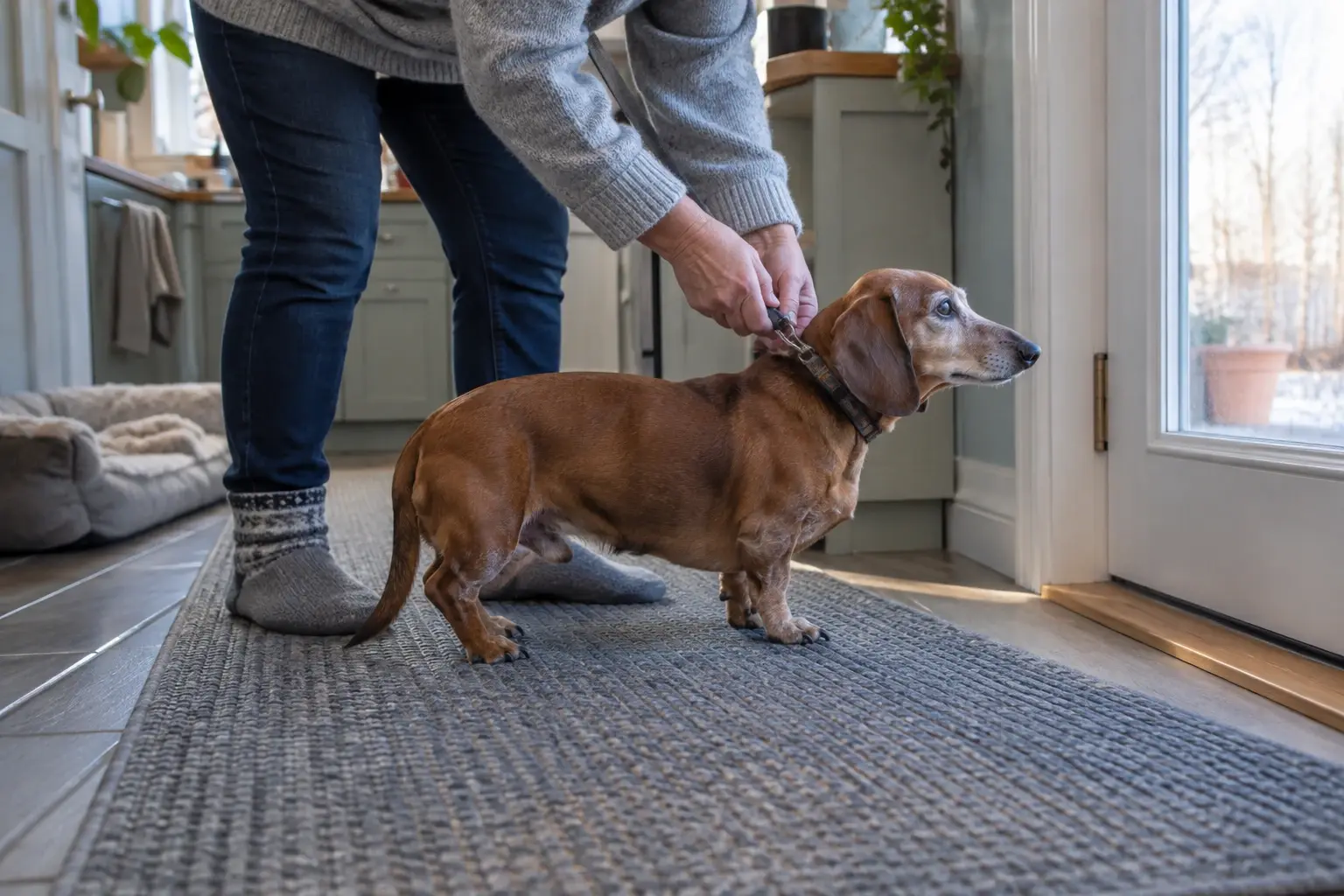
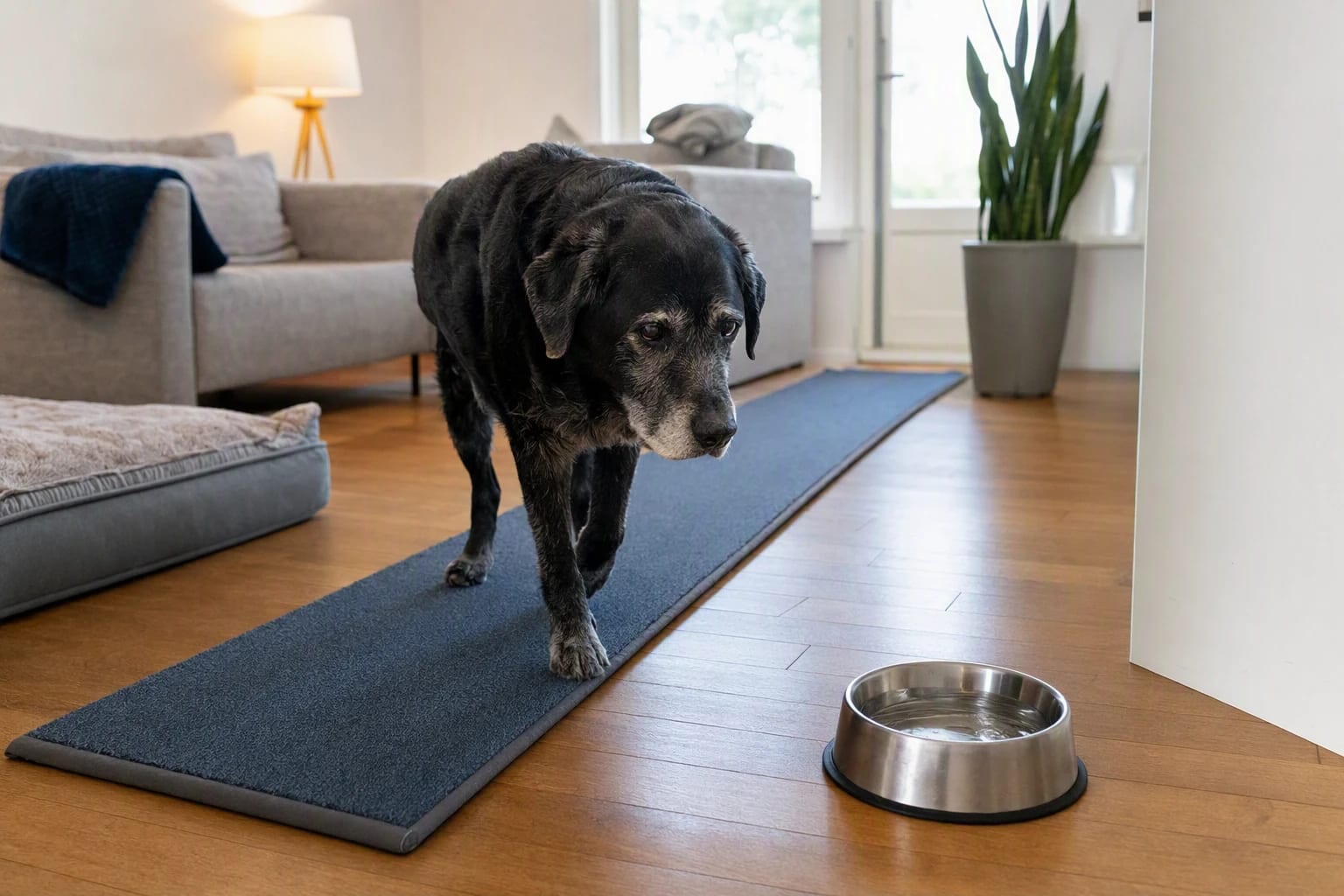
Reducing the risk of slipping is the first step in fixing up the house, but the materials themselves need to stay put. Choose rugs that are easy to secure, with flat edges, and place them along the routes your dog actually uses, not just in the middle of the room. You can add a non-slip pad underneath; if he can push the rug around with his nose or paws, it becomes an obstacle itself.
Near the water bowl, splashes and puddles are almost inevitable: wipe them up quickly and make sure your dog doesn't have to step on a wet surface to get a drink. In areas where rugs aren't practical, it's just as important to keep the floor dry and free of clutter. To keep things tidy, avoid piling baskets, low decorations, or temporary boxes in his usual walkways.
If your dog refuses to walk on a new material, don't drag him across it. You can gradually extend the rug he already knows toward the area in question, watching whether he steps onto it on his own before you cover more space.
How do you know if a ramp or step alternative is the right fit?
A ramp can solve certain level changes, but a dog won't necessarily use it just because it's there. Identify the spot he needs to get past: a threshold, the side of the couch, an entryway, or getting in and out of the car. Which of these gets in his way most often? The ramp needs to be stable, have a non-slip surface, and leave both the entrance and exit clear.
The first time, let him sniff it, approach it, or walk past it with no pressure. You can place familiar objects at both ends to draw his attention to the path; avoid pulling him to force him across. If he backs away repeatedly, circles around it, or the ramp narrows the passage, move it and try a different spot.
For practical home adaptations, see the senior-dog care guide. Select equipment for the individual dog's comfort and safety; a product purchase does not explain a new health change.
Set up a resting spot that's easy to reach
Your dog's resting area should be in a quiet spot, away from big temperature swings, with a good view of family activity. Don't tuck the bed between pieces of furniture or make him squeeze past toys, thresholds, or narrow passages to get in and out. If he likes resting in different rooms, set up well-accessible spots in the areas he uses most, instead of constantly moving the same bed around.
The bed should lie flat with edges that don't curl up easily. A crate with a tall opening can make getting in and out harder: watch whether he has to lift his legs high, take a wider approach, or reposition himself over and over, then consider an easier-to-enter model. After washing, put the bed back in the same spot so the routes through your house stay predictable.
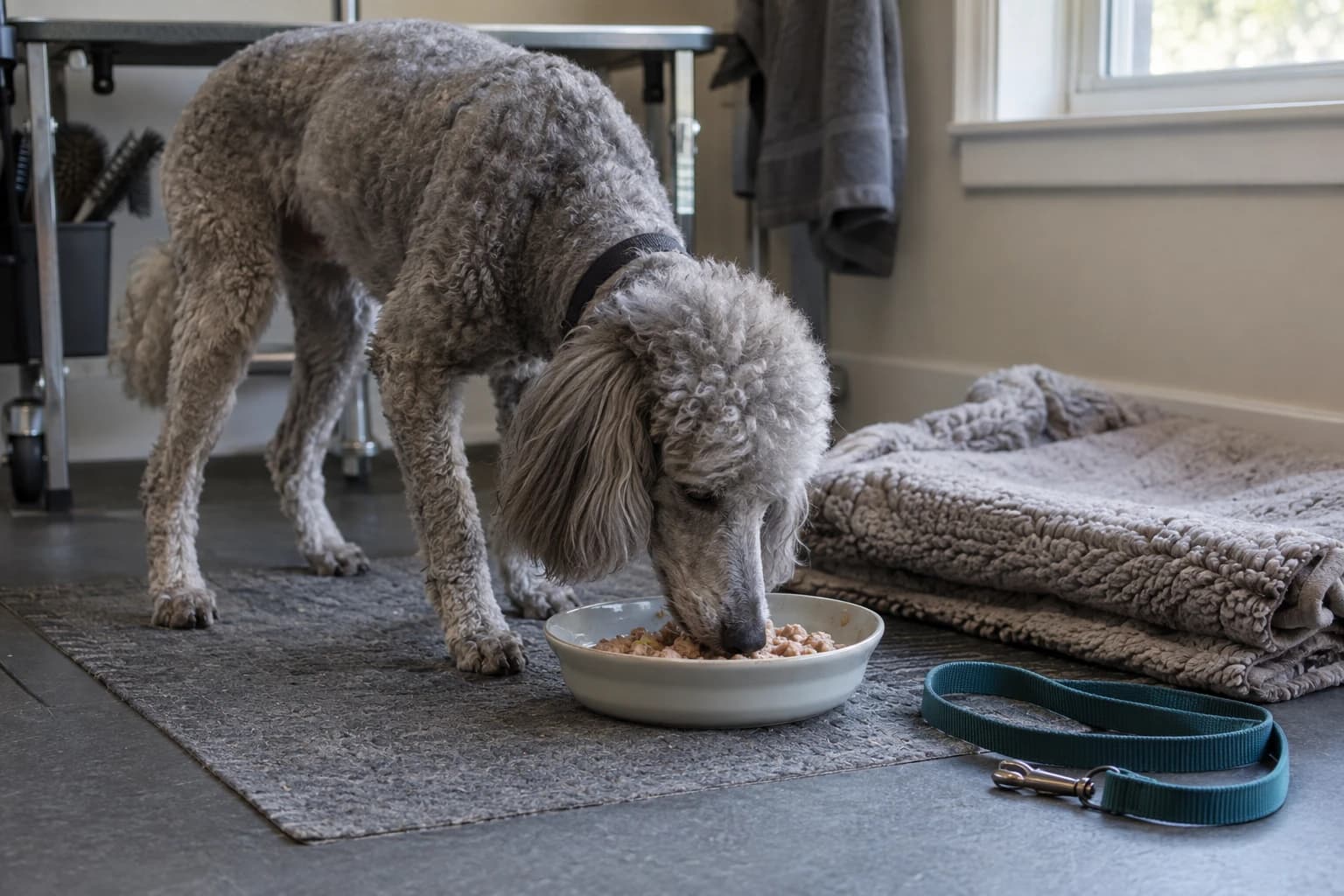
The water bowl, food bowl, and bed don't all have to be together. Spread them out in spots your dog already visits willingly and where the floor is stable, so he doesn't have to cross busy areas just to get a drink or lie down. After setting up the room, check the path from your dog's eye level: it's much easier to spot obstacles from down there than standing up.
Lighting and layout matter at night
A house that's bright during the day can have unclear paths after dark. After turning off the main lights, check the route from the bed to the water bowl, the door, or the potty area. Can your dog still find safe places to plant his paws? If needed, add a soft auxiliary light that isn't pointed in his eyes, and make sure the cord doesn't cross his walking path.
Keep furniture as stable as possible, especially along the routes your dog knows. Temporarily set-down bags, hanging laundry, and cleaning tools should be picked up right away. Near the stairs, the balcony door, and tight spaces he might wander into by mistake, close a door or use a clearly visible barrier. The barrier shouldn't have sharp corners or edges he could trip over.
After each change, watch whether your dog reaches the water bowl, the bed, and the door more easily. If he still hesitates in the same spot, note the time of day, the light level, and what's around him. That way you can decide whether to adjust the lighting, remove an obstacle, or bring it up with your veterinarian.
Frequently asked questions
Do I need non-slip rugs on every floor in the house?
Not necessarily. Start with the routes your dog uses most and where he's most likely to slip, and make sure the rugs don't slide or curl up. In the other areas, it may be enough to keep the floor dry and clear, rearranging as you observe what he needs.
What if my senior dog won't use the ramp?
Don't pull him to force him across. Check that the ramp is stable, the surface isn't slippery, and both ends are unobstructed. You can also reduce the level change by rearranging furniture. If your dog keeps avoiding that spot, note the behavior and discuss it with your veterinarian.
Where should I put the bed?
Pick a quiet but not isolated spot, where your dog can get in and out easily without crossing clutter or squeezing through tight passages. Once you've placed it, try to keep it in the same spot and watch whether he uses it on his own.
A room-by-room checklist to keep
- Entrance: clear the route and check for a high or slippery threshold.
- Living space: secure rugs and provide a reachable resting option.
- Feeding area: make food and water easy to reach without a difficult turn.
- Sleeping area: keep the route to the door clear and softly lit.
- Stairs: limit unnecessary trips when movement is uncomfortable.
Record which change made ordinary access easier. This checklist does not imply that Dogevera sells the furniture or equipment described.
Related reading
- Senior Dog Struggling With Stairs: What to Record
- Senior Dog Hearing Loss: Helping Your Dog Navigate Daily Life Safely
References
- AAHA Senior Care Guidelines for Dogs and Cats — Journal of the American Animal Hospital Association (2023). DOI: 10.5326/JAAHA-MS-7343.
- Attitudes of Australian Veterinary Professionals to Diagnosing and Managing Canine Cognitive Dysfunction. Veterinary sciences. 2025. PMID: 40266994. DOI: 10.3390/vetsci12030272.
- AAHA: evaluating the unhealthy senior pet.
For individual health questions, your veterinarian remains the best partner.