The Short Version
When an older dog's hearing starts to fade, shift your communication toward hand signals, light cues, and gentle, predictable signals through the floor. At the same time, keep the layout of your home as consistent as possible. Never touch your dog unexpectedly from behind: step into his line of sight first, then use a consistent signal to get his attention. Jot down changes and situations where he startles easily. That way, you'll have concrete notes to share if a vet visit comes later.
Living safely with hearing changes
Don't jump to the conclusion that your dog is ignoring you on purpose. Watch how he behaves in a quiet room, outdoors, right after waking up, and when someone approaches from the side. Note which situations make him hesitate, startle, or lose track of where you are.
Then agree on a communication method everyone in the household can use consistently:
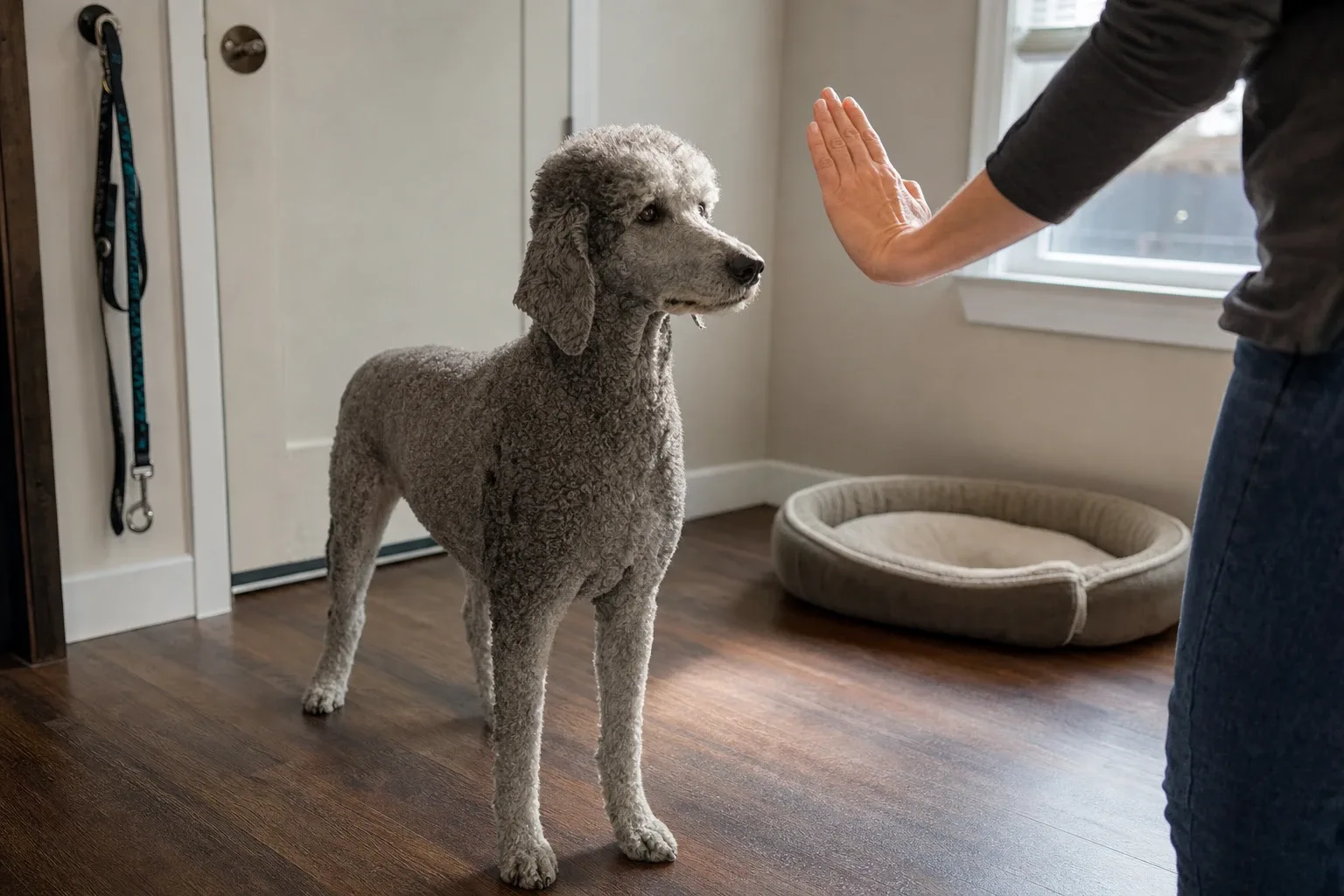
- Make sure your dog sees you first. Then use short, identical hand signals for “Come,” “Stop,” or “Follow me.”
- Replace repeated calling with calm, clear movements. Don't get louder or scold him when he doesn't respond.
- During his rest time, approach slowly from the front or slightly off to the side until you're in his line of sight. Give him room to turn around or walk away.
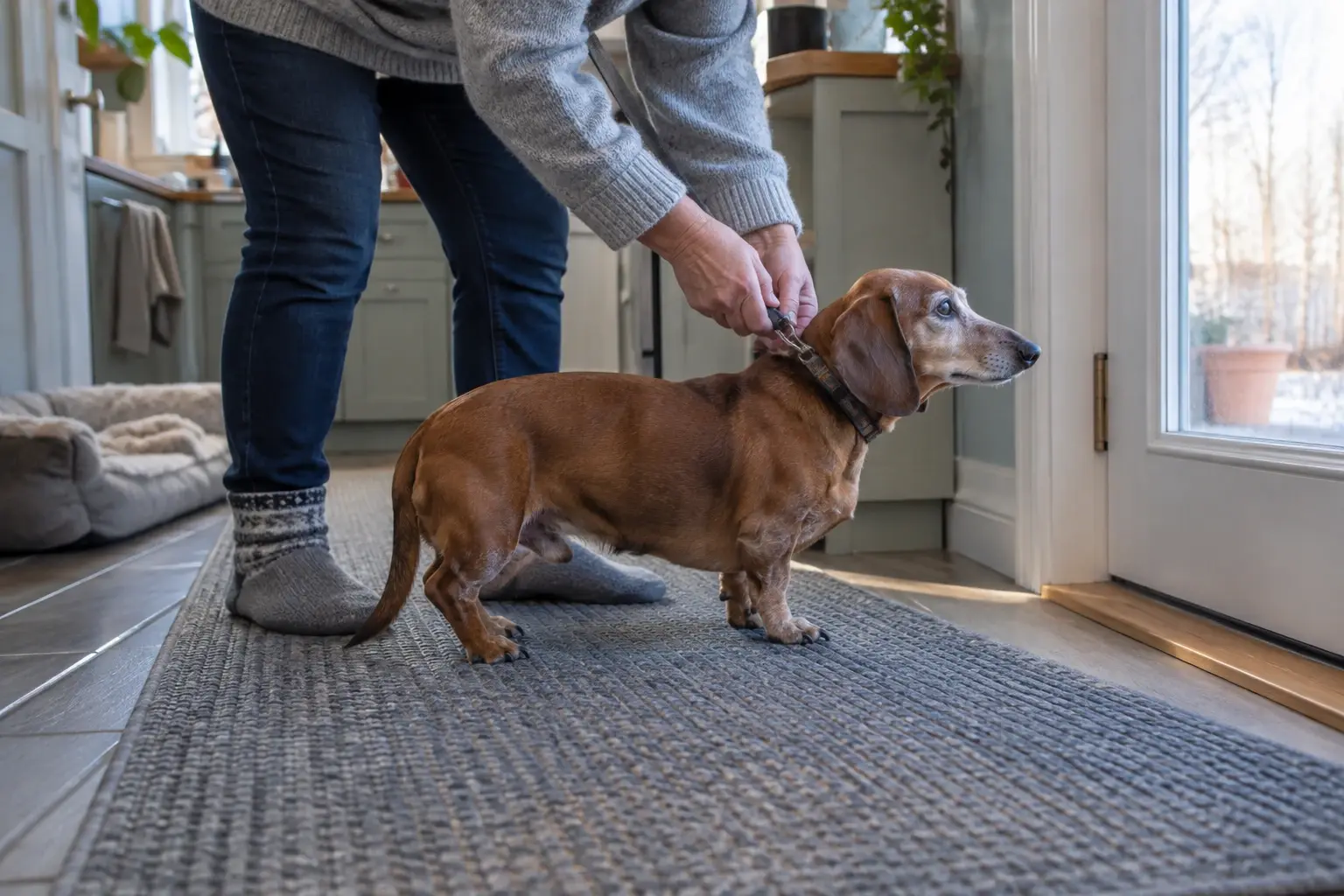
- Before leaving the house, check the leash, the doors, and your surroundings. Outdoors, never count on your dog hearing you call him.
You can record these observations alongside other changes in an older dog's daily life in a simple table, appetite, rest, mobility, and grooming, for example. You'll find more ideas for everyday monitoring in our guide to caring for senior dogs: home environment and daily routine.
What Communication Works for Dogs with Reduced Hearing?
Build Repeatable Visual Signals
Each movement should carry exactly one meaning, and everyone in the family should use it the same way. A downward-facing palm, an arm sweeping toward your side, or a steady light cue sticks in your dog's memory far better than gestures that change on a whim. Move slowly and clearly. Don't stack several hand signals in a row right in front of your dog.
Start practicing at a natural moment when your dog is already looking at you. If he follows you or stays put, a gentle touch, a word of praise, and the usual reward are enough. Don't launch into the exercise suddenly while his back is turned or while he's asleep.
Gentle Cues Through the Floor
If you need to wake him or get his attention, step into his line of sight first. Alternatively, your footsteps can create a soft, predictable sound or a light vibration through the floor. Don't stomp, don't bang on the table, don't approach abruptly, and avoid strong vibrations. Cues like those tend to unsettle your dog even more.
How Can You Reduce Startles and Disorientation at Home?
Keep furniture, your dog's bed, his food bowl, and the route to the door in their familiar spots. Don't let objects suddenly block his usual walkways, and don't leave doors half-open in places that used to be clear. Stairs, entryways, and tight corners should stay especially well-lit, uncluttered, and easy to navigate.
If your dog startles easily around people or other animals, set up a quiet retreat corner at his resting spot. Ask visitors to make themselves visible first and then approach from the side. If there are children in the household, set one rule in stone: while the dog is sleeping, eating, or retreating to a corner, he is neither touched nor followed.
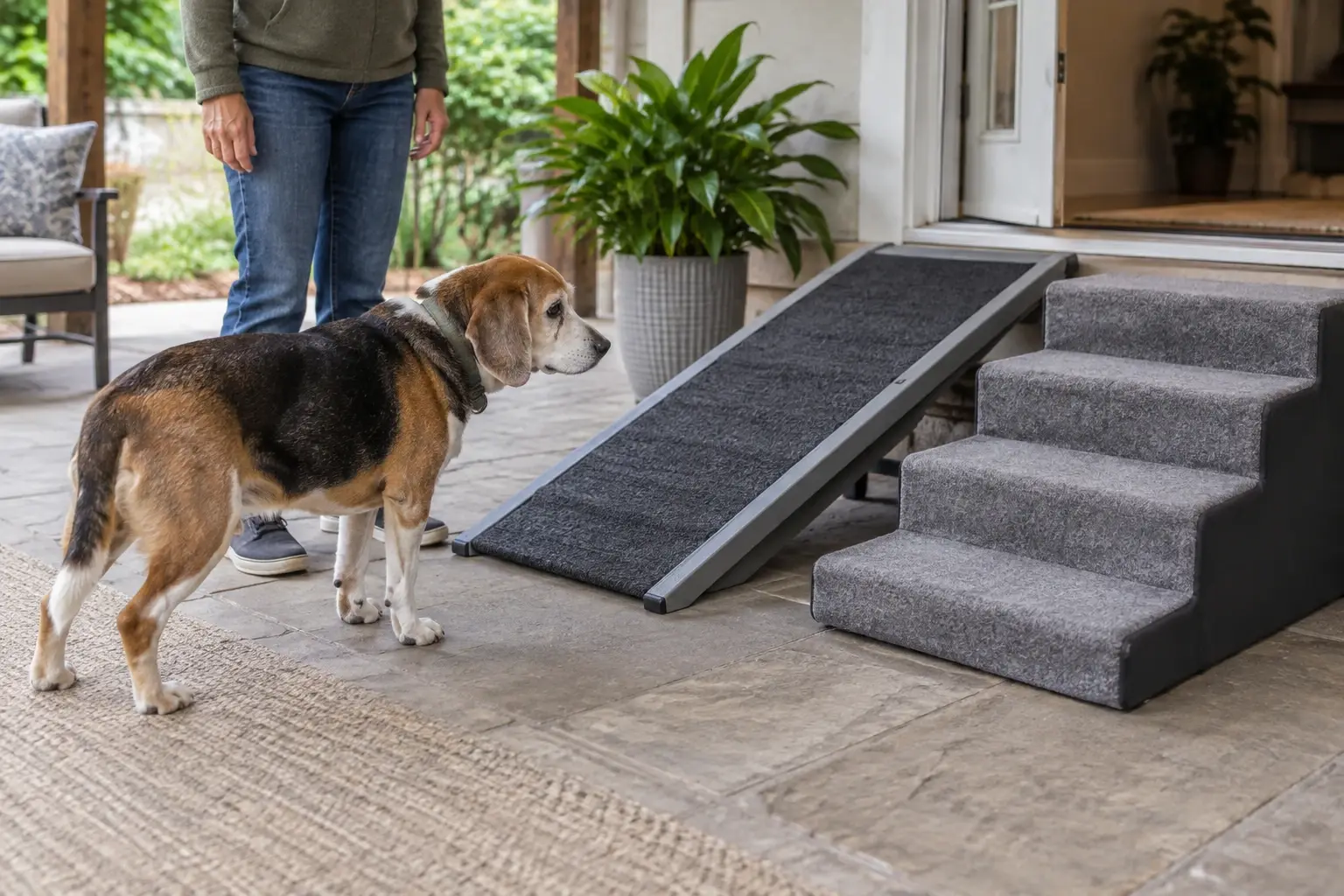
For practical home adaptations, see the senior-dog care guide. Select equipment for the individual dog's comfort and safety; a product purchase does not explain a new health change.
A Practical Observation Log
Keep notes for three days, using the same categories every time:
1. Situation: Waking up, eating, moving around the house, being outdoors, or someone entering the room. 2. Signal: Did your dog see you? Did he respond to a hand signal or to the way you approached? 3. Reaction: Calm, hesitant, suddenly startled, searching for the direction of the sound, or not attentive at all. 4. Environment: Was it dark, cramped, or noisy? Had furniture been moved? 5. Outcome: Did anything change after you approached from the front, used a consistent hand signal, or picked a calmer route?
This log isn't a test for diagnosing your dog. It's a tool for spotting recurring patterns. If the change appears suddenly, keeps getting worse, or is already affecting his eating, rest, mobility, or safety, bring your notes with you to the vet. This article is no substitute for a veterinary exam.
Frequently Asked Questions
Should I still talk to my dog if he can't hear me call?
Yes, keep speaking to him calmly. He may still pick up on the tone of your voice and the rhythm of your interactions. Just pair important signals with a consistent hand signal or a visible cue as well. Outdoors, never rely on voice recall alone.
Can I touch an older dog from behind to wake him?
It's not recommended. Step into his line of sight from the front or slightly off to the side first, wait a moment until he notices you, and then approach gently. That makes a startle reaction much less likely than an unexpected touch.
Do I need to rearrange all the furniture right away?
No. Start by keeping familiar paths clear, removing trip hazards and objects blocking doorways, and watching where your dog hesitates most often. Change only one area at a time so you can gauge the effect.
Is a change in hearing always just a sign of old age?
At home, you can document the changes, but the underlying cause can't be determined from a missed response alone. If other new behavioral changes appear or everyday safety is affected, describe the specific situations and time frames to your veterinarian.
Related reading
- Old Dog Not Responding to Name? Hearing or Cognition
- Creating a Senior Dog-Friendly Home: A Room-by-Room Safety Guide
References
- Attitudes of Australian Veterinary Professionals to Diagnosing and Managing Canine Cognitive Dysfunction. Veterinary sciences. 2025. PMID: 40266994. DOI: 10.3390/vetsci12030272.
- AAHA Senior Care Guidelines for Dogs and Cats — Journal of the American Animal Hospital Association (2023). DOI: 10.5326/JAAHA-MS-7343.
- AAHA: evaluating the unhealthy senior pet.
For individual health questions, your veterinarian remains the best partner.