Your senior dog finishes dinner, then follows you to the kitchen the way she always has, and you are left holding the bag and wondering whether the portion is right. Choosing a weight-management food for an older dog is mostly a practical task: reading labels carefully, measuring what goes in the bowl, and watching how your dog responds over the following weeks. This article gives you a checklist for both buying and transitioning, plus a simple way to track progress.
One brief note: a weight-loss plan works best when your veterinarian knows about it, especially if your dog has other conditions or takes medication.
What the research says about structured weight loss
Weight loss in dogs is well studied, and the findings are encouraging for owners who follow a plan.
- A 3-month prospective observational cohort study followed weight loss in 926 overweight dogs across 340 veterinary practices in 27 countries.
- 896 of the 926 dogs (97%) lost weight, with a mean weight loss of 11.4 ± 5.84%.
- Dogs were fed an initial energy allocation of 60-80 kcal/kg target body weight^0.75/day depending on sex and neuter status. That calculation is something your vet or a clinic weight program can do for you; it is not something to derive on your own from a product label.
- The dogs' median age at the start was 74 months, with a median body condition score of 8 on a 9-point scale, so many participants were dogs much like the seniors we write about.
- Results also varied by dog: sexually intact dogs lost more weight than neutered dogs, and female dogs lost more than male dogs.
The takeaway is not a formula to copy at home. It is that structured programs, built around a defined calorie allocation and consistent follow-up, helped nearly every dog in the study lose weight. Your job at home is to pick a suitable food and run the daily routine reliably.
What makes a food suitable as senior dog food for weight loss
Shelves and search results are full of "weight management" labels, but the product details live in the fine print. Before you buy, check each of these:
- Complete and balanced statement. Look for an AAFCO nutritional adequacy statement for adult maintenance (or all life stages). A weight-loss food still has to be nutritionally complete, because your dog will be eating it as the main diet for weeks or months.
- Calories per serving, clearly stated. Compare foods by calories per cup or per kilogram, not by marketing claims. This is the number that makes portion math possible.
- A feeding guide you can actually use. Feeding charts should offer ranges by body weight. Note whether the chart refers to current weight or target weight; weight-management products often use target weight, which matters.
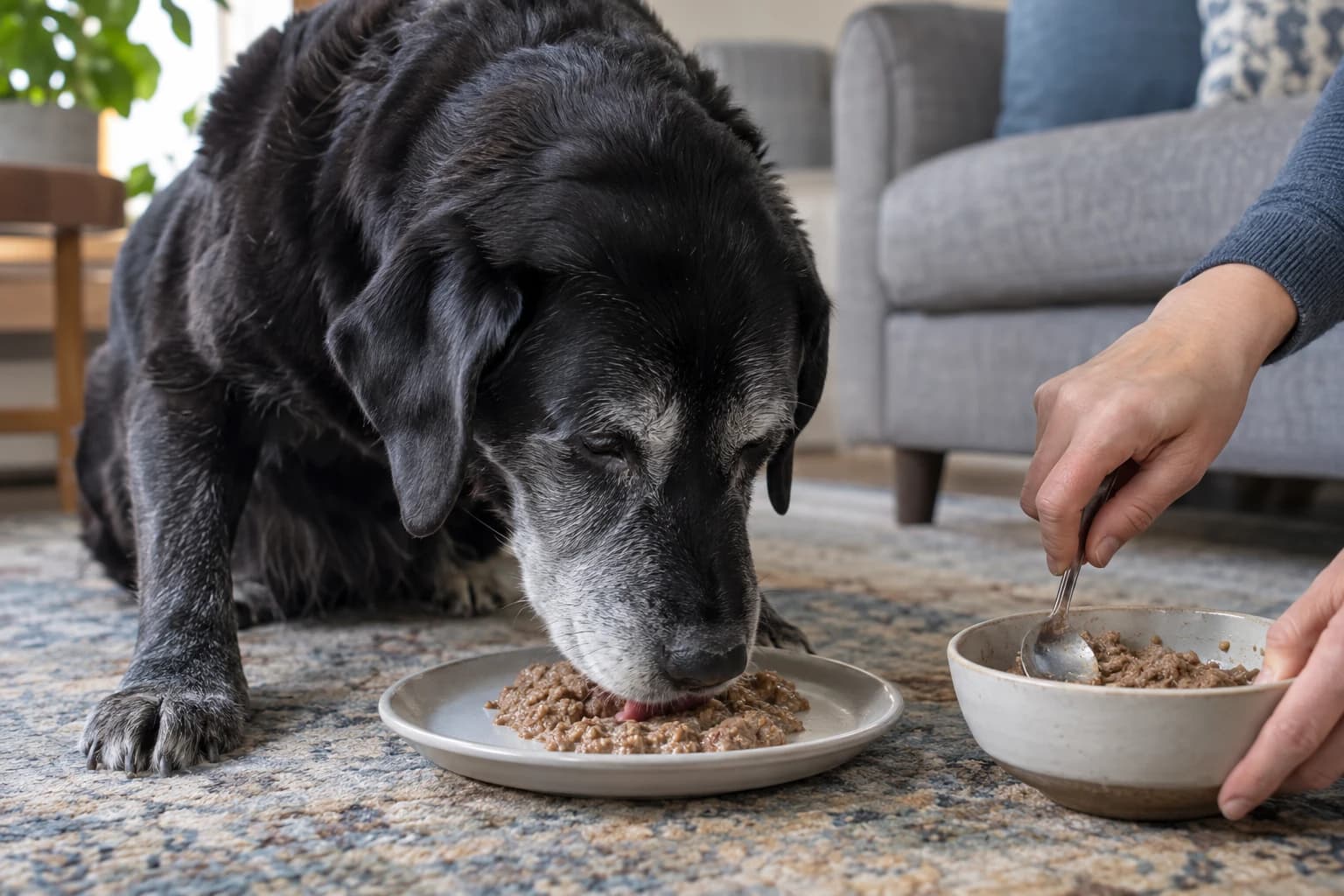
- Senior-appropriate format. If your dog has dental trouble, a kibble-only weight product may not be practical. Our guide to soft dog food for senior dogs with bad teeth covers how to compare textures without giving up the nutrition you need.
Buying checklist: questions to answer before checkout
Run through this list for any product you are considering:
- Is the AAFCO adequacy statement present, and for which life stage?
- Are calories listed per cup and per kilogram?
- Does the feeding guide distinguish target weight from current weight?
- Do you know the daily amount before you open the bag, and does that amount fit your vet's overall plan?
- Is the bag size matched to your dog? A small senior dog can take months to finish a large bag, which affects freshness.
- If the product makes weight-loss promises on the front, does the label detail actually support the routine you have in mind?
If you want a broader refresher on label sections before comparing products, our senior dog food guide walks through the main parts of a label and how feeding needs change with age.
Portion measurement: the step most plans fail on
One reason home weight-loss efforts stall is that portions drift. The University of Liverpool feeding-practices review of 95 dogs starting a weight-loss program found that only 36 of 95 owners (38%) measured portions with a measuring cup, while 37 of 95 (39%) relied on visual estimation. The same review recorded how common extras were: 43% fed purchased treats, 85% fed human food as treats, and 25% fed table scraps.
You do not need perfect precision, but you do need consistency:
- Use an actual measuring cup or a kitchen scale for the main meal. A scale removes the scoop-vs-heaped-scoop problem entirely.
- Count treats as part of the day's food, not as extras. If your weight-management food can double as treat pieces, use a few of the daily kibble ration for training and rewards.
- Measure for at least the first few weeks, until the routine feels automatic. Eyeballing reintroduces drift quietly.
- Keep the same measuring tool in the same place so nobody in the household improvises.
Transition plan: a two-week changeover you can follow
Dogs generally handle food changes best when the new food is introduced gradually. Here is a simple structure you can repeat:
1. Days 1-3: roughly three-quarters old food, one-quarter new food, mixed together. 2. Days 4-6: half and half. 3. Days 7-9: one-quarter old food, three-quarters new food. 4. Days 10 onward: all new food, at the agreed daily amount.
Watch stool quality and appetite during the changeover. If your dog refuses the mix or you notice loose stools, slow the schedule down rather than abandoning it. Some seniors take longer, and that is fine. If your dog is a picky eater with supplements or medications mixed in, the same mixing logic in our article on mixing a supplement into wet food without settling applies to food transitions too.
Follow-up: a simple weekly log
Pick a consistent check-in, for example every Sunday:
- Weigh your dog if you can, or note visible changes such as how the collar or harness fits.
- Photograph the same side view each week. Side-by-side photos reveal gradual change better than daily glances.
- Note appetite, energy on walks, and anything unusual.
- Confirm the daily ration is being measured, and check whether anyone has been adding extras.
Share this log at your follow-up veterinary visits. If weight is not moving after several weeks on the agreed plan, that is useful information for the clinic, not a reason to cut portions further on your own.
Where supplements fit
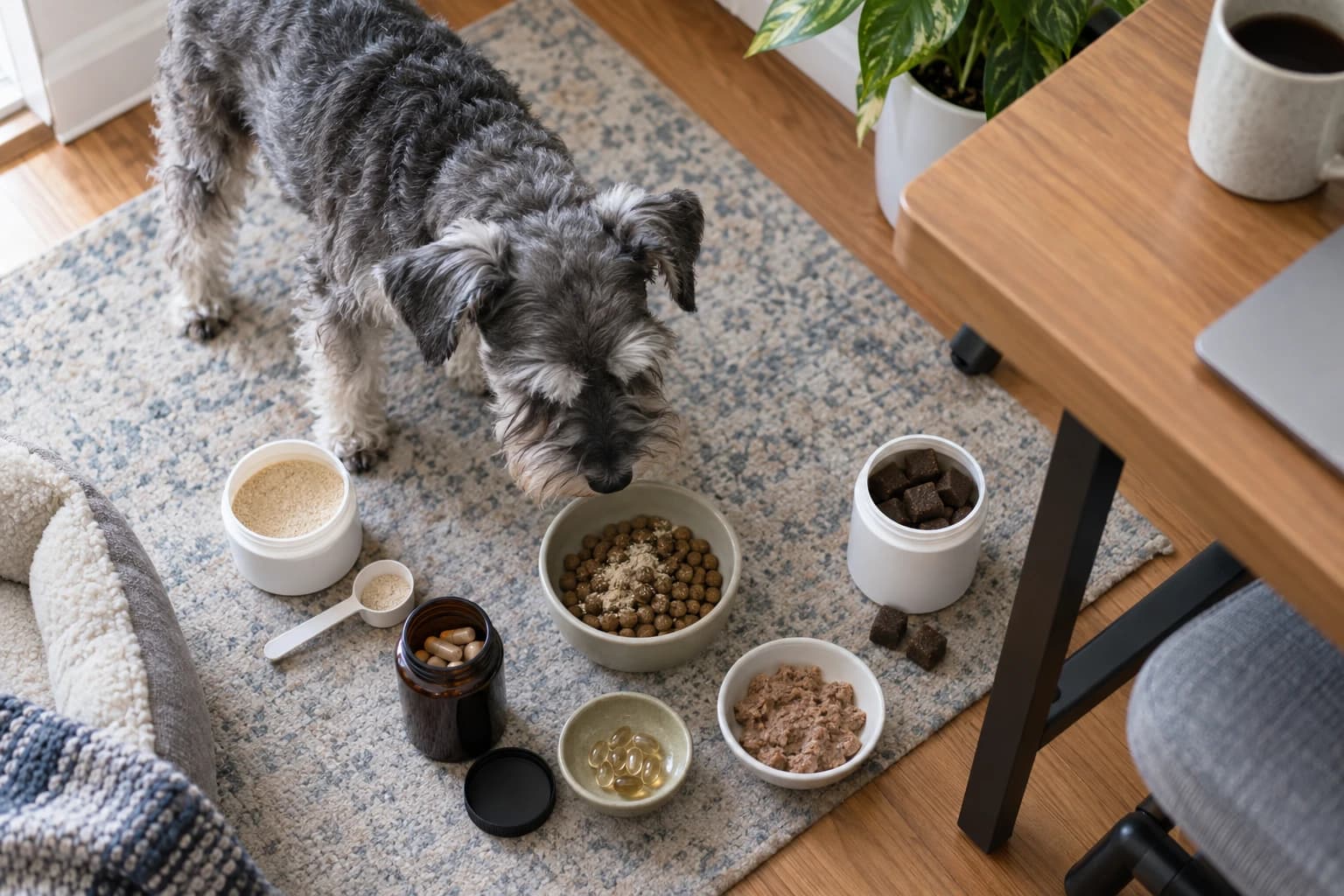
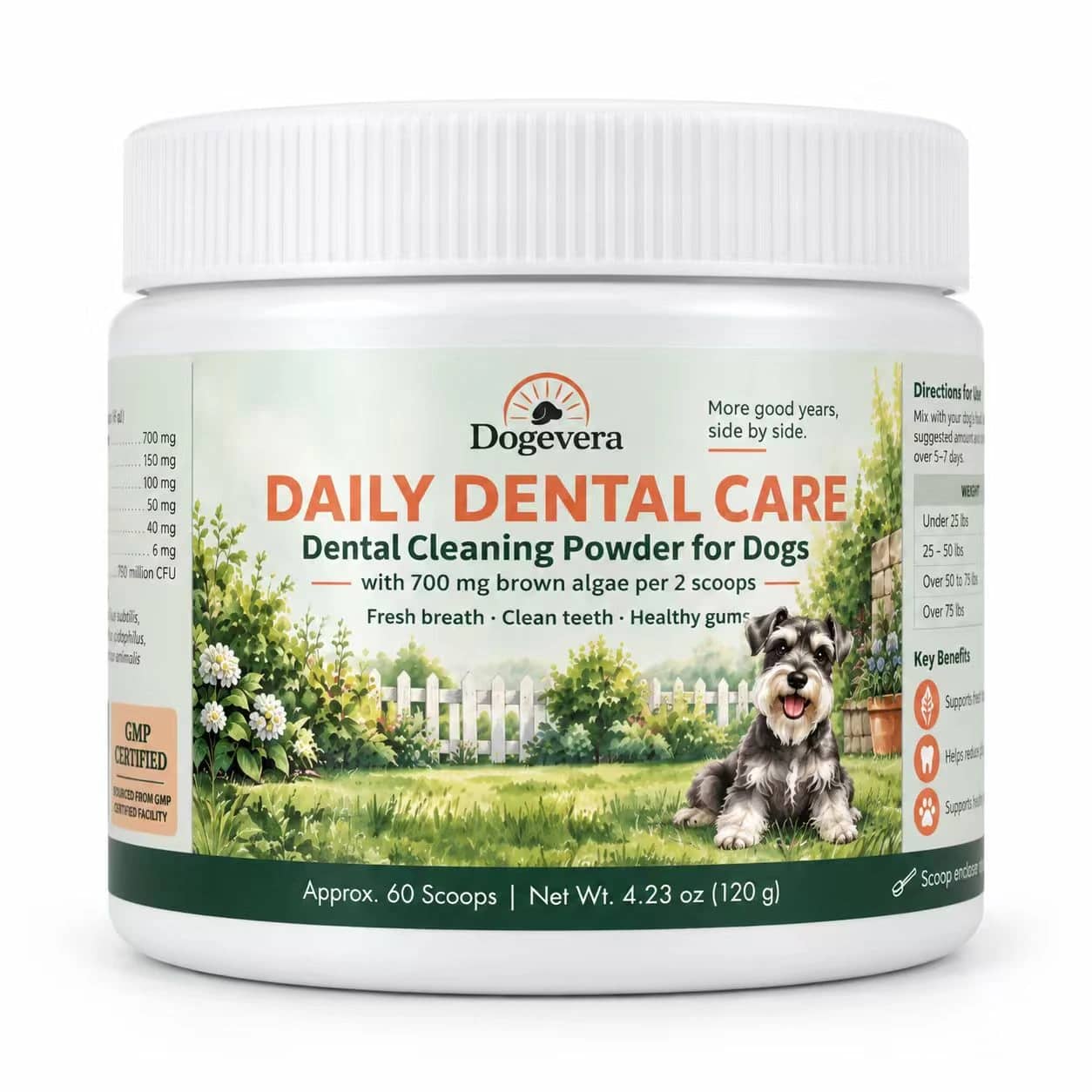
Weight management is a food and routine task, and no supplement treats excess weight. If you are considering any supplement alongside the new diet, remember that supplements sit under different rules than complete foods. Our shopper's guide to how dog supplements are regulated in the US explains what those rules do and do not require, which is helpful context for evaluating any product label that makes strong-sounding claims.
FAQ
Can I just feed less of my senior dog's current food? Portion reduction is part of most weight-loss plans, but a senior dog eating notably less of an ordinary food may take in less of some nutrients along the way. That is why weight-management diets are formulated to stay complete at lower calorie intake. Discuss the approach with your vet before cutting portions significantly.
How fast should a senior dog lose weight? Gradual loss is the norm in structured programs, and the right pace for your dog depends on individual factors your vet can assess. Use your weekly log to confirm the trend rather than aiming for a number on your own.
Do treats really matter that much? Yes, as unplanned calories they can quietly offset a careful plan. The Liverpool review found most owners in the program were feeding purchased treats, human food as treats, or table scraps before starting. Keep treats, but count them within the day's total.
Next step
Before you order anything, weigh your dog or note your best current estimate, photograph her side view today, and take the label details of the food you are using now to your next vet visit. Those three items turn a product decision into a plan you can actually track.
References
- European Pet Obesity Study: a 3-month prospective observational cohort study of weight loss in 926 overweight dogs across 340 veterinary practices in 27 countries. https://europepmc.org/article/MED/28886096
- Feeding practices review: information from 95 dogs attending the Royal Canin Weight Management Clinic, University of Liverpool (Wirral, UK). https://pubmed.ncbi.nlm.nih.gov/22005444/
For individual health questions, your veterinarian remains the best partner.