What we sell
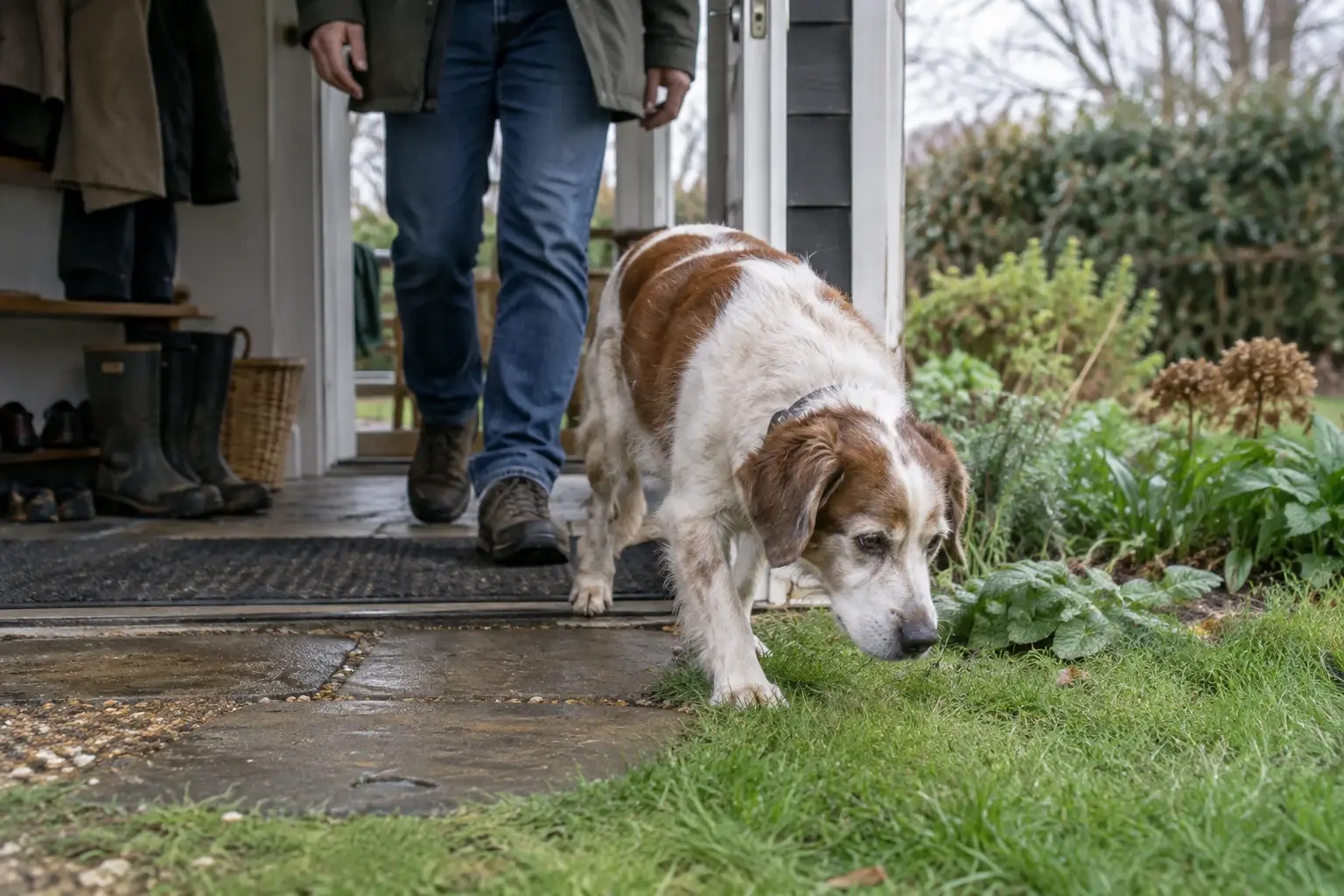
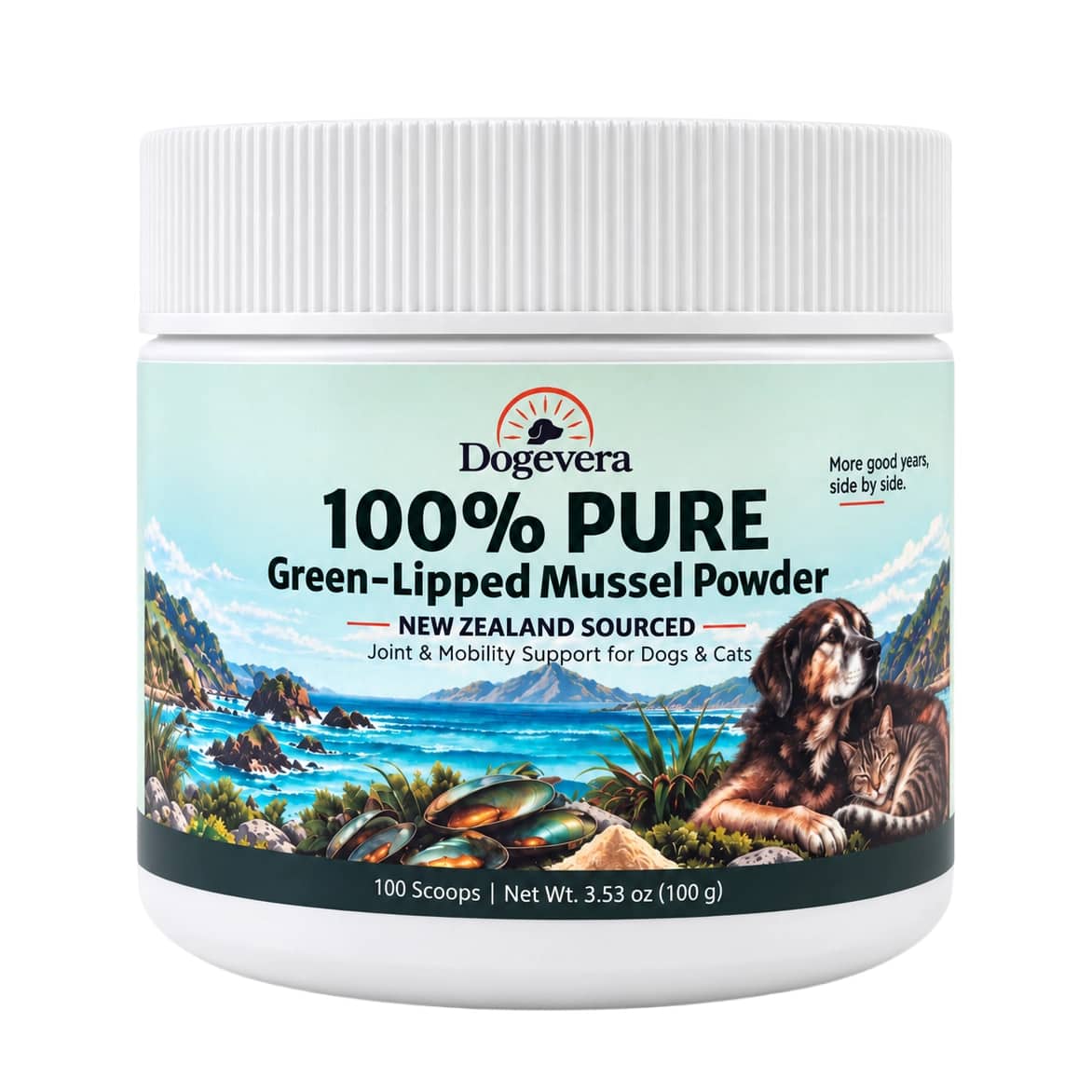
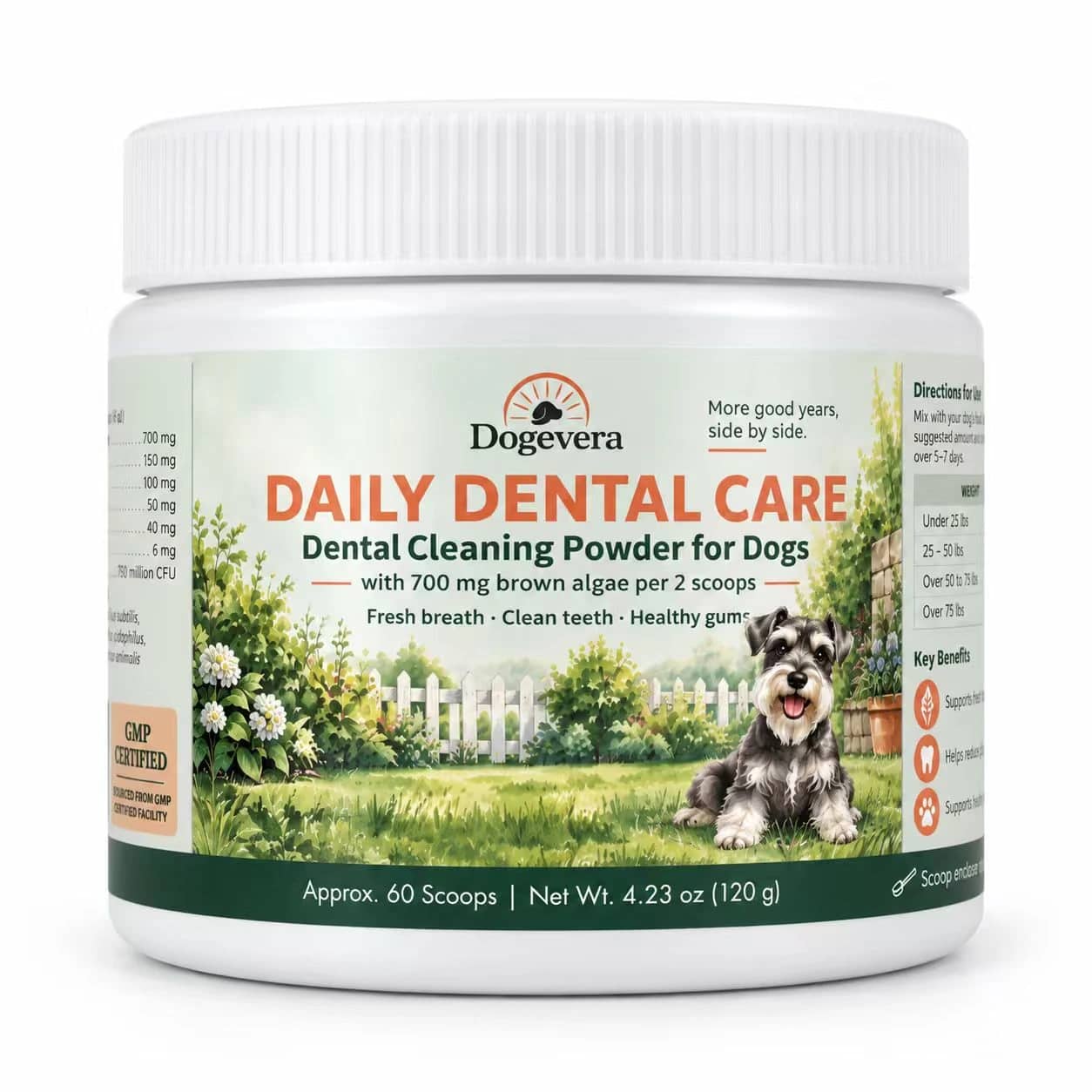
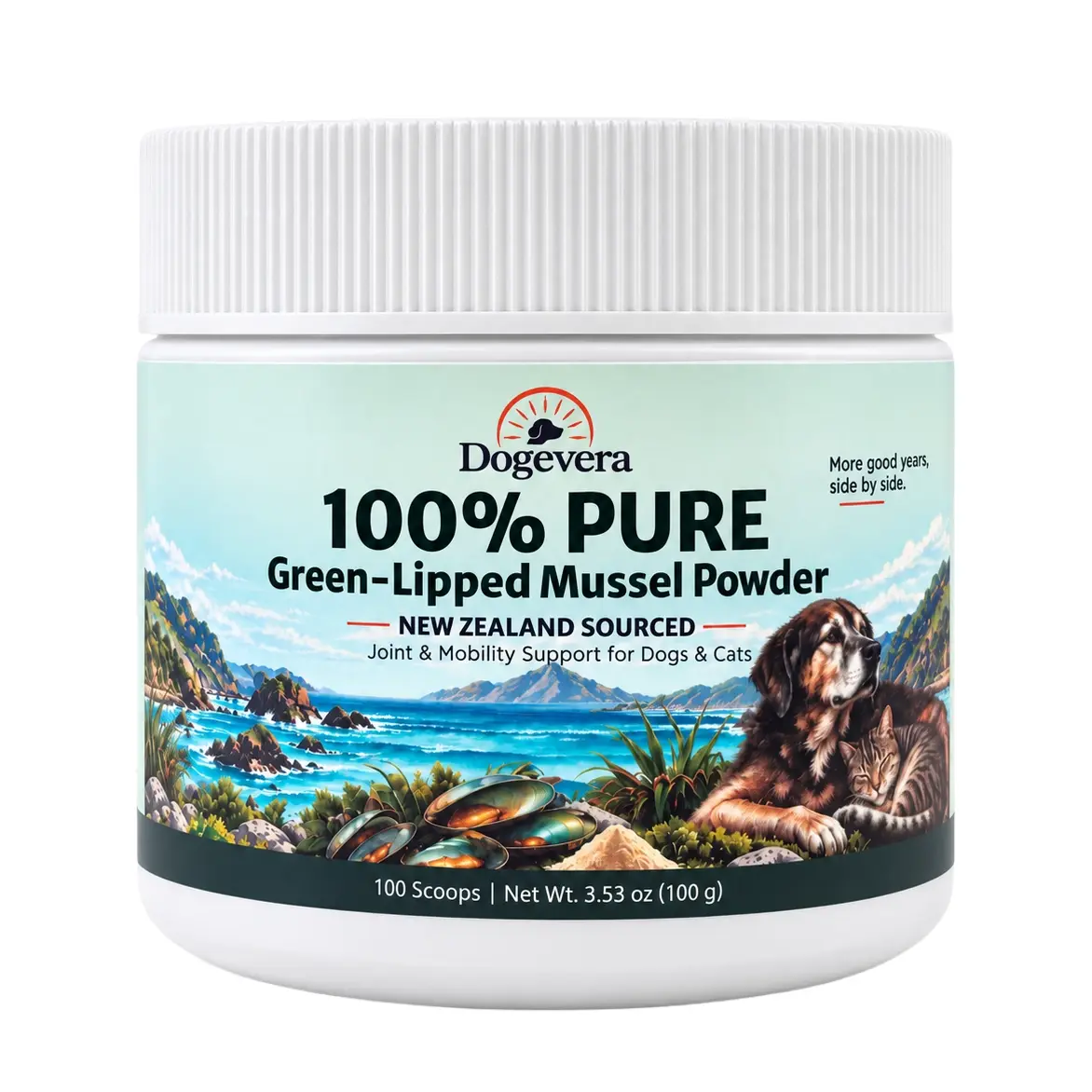
Green Lipped Mussel Powder for Dogs - Dogevera, 100% New Zealand Green Lipped Mussel, Hip & Joint Support, 100g$29.99
We sell this powder. It was not the product tested in the studies discussed here.
TL;DR
Your senior dog pauses on the kitchen floor, and you wonder whether to buy a joint supplement or change the setup at home. For senior dog arthritis home support, start with secure footing, easier access, a complete diet and the existing care plan, then consider whether a supplement has a clear role. Supplements do not replace diagnosis or treatment; new or sudden symptoms need prompt veterinary care, and an inability to stand or walk warrants urgent attention.
Start With the Surfaces Your Dog Uses
Before adding something to the food bowl, follow your dog's ordinary route from bed to water to the outside door. Look for places where paws slide, turns become awkward or getting up requires stepping straight onto a slick floor. Rugs or mats that stay firmly in place can provide more dependable footing in these areas. AAHA's chronic-pain guidance includes environmental changes, suitable activity and weight management within a coordinated care plan.
Make the route usable, not just one isolated spot:
- Beside the bed: Provide secure footing where your dog first stands, not only underneath the bed.
- Across the room: Look for slippery gaps between rugs, especially where your dog changes direction.
- At the bowls: Check whether your dog can approach, stand and leave without sliding.
- Near the door: Remove clutter and check that mats do not bunch up or move.
Watch normal movement rather than asking your dog to repeat something difficult. A note such as “back paws slid while turning toward the water bowl” is more useful than “seemed old today.”
This is maintenance rather than waiting for a crisis. Making everyday movement easier is a practical way to care for the dog; spending on the actual obstacle first also helps owners avoid buying products that do not address it.
Make Access Easier Before Buying Equipment
Consider whether your dog needs to reach the raised surface at all. A comfortable resting place on the floor may be a simpler choice than preserving access to a couch. Keep essential destinations, including water and the usual resting area, within an accessible route.
If a ramp or pet stairs are needed, compare the equipment with the space where it will be used. A ramp requires room for its slope and approach; stairs require manageable steps and secure paw placement. Neither is automatically the better option. The senior-dog ramp versus stairs guide explains how dimensions, footing and placement affect that choice.
Before ordering, write down:
- The height of the destination and the available floor space.
- How the equipment will stay secure at both ends.
- Whether your dog has room to approach and turn away.
- Whether access can be blocked when the setup is not in use.
Do not use a difficult climb as a test of whether your dog “really needs” help.
Keep a Complete Diet as the Foundation
A joint-support powder is not a replacement for a complete meal. In the US, look for the food's nutritional adequacy statement rather than relying on a senior-dog picture or a joint-health phrase on the front of the bag. The AAFCO explanation of nutritional adequacy statements describes how to identify a complete and balanced food for the stated life stage. A supplement is not a replacement for that diet.
For your purchase checklist, record the exact food, the amount offered, what your dog actually eats, and any toppers or treats. Keep a prescribed diet within the existing treatment plan rather than replacing it because another food advertises joint support.
A complete diet also matters when considering added nutrients. More is not automatically better: adding nutritional supplements can create unnecessary overlap, and the food label may not disclose every nutrient amount needed to calculate the combined intake yourself. Mark unknown amounts as unknown instead of assuming they are absent. AAFCO's consumer supplement guidance explains why baseline diet, added nutrients and safe use levels all matter when assessing overlap.
Compare Supplements Against the Whole Routine
Start with a concrete question: what would this product add that is not already part of the routine?
Place the proposed supplement beside the labels for current joint products, multivitamins, oils, chews and fortified toppers. Compare:
- Ingredient identity: Record the named ingredient and its form, not just “mobility blend.”
- Amount per serving: Look for each active ingredient's quantity in plain text. A combined blend weight does not reveal individual amounts.
- Serving directions: Use the exact product's instructions, not a scoop size borrowed from another jar.
- Other ingredients: Include carriers, flavorings and allergen information in the comparison.
- Evidence: Separate research about an ingredient or preparation from evidence about the finished product being sold.
The guide to whether dog joint supplements work expands on why evidence for one preparation should not be treated as a promise for another. Ingredient names alone are not enough to establish equivalent results.
If you are considering green-lipped mussel powder for dogs, put its ingredient declaration, serving guide and shellfish information on the same comparison list. Mussel is a shellfish; it is not a shellfish-free option. A product page or an ingredient study does not establish that the product can replace the current treatment plan.
Before paying, also check package quantity, ongoing cost under the labeled directions, return terms and the availability stated at checkout. Leave products with missing essential information on hold rather than filling the gaps with assumptions.
Use One Home-and-Purchase Checklist
Keep this list with your dog's existing treatment instructions. Home modifications belong alongside the care plan, not in competition with it. Record the household changes separately from any product changes so that the treating team can interpret follow-up observations.
- Fix now: Identify a slipping surface, obstructed route or unnecessarily difficult destination that can be made easier.
- Keep consistent: Record prescribed medicines, food and activity instructions. Do not change them because a supplement has been added.
- Gather before buying: Save the full proposed product label, including ingredients, amounts and serving directions.
- Flag overlap: Highlight repeated ingredients and any quantities you cannot establish.
- Clarify the plan: Ask whether the exact proposed product fits the current medicines, diet and other supplements, and what changes should trigger contact.
- Record ordinary observations: Note the location, movement and circumstances when your dog hesitates or struggles. Record home changes and product start dates separately.
Start the household review before access becomes an everyday struggle. There is no need to wait for a supplement decision before securing a loose rug or clearing the path to water.
Keep Activity Within the Existing Plan
Use the activity plan already agreed for your dog rather than a universal walk length from a supplement article. Note which familiar surfaces and movements are comfortable, provide secure routes and avoid asking your dog to repeat a painful movement for a test or video. If weight is part of the management plan, agree on food portions and an appropriate target with the treating team instead of making an abrupt diet change.
When to Stop the Shopping Checklist
New severe difficulty moving or a sudden change needs assessment rather than a supplement experiment. Inability to stand or walk is an emergency concern in VCA's emergency-care guidance. Call for help with safe transport instead of forcing your dog to use a ramp or continue a walk. For less sudden changes, record what you see and arrange a review; the senior-dog sudden-stiffness guide explains useful observations without trying to diagnose arthritis at home.
FAQ
Does stiffness mean my dog has arthritis?
Do not turn a home observation into a diagnosis. Describe what you see, such as difficulty rising after rest or hesitation at a particular step, so the change can be assessed rather than dismissed as age.
Should I buy a supplement before changing the house?
Not as a prerequisite. Review footing and access first, then evaluate the proposed supplement against the complete diet and existing plan. These are separate decisions with different purposes.
Can I stop prescribed medicine if movement looks better?
Keep prescribed treatment unchanged unless the treating clinician directs otherwise. A better day after several household changes does not establish which change helped or justify replacing the treatment plan.
What if two supplements share an ingredient?
Highlight the duplicate and collect the declared amounts and serving directions for both. Do not assume that different brands, formats or front-label purposes make them suitable to combine.
Sources
- AAHA: Acute vs. Chronic Pain. Context for individualized, coordinated management and environmental support.
- AAFCO: Reading Labels. Nutritional adequacy and complete-and-balanced statements.
- AAFCO: Supplements. Diet and added-nutrient overlap; not evidence for any particular joint product.
- VCA ASEC: Emergency and Critical Care. Inability to stand or walk warrants emergency assessment.
Related reading
For individual health questions, your veterinarian remains the best partner.