
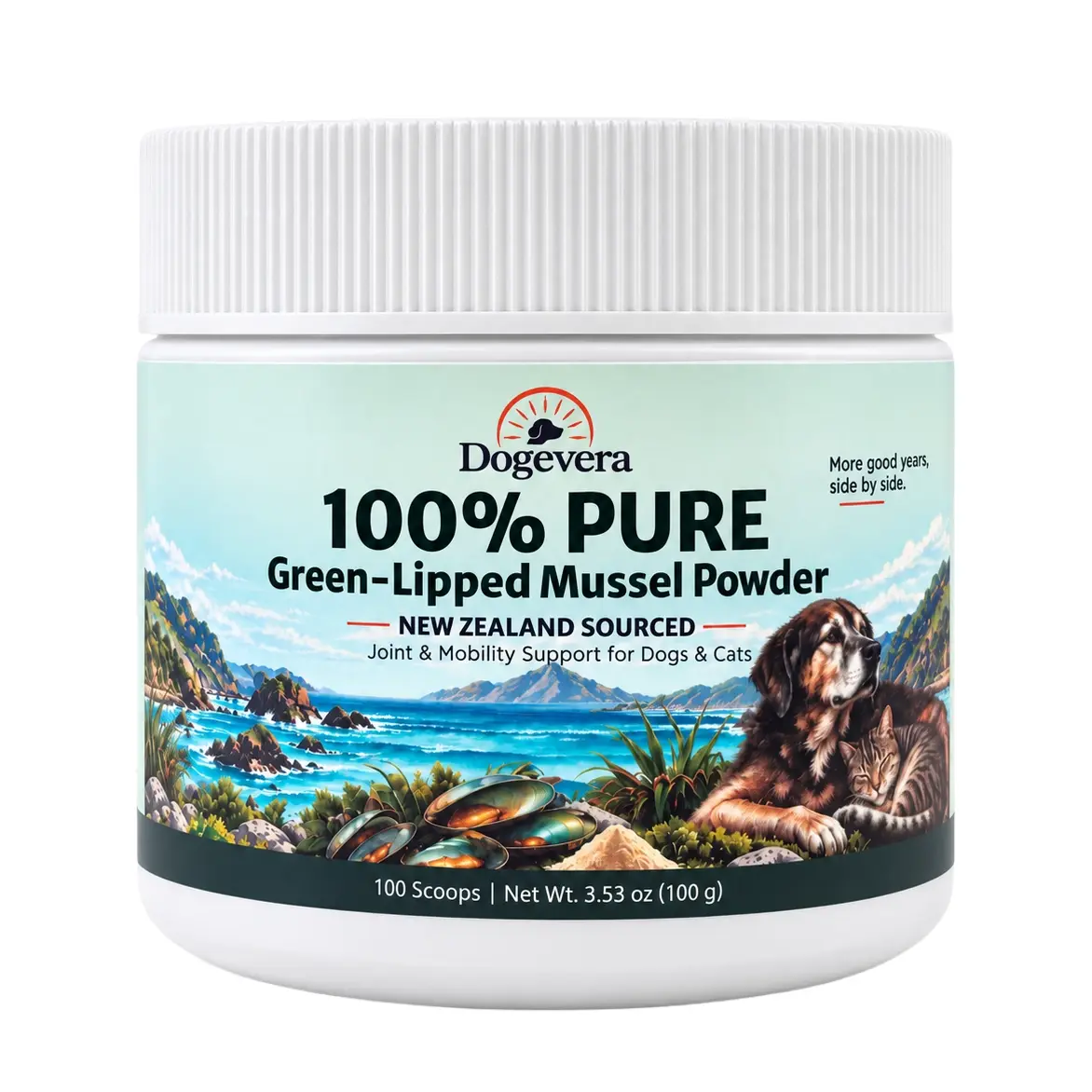
We sell this powder. It was not the product tested in the studies discussed here.
TL;DR
Some dog joint supplements have shown modest benefit in controlled trials, typically reducing pain scores or improving mobility in dogs with osteoarthritis. Results depend heavily on the specific formulation, dose, and product quality. No supplement rebuilds cartilage, reverses joint damage, or replaces veterinary care.
What canine trials have actually measured
Most published studies evaluate pain scores, lameness grades, or owner-reported mobility changes in dogs diagnosed with osteoarthritis. Researchers use veterinary orthopedic exams, force-plate gait analysis, or standardized questionnaires to track changes over weeks or months. A product that reduces pain does not necessarily restore lost cartilage or prevent disease progression.
Evidence differs across ingredients and preparations. Findings for glucosamine, chondroitin and green-lipped mussel should be read in the context of each trial and the wider evidence, rather than as a ranking of ingredient names. See the green-lipped mussel evidence review for formulation-specific limits.
Studies of specific omega-3 interventions cannot justify changing prescribed pain medication or assuming that every fish-oil product works the same way. Discuss the complete management plan and the actual EPA/DHA information with your veterinary team.
Why results differ between formulations
Two products listing the same ingredient on the label can deliver very different outcomes. Molecular weight, extraction method, and processing affect bioavailability. A glucosamine product may use sulfate, hydrochloride, or a combination; chondroitin may be sourced from bovine, porcine, or marine cartilage. Green-lipped mussel can be freeze-dried whole powder, lipid extract, or stabilized oil, and only specific preparations have been studied.
A study of one amount and preparation does not validate a different concentration or product. Research quantities are not home dosing instructions. Follow the product label and the individual veterinary plan.
Ask what quality information is available and what it covers. A report on a raw ingredient, a manufacturing registration and a finished-batch analysis answer different questions; none by itself proves clinical benefit.
How to judge a product without overclaiming
Start with the ingredient panel, not the front-of-package claims. Check for specific ingredient forms (for example, glucosamine sulfate rather than just "glucosamine"), disclosed sourcing, and amounts listed in milligrams per serving, not percentages or proprietary blends.
Look for products that name the dose used in research and provide batch testing results. A certificate of analysis or third-party verification from an independent lab adds accountability.
Avoid products claiming to rebuild cartilage, cure arthritis, or replace veterinary treatment. Those statements are not supported by canine research. A supplement may support joint comfort or reduce inflammation; it does not repair structural damage.
New stiffness or difficulty getting up should be assessed before it is attributed to aging or used to choose a supplement. Keep comfortable observations while seeking advice, then agree on any follow-up period with the clinic. An unchanged home log is useful information, but cannot alone prove that a product works or does not work.
What a supplement cannot do
A supplement cannot diagnose joint disease. A veterinary examination and any appropriate tests help distinguish possible causes of lameness.
Supplements do not replace pain medication, weight management, or physical rehabilitation. In many cases, a multimodal approach combining medication, controlled exercise, and environmental changes produces better results than a supplement alone.
When a finished product lacks relevant clinical evidence, be clear about that uncertainty. Ingredient research is not a substitute for a trial of the product in the relevant population.
FAQ
Do vets recommend joint supplements for dogs? Many veterinarians suggest joint supplements as part of a broader arthritis management plan, especially when the product has trial data behind it. A supplement is not a substitute for diagnosis, pain control, or monitoring.
Can a supplement prevent arthritis? Do not use the studies discussed here to claim prevention in healthy dogs or reversal of joint damage. Their populations, formulations and measured outcomes limit what can be concluded.
How do I know if a joint supplement is safe? Check for third-party testing, clear ingredient sourcing, and contact information for the manufacturer. Report any adverse effects to your veterinarian and consider filing a report with the FDA's Safety Reporting Portal for pet products.
Are human joint supplements safe for dogs? Some human formulations contain xylitol, excessive vitamin D, or other ingredients toxic to dogs. Use only products labeled for canine use, and consult your veterinarian before giving any human supplement.
Related reading
- How Long for Dog Joint Supplements to Work? A Practical Guide
- Hip and Joint Dog Chews: A Senior-Dog Guide
References
- Efficacy of a joint supplement containing eggshell membrane among other ingredients to improve the mobility of dogs with osteoarthritis: a multicenter double-blind randomized placebo-controlled study. Frontiers in veterinary science. 2025. PMID: 40530040. DOI: 10.3389/fvets.2025.1561793.
- A 2022 Systematic Review and Meta-Analysis of Enriched Therapeutic Diets and Nutraceuticals in Canine and Feline Osteoarthritis. International journal of molecular sciences. 2022. PMID: 36142319. DOI: 10.3390/ijms231810384.
For individual health questions, your veterinarian remains the best partner.