An older dog’s bowl can raise a practical question: should you choose a complete dog food for joint health, add a supplement, or use neither? Start by deciding what the product replaces. A complete food is intended to serve as the diet; a supplement is an addition and may bring extra calories and overlapping ingredients.
This guide is for label comparison, not diagnosis. New or worsening stiffness, pain, trouble standing, or other urgent changes should be discussed promptly with a veterinary professional.
First, decide what the product is replacing
Use this quick sorting step before comparing claims:
- Complete food: Compare it with the current main diet. Check whether the label describes it as complete and balanced for your dog’s life stage, then compare calories and feeding directions.
- Topper or treat: Treat it as an addition rather than a replacement for the main diet. Include it in your daily food plan.
- Joint supplement: It does not automatically replace the dog’s food. Check the declared ingredients, serving directions, calories, and any feeding cautions on that specific product.
- Food plus supplement: Review both labels together. The same ingredient can appear in the food and the add-on, so adding a supplement may double-count it.
If you are comparing supplement forms rather than complete diets, learn how dog joint supplements are evaluated before treating an ingredient name as proof that two products are equivalent.
Compare complete joint-support foods by label
A food marketed for joint support still needs to fit your dog’s everyday diet. Compare these points side by side:
- Diet status: Identify whether the product is a complete food or an additional product.
- Ingredient list: Note the named joint-related ingredients and where they appear in the list.
- Calories: Compare the food’s calorie information with the current food. A change in calorie density can alter how much food belongs in the bowl.
- Feeding directions: Use the product’s own directions rather than transferring portions from another food.
- Life-stage wording: Check that the label’s stated use matches your dog’s feeding needs.
- Evidence for the finished food: Separate evidence about the complete product from evidence about one ingredient used somewhere else.
A complete food can replace the current main diet only when its label supports that role. A joint supplement does not become a complete diet simply because it contains several familiar ingredients.
For broader label-reading context, compare senior dog foods by nutrition and feeding information before making a complete-food switch.
Compare add-on supplements without double-counting
Supplements deserve a separate review because they are added to the diet rather than used as the entire diet. Check:
- Ingredient identity: Record the exact ingredient names, not just the front-label phrase.
- Declared amount: Look for the amount of each relevant ingredient when the label provides it.
- Serving unit: Confirm whether the label refers to a scoop, chew, capsule, or another unit.
- Calories: Check whether the supplement adds calories to the daily routine.
- Other ingredients: Note carriers, flavors, oils, or animal-derived ingredients that may matter to your household.
- Product-specific directions: Keep the package directions with the product. Do not copy a serving from a different supplement or ingredient form.
Then compare the supplement with the complete food and every other add-on. Make a simple list with three columns in a notebook:
- Ingredient name
- Where it appears
- Declared amount or label wording
If an ingredient appears in several places but one or more labels do not declare an amount, record that limitation instead of estimating a combined total.
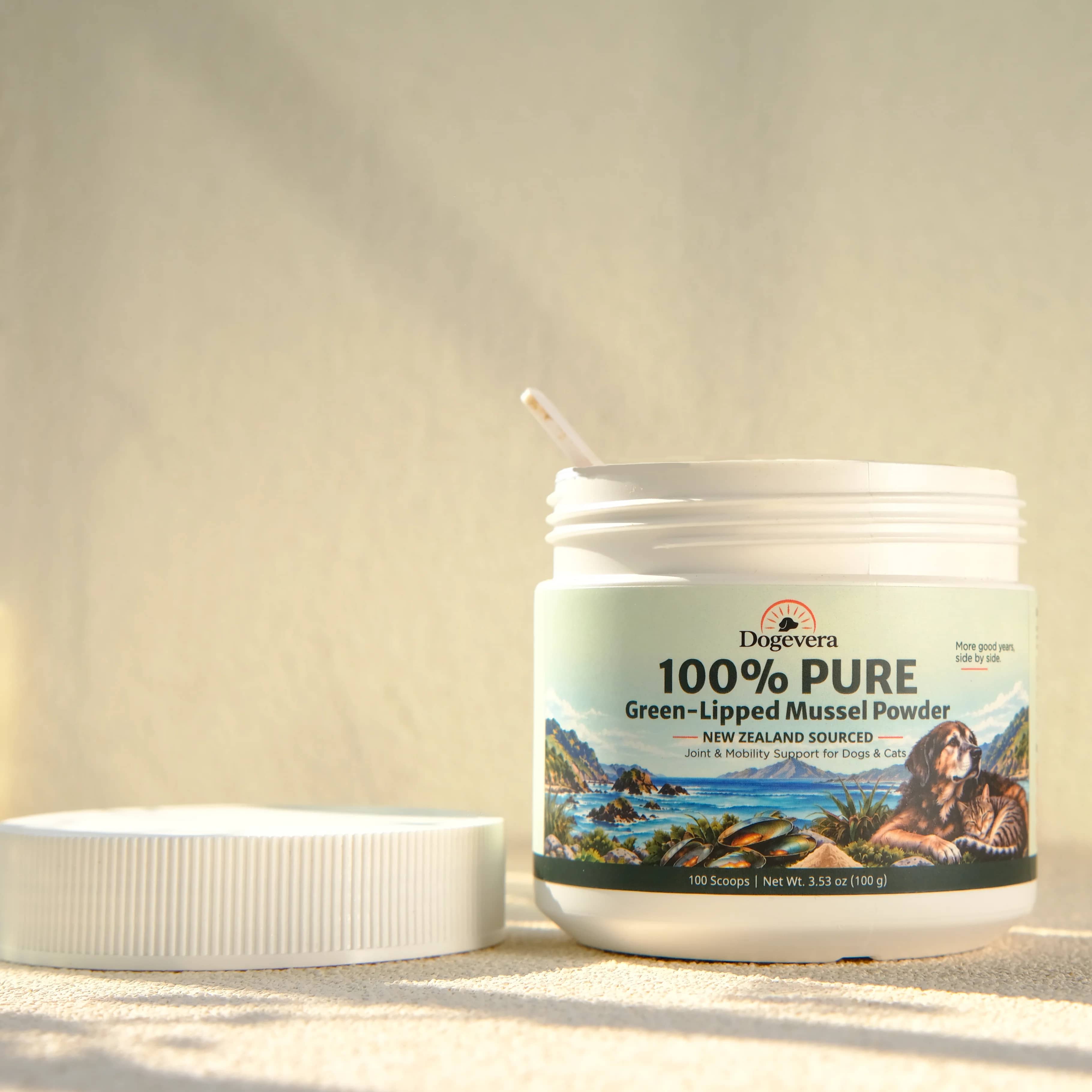
A green-lipped mussel product is one example of an add-on that needs its own label review. Read what canine green-lipped mussel studies can and cannot tell us before transferring research from one product form to another. If you are comparing a specific option, New Zealand Green Lipped Mussel Powder for Dogs should be checked by its current label and serving directions, like any other supplement.
Food or supplement: a practical comparison
Choose a complete food first when:
- You want one main diet to replace the current food.
- You need to compare calorie information and feeding directions in one label.
- Your priority is a complete daily feeding plan rather than an extra ingredient.
- You are prepared to transition and monitor how the new food fits your dog’s routine.
Consider an add-on comparison when:
- The current complete food is otherwise staying in place.
- You want to evaluate one additional ingredient separately.
- You can account for extra calories and overlapping ingredients.
- The product provides clear ingredient and serving information.
Pause the purchase when:
- The label does not make the product’s role clear.
- You cannot find the relevant ingredient amount or serving unit.
- Several products repeat the same ingredient and you cannot compare their declarations.
- The marketing language is stronger than the product-specific information.
For a closer look at purchasing criteria, use this green-lipped mussel supplement buyer’s guide to organize questions about the product label and evidence.
A repeatable label-check routine
Use this process whenever you compare a food with a supplement:
1. Write down the current complete food and every add-on. 2. Mark each item as a complete food, topper, treat, or supplement. 3. Copy the relevant ingredient names exactly as printed. 4. Record calories, serving units, and declared amounts where available. 5. Circle ingredients that appear in more than one product. 6. Decide whether the new item replaces the main food or is added to it. 7. Keep the package label, lot information, and purchase details together. 8. After any change, record what your dog ate and any noticeable reaction rather than changing several products at once.
This checklist helps separate a food change from a supplement addition. It also gives you clearer information to discuss if your dog’s eating, movement, or comfort changes.
FAQ
Can a joint-support food replace a joint supplement?
It may replace the current main food if its label identifies it as a complete food for your dog’s needs. It does not automatically make a separate supplement unnecessary, and adding both can create overlapping ingredients or extra calories.
Can I add a supplement to a complete joint-support food?
Check both labels first. Compare ingredient names, declared amounts, serving units, and calories. Avoid guessing a combined amount when one label does not provide enough information.
Are foods and supplements interchangeable when they list the same ingredient?
No. The product form, declared amount, serving directions, and evidence may differ. Compare the finished product rather than assuming that a shared ingredient name makes two products equivalent.
What should I do if my dog reacts after a new supplement?
Stop and record the product name, ingredient list, amount offered, time it was given, and what you noticed. Contact a veterinary professional for guidance, especially if the reaction is severe or urgent.
What is the simplest next step?
Gather the current food and add-on labels, then make the ingredient-and-calorie list before buying another product. If the comparison remains unclear, bring those labels and your notes to a veterinary appointment.
Related reading
For individual health questions, your veterinarian remains the best partner.