TL;DR
Your big dog still waits beside the food bin, but the walks are shorter and you’re wondering whether the same scoop still fits. When choosing senior dog food for large breeds, start with a complete diet suited to your dog’s needs, then compare calories, measurable daily portions, nutrient disclosures, and everything added outside the bowl. A senior label or joint-support claim alone is not enough reason to switch.
What should change as a large dog gets older?
The goal is to keep your dog comfortably nourished without letting portions drift away from current needs. A less active dog may need a different calorie intake, but age alone does not tell you whether to feed less, change foods, or choose a softer texture.
Look at the dog before comparing bags. Has the waist become less visible? Does the back or hindquarters look less muscular? Is food being left behind, or does chewing seem slower? Weight, muscle, appetite, and meal comfort are different questions, even when they change together.
Start reviewing the feeding routine while meals and movement are still comfortable, rather than waiting for an obvious problem. Maintaining nutrition and noticing changes early is better for the dog and can be more economical than paying for unnecessary add-ons or responding late to a problem.
New or sudden symptoms need prompt veterinary care, and supplements do not replace diagnosis or treatment.
Compare senior dog food for large breeds by daily portions
Use the nutritional adequacy statement to establish whether a food is complete and balanced for the appropriate life stage. Treats, toppers, and products labeled for intermittent or supplemental feeding are not equivalent to a complete daily diet. An existing prescribed feeding plan takes priority over a general shopping comparison.
Next, compare what actually goes into the bowl:
- Calories per serving: Note whether the label gives calories per cup, can, tray, or another unit.
- Calories by weight: Calories per kilogram can help compare foods without relying on differently sized scoops or packages.
- Suggested daily amount: Treat the feeding guide as a starting point, not proof that the portion suits your individual dog.
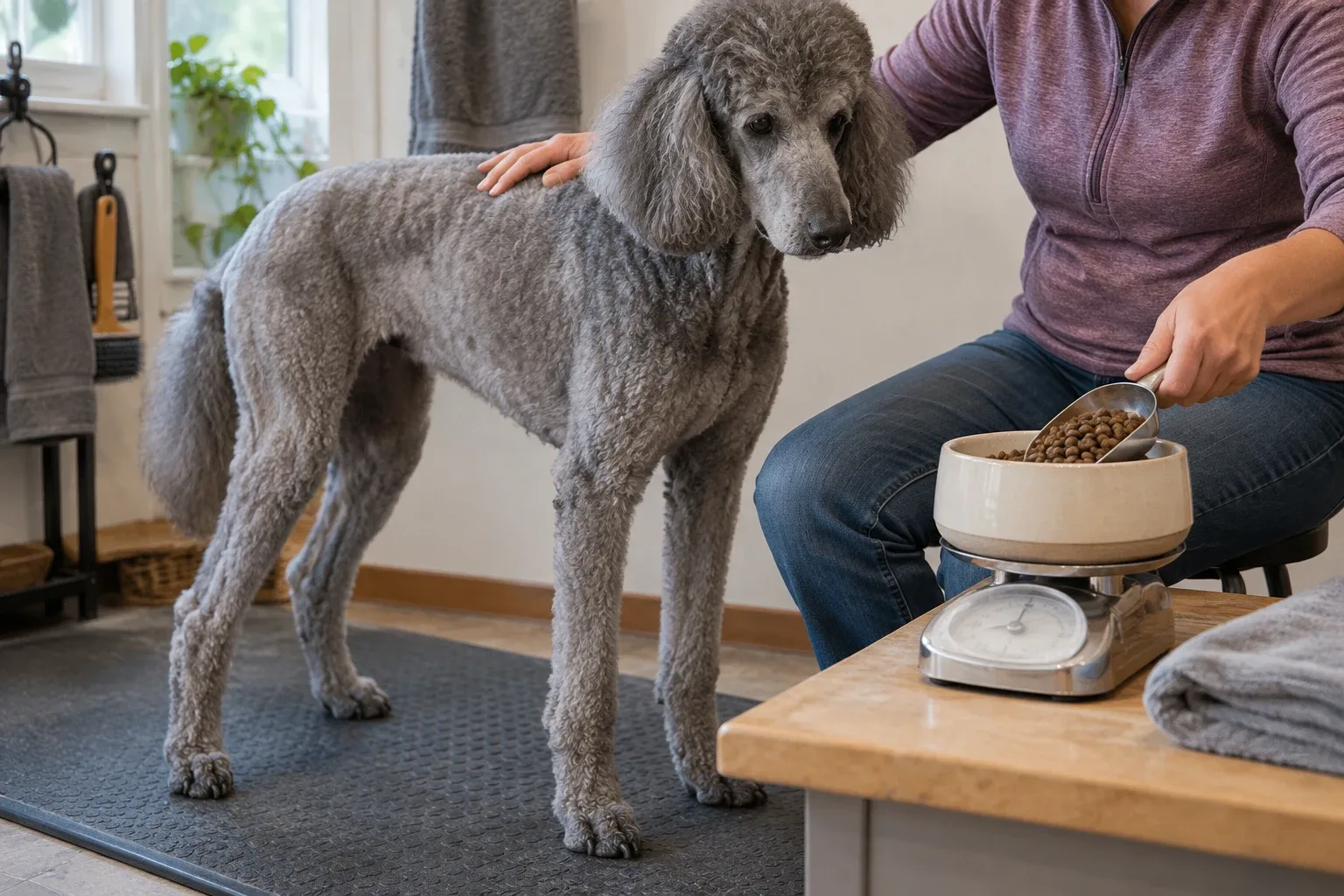
- Measurability: Choose a routine you can repeat reliably, preferably recording food weight when practical.
- Meal acceptance: A theoretically suitable food is not useful if your dog cannot comfortably eat it.
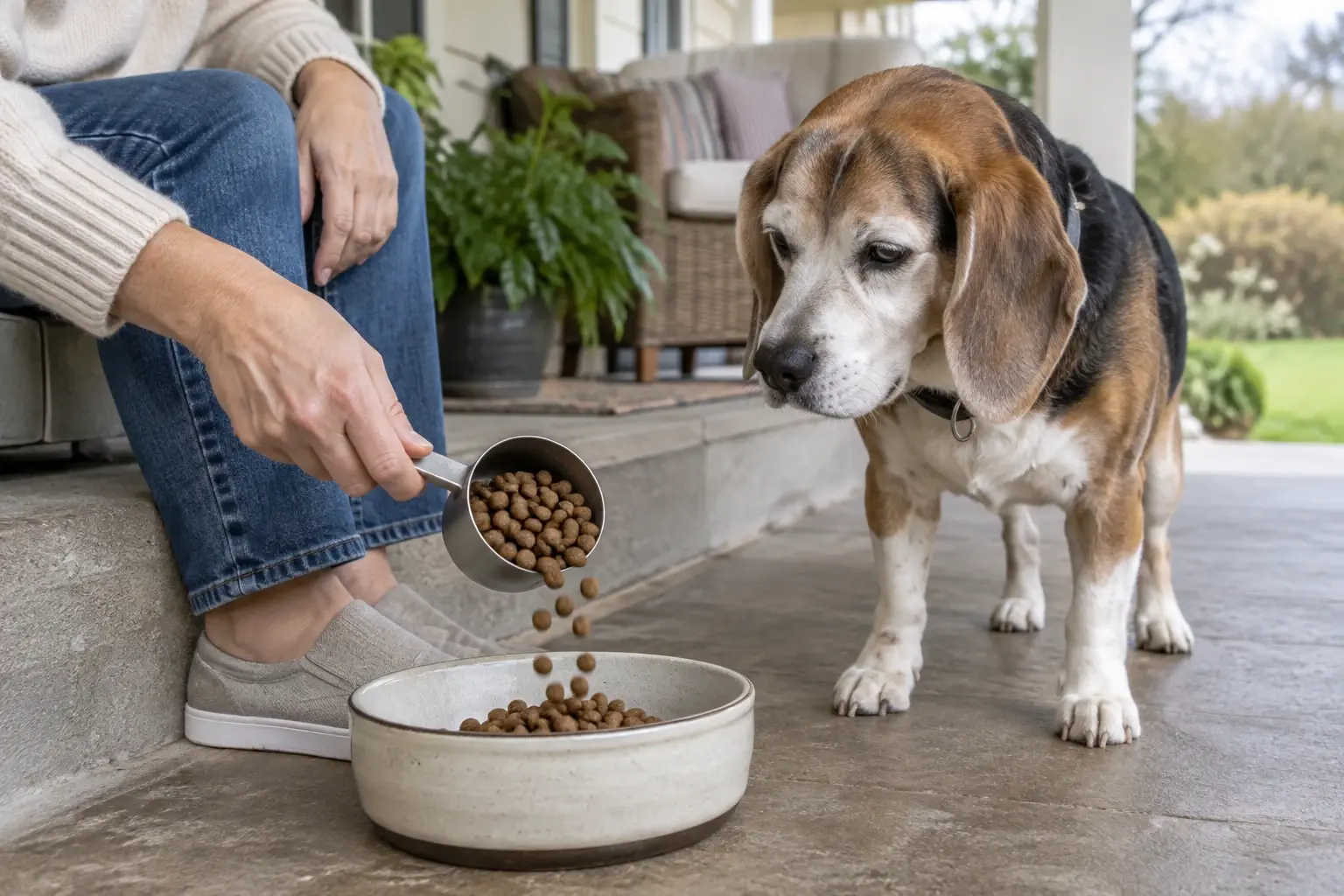
Do not carry the old scoop amount straight over to a new food. Equal-looking portions can provide different calories. Compare dry and wet foods by the calories fed, not by bowl volume.
Read nutrient disclosures without overreading claims
Protein deserves attention, but the largest percentage on the front of a bag does not settle the comparison. Moisture affects the percentages shown on food labels, so dry kibble and wet food need a consistent comparison basis. Request comparable nutrient information from the manufacturer when the packaging does not provide it.
Separate basic nutrition from optional support claims:
- Complete-diet information establishes the food’s intended nutritional role.
- Nutrient amounts help you compare what the daily portion supplies.
- Named support ingredients tell you something is included, but not necessarily how much your dog receives.
- Finished-food evidence matters more than assuming an ingredient’s reputation proves the food’s benefits.
If a food highlights glucosamine, for example, look for its declared amount and the basis of that declaration. Our guide to comparing glucosamine supplements for senior dogs expands on why ingredient form, quantity, and evidence are separate questions.
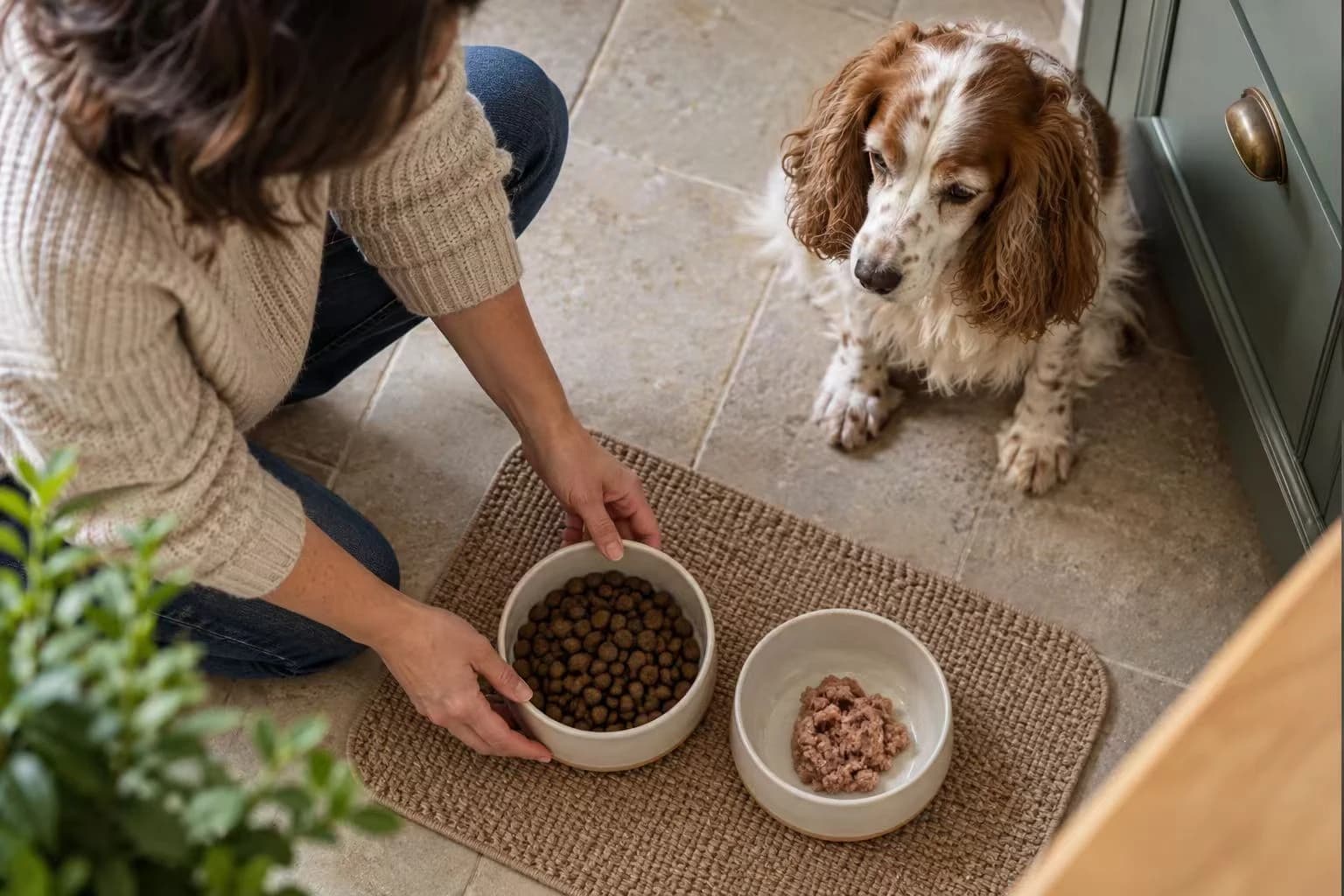
Fresh food is not automatically the better senior option. Research on senior-dog diets notes that evidence comparing the potential health benefits of fresh and conventionally processed foods remains limited. Format alone does not establish that a food is the best choice for your dog.
Count treats and supplements as part of the routine
Write down everything your dog eats outside the main meals: training rewards, dental chews, table scraps, pill-hiding food, oils, powders, and soft chews. Record calories where disclosed rather than treating small extras as invisible.
Then check for repeated ingredients. A complete food, joint chew, and separate oil may overlap without serving three distinct purposes. For fatty-acid products, comparing omega-3-only and mixed omega-3-6-9 supplements helps distinguish the named oils from the fatty acids actually disclosed.
For supplements, require each active ingredient and its amount per labeled serving in plain text, not a proprietary blend total. That is Dogevera’s disclosure standard because it makes overlap and cost comparisons possible; transparency itself is not proof of benefit. Do not increase a serving simply because your dog is large.
Use a daily-bowl comparison before buying
For each candidate food, make a short comparison list using the same headings:
- Complete diet: Copy the nutritional adequacy statement and intended life stage.
- Daily portion: Record the proposed amount and its calories, including any mixed feeding.
- Daily extras: List treats and supplements, their labeled servings, and disclosed calories.
- Nutrient questions: Note missing information, especially for prominently advertised support ingredients.
- Daily cost: Divide the package price by the number of daily portions it supplies.
- Practical fit: Include storage, preparation, comfortable eating, and likely waste.
Calculate supplement costs separately using the exact product’s directions for your dog’s weight band. Divide package contents by the labeled daily serving to estimate package life, then divide price by that number of days. A lower jar price does not necessarily mean a lower daily cost for a large dog.
Once you choose, follow the food’s transition instructions and keep a simple record of portions, leftovers, stool, and meal comfort. If appetite changes, use this guide to recording what a senior dog actually eats rather than repeatedly adding toppers and losing track of the original problem.
FAQ
Does my large dog have to switch to senior food?
Not solely because of the word “senior.” The useful question is whether the current complete diet still fits your dog’s condition, intake, comfort, and care plan. Review those factors before changing a food that is working well.
Is large-breed senior food automatically lower in calories?
Do not assume so from the product name. Compare the calorie declaration and the actual daily portion. A smaller portion of one food may provide more calories than a larger portion of another.
Can joint-support food replace a supplement?
Possibly, depending on the purpose of the existing supplement and what the food actually discloses. Compare the ingredients and amounts before combining or replacing products, and keep any established treatment plan separate from food marketing claims.
References
- Serum Metabolomics of Senior Dogs Fed a Fresh, Human-Grade Food or an Extruded Kibble Diet. Metabolites (2025). PMID: 41149653. DOI: 10.3390/metabo15100676
For individual health questions, your veterinarian remains the best partner.