TL;DR
Your little dog pauses over the bowl, and you wonder whether a smaller kibble or a different recipe would make meals easier. Choose senior dog food for small breeds by matching chewing comfort, calorie density, and a clearly measured portion, then confirm that it is complete and balanced for the appropriate life stage. The word “senior” alone does not establish nutritional suitability. (fda.gov)
Match kibble size to comfortable eating
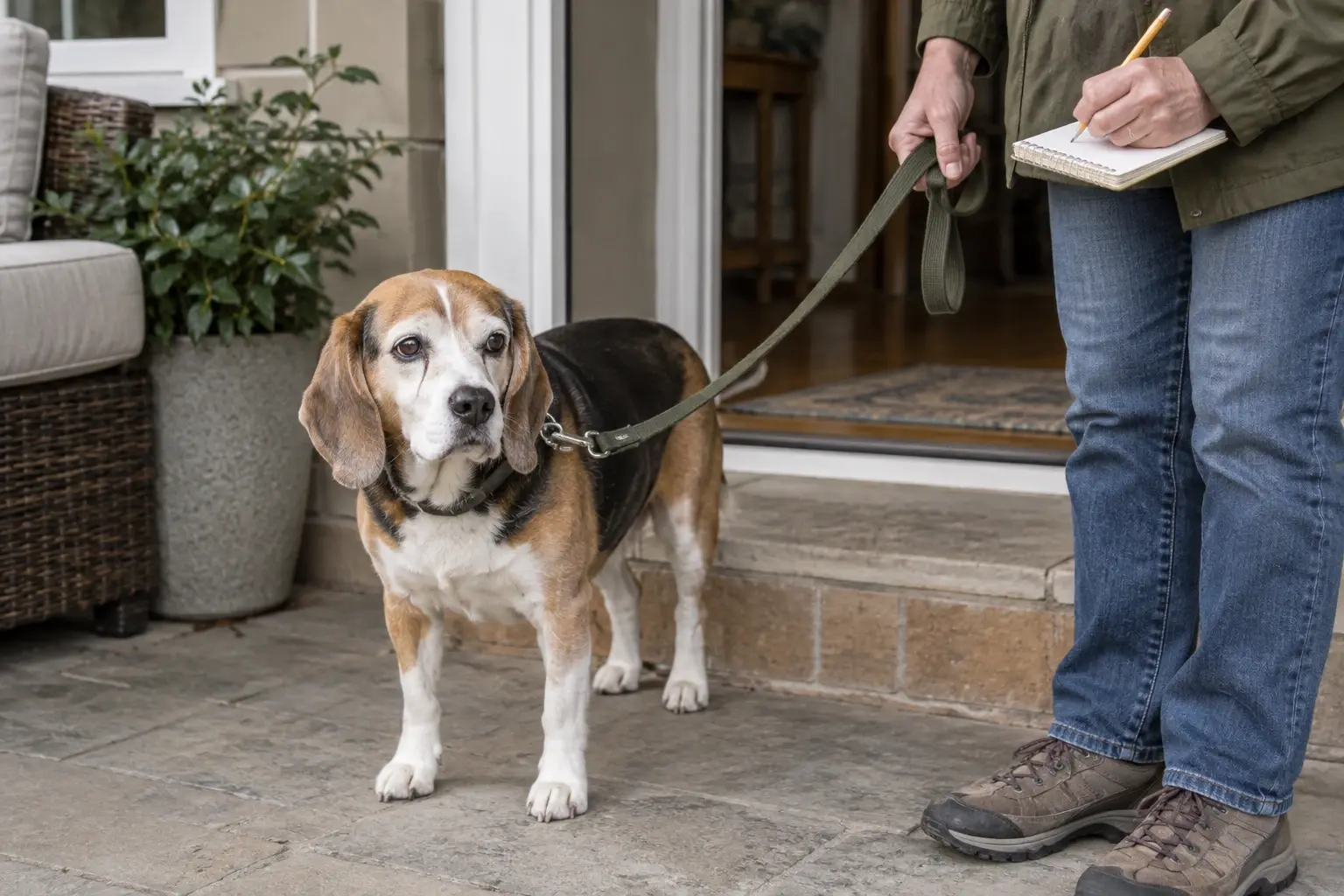
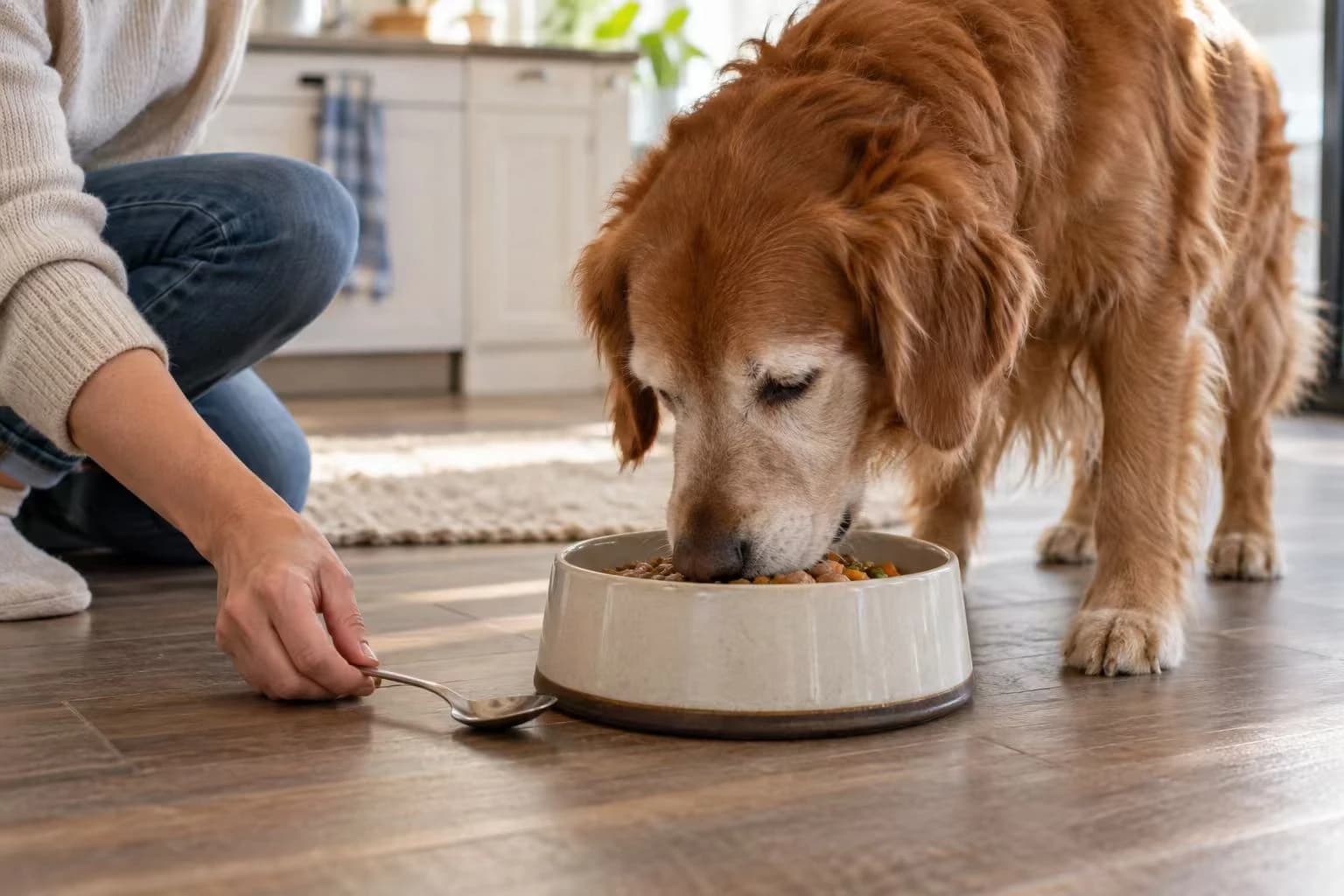
Before comparing bags, watch an ordinary meal. Note whether your dog picks pieces up easily, drops them repeatedly, leaves particular pieces behind, or takes longer to finish. These observations give you a practical question to investigate rather than a reason to buy whatever has the smallest kibble.
Compare the actual piece dimensions and shape when the manufacturer provides them. A product photograph without a size reference is difficult to judge. If those details are missing, request them before committing to a large bag.
Use this distinction when shopping:
- Difficulty picking up pieces: Compare shape and dimensions, along with how food sits in the bowl.
- Difficulty chewing: Consider texture as well as size; a smaller piece may still be hard.
- Comfortable eating and stable intake: Identify a specific benefit before changing the current food.
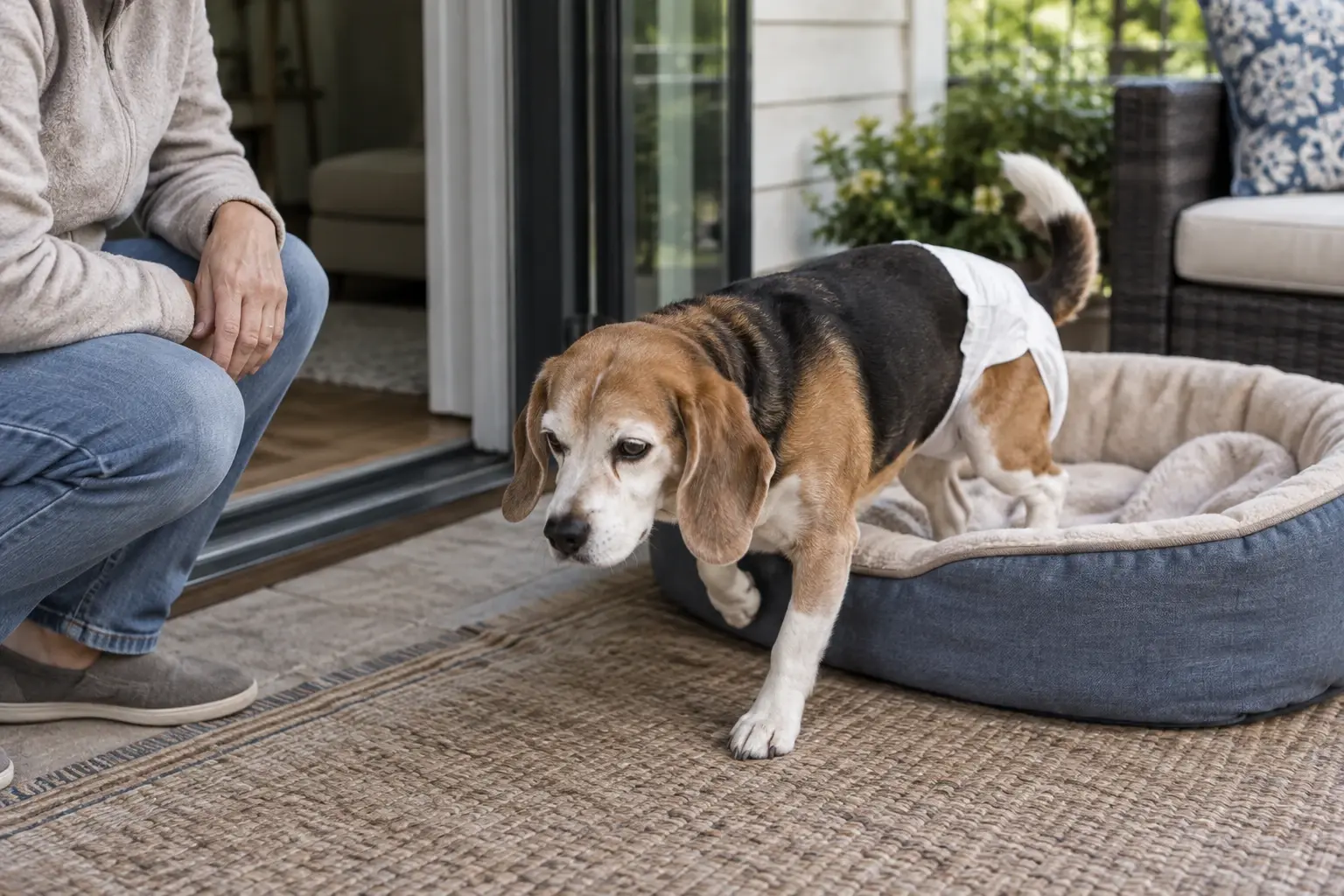
New chewing difficulty, appetite loss, or unexplained weight change needs prompt veterinary assessment, and emergency symptoms need immediate care; food changes and supplements do not replace diagnosis or treatment. (akc.org)
Compare calorie density before choosing a serving
Calorie density means how much energy a food provides in a given amount. A more concentrated food provides more calories in a smaller portion, so carrying the old scoop size over to a new recipe can change intake. US labels express calorie content in kilocalories, commonly shown as kcal. (aafco.org)
Copy the calorie information for each candidate into your notes. Compare matching units, such as kcal per kilogram, rather than comparing one food’s cup value with another food’s weight value.
Make the choice around your dog’s current eating pattern:
- Finishing small meals but needing an assessed increase in intake: Discuss whether a more concentrated complete food fits the feeding plan.
- Gaining unwanted weight: Compare the calories in the proposed daily portion before buying.
- Leaving meals unfinished: Record what is actually eaten rather than assuming the amount offered is the amount consumed.
There is no single calorie density that suits every older dog. Individual condition and intake matter when selecting a diet. (vcahospitals.com) If an “energy” claim is influencing your purchase, the guide to senior dog energy supplements explains how to separate added calories from broader marketing promises.
Confirm the complete-food statement
For the main diet, find the nutritional adequacy statement. Look for “complete and balanced” wording and the intended life stage, with an AAFCO nutrient-profile or feeding-test statement. Adult maintenance is relevant wording to look for when comparing foods for an older adult dog. A topper or product intended for intermittent or supplemental feeding serves a different purpose. (fda.gov)
Keep this separate from front-of-bag claims about small breeds, vitality, or premium ingredients. Those phrases do not replace the adequacy statement.
If protein is a deciding factor, compare it on a consistent basis, especially when considering both wet and dry foods. Moisture changes how the printed percentages compare. The guide to comparing protein in senior dog food expands on that comparison. (fda.gov)
Choose portions you can measure consistently
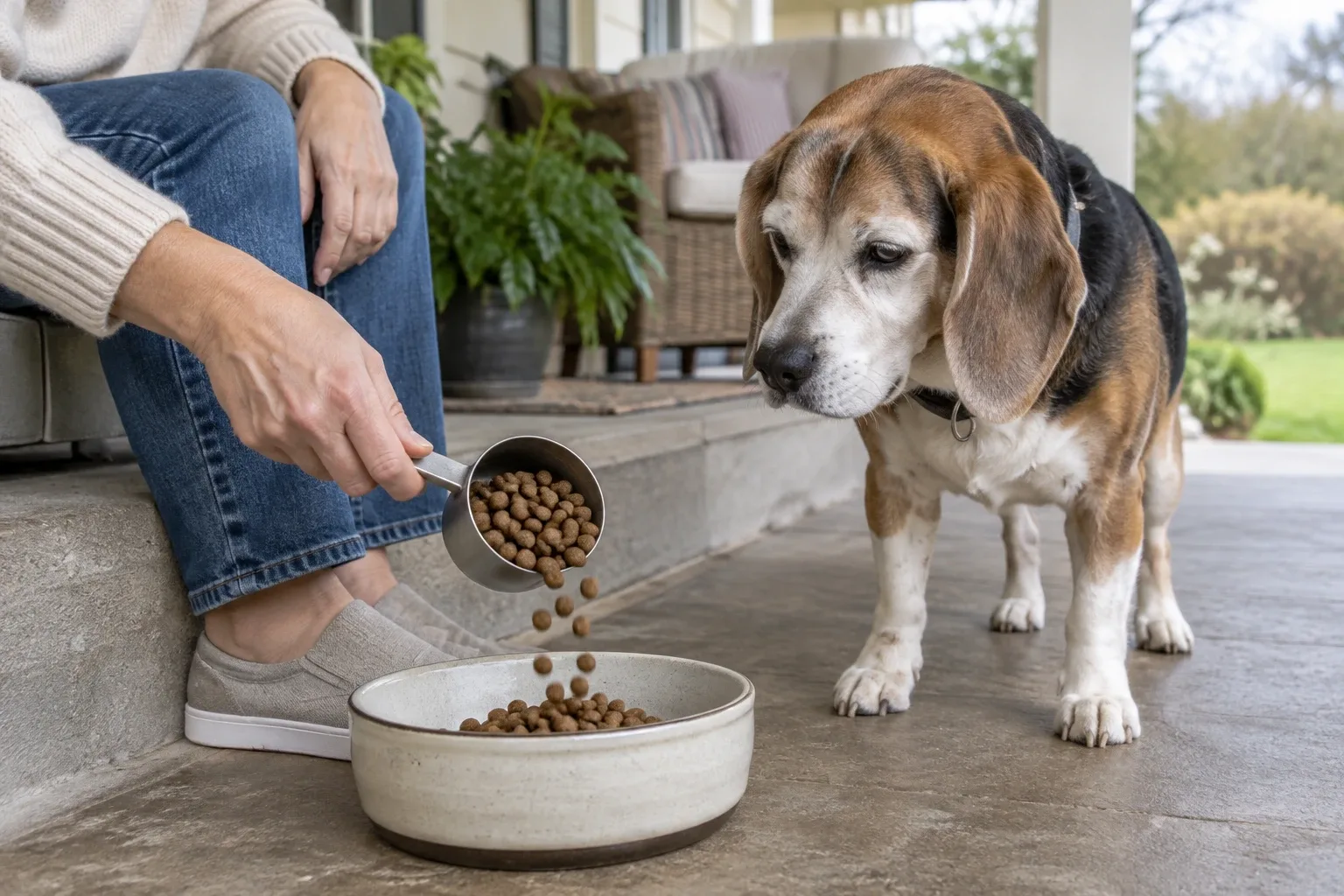
For a small serving, make the measurement process explicit. Prefer directions that give a clear daily amount, identify the units, and explain how to divide that amount between meals.
Before buying, check whether you can answer these questions without guessing:
- Is the stated amount for the whole day or each meal?
- Are portions listed in grams, cups, or both?
- If cups are used, is the cup measure defined?
- Does the weight range clearly include your dog?
- Can everyone feeding the dog follow the same instructions?
When gram amounts are available, place the empty bowl on a kitchen scale, zero it, and weigh the portion. Record leftovers separately. If directions use cups and you want to weigh the food, request the recipe’s gram equivalent rather than borrowing one from another food.
Treat the package feeding guide as a starting point for an individual plan, with adjustments based on your dog’s condition and activity. (aafco.org)
Use a shortlist before buying a large bag
Compare candidate foods in the same order:
- Eating comfort: Actual kibble dimensions, shape, and texture information.
- Energy density: Calories expressed in matching units.
- Meal completeness: The exact nutritional adequacy and life-stage wording.
- Serving clarity: An unambiguous daily portion you can measure.
- Practical cost: Package price divided by the number of days it will last at the planned portion.
Begin this comparison while meals are still manageable. Supporting comfortable, consistent eating is worthwhile for your dog, and checking portion size and daily cost before purchasing helps you avoid wasted food and unsuitable bags.
For a change of recipe, save both labels and follow the manufacturer’s transition directions. Keep other food additions consistent so your observations are easier to interpret. If digestive tolerance is part of the decision, use the senior food guide for sensitive stomach concerns alongside this small-portion checklist.
FAQ
Does a small senior dog automatically need supplements?
No. Small size and older age alone do not identify a supplement need. Establish whether the complete diet suits the individual dog before considering an addition for a specific purpose. (fda.gov)
Should I compare bag prices or daily feeding costs?
Compare daily costs using the planned portion for each food. Bag price alone leaves out differences in package weight and how much you will feed.
For individual health questions, your veterinarian remains the best partner.