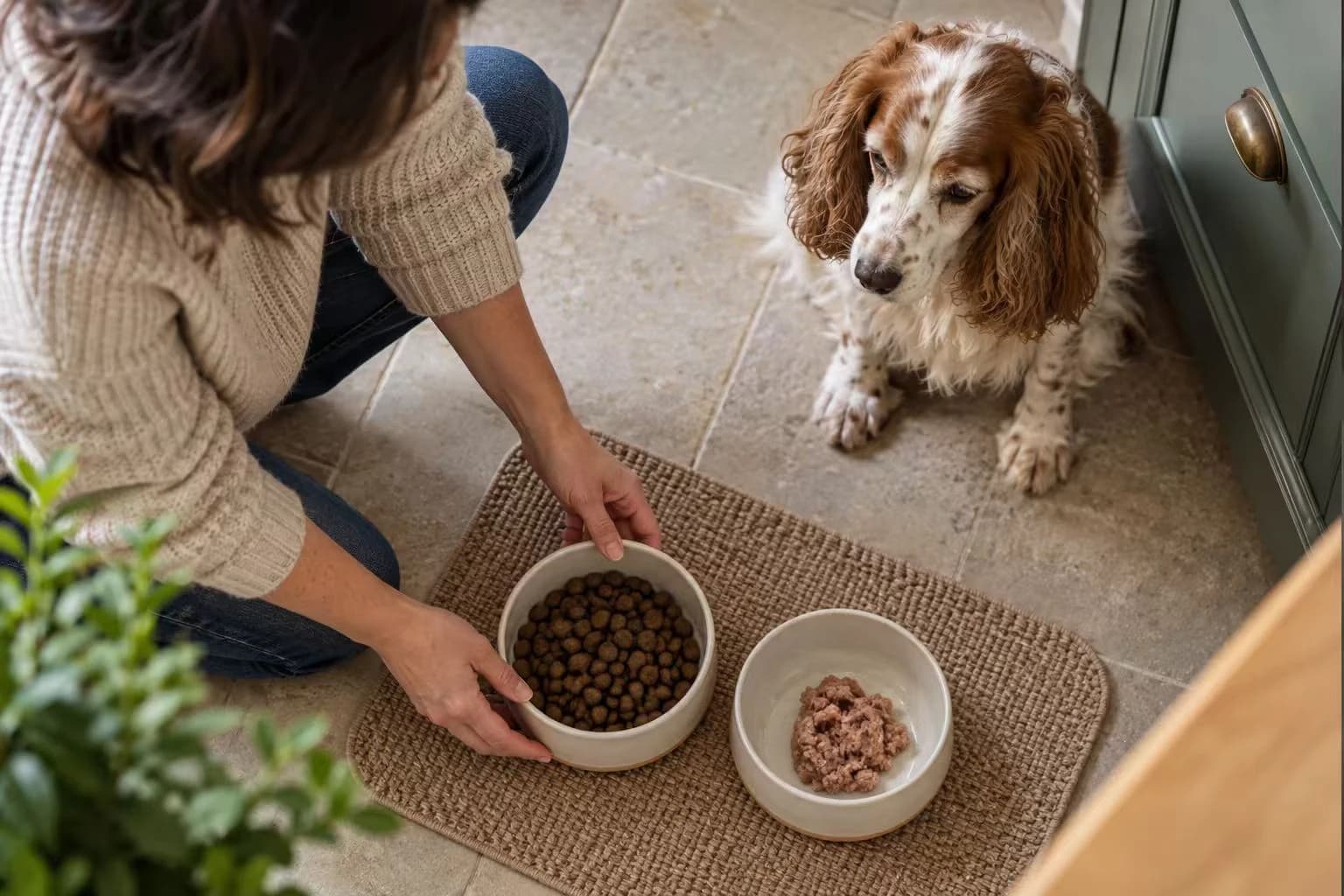
When your older dog has a loose stool, skips a meal, or seems less comfortable after eating, the first choice is often whether to change food or investigate the pattern first. For senior dog food for sensitive stomach concerns, start with the label rather than the front-of-bag promise: check that the food is identified as complete for its intended life stage, read the transition directions, and look for evidence that applies to the finished food.
A recurring digestive symptom deserves prompt advice from a veterinary professional; food labels cannot explain its cause.
Use this quick decision aid:
- One isolated change: record what happened and review recent food, treat, and routine changes before switching foods.
- A recurring pattern: keep the food information and your observations together, then seek professional guidance.
- A food-selection question: compare complete-food statements, ingredient disclosure, calories, feeding directions, and the exact support behind any sensitive-stomach claim.
Start by separating symptoms from shopping questions
“Sensitive stomach” can describe a shopping concern, but it does not explain why an individual dog has digestive changes. A food may be marketed for digestion while your dog’s pattern needs separate attention.
Before buying, write down:
- What changed, such as stool consistency, appetite, vomiting, or visible discomfort
- When the change appeared in relation to a new food, treat, chew, or supplement
- Whether more than one item changed at the same time
- The exact product name, recipe, package size, and ingredient list
Avoid treating a single observation as proof that a food caused the problem. A short, consistent record gives you a clearer basis for comparing the old and new routines.
Check whether the food is complete for its intended use
Look for the food’s nutritional adequacy statement and intended life stage. A complete food should be clearly identified for the purpose described on its label, rather than presented only as a topper, treat, or supplemental product.
Then compare:
- The exact life-stage wording
- Feeding directions and the units used
- Calorie information, if provided
- Whether the package describes the food as complete or supplemental
- Whether the recipe has changed between the product page and the package in your home
“Senior” on the front of a bag does not replace reading the full label. If protein is the main concern, compare the declaration on a consistent basis rather than relying on large front-panel claims. Senior Dog Food High Protein: How to Compare Labels explains how to approach that comparison without treating one number as the whole decision.
Read sensitive-stomach claims with the evidence beside them
A digestive-support claim is more useful when the brand explains what it means and what information supports it. Look for details such as:
- The specific finished food tested or evaluated
- The exact claim being made
- The ingredients or formulation features connected to that claim
- Whether the information concerns the finished recipe or only an individual ingredient
- Any limits the brand places on the evidence
Do not transfer evidence from a supplement, an ingredient study, or a different recipe to the food in your cart. A general statement about an ingredient does not establish what a complete finished food will do for every senior dog.
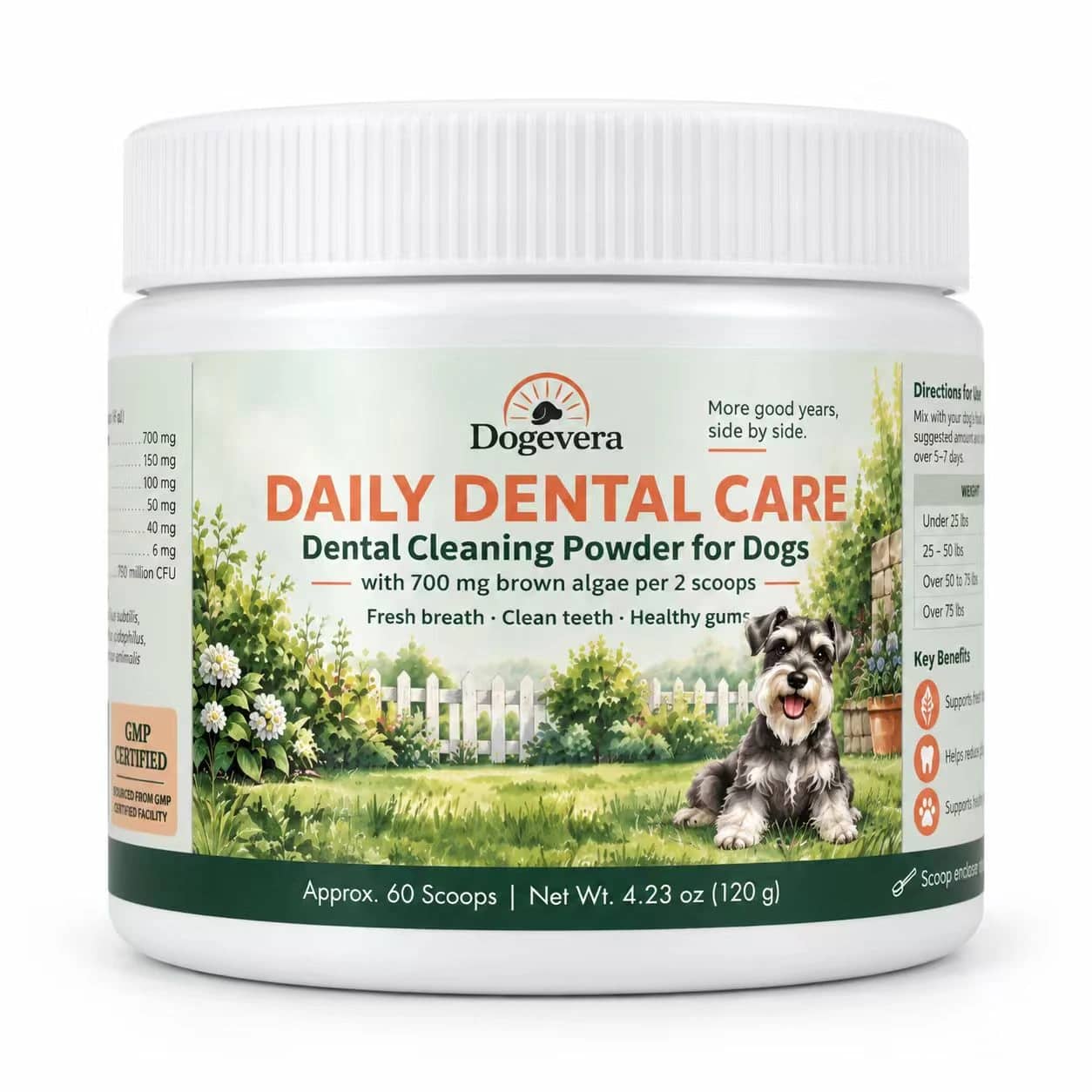
If you are also considering a gut-health supplement, keep that decision separate from choosing a complete food. Dog Gut Health Supplements: Read the Label First covers strain identity, storage information, and the difference between ingredient details and product evidence.
Compare ingredients without chasing a single “best” recipe
Ingredient lists can help you compare products, but they do not provide a diagnosis or guarantee that a recipe will suit your dog. Read the full list and note:
- Named animal and plant ingredients
- Added supplements, fibers, oils, or flavoring ingredients
- Ingredients your dog has previously eaten without difficulty
- Ingredients that appear in treats, toppers, chews, or supplements too
- Differences between similar recipes from the same brand
Choose a product you can identify clearly and feed consistently enough to observe. Changing the main food, treats, and supplements together makes the result harder to interpret.
If weight is also part of the decision, avoid assuming that a digestive claim answers a calorie or portion question. Senior Dog Food for Weight Loss: A Buying and Transition Checklist offers a separate label-first approach for weight-management choices.
Follow the package transition directions
A food change is easier to assess when you follow the package’s transition guidance instead of improvising several changes at once. Before starting, keep the old package or photograph its label so you can compare the two foods accurately.
A practical transition checklist:
1. Confirm the new food’s complete-food statement, intended life stage, feeding directions, and ingredient list. 2. Read the manufacturer’s transition instructions and follow the stated sequence. 3. Keep treats, toppers, chews, and supplements as consistent as possible during the change. 4. Record appetite, stool changes, and any other concern in the same place each day. 5. If your dog reacts, stop treating the food change as a simple shopping experiment and contact a veterinary professional for advice.
Do not compensate for an unfinished meal by guessing an extra serving, and do not combine several new products while trying to identify a food your dog tolerates.
A simple label-and-observation checklist
Save this checklist with a photo of the package:
- [ ] Complete-food statement checked
- [ ] Intended life stage checked
- [ ] Ingredient list saved
- [ ] Feeding and transition directions saved
- [ ] Sensitive-stomach claim copied exactly
- [ ] Evidence checked for the finished food, not only an ingredient
- [ ] Recent treats, chews, toppers, and supplements listed
- [ ] Appetite and stool observations recorded
- [ ] Recurring or concerning symptoms discussed with a professional
This process helps you make a clearer product comparison without presenting food selection as treatment. If the label is vague, the evidence is not specific to the finished food, or the transition instructions are missing, choose a different product to evaluate or ask for guidance before changing the routine.
FAQ
Is senior dog food automatically suitable for a sensitive stomach?
No label term can determine whether a particular food suits an individual dog. Compare the complete-food statement, ingredients, directions, and evidence, while keeping recurring symptoms separate from the buying decision.
Should I change food after one loose stool?
Record the event and review recent changes before making several adjustments at once. A recurring or concerning pattern needs professional advice rather than repeated product switching.
Can I add a gut supplement to a new food?
Adding both at once makes it harder to identify what changed. Compare the supplement’s label and purpose separately, and discuss recurring digestive concerns with a veterinary professional.
For individual health questions, your veterinarian remains the best partner.