You have found a probiotic chew with a large number on the front, but the back gives little detail about the organisms inside. When choosing a dog supplement for gut health, start with the identity of the strains and what the product actually documents. A bigger advertised count cannot fill gaps in the label. Keep the current food and other additions beside you while comparing options.
What exactly is the product intended to do?
Write down the goal stated on the label and your own reason for considering it. General gut support, a change in feeding routine and an ongoing digestive problem are different questions. Persistent or sudden digestive changes need veterinary assessment; this buying guide does not offer a treatment or an individual dose.
Record the dog's usual food, treats and existing supplements before adding another candidate. The senior dog food selection guide helps you keep the main diet in view. A supplement label should be considered within that feeding pattern, rather than as a separate promise.
Look for strain identities, not just a category name
Copy the full organism names and any strain identifiers provided. If the seller cites a study, ask whether the studied strain matches the one in the product. Also check whether the research concerns dogs, another species or a laboratory setting. These are questions to resolve, not details to silently assume.
For each claim, identify the outcome actually measured and the formulation used. Research about one organism does not by itself document every mixture containing a similar name. Keep a note of the reference and its limits. If the company only repeats its advertising line, mark the evidence as unspecified.
What conditions apply to the CFU figure?
Colony-forming units describe a measure of viable microorganisms under the stated conditions. ISAPP explains this viability measure; that definition is not evidence of a clinical outcome in dogs. Read whether the advertised figure applies at manufacture or through the stated shelf life, and whether it refers to a serving or another quantity. Without that context, comparisons can look precise while describing different things.
- Identity: full organism and strain information where provided.
- Count: its reference quantity and the point at which it is guaranteed.
- Storage: instructions before and after opening.
- Expiry: a usable date and clear batch identification.
- Directions: the product's own instructions, rather than those of another formulation.
Do not turn the biggest count into a recommended dose. A missing guarantee or strain identity should lead to a question for the manufacturer, not a numerical ranking assembled from incomplete information.
Check the entire formula against the existing diet
Look beyond the headline ingredient. Flavorings, carriers and other components remain part of what your dog eats. The supplement allergen guide explains why the small print belongs in the comparison. Record unfamiliar components and ask for clarification when a description is vague.
If multiple products contain overlapping ingredients, keep them on the same inventory. The WSAVA food-selection guidance emphasizes checking nutritional adequacy and obtaining useful information from manufacturers. An impressive supplement presentation does not replace those questions about the main food.
Keep dental claims separate from gut claims
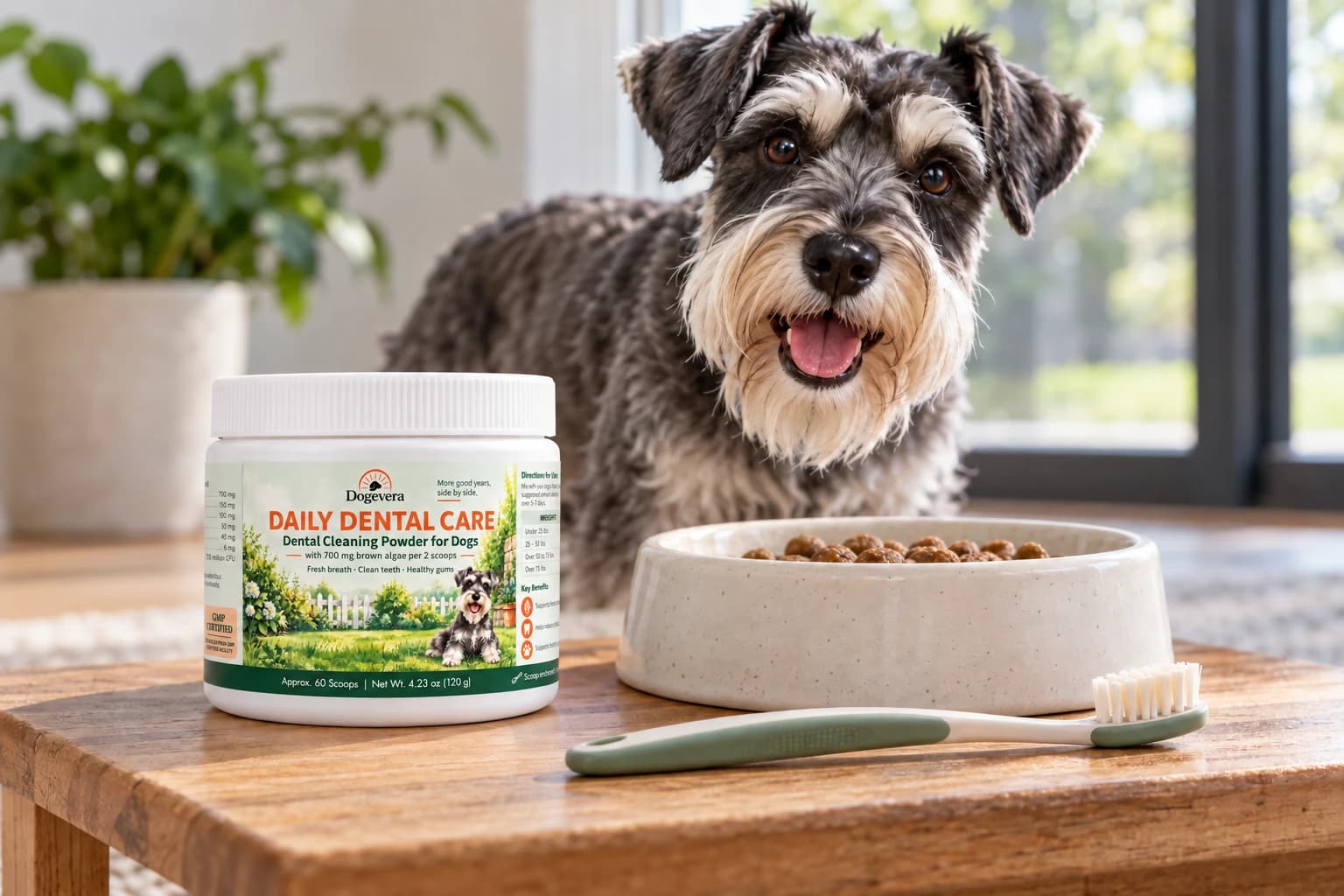
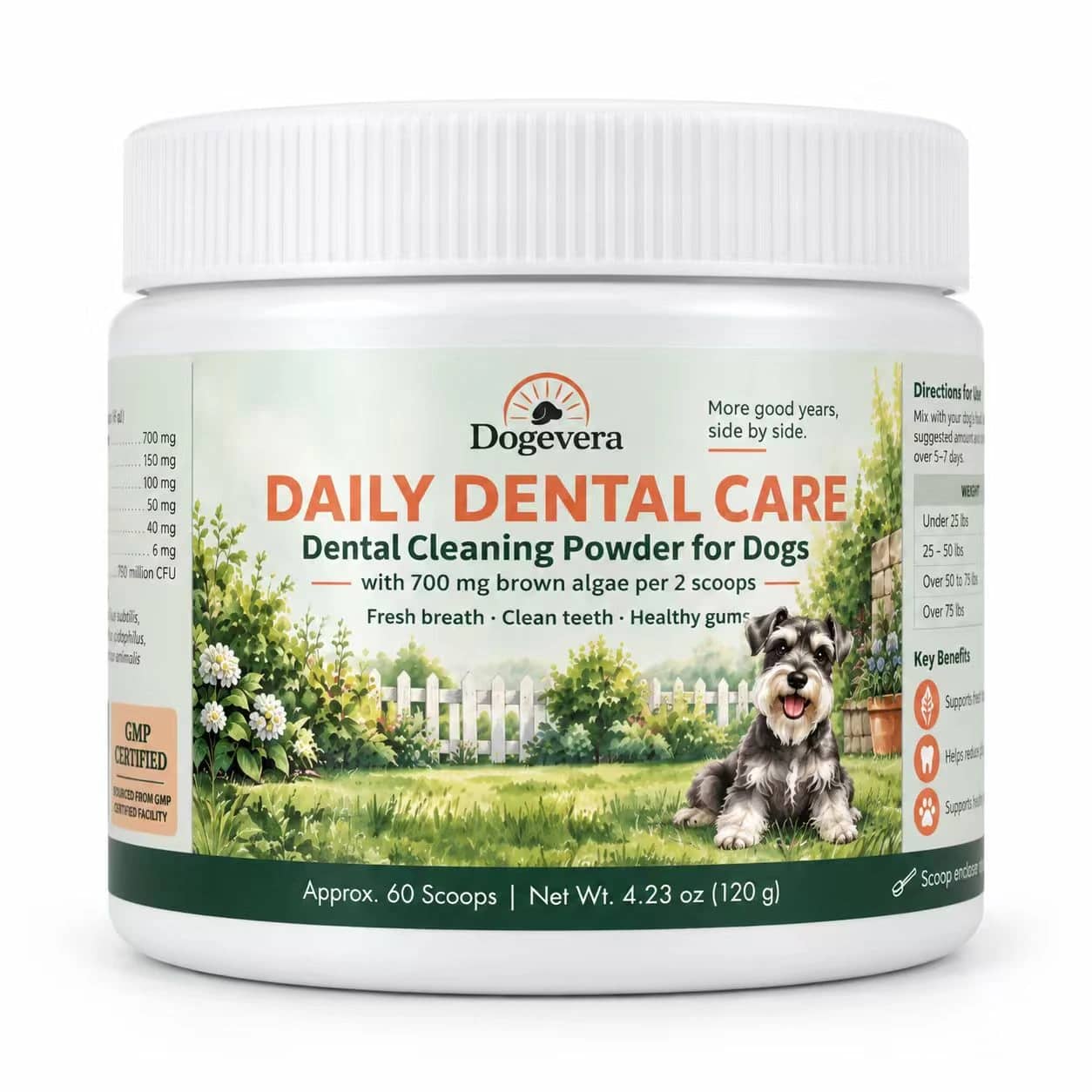
A dental formulation belongs in a different comparison unless the manufacturer documents a relevant gut claim. For example, review the current description of Dogevera Daily Dental Cleaning Powder as a dental product; this article does not present it as a gut-health probiotic.
The dental powder ingredient guide deals with that label-reading task. Similar words such as support or daily do not make the purposes interchangeable. Keep each candidate's stated role, supporting evidence and instructions together so a result is not borrowed from an unrelated product category.
FAQ
Is the highest CFU count the best choice?
The count alone does not establish that ranking. You also need identity, guarantee conditions, directions and relevant evidence.
What should I record if I introduce a suitable product?
Keep the agreed feeding routine, actual acceptance and any changes in a brief log. Avoid changing food and several additions together, which makes observations harder to interpret.
For individual health questions, your veterinarian remains the best partner.