TL;DR
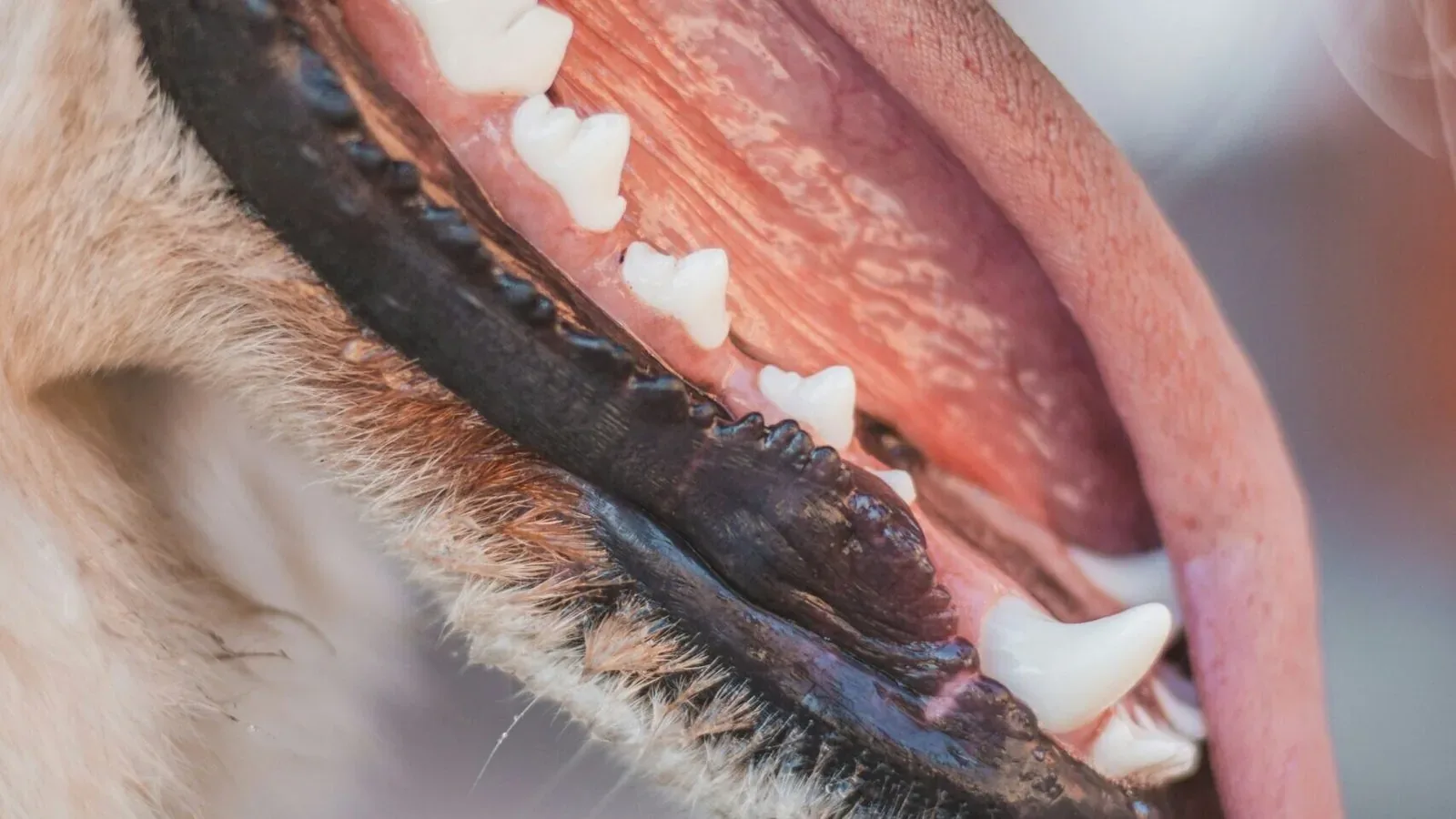
Healthy dog gums are bubblegum pink (or pink with natural black patches), moist, firm and fit snugly around each tooth, with no bleeding, swelling or bad smell. Red, swollen gums that bleed when your dog chews or when you brush are the first stage of gum disease (gingivitis), which is caused by plaque and is reversible if the plaque is controlled. Left alone, it turns into periodontitis, which destroys the bone holding the teeth and is not reversible. Gum disease is the single most common diagnosis in dogs: 12.5% of UK dogs were diagnosed in a year, with Toy Poodles at nearly 4 times the odds of crossbreeds, and exams under anesthesia find it in 44% to 100% of dogs. It also affects the rest of the body: in a study of 136 dogs, gum disease was significantly associated with heart disease. The fix is daily plaque control at home. In a randomized trial, daily seaweed led to less plaque, tartar and gum bleeding over 90 days. Overgrown gums (gingival enlargement) are a separate problem, often seen in Boxers, and can be caused by some medicines.
Healthy vs unhealthy dog gums
| Gum appearance | What it means | What to do |
|---|---|---|
| Pink, moist, firm, snug around teeth | Healthy | Keep up daily care |
| Black or spotted pink and black | Normal pigment in many breeds | Check the pink parts and the gum edge |
| Red line along the gum edge | Gingivitis, the early stage of gum disease | Start or step up daily plaque control |
| Red, puffy, bleeding when touched | More active gingivitis | Vet check and cleaning; daily care afterward |
| Gums pulling back, roots showing, loose teeth | Periodontitis | Vet assessment with X-rays under anesthesia |
| Gums growing over the teeth | Gingival enlargement | Vet check; may need trimming |
| Pale, white, grey, yellow or blue | Not a gum disease problem: anemia, shock, jaundice or low oxygen | Same-day vet; see pale gums in dogs |
How to check your dog's gums
- Lift the upper lip on each side and pull the lower lip down.
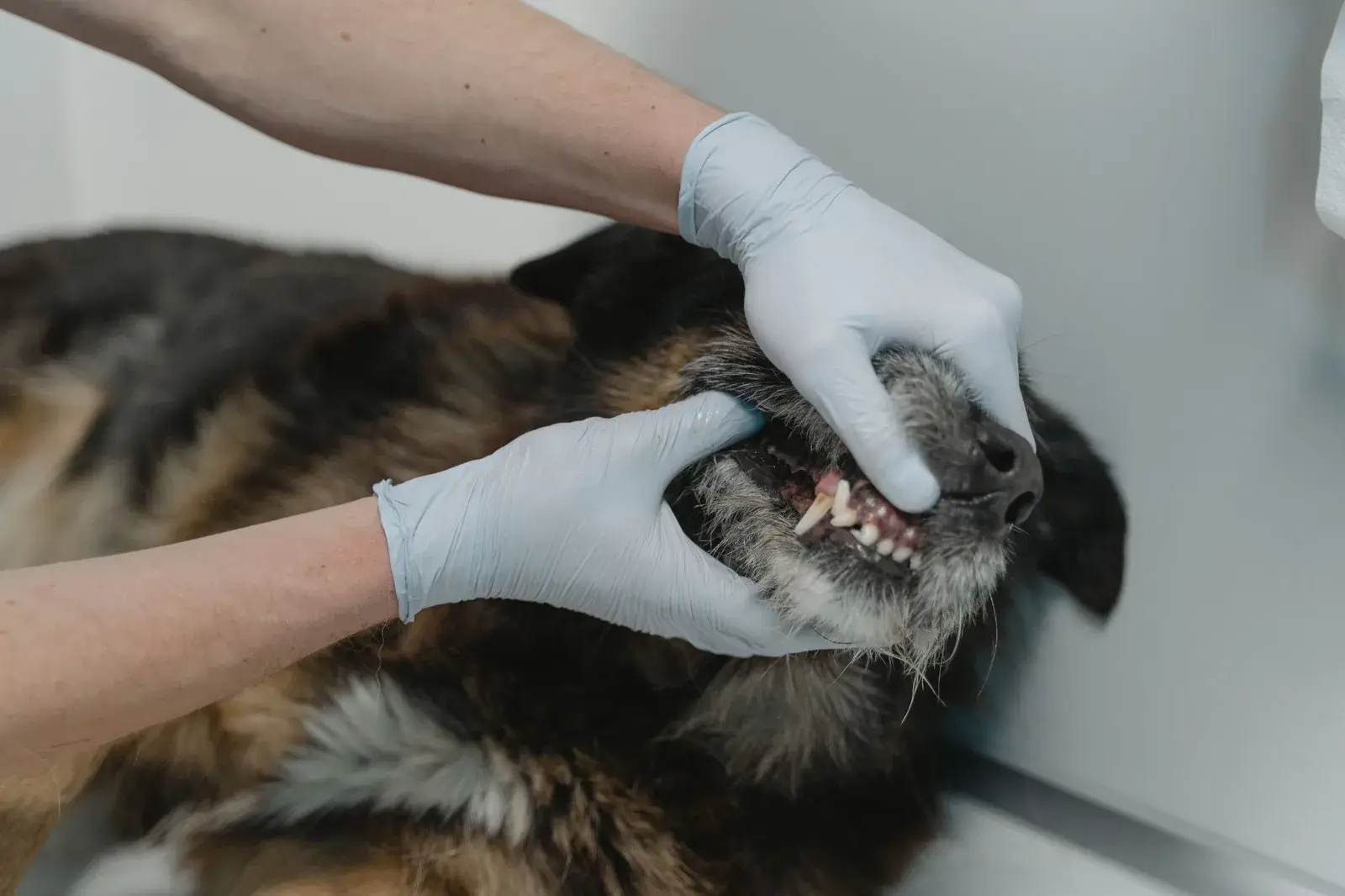
- Look at the gum edge where it meets each tooth, especially the big back teeth and the canines.
- Press gently on a pink area: the color should return within about 2 seconds.
- Smell the breath. A strong, rotten smell often means gum disease.
- Do it weekly, and take a photo in good light to compare over time.
Why do dog gums bleed?
Gingivitis
Plaque along the gum edge inflames the gums within days. Inflamed gums bleed easily when your dog chews a toy or when you brush. The good news: at this stage, removing the plaque reverses it.
Periodontitis
If plaque keeps building up, bacteria move under the gumline, the gums pull away and the bone and ligament that hold the tooth are destroyed. This damage is permanent. The UK study found:
- Toy Poodles (3.97 times), King Charles Spaniels (2.63), Greyhounds (2.58) and Cavalier King Charles Spaniels (2.39) had the highest odds.
- Flat-faced breeds had 1.25 times and spaniels 1.63 times the odds.
- Smaller dogs had higher odds than larger dogs.
A small-animal vet Morty has known for years, who asked us not to use their name, sees the end result of this in small Poodles almost every week: "Toy Poodles get periodontitis and oronasal fistulas all the time. Keep their mouths clean." See Poodle lifespan and dog tooth abscess.
Other causes of bleeding gums
- Clotting problems or low platelets, especially if you also see bruises or nosebleeds.
- Rodent poison. Bleeding gums after possible exposure is an emergency.
- Mouth tumors. See mouth cancer in dogs.
- Injury from sticks, bones or hard chews.
Gum disease and the rest of the body
Bacteria from diseased gums can enter the bloodstream every time a dog chews. In a study of 136 dogs, older age and small size raised the risk of gum disease, and dogs with gum disease had a significant association with heart disease. That is one more reason gum health matters most in small senior dogs. See congestive heart failure in dogs.
Overgrown gums (gingival enlargement)
Some dogs develop thick gums that grow over the teeth, creating deep pockets that trap food and plaque. Causes include:
- Breed tendency, classically Boxers. See Boxer lifespan.
- Medicines such as cyclosporine and some heart and blood pressure drugs (calcium channel blockers), which caused gum overgrowth in laboratory dog studies.
- Long-term plaque and inflammation.
A veterinary dental review describes treatment as surgical trimming plus a professional cleaning, with home oral hygiene to reduce recurrence, and stresses reviewing the dog's medicines to find a cause. A firm, single lump on the gum is different and should be biopsied; most are benign, but some are tumors.
How to keep dog gums healthy
1. Brush daily if you can
In a randomized, blinded trial, daily brushing was more than three times as effective at controlling plaque as a daily dental chew or a dental diet. See how to brush your dog's teeth.
2. Add daily plaque control in food
For dogs that will not be brushed, or as an extra:
- In a double-blind, randomized, placebo-controlled trial of 60 small dogs, daily brown seaweed (Ascophyllum nodosum) led to significantly less plaque, less tartar, fresher breath and less gum bleeding than placebo over 90 days.
- Coating food with sodium hexametaphosphate cut tartar formation by about 60% to 80% in laboratory Beagles.
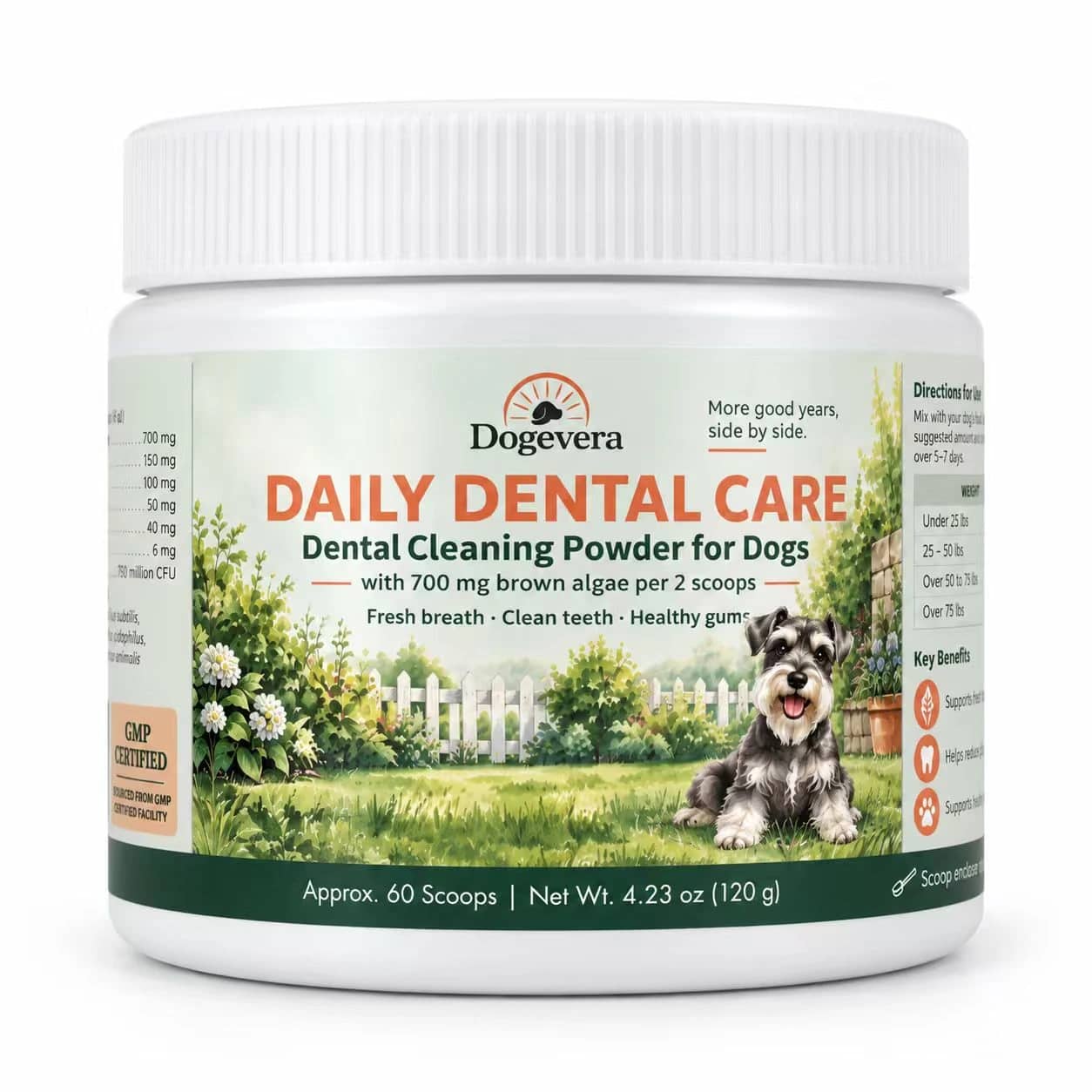
Our Daily Dental Cleaning Powder contains *700 mg Ascophyllum nodosum and 100 mg sodium hexametaphosphate per 4 g serving*, stirred into food once a day, and is now available to pre-order. Seaweed contains natural iodine, so ask your vet first if your dog has a thyroid condition.
3. Professional cleaning when needed
Once tartar and pockets have formed, only a cleaning under anesthesia with X-rays can treat them. Anesthesia-free scraping does not clean under the gumline. See dog teeth cleaning without anesthesia.
FAQ
What do healthy dog gums look like?
Bubblegum pink or pink with natural black areas, moist, firm and snug around each tooth, with no redness along the edge, swelling, bleeding or bad smell.
Why are my dog's gums bleeding?
Most often gingivitis from plaque. Less common causes include clotting problems, rodent poison, injury and mouth tumors. Bleeding with bruising or after possible poison exposure is an emergency.
Can gingivitis in dogs be reversed?
Yes. Gingivitis is reversible with plaque removal and daily care. Once it becomes periodontitis, the bone loss is permanent, but further damage can be slowed.
What color are unhealthy dog gums?
Red or purple-red at the edge with gum disease; pale, white, grey, yellow or blue gums point to problems such as anemia, shock, jaundice or low oxygen and need a vet the same day.
Which dogs get gum disease most?
Small breeds, especially Toy Poodles, King Charles and Cavalier King Charles Spaniels, plus Greyhounds, flat-faced breeds and older dogs.
References
- O'Neill DG, et al. Epidemiology of periodontal disease in dogs in the UK primary-care veterinary setting. Journal of Small Animal Practice. 2021. PMID: 34374104
- Wallis C, Holcombe LJ. A review of the frequency and impact of periodontal disease in dogs. Journal of Small Animal Practice. 2020. PMID: 32955734
- Pereira Dos Santos JD, et al. Relation between periodontal disease and systemic diseases in dogs. Research in Veterinary Science. 2019. PMID: 31226571
- Lewis JR, Reiter AM. Management of generalized gingival enlargement in a dog: case report and literature review. Journal of Veterinary Dentistry. 2005. PMID: 16295803
- Gawor J, et al. Effects of edible treats containing Ascophyllum nodosum on the oral health of dogs: a double-blind, randomized, placebo-controlled single-center study. Frontiers in Veterinary Science. 2018. PMID: 30109236
- Stookey GK, Warrick JM, Miller LL. Effect of sodium hexametaphosphate on dental calculus formation in dogs. American Journal of Veterinary Research. 1995. PMID: 7574160
- Allan RM, Adams VJ, Johnston NW. Prospective randomised blinded clinical trial assessing effectiveness of three dental plaque control methods in dogs. Journal of Small Animal Practice. 2019. PMID: 30575038
For individual health questions, your veterinarian remains the best partner.