TL;DR
Dog teeth chattering is a fast, involuntary clicking or shivering of the jaw. Sometimes it is harmless: excitement, cold, nerves or sniffing an interesting smell. But many veterinarians treat mouth pain as the cause until proven otherwise, especially in older dogs: an abscess, a broken tooth, gum disease or tooth resorption. That is not rare: in a 2026 study of 369 dogs examined under anesthesia, 98.6% of dogs over 1 year old had some periodontal disease and 50.9% had at least one broken tooth. Less often, chattering comes from nausea, jaw joint pain or focal seizures. If chattering is new, keeps happening, or comes with drooling, bad breath, dropping food or pawing at the mouth, book a vet visit and take a video.
What teeth chattering looks like
The lower jaw shakes rapidly, so the teeth click together. It usually lasts seconds. Some dogs also smack their lips, drool or lick.
A 2024 study described this as episodic mandibular tremor in 11 dogs seen at hospitals and 31 dogs from an owner survey:
- Every dog had short episodes lasting less than a minute, with no other neurologic signs.
- Excitement triggered chattering in 45.2% of the survey dogs.
- Cavalier King Charles Spaniels were the most common breed.
- The median age was 3 years.
- Most dogs had another medical condition at the same time (8 of 11 hospital dogs and 20 of 31 survey dogs), which is why the authors suggest chattering may sometimes be a sign of pain.
Common causes of teeth chattering in dogs
| Cause | Clues | What to do |
|---|---|---|
| Mouth pain: gum disease, broken tooth, abscess, tooth resorption | Bad breath, red gums, chewing on one side, dropping food, pawing at the face; worse when eating | Vet dental exam with X-rays |
| Excitement or anticipation | Happens before meals, walks or greeting people; stops when the dog calms | Usually nothing |
| Cold or shivering | Whole body trembles; stops when the dog is warm | Warmth |
| Anxiety or stress | At the vet, in storms, during car rides; common in some greyhounds | Reduce the trigger; ask about anxiety help |
| Sniffing or licking a strong scent | Right after sniffing urine or another dog | Usually nothing |
| Jaw joint (TMJ) pain | Older dog, previous jaw injury, pain opening the mouth | Vet exam, sometimes CT |
| Nausea or acid reflux | Lip licking, drooling, swallowing, vomiting or grass eating | Vet check; medication often helps quickly |
| Focal seizure | Dog seems "absent," does not respond to its name, may snap at the air | Vet visit; video the episode |
Mouth pain: the first thing to rule out
Veterinary Partner, the Veterinary Information Network's site for pet owners, notes that some vets consider chattering to be dental or oral pain until proven otherwise. Abscesses, broken teeth and gingivitis can all cause it, and even ulcers or growths in the mouth that do not touch the teeth can trigger chattering.
Dental disease is far more common than most owners realize:
- In a 2026 study, vets examined and probed the teeth of 369 dogs under anesthesia. 98.6% of dogs over 1 year had periodontal disease, 59.6% at stages where the tooth's support is already being lost, and 50.9% had at least one broken tooth.
- Tooth resorption, where the hard tissue of a tooth slowly dissolves, becomes more common with age. In a study of 248 small dogs, it rose significantly from 9 to 11 years of age onward, was most common in the premolars, and was more common in Maltese than in other breeds. It is often hidden below the gum line, so it needs dental X-rays to find.
If your dog chatters and also has bad breath, tartar, red gums, or chews on one side, a dental exam is the next step. See how many teeth a dog has and why older dogs lose them and broken dog tooth: what to do.
Excitement, cold and nerves
Many dogs chatter when they are excited, such as before dinner, a walk or a favorite person arriving. In the 2024 study, excitement was the trigger in almost half of the survey dogs. Cold dogs shiver, and the jaw shivers too. Some dogs chatter when anxious; Veterinary Partner notes it is a relatively common sign of anxiety in some greyhounds and usually stops when the stressful situation, such as a vet visit, ends.
After sniffing or licking
Some dogs chatter right after sniffing or licking another dog's urine or a strong smell. This is commonly thought to be linked to how dogs process scent, and on its own it is not a concern.
Nausea and the gut
A nauseous dog may lick its lips, drool, swallow repeatedly and chatter. Veterinary Partner notes that when the cause is in the gut, treatment often stops the chattering within the first week.
Focal seizures
A focal seizure affects only part of the brain. A dog having one may chatter its teeth or snap at the air ("fly biting"), and the key clue is that it does not respond normally when you call its name or make a noise, and it may stare into space. It may act strangely beforehand, such as pacing or clinging to you.
Teeth chattering in older dogs
In a senior dog, new chattering is most often worth a look in the mouth. Older dogs have more gum disease, more broken teeth and more tooth resorption, and they hide mouth pain well. They keep eating, just more slowly or on one side.
Watch for:
- Bad breath that has got worse
- Dropping food or chewing on one side
- Pawing at the face or rubbing it on the floor
- Reluctance to play with chew toys
- Blood on toys or in the water bowl
- Chattering at night or when resting
See senior dog dental care for exams and anesthesia safety in older dogs, and why your senior dog's breath smells bad.
When to see a vet
Book a vet visit if:
- The chattering is new and keeps happening
- It comes with bad breath, drooling, bleeding, swelling or reluctance to eat
- Your dog does not respond to you during episodes
- Your dog is older, or has known dental disease
- It comes with vomiting, lip licking or other signs of nausea
Go the same day if your dog has a swollen face, cannot close its mouth, has a seizure that lasts more than 5 minutes, or has several episodes in a row.
What the vet will do
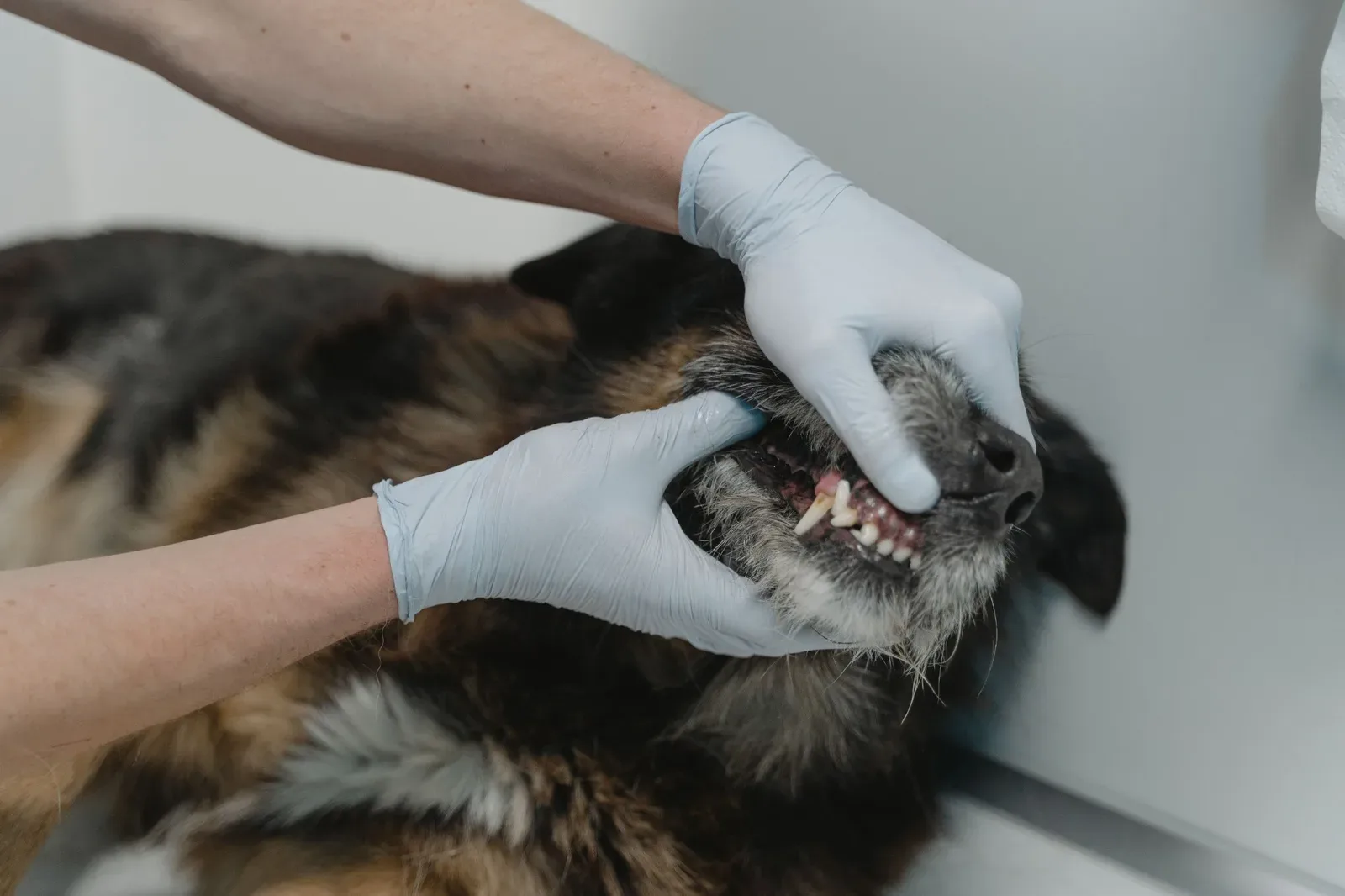
- Look in the mouth while your dog is awake, then usually recommend a full dental exam under anesthesia with dental X-rays, because much dental disease sits below the gum line.
- Watch your video. Veterinary Partner recommends filming episodes and listing every sign you notice.
- Check for nausea or gut problems with blood tests or imaging if the mouth looks normal.
- Consider neurologic causes if your dog seems absent during episodes; sometimes a short trial of anti-seizure medicine helps confirm it.
How to prevent mouth pain
- Brush daily with a dog toothpaste. See best dog toothpaste.
- Add daily help if you cannot brush. In a randomized, placebo-controlled trial of 60 small dogs, daily treats containing the brown seaweed Ascophyllum nodosum led to significantly less plaque and tartar and fresher breath over 90 days. Our Daily Dental Cleaning Powder contains 700 mg of Ascophyllum nodosum plus sodium hexametaphosphate per 4 g serving, stirred into food, and is now available to pre-order. See how to clean dog teeth without brushing.
- Avoid very hard chews such as antlers, bones and hard nylon, which can break teeth.
- Get professional cleanings when your vet recommends them, especially for small and toy breeds.
FAQ
Is dog teeth chattering a seizure?
Usually not. Most chattering is from excitement, cold, nerves or mouth pain, and the dog stays fully aware. A focal seizure is more likely if your dog does not respond to its name during the episode, stares into space or snaps at the air. Film it and show your vet.
Why does my dog's jaw chatter after licking?
Many dogs chatter after licking or sniffing a strong scent, such as another dog's urine. This is common and usually harmless. If it also happens without any smell nearby, or comes with drooling or bad breath, have your vet check the mouth.
What neurological disorders cause teeth chattering in dogs?
Focal seizures are the main one. A 2024 study also described episodic jaw tremor in dogs, mostly Cavalier King Charles Spaniels, in which short episodes happened without other neurologic signs; most of those dogs also had another medical condition.
Why does my old dog chatter its teeth?
In older dogs, mouth pain is the first thing to rule out: gum disease, broken teeth and tooth resorption all become more common with age. Cold, nausea and jaw joint pain are other possibilities. A vet dental exam with X-rays is the best way to find out.
Why does my dog chatter its teeth at night?
At night, chattering can be from cold, dreaming or discomfort. If it happens often while your dog is resting, especially in an older dog, have the mouth checked for pain.
Do dogs chatter their teeth when they are cold?
Yes. A cold dog shivers, and the jaw shivers with it. The chattering stops once the dog is warm.
References
- Liatis T, et al. Episodic mandibular tremor in dogs: an idiopathic movement disorder or a manifestation of pain. Journal of the American Veterinary Medical Association. 2024. PMID: 38838709
- Johnson T. Teeth Chattering in Dogs. Veterinary Partner, Veterinary Information Network. 2023.
- Stepaniuk KS, Gingerich W, Ziche AM. Oral examination in a random anesthetized canine population for the prevalence of periodontal disease and fractured teeth. Journal of Veterinary Dentistry. 2026. PMID: 42095652
- Bae J, Kim SE, Seo K. Prevalence and classification of tooth resorption in small-breed dogs: a retrospective study using full-mouth intraoral radiographs. The Veterinary Journal. 2025. PMID: 40374100
- Gawor J, et al. Effects of edible treats containing Ascophyllum nodosum on the oral health of dogs: a double-blind, randomized, placebo-controlled single-center study. Frontiers in Veterinary Science. 2018. PMID: 30109236
For individual health questions, your veterinarian remains the best partner.