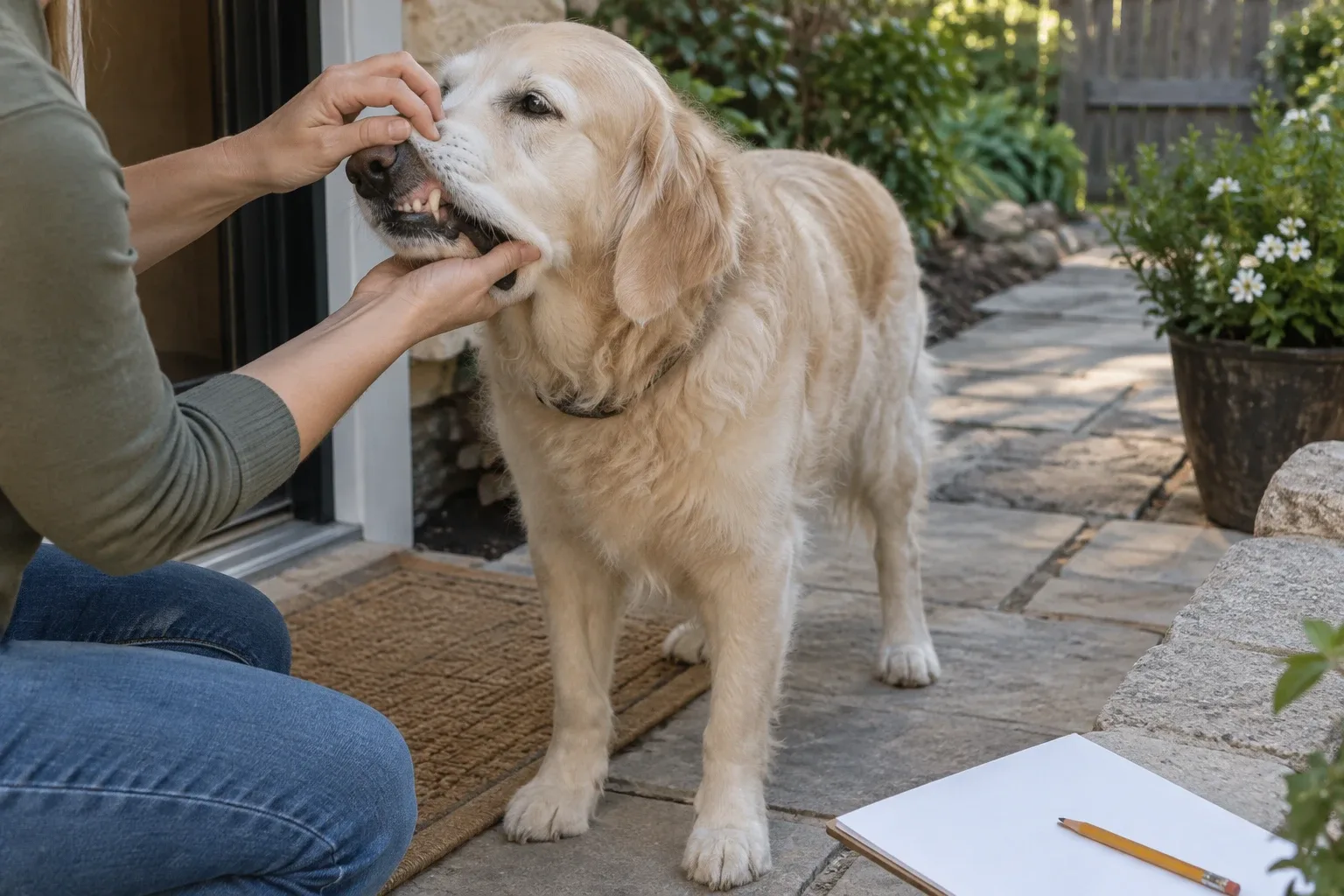
Your senior dog may accept a soft treat but turn away when you lift a lip. In that moment, the best senior dog dental care choice is usually not to force a full inspection. Start with a short, repeatable routine: gentle mouth handling, comfort notes, label checks and a plan for professional care when home care is not enough.
A published owner survey found that one in four dog owners had difficulty inspecting their dog's teeth, so a simple worksheet can make this task more manageable. If your dog shows sudden mouth pain, facial swelling, significant bleeding or cannot eat, seek prompt professional care.
Set up a daily dental-care routine
Keep the daily task brief and predictable. Use the same calm location and choose a time when your dog is already settled.
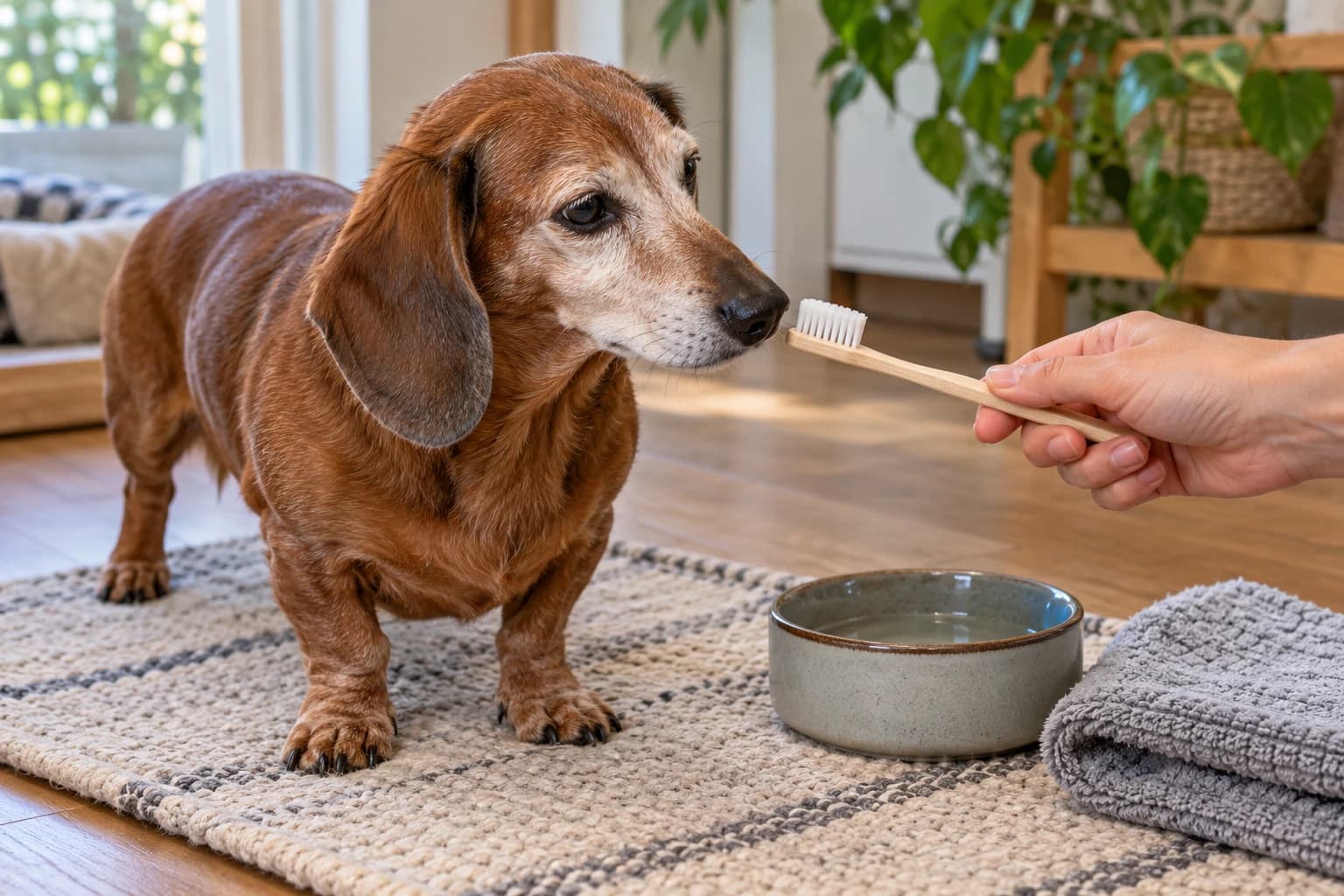
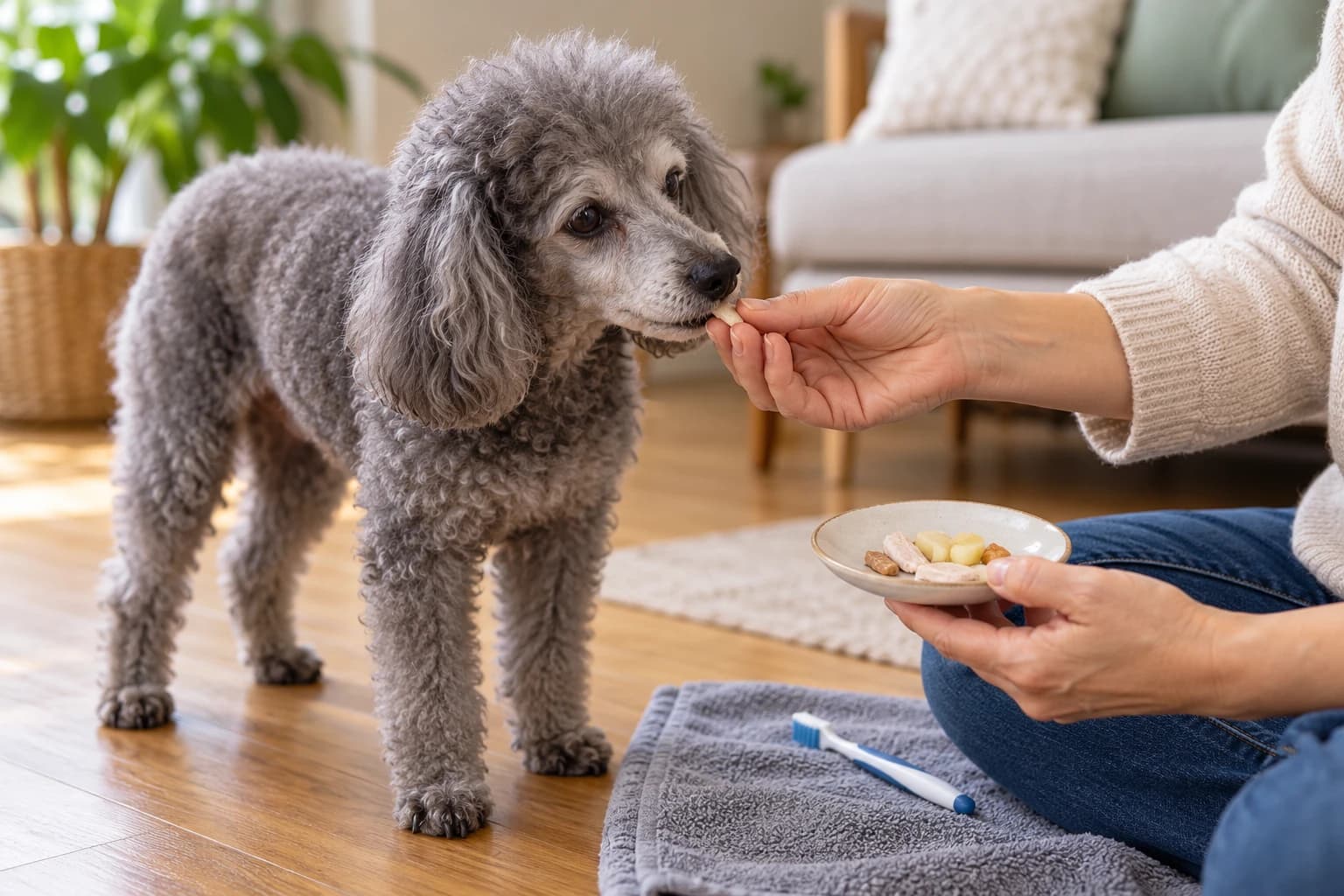
- Prepare: Have a dog toothbrush or other brush made for canine use, dog toothpaste if you use it, a towel and a small reward ready.
- Start with consent: Touch the cheek, lift the lip slightly and stop if your dog pulls away, stiffens, growls or seems uncomfortable.
- Build gradually: On one day, handling may be the only step. On another, you may briefly touch the outer teeth. Do not turn a short practice session into a struggle.
- Record the response: Note whether your dog accepted handling, which side was easier and any visible changes.
- Keep products separate from improvisation: Follow the product's own label directions rather than adapting a human dental product or guessing how much to use.
For product-specific toothpaste choices, compare ingredients, flavor and label directions in Best Dog Toothpaste for Bad Breath: How to Choose only as a broader buying reference. The linked page is about choosing products, not diagnosing the reason for bad breath.
Use this weekly mouth-check worksheet
Choose one day each week for a slightly closer check. You do not need to force the mouth open. Look only as far as your dog remains comfortable.
- Comfort: Did your dog allow cheek or lip handling without pulling away?
- Breath: Is the odor noticeably different from the previous check?
- Visible teeth: Do you notice new discoloration or material on the teeth?
- Gums: Do they look different from your usual observation?
- Eating behavior: Is your dog still managing the usual food and treats comfortably?
- Chewing pattern: Is your dog avoiding one side or suddenly refusing harder treats?
- Next action: Continue the routine, pause a new product, or arrange professional advice based on the change.
Write the date and a few words rather than relying on memory. A pattern is more useful than a single uncertain glance, and the notes can help you explain what changed.
Choose between brushing and temporary alternatives
Brushing can be the most direct home-care practice to work toward, but an older dog may not tolerate it immediately. Use this comparison when deciding what to do today.
- If your dog accepts brief mouth handling: Continue short practice and gradually introduce the brush according to your dog's comfort.
- If your dog accepts handling but not the brush: Return to cheek and lip touches, then try the brush without rubbing. Keep the session short.
- If your dog refuses any mouth handling: Do not force brushing. Keep notes, avoid testing a painful-looking area and arrange professional advice if the change is new or concerning.
- If brushing is temporarily not tolerated: Use label-directed adjuncts only as a temporary part of the routine while you work on calm handling or arrange an examination. Do not treat an adjunct as a replacement for professional dental care.
- If a new product causes a change: Stop adding more of it, record the product name and ingredients, and ask for advice about the next step.
This is a choice about cooperation and organization, not a reason to hide a persistent mouth problem. Established tartar, pain or other concerns need an appropriate professional assessment.
Compare dental adjunct labels
A powder, chew or water product can look convenient, but the label determines what you can actually evaluate. Compare products using the same checklist.
- Named ingredients: Are the ingredients clearly identified rather than grouped under a vague blend?
- Serving directions: Does the label explain how the product is intended to be used?
- Warnings and exclusions: Are relevant allergens, storage instructions and cautions easy to find?
- Finished-product evidence: Is the evidence about this exact product, or only about one ingredient or a different format?
- Routine fit: Can you use it consistently without changing the rest of your dog's feeding routine?
- Acceptance: Will your dog reliably eat or use it without pressure?
For a closer look at ingredient identity, quantity information and finished-product evidence, see Dog Dental Powder Ingredients: How to Read a Label. If you are checking a VOHC claim, verify the exact finished product rather than relying on a general statement, using Dog Dental Powder VOHC Approved? How to Verify It.
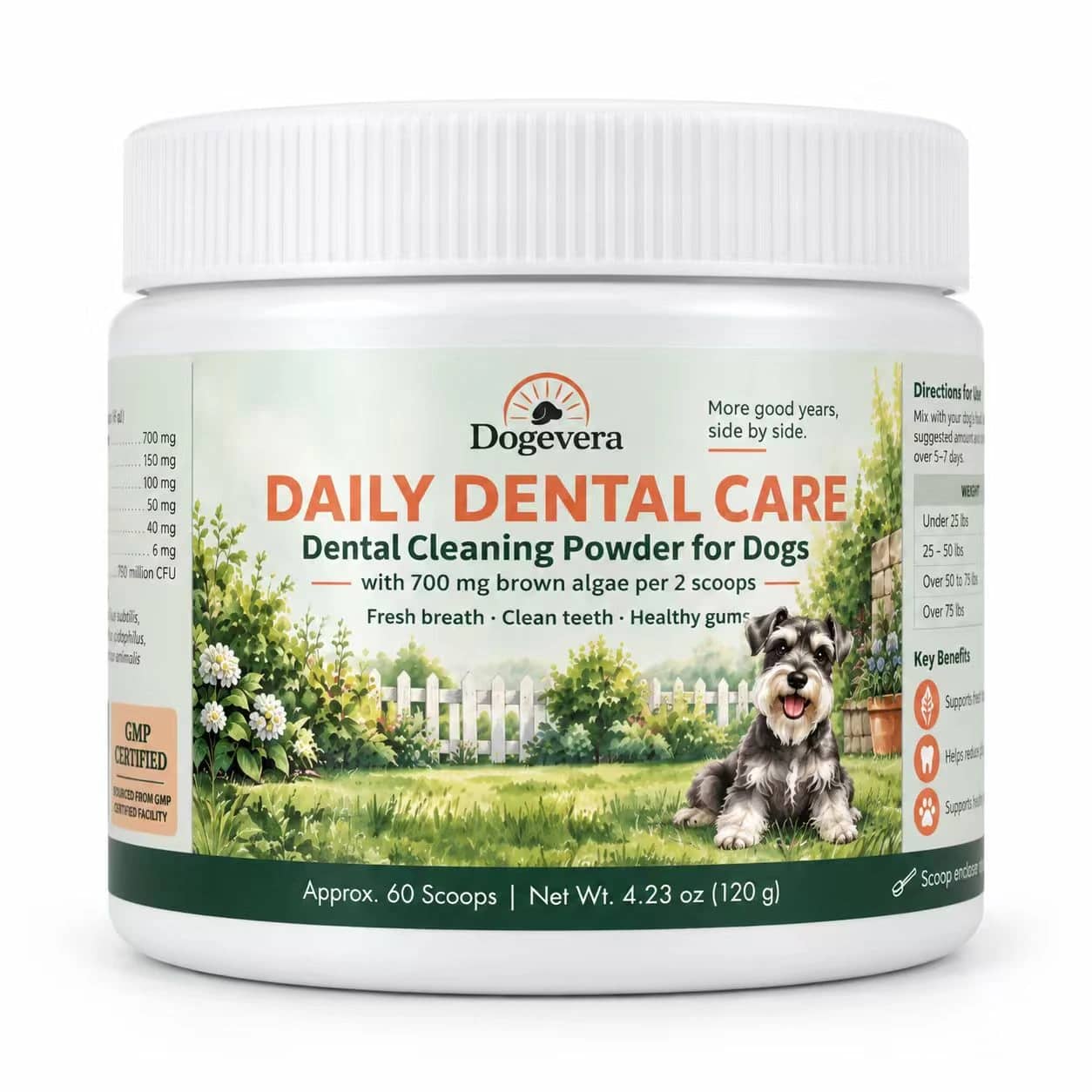
If a labeled powder fits your routine, Daily Dental Cleaning Powder for Dogs is the relevant product page to review. Follow its current label rather than guessing a serving or mixing method.
Arrange professional dental care thoughtfully
Home observations can help you decide what to report, but they do not replace a professional examination. Arrange advice when you notice a persistent change in breath, visible buildup, mouth sensitivity, altered chewing or difficulty eating. Also contact the clinic when you cannot safely inspect the mouth at home.
Before the appointment, bring:
- Your weekly notes and the date you first noticed the change
- A list of dental products, treats and foods currently used
- Photos only if they can be taken without restraining or upsetting your dog
- Questions about whether brushing, an adjunct or a professional procedure is appropriate
- Any details about changes in eating, chewing or tolerance of mouth handling
Ask the clinic what they want you to do before and after any recommended procedure. Do not start, stop or combine products based only on a label claim when your dog already has a mouth concern.
FAQ
How often should I check my senior dog's teeth?
Use a brief daily routine for handling practice when your dog is comfortable, and make a closer observation part of a weekly worksheet. Stop when your dog shows discomfort rather than forcing a complete look.
What can I do if my dog will not tolerate brushing today?
Return to a calm step your dog accepts, such as touching the cheek or lifting the lip briefly. You can review a labeled adjunct temporarily, but a new or persistent mouth problem still needs professional advice.
Should I choose a powder, chew or water product?
Choose the format your dog can use consistently, then compare named ingredients, directions, warnings and evidence for the exact finished product. Do not assume that evidence for one format applies to another.
What should I bring to a dental appointment?
Bring your observation notes, product labels or names, feeding details and specific questions about comfort, home care and any recommended professional treatment.
References
For individual health questions, your veterinarian remains the best partner.