TL;DR
The best dog chew for bad breath is one your dog can chew comfortably, finish safely under supervision, and fit into a broader dental routine. A chew can be a pleasant daily option, but it cannot tell you why a new or persistent odor has appeared.
New, strong, or ongoing bad breath is worth discussing with a veterinarian, particularly if your dog is also eating differently or seems uncomfortable around the mouth.
Which dog chew is best for bad breath?
You notice it during a good-morning cuddle: your senior dog’s breath is stronger than usual, and the dental-chew aisle suddenly feels full of big promises. Start with fit, not the boldest package claim.
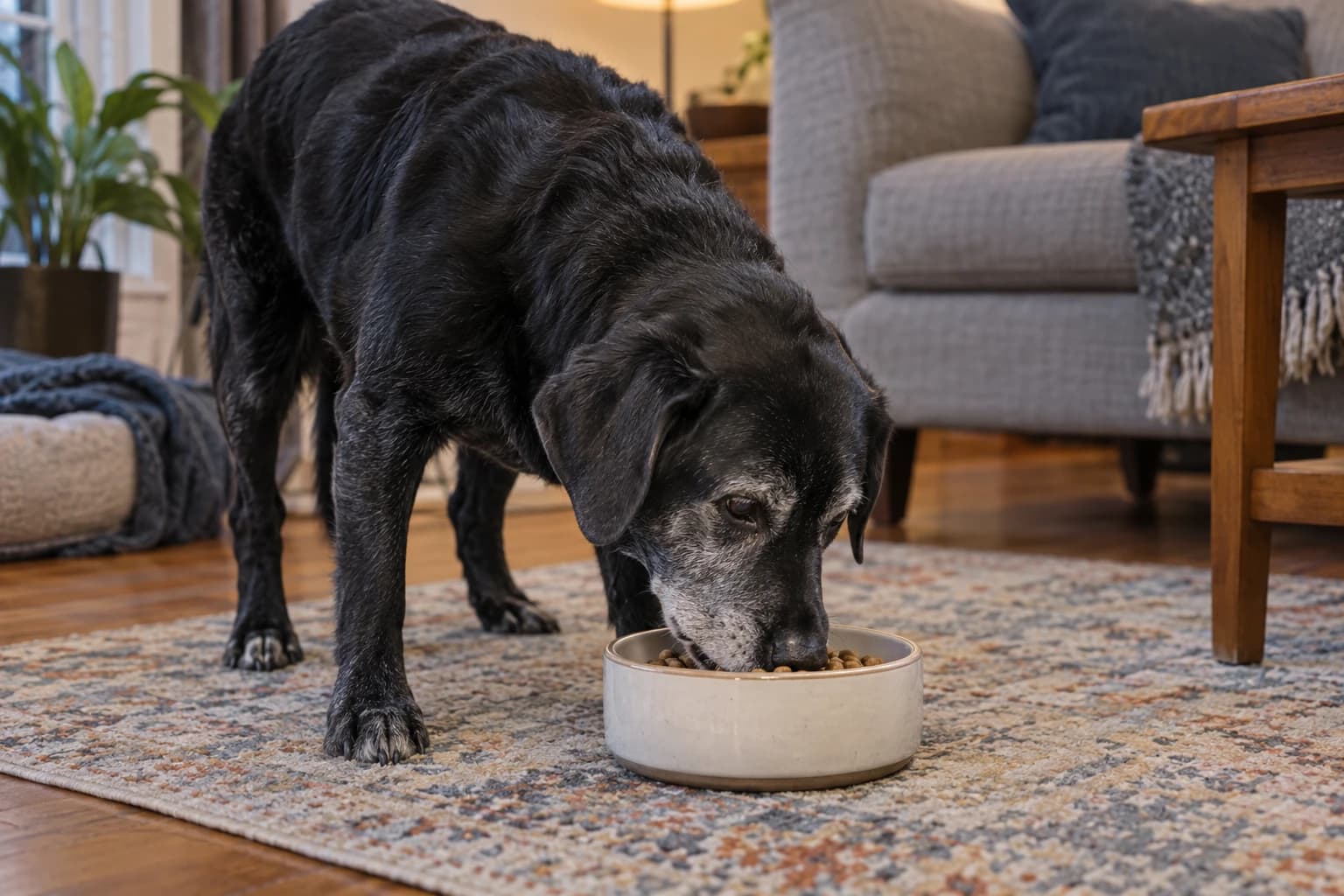
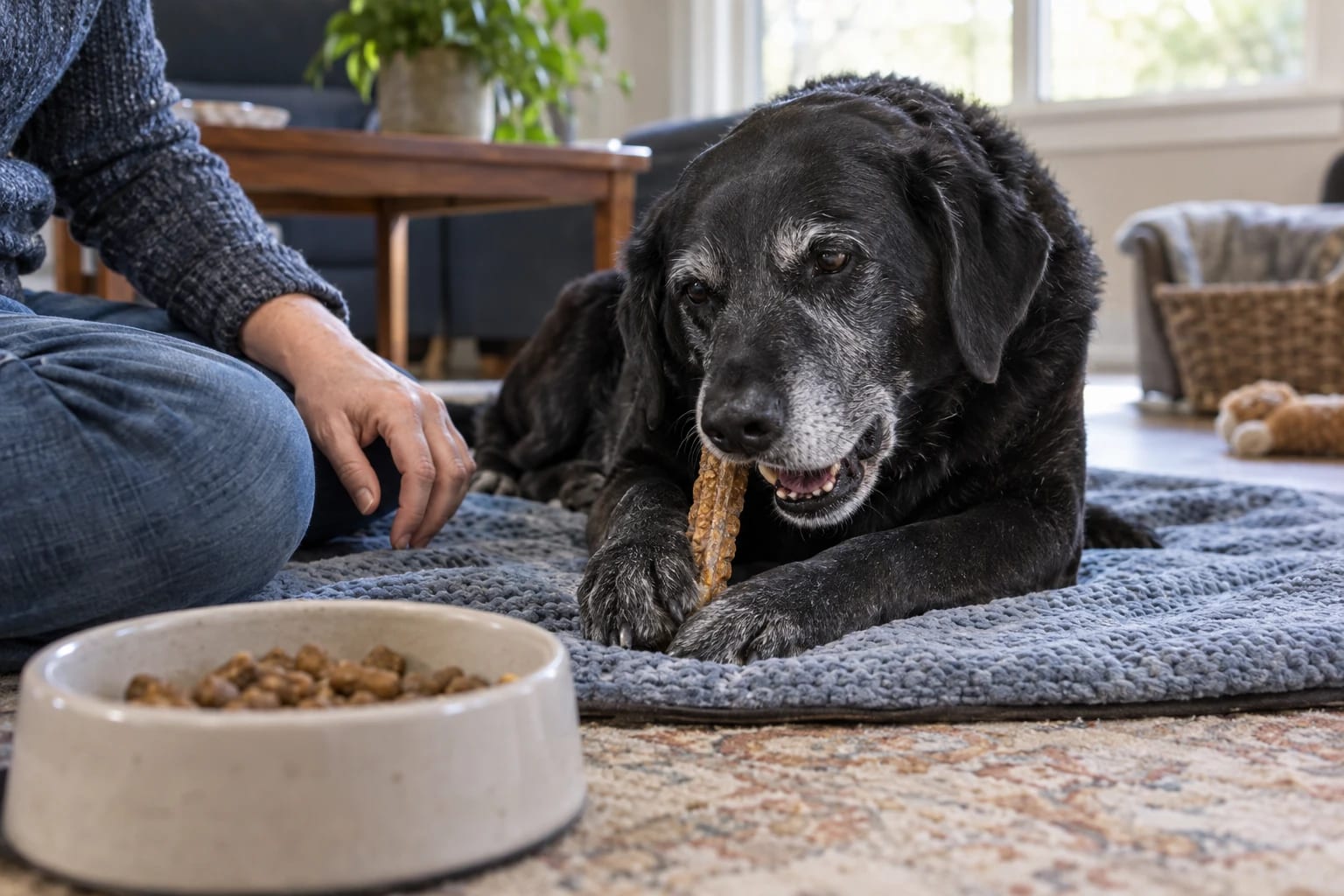
A suitable chew should match your dog’s current eating style. Some older dogs still enjoy a firmer chew, while others pause, drop hard treats, chew on one side, or prefer softer foods. Those details matter more than whether a package uses words such as “fresh” or “clean.” For a closer look at what bad breath can signal at home, see why a senior dog’s breath may smell bad.
Use this quick comparison before bringing home a new chew:
| What to compare | A practical choice | What to avoid | |---|---|---| | Texture | A chew your dog can manage calmly and steadily | A very hard item that makes your dog hesitate, struggle, or abandon it | | Size | A size intended for your dog’s current body size | A small chew your dog could try to swallow whole | | Ingredients | A full, readable ingredient panel that fits your dog’s usual food routine | Vague descriptions that do not clearly identify the ingredients | | Portions | Clear feeding directions and calorie information, when listed | Treating an unspecified amount as an everyday extra | | Your dog’s response | Relaxed chewing and normal interest afterward | Gagging, repeated dropping, frantic gulping, or obvious mouth discomfort |
The right choice is often the simplest one: a clearly labeled chew that your dog handles comfortably and that does not crowd out regular meals.
Chew texture matters more for older mouths
A dental chew is not automatically a good match just because it is sold for dogs. Watch your dog eat their usual kibble and treats before choosing a texture. If they have recently stopped eating hard treats, do not use a dental chew as a test of whether they can manage one.
Offer a new chew when you can stay nearby. Pick it up if your dog tries to gulp it, breaks off a large piece, repeatedly spits it out, or walks away after attempting to chew. Keep the first few tries simple: offer only one new chew product at a time, and note how your dog approaches, chews, and finishes it.
Ingredient considerations are equally practical. Read beyond the front label for animal proteins, flavorings, grains, plant ingredients, and added supplements. If your dog already avoids a particular ingredient, choose a chew that makes its full recipe easy to check. Our guide to dog treats and dental health has a useful label-reading approach for comparing dental-style treats.
How should a dental chew fit into daily care?
Think of a chew as one routine element rather than the entire plan. Follow the package directions for frequency and serving size, and account for the chew within your dog’s normal food routine. Avoid adding several new dental products at once, because it becomes harder to tell which one your dog accepts well.
For three days, keep a short note with four observations:
- Did your dog take the chew willingly?
- Did they chew it comfortably or struggle with the texture?
- Did they finish it without gulping large pieces?
- Did their interest in regular food stay the same?
This is not a test of whether a chew “works.” It is a straightforward way to decide whether the format suits your dog before making it a regular purchase.
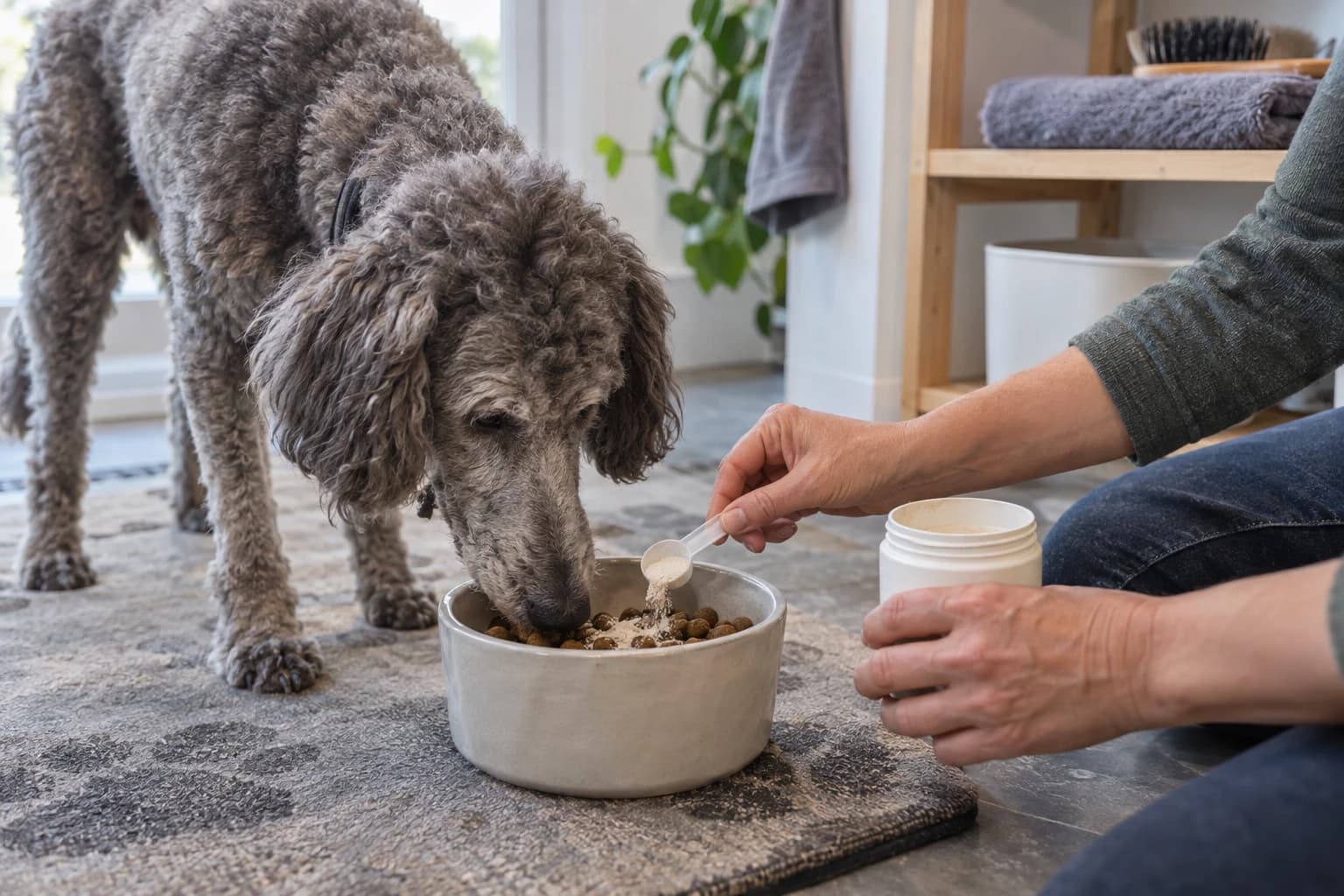
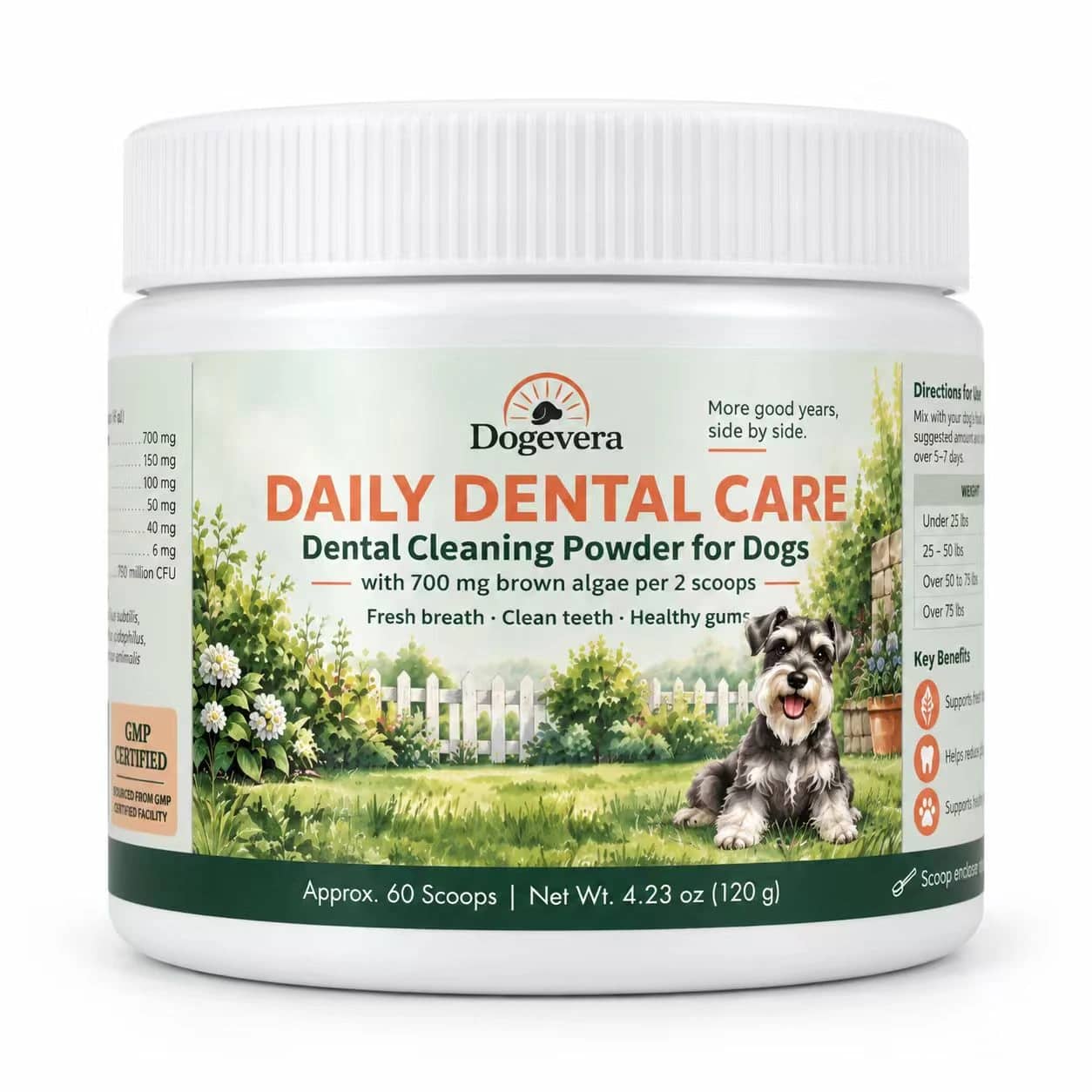
Some households prefer a food-based routine rather than another chew, especially when an older dog no longer enjoys firm treats. A powder is a different format, not a replacement chew, but Daily Dental Cleaning Powder for Dogs may be worth comparing if the package directions and ingredient list fit your dog’s usual meals. You can also compare how powders fit into a realistic routine in this guide to the best dog dental powder for senior dogs.
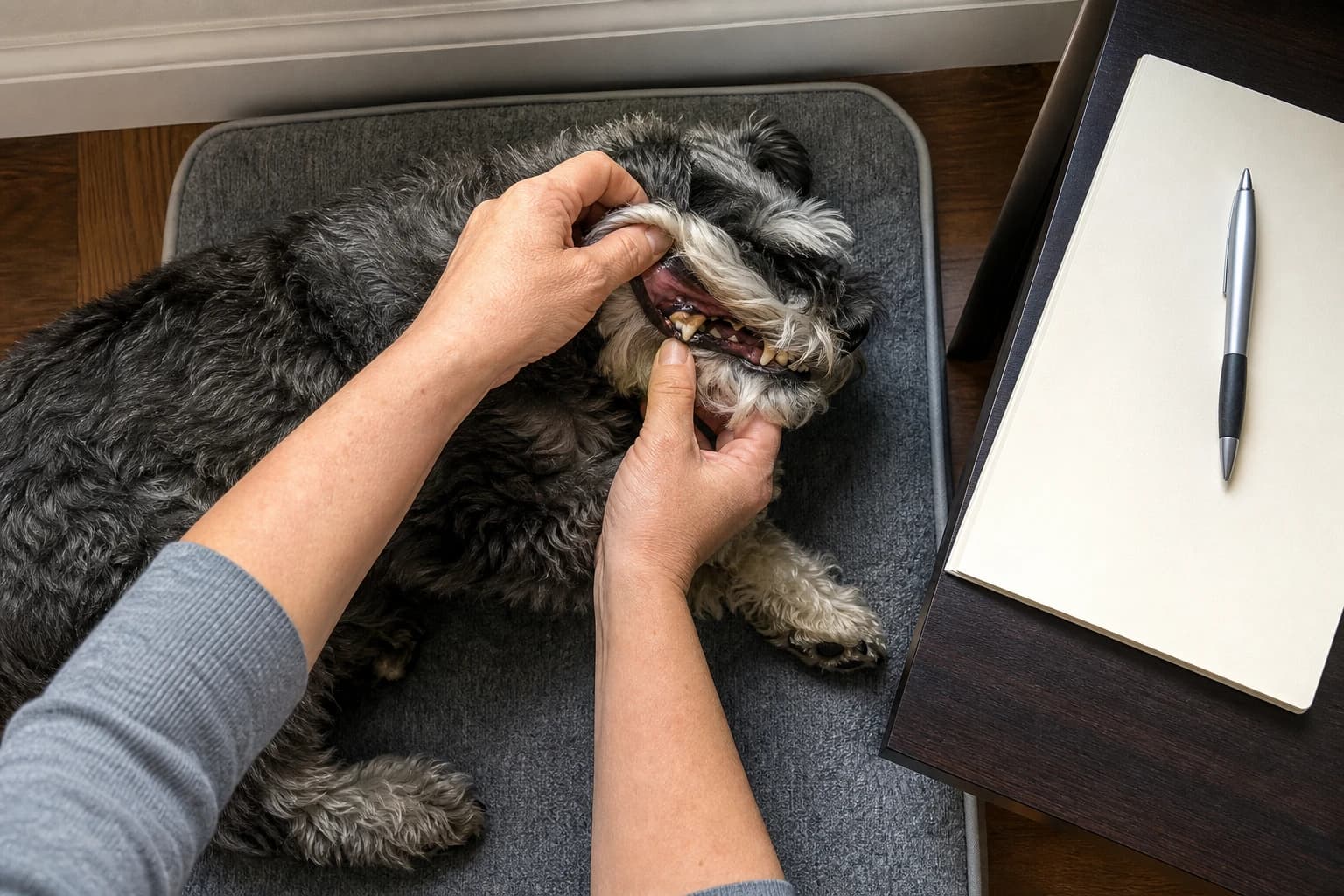
Regular mouth checks remain useful. During a calm moment, notice whether your dog has a new odor, changes in chewing, drooling, pawing at the mouth, or a shift away from regular food. Write down the pattern rather than relying on memory.
When should you skip a dental chew?
Skip the chew for now if your dog suddenly refuses hard foods, seems unable to chew comfortably, repeatedly drops food, or has an abrupt change in appetite. Do not try to solve those changes by switching among tougher chews or offering several treats to tempt them.
Choose a softer treat only when your dog is otherwise eating normally and the texture is easy for them to handle. If the change continues, record what you have noticed and arrange a veterinary conversation. A dental chew is for an ordinary routine, not for working around a possible mouth problem.
FAQ: Dog chews for bad breath
Can a dental chew replace brushing or dental care?
No. A chew can be one part of daily care, but it does not replace regular mouth observations or professional dental care when your dog needs it.
Are hard dental chews better for bad breath?
Not necessarily. The better option is the texture your dog can chew safely and comfortably. A harder chew is not automatically a better choice for an older dog.
What if my dog will not eat a dental chew?
Do not force the issue or keep offering harder versions. Check whether your dog is also avoiding regular food or other treats, then choose a different routine only if they are eating comfortably otherwise.
How do I compare two dental chews?
Compare the full ingredient list, intended size range, feeding directions, texture, and how each option fits your dog’s usual diet. Then introduce only one new product at a time and observe how your dog manages it.
For individual health questions, your veterinarian remains the best partner.