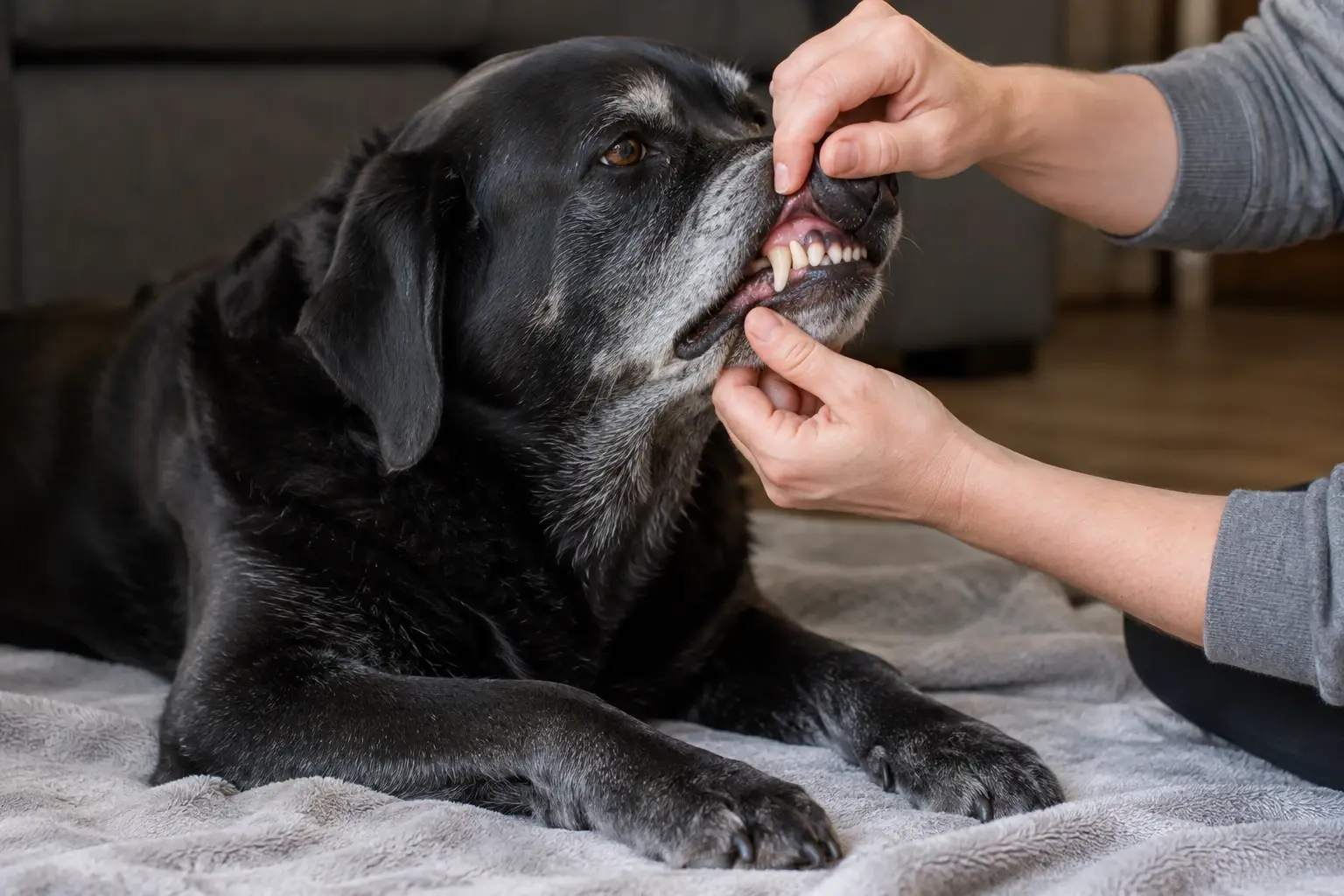
A quick note: this article is general everyday guidance, not veterinary advice. A new or worsening breath smell in a senior dog deserves a professional oral exam.
You fill the water bowl, and within a minute your older dog turns away from it. That is the real question with any dog water additive for bad breath: not whether the bottle promises fresher breath, but whether your specific dog will drink the water you just changed. This guide walks through choosing a dog-specific additive by its exact label, then setting up a drinking routine you can actually observe.
The short answer: pick a product made for dogs, read its label and evidence for the finished product, follow the mixing directions exactly, and record acceptance for at least a week before judging it. If a product makes you guess at any of those steps, keep looking.
Why the label matters more than the promise
Water additives sit in a crowded shelf category. Some are formulated as pet dental products with specific active ingredients and directions; others are essentially flavored water fresheners. The clearest way to separate them is to look past the front of the bottle:
- Complete ingredient list. Named ingredients in order, not vague blends. If your dog has food sensitivities, check for chicken, shellfish, or other allergens in the fine print.
- Exact mixing instructions. A specific amount per bowl size or per liter of water. "A splash" or "as needed" tells you nothing about what your dog is actually consuming.
- What the claim covers. "Freshens breath" and "reduces plaque" are different claims with different evidence behind them.
- Evidence for the finished product. Research on an ingredient does not automatically transfer to every bottle containing it. Some products carry third-party acceptance for a specific claim; our guide to checking whether a dental product appears in the VOHC accepted-products list walks through verifying it yourself, and the same verification logic applies when a water additive makes a plaque claim.
Dog-specific first: why human products don't fit
A water additive made for dogs is formulated for a drinking-water routine and usually flavored to be accepted by dogs. Human mouthwashes and breath products are not built for dogs to swallow, and some ingredients that are safe for people to rinse with are not safe to drink. When comparing options, this is the first filter: is it explicitly a dog product with directions for use in a dog's drinking water?
Flavor and odor matter more than most listings admit. A dog with an aging sense of smell may reject water that smells of mint or strong additives. If your dog is already a picky drinker, a faintly flavored or unflavored product is the lower-risk starting point.
A selection checklist you can run in ten minutes
Before buying, check each item. A product that fails several should probably stay on the shelf:
1. Labeled for dogs with drinking-water directions on the package or manufacturer site. 2. Exact serving per volume of water stated in household units you can measure. 3. Finished-product evidence described somewhere specific: what claim, what product, what basis. A claim without any product-level detail is not automatically unsafe, but it gives you nothing to compare. 4. Full ingredient disclosure, including flavorings and preservatives. 5. Known contraindications or cautions listed, such as guidance for dogs with specific conditions or those on medication. 6. A clear mixing container or cap so you are not eyeballing a dose daily. 7. A return or guarantee term you understand before opening, since acceptance is genuinely uncertain until your dog tries it.
Set up the drinking routine before you add anything
The most useful step happens before the first drop goes in the bowl. For two or three days, note your dog's normal drinking pattern: which bowls, roughly how many visits a day, and how fresh the water looks at the end of the day. This is your baseline. Without it, you cannot tell whether a change in drinking is the additive, the weather, or something unrelated.
Then follow the product's exact directions. Do not concentrate the mixture to make it work faster, and do not dilute it below the label out of caution. The label amount is the amount the product was designed around.
Keep a simple acceptance record:
- Each day: did the dog drink as usual, less, more, or refuse the bowl?
- First three days especially, note sniffing, backing away, or waiting for a second bowl.
- Note any drooling, lip-smacking, or unusual pawing at the mouth.
If your dog refuses the treated water, stop and offer plain water immediately. Refusal is information, not a failure: it may mean the flavor, the odor, or simply habit. Some owners solve this by treating only one bowl and leaving a second untreated bowl, which also tells you whether refusal is about the taste or about something else. Never restrict water to force acceptance of a treated bowl; reliable access to plain water always comes first.
How water additives fit alongside the rest of dental care
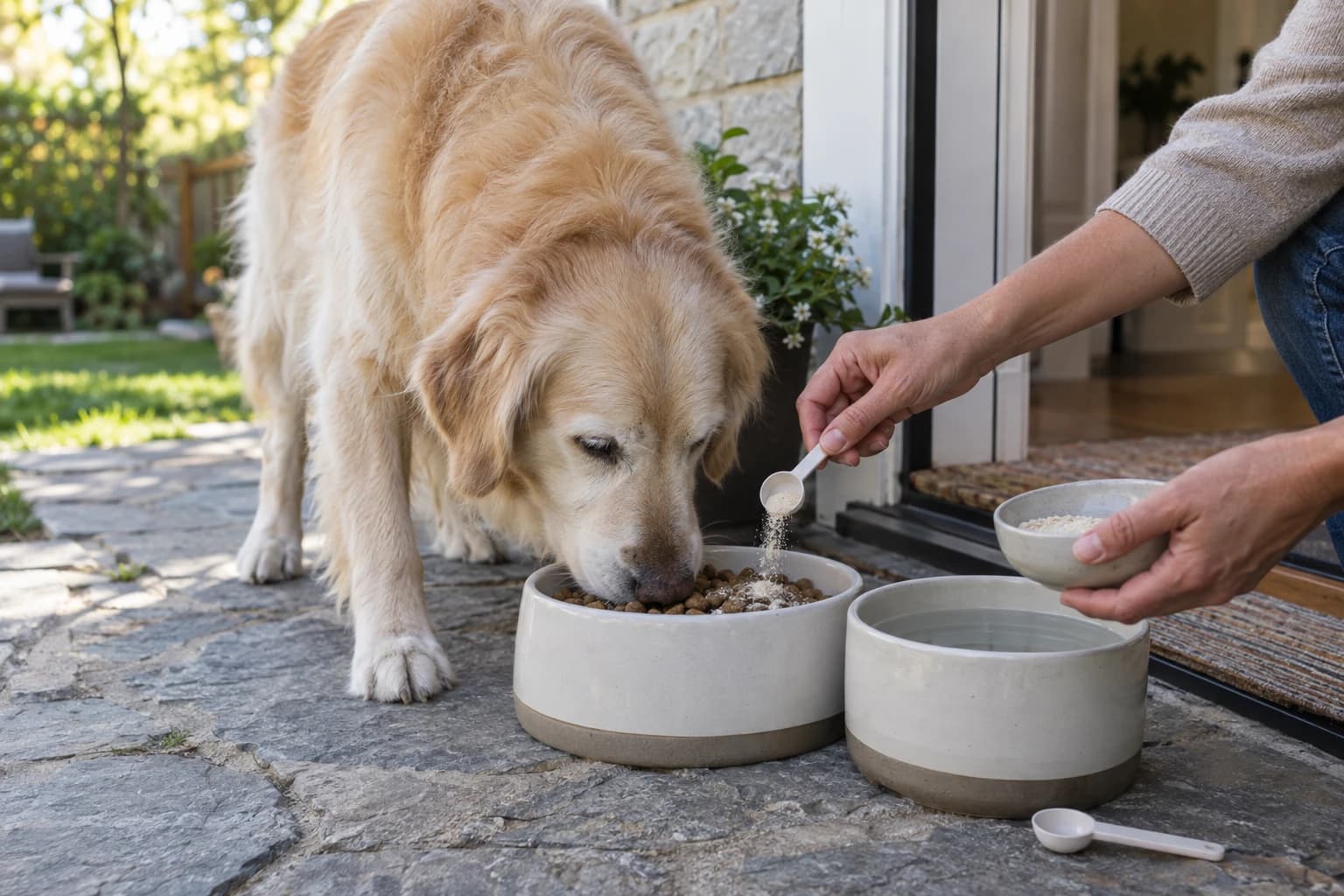
A water additive is one layer, not the whole routine. For senior dogs, drinking-water additives have one structural limitation worth understanding: you cannot control how much water a dog drinks, so the actual daily exposure varies. Powders mixed into food face the same acceptance question in a different form. Our dog dental powder vs water additive comparison breaks down label clarity, daily use, and intake uncertainty side by side if you are deciding between the two formats.
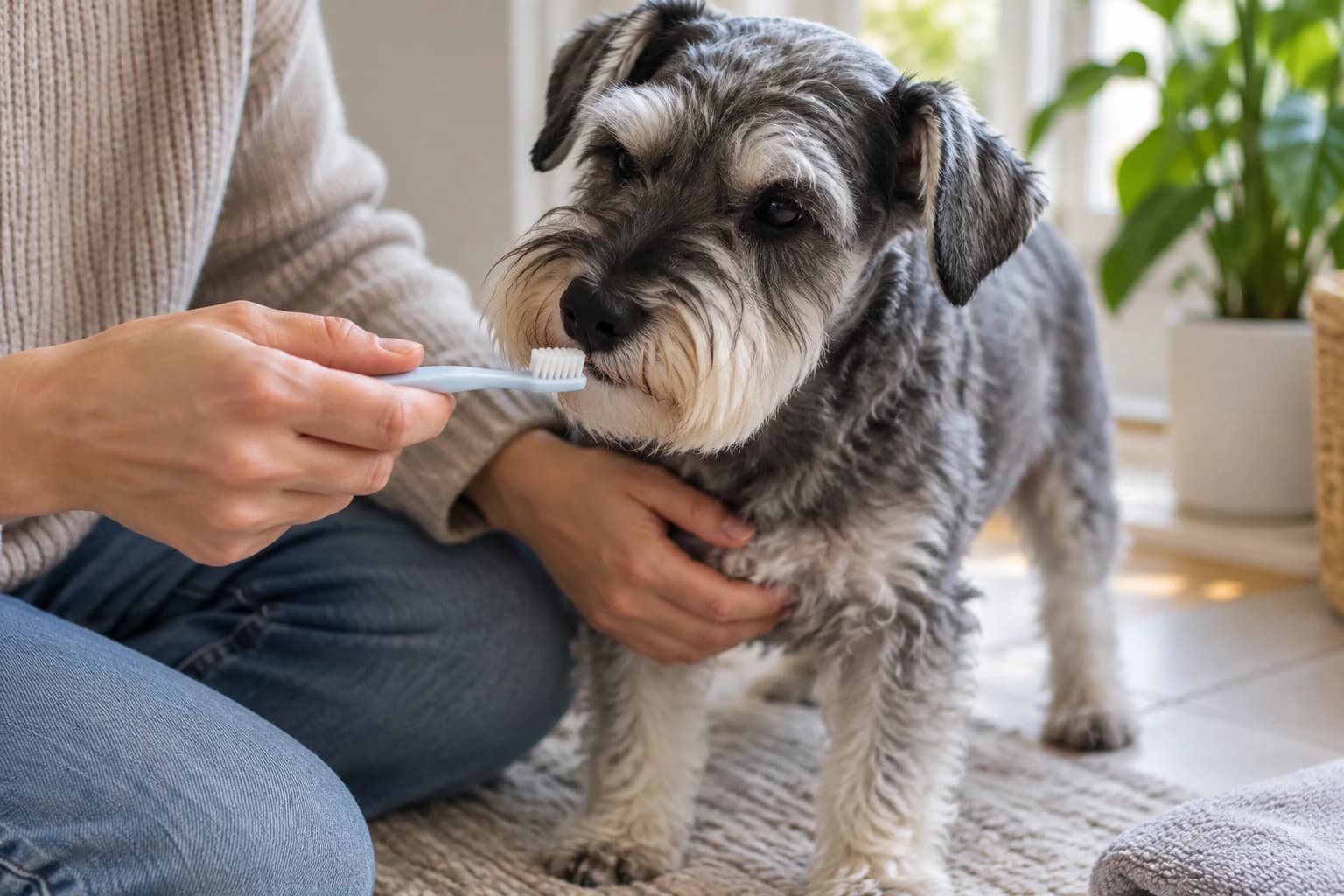
Whichever format you choose, it works alongside, not instead of, the basics: regular professional oral examinations, brushing where tolerated, and diet choices that fit your dog's mouth. If you want a broader starting point, our guide to why a senior dog's breath smells bad covers the three sources to check before assuming any product will fix it. For owners working on brushing directly, the toothpaste guide for bad breath compares options by label and flavor acceptance in the same spirit as this article.
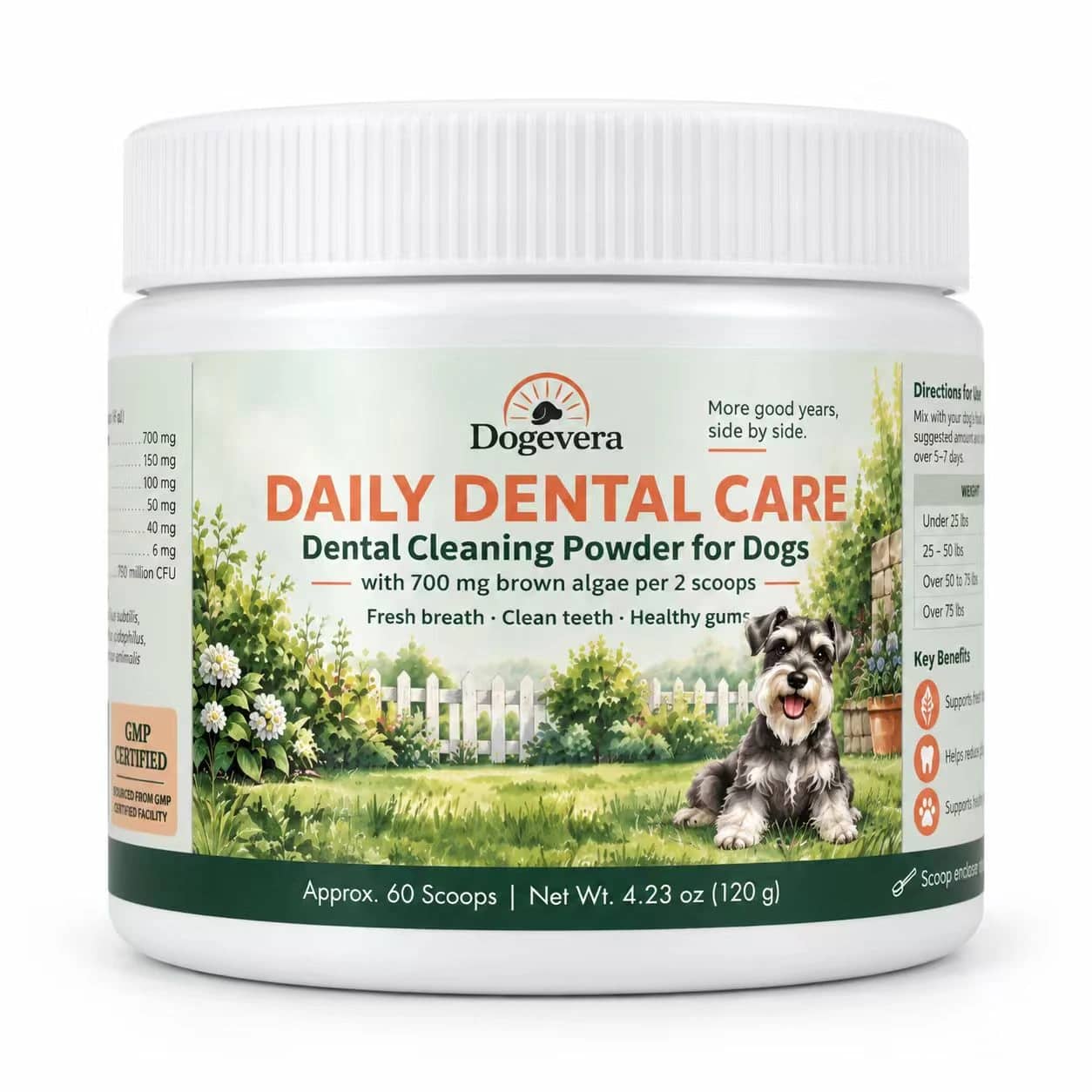
And if your comparison lands on the powder side, our daily dental cleaning powder follows the same label-first approach this article describes, with exact serving directions and ingredient disclosure on the label.
FAQ
How long should I give a water additive before deciding it isn't working? Give it at least a week of consistent use with your acceptance record, then review. If your dog never fully accepted the treated water, the product has not had a fair trial, and the honest conclusion is an acceptance problem, not an effectiveness one.
Can I add the additive to a pet fountain? Only if the product's directions say so. Fountains circulate and filter water, and some products are designed for still water with specific serving instructions. Follow the label rather than improvising.
My dog drank less on the additive but still drank some. Should I continue? A noticeable drop in drinking is a reason to pause and offer plain water, then note what you observed. Reduced intake, even if your dog never fully refuses, is a practical signal to stop rather than push through.
Do water additives replace dental cleaning? No. Additives are part of home care. Established tartar and mouth pain need professional examination and treatment; home products support daily care around that, not instead of it.
What to do this week
Pick two candidate products and run the checklist above against both. Choose the one with clearer directions and more specific product-level information, then build the two- or three-day drinking baseline before your first treated bowl. Small, observed steps will tell you more about fit than any claim on the bottle.
For individual health questions, your veterinarian remains the best partner.