
We sell this powder. It was not the product tested in the studies discussed here.
TL;DR
New or persistent bad breath deserves a veterinary oral assessment. Odor alone cannot distinguish plaque, dental disease or another medical cause. Record changes in eating, drooling and comfort without forcing the mouth open. Seek immediate emergency care for breathing difficulty or collapse.
The three most common sources of bad breath
Plaque, tartar and disease affecting the mouth can occur together. Other health problems can also change breath. You cannot reliably sort these causes by smell or appearance at home; describe the change and let a veterinary examination guide the next step.
Plaque is a film on tooth surfaces, while calculus is hardened buildup. Visible deposits do not reveal everything happening below the gumline. A familiar-looking mouth or normal appetite does not rule out disease.
What a home observation can tell you
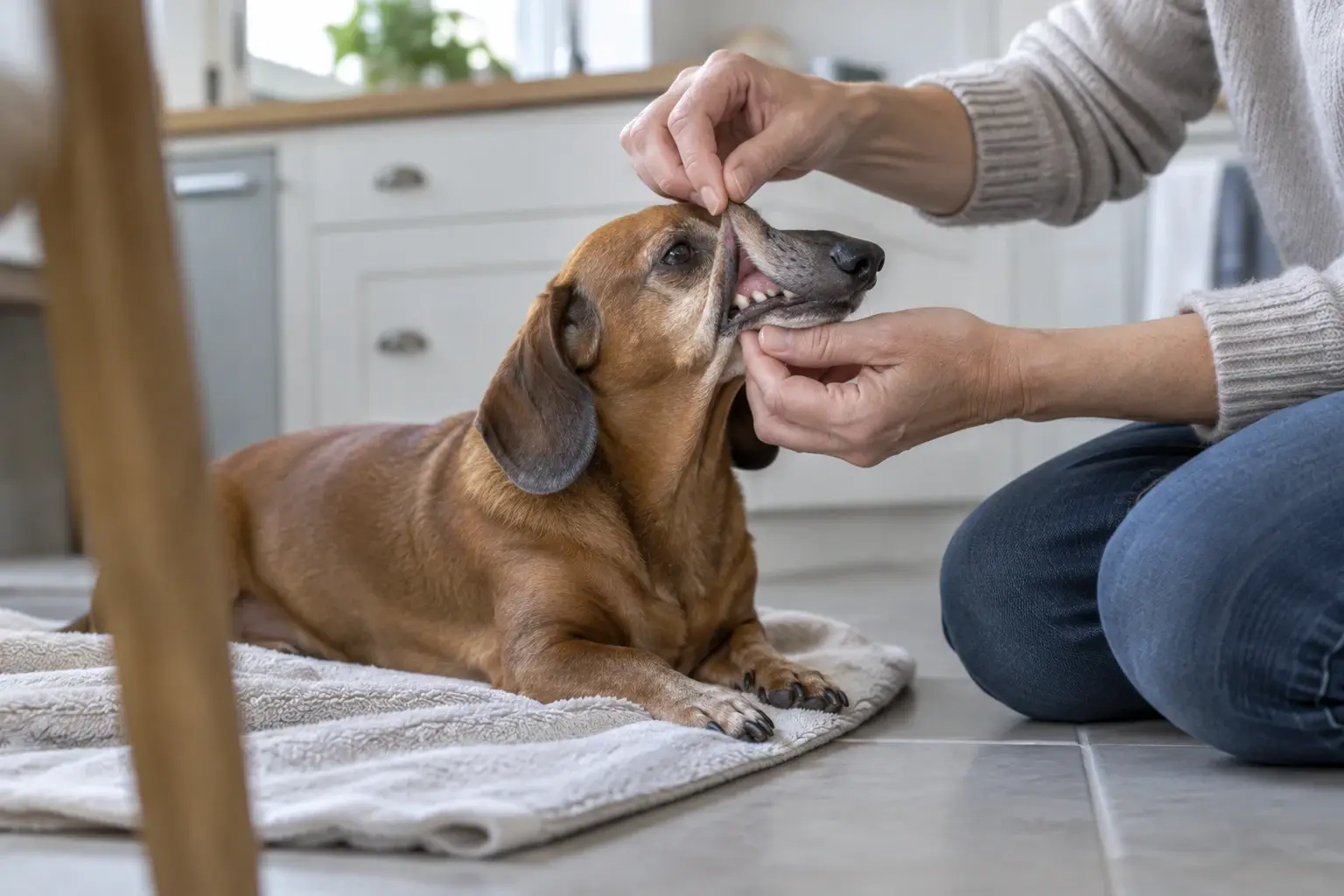
If your dog is comfortable with ordinary face handling, note visible changes without scraping teeth, pressing on gums or forcing an inspection. Gum pigmentation varies, so describe a change from your dog's usual appearance instead of using a universal color test.
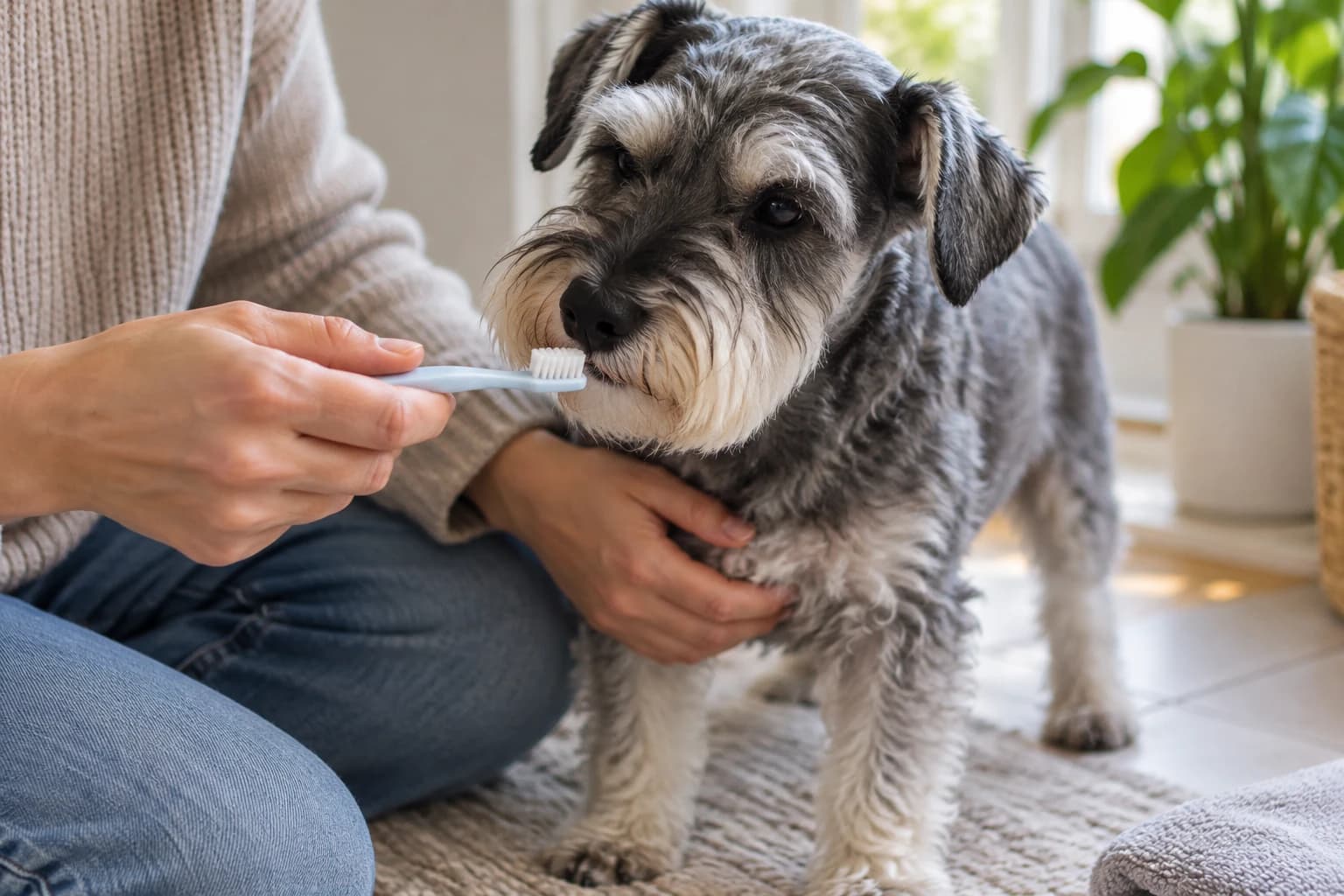
This stage is reversible. Brushing, dental wipes, or a mix-in daily dental cleaning powder can slow plaque formation when used consistently. A powder will not remove tartar that has already hardened, but it may make daily care easier for dogs who resist brushing.
Why visible buildup needs an examination
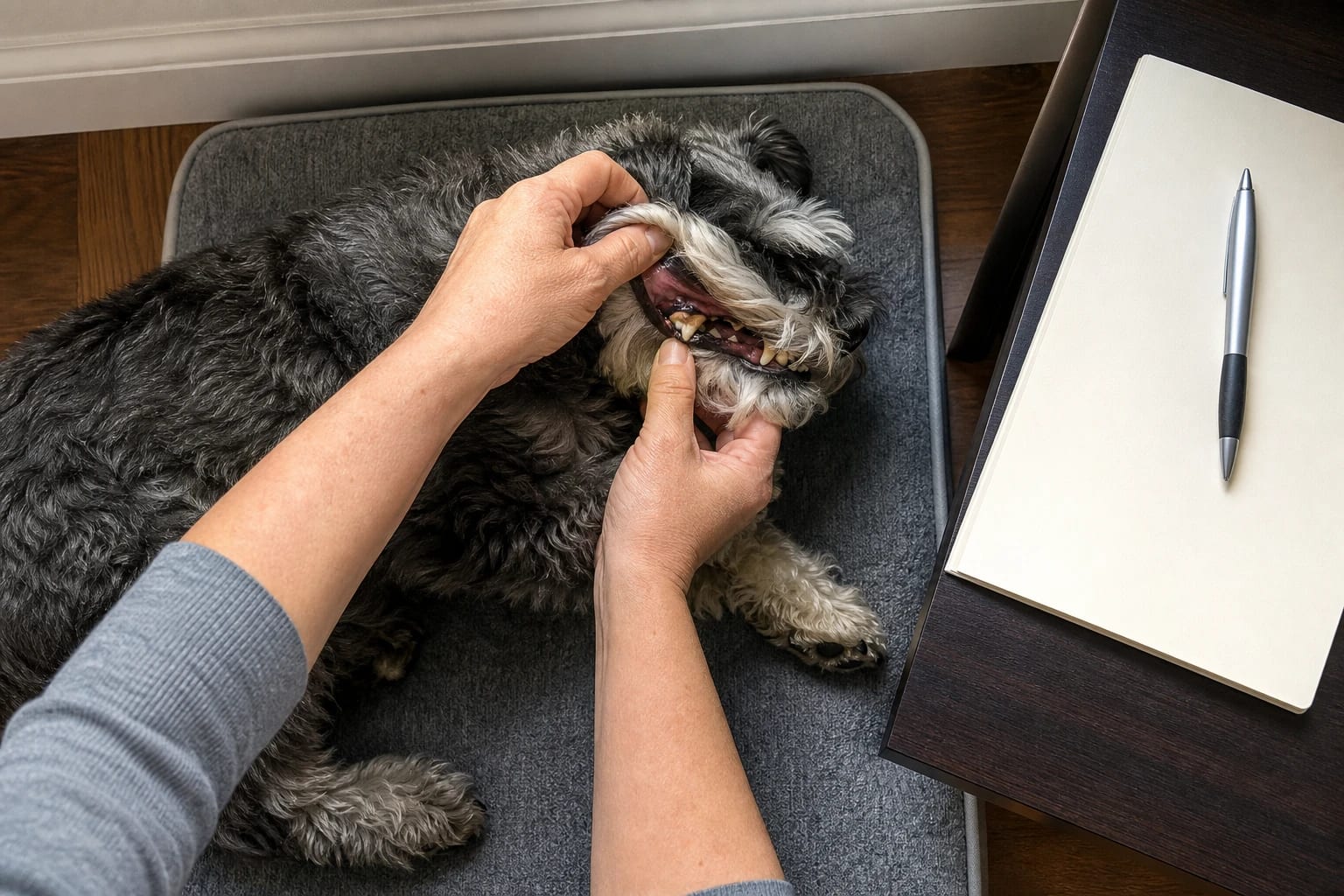
A visible deposit or gum change is useful information for the clinic. Do not touch or try to remove deposits to test what they are. The assessment and any treatment should be planned by the veterinary team.
Tartar requires professional removal under anesthesia. Home products cannot scrape or dissolve it safely. If you see visible brownish buildup, schedule a veterinary oral exam to discuss what a professional cleaning involves and what it costs.
When bad breath signals a medical emergency
Contact your veterinarian promptly when bad breath accompanies eating difficulty, swelling, bleeding, pain or a marked change in behavior. The smell can be described in your own words, but it is not a home test for kidney disease, diabetes or a tumor.
Difficulty breathing, collapse or severe distress requires emergency veterinary care immediately. For other new mouth or eating changes, call the clinic for guidance on urgency rather than choosing a waiting period from the odor alone.
A home assessment sequence you can follow
Write down when the breath changed, whether it is persistent, and any changes in normal meals or drinking. Do not bring your face close to a painful mouth or force lip handling. A photograph is optional and should only be taken without causing distress.
Watch naturally occurring meals while arranging veterinary advice. Note dropping food, one-sided chewing, drooling or pawing at the face. You do not need to observe for several days before contacting the clinic.
If you see only mild plaque and no gum changes, a routine veterinary dental exam is a reasonable next step. If you see tartar, redness, or bleeding, schedule an exam within the next week or two. If you see any of the urgent signs listed earlier, call your veterinarian the same day.
FAQ
Can I remove tartar at home with a scraper or dental tool? No. Tartar removal requires specialized instruments and anesthesia so the veterinarian can clean below the gumline safely. Attempting it at home can injure the gums, break a tooth, or push bacteria deeper into the tissue.
Is bad breath in senior dogs always a dental problem? No. While plaque and tartar are common, bad breath can also signal kidney disease, liver disease, diabetes, or an oral tumor. If the smell is unusual or came on suddenly, a veterinary exam is the only way to rule out a systemic condition.
How should I check the mouth at home? Ask the clinic what gentle home observations are appropriate for your dog. Stop if handling is painful or resisted. Home checks do not replace an oral examination.
Will changing my dog's food improve bad breath? Food alone will not remove plaque or tartar, and it will not treat an underlying medical condition. If bad breath persists after a diet change, a veterinary exam is still necessary.
What to do next
Use a change in breath as a reason to pay attention and seek appropriate advice, not as a way to diagnose the cause. Record the accompanying eating and comfort changes, and avoid masking the issue with a new product.
Related reading
- Dental powder for dogs: what brown-algae studies actually show
- Dog Chewing on One Side of Mouth: What to Do
- Dog Teeth Cleaning Cost: What a Powder Can’t Replace
- Best Dog Chew for Bad Breath: A Senior-Dog Guide
References
- Effects of Edible Treats Containing Ascophyllum nodosum on the Oral Health of Dogs: A Double-Blind, Randomized, Placebo-Controlled Single-Center Study. Frontiers in veterinary science. 2018. PMID: 30109236. DOI: 10.3389/fvets.2018.00168.
- World Small Animal Veterinary Association Global Dental Guidelines — Journal of Small Animal Practice (2020). DOI: 10.1111/jsap.13132.
- VCA: emergencies in dogs.
For individual health questions, your veterinarian remains the best partner.