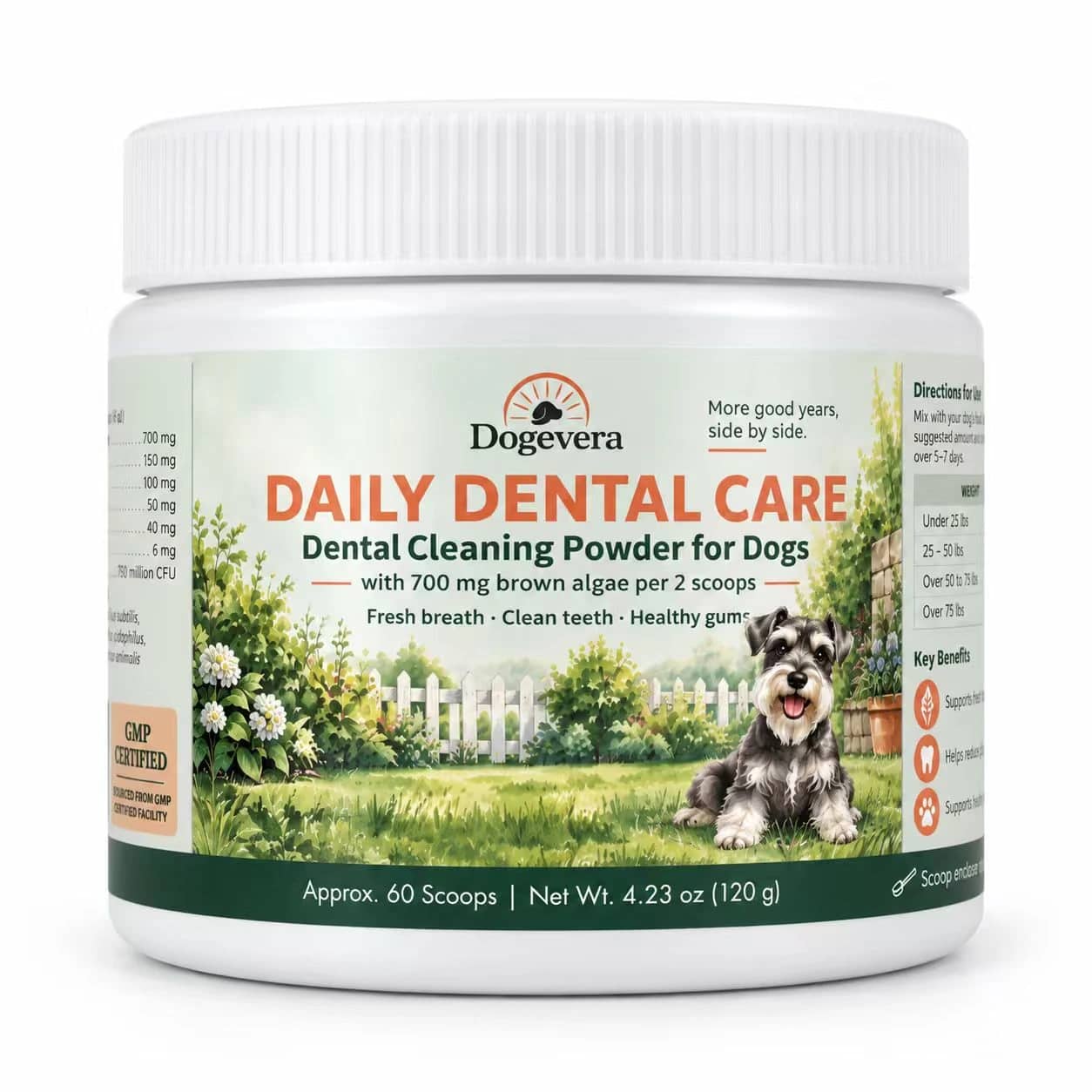

We sell this powder. It was not the product tested in the studies discussed here.
TL;DR
Broken teeth are very common in dogs: in a 2026 study that examined 369 randomly selected dogs under anesthesia, 50.9% had at least one fractured tooth, and fractures became more common with age and body weight. The key question is whether the break has exposed the pulp, the living center of the tooth, which shows as a pink or dark spot in the middle of the broken surface. VCA Animal Hospitals explains that an exposed pulp becomes infected and the infection can spread into the jaw, and that antibiotics often cannot clear it, so these teeth need a root canal or extraction, not watching and waiting. A small chip with no exposed pulp may only need monitoring. Most dogs hide the pain: VCA notes there are often no signs at all. Chewing on one side, dropping food or refusing hard treats are the clues. Avoid bones, antlers, hooves and other chews that do not bend.
Is a broken dog tooth an emergency?
See a vet the same day if:
- the tooth is bleeding, or you can see pink or red in the middle of the break
- your dog has facial swelling, especially below the eye
- your dog will not eat, or cannot close its mouth
- the tooth is loose or pushed out of position, or the break followed a blow to the face
Book a dental visit within a few days if:
- you see a chip or crack but no pink or dark spot
- your dog has started chewing on one side or avoiding hard food
Even when it is not an emergency, Cornell University's veterinary college warns that a wiggly tooth should not just be monitored, and that a chronic broken tooth can lead to an abscess with swelling and pain.
Which teeth break, and why
VCA says the most frequently broken teeth in dogs are the canine (fang) teeth, followed by the large upper cheek teeth at the back of the mouth. Fractures come from:
- Chewing on hard objects such as antlers, bones and other hard, non-bending chew toys (VCA)
- Trauma, such as being hit by a car or an object
In the 2026 study, dogs with a medium-length skull (most breeds that are neither flat-faced nor long-nosed) had more fractured teeth than flat-faced or long-nosed dogs, and fractures increased with age and body weight. Older, bigger dogs that chew hard objects are the most at risk.
Types of tooth fractures
VCA describes these types:
- Enamel fracture: only the outer enamel is lost.
- Uncomplicated crown fracture: the crown breaks but the pulp is not exposed.
- Complicated crown fracture: the crown breaks and exposes the pulp.
- Uncomplicated crown-root fracture: the break reaches the root but the pulp is not exposed.
- Complicated crown-root fracture: the break reaches the root and exposes the pulp.
- Root fracture: the root itself is broken.
You cannot see the root at home, which is why your vet will take dental X-rays under anesthesia before deciding on treatment. Cornell notes that X-rays show the damage from the surface to the root.
Signs of a broken tooth
VCA lists:
- chewing on one side of the mouth
- dropping food
- drooling
- grinding the teeth
- pawing at the mouth
- facial swelling
- reluctance to eat hard food or play with chew toys
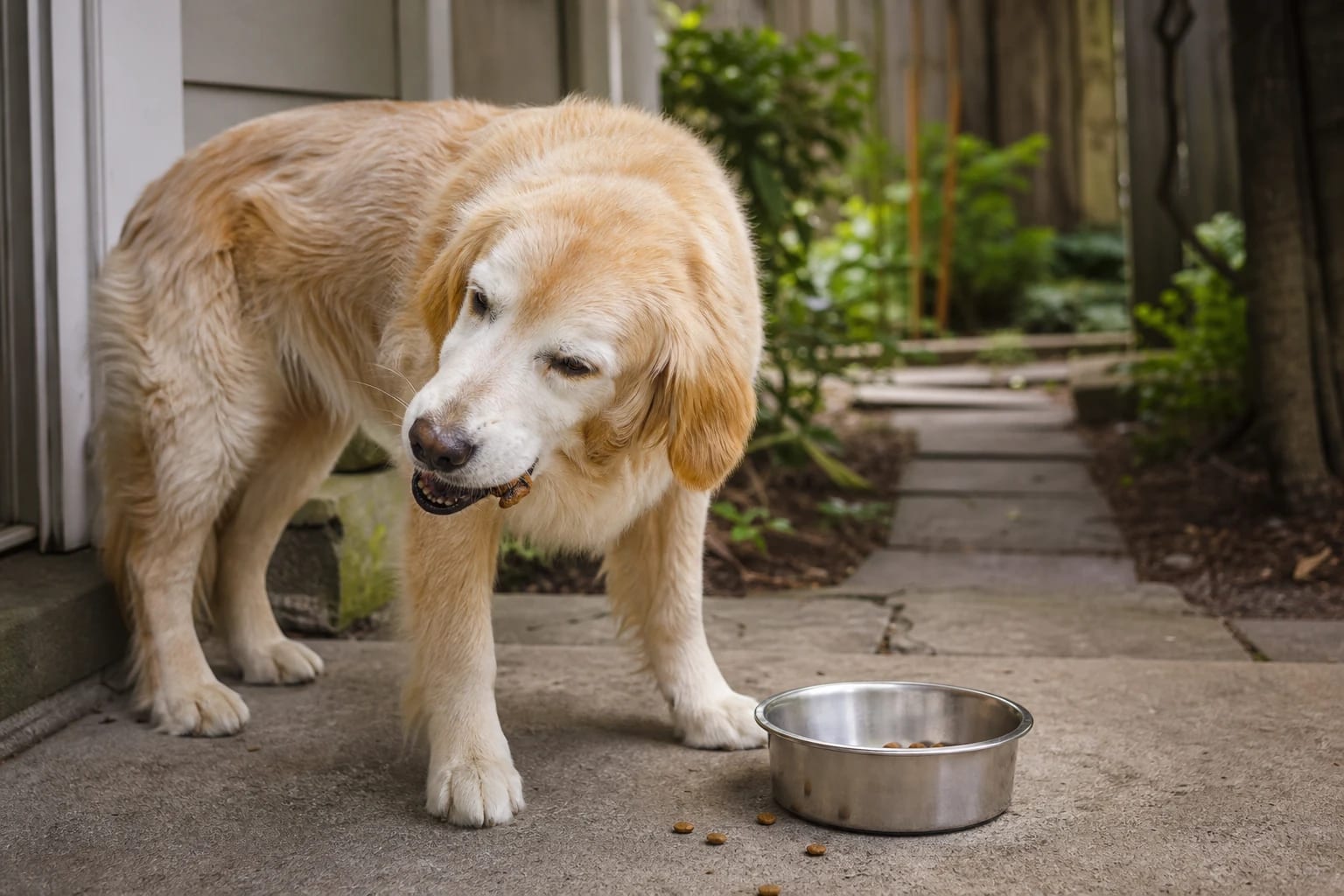
Cornell adds that dogs may react to hot and cold, avoid cool drinks, or go to the food bowl and walk away without eating. But VCA notes that often there are no signs at all, because dogs are experts at hiding pain. Many broken teeth are found by owners lifting the lips, or by the vet at a check-up.
Why does my dog chew on one side?
A dog that suddenly chews on one side, chews in a strange, careful way or drops food is usually avoiding pain on the other side. The most common causes are a broken or loose tooth, gum disease, or an infected tooth root. Cornell reports that 80% to 90% of dogs over 3 years old have some component of periodontal disease, and one painful tooth is enough to change how a dog chews.
VCA also lists these among the reasons a dog may want to eat but cannot:
- inflammation of the mouth, gums or throat
- advanced gum disease with loose teeth
- an abscess or mass behind the eye
- pain in the chewing muscles or the jaw joint
- tumors of the mouth, tongue or tonsils
- nerve problems affecting chewing or swallowing
Also check for something stuck between the teeth or across the roof of the mouth, such as a stick fragment.
What to check at home
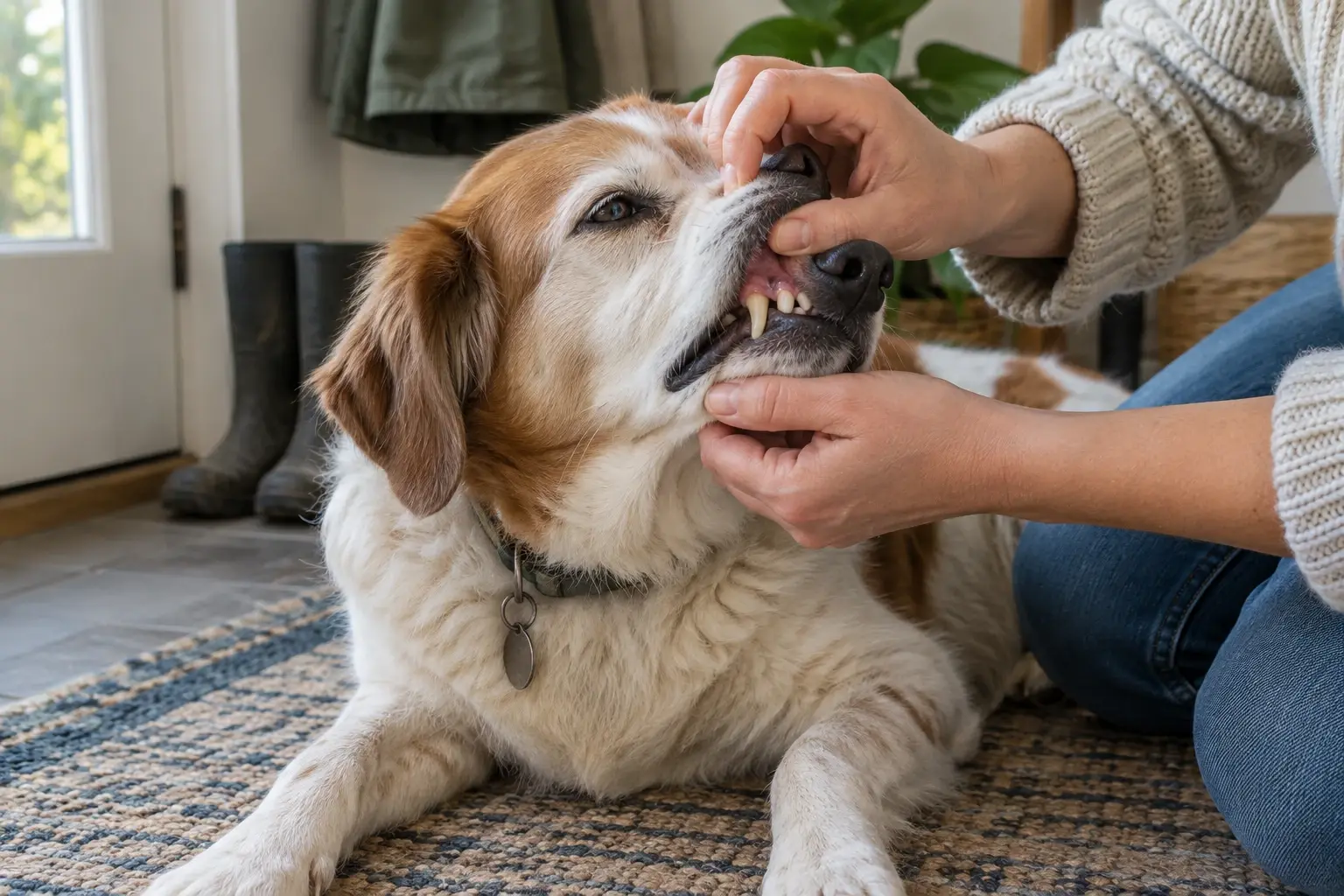
With your dog relaxed, lift the lips on each side in good light and compare:
- The broken surface: a pink, red or dark dot in the center means the pulp is exposed
- Tooth color: a tooth that is gray, purple or darker than the others may have a dead pulp
- Gums: redness, swelling or bleeding around one tooth
- Face: swelling below the eye or along the jaw
- Smell: breath that is worse on one side
Do not force the mouth open if your dog resists; a painful dog may snap. Take a photo for your vet if you can.
Treatment options
Root canal therapy
For teeth with an exposed pulp, a root canal removes the infected pulp, cleans and seals the canal, and keeps the tooth in place. VCA says long-term results of root canal treatment are generally excellent, and a crown may be added afterwards to protect the tooth.
Vital pulp therapy
For a recent fracture, the vet removes the top of the pulp and seals it so the tooth stays alive. VCA describes it for recently fractured teeth in younger dogs. A 2025 University of Wisconsin study of 79 teeth treated over 25 years found an 80% success rate, with no significant link between the dog's age and success. Treated teeth need X-ray checks afterwards, because some later need a root canal.
Extraction
Removing the tooth under anesthesia. VCA says vets generally avoid extracting fractured teeth that are otherwise healthy, but Cornell notes most broken incisors are extracted, and extraction is often the least expensive option. It is also used when the root is badly damaged or the tooth is loose.
Restoration or monitoring
If the pulp is not exposed, VCA notes the tooth can be restored (smoothed and sealed) without a root canal. Cornell notes a small chip with no exposed dentin may simply be monitored with your vet.
What not to do
VCA warns that ignoring an exposed pulp is not a good option, as the tooth will become sensitive and painful, and the infection inside is usually beyond the reach of antibiotics. Do not give human pain relievers; they can seriously harm dogs.
Can a dog live with a broken tooth?
A dog can live with a small chip that has not exposed the pulp, once a vet has checked it. A broken tooth with an exposed pulp should not be left: it stays painful, and the infection can spread into the jaw and form an abscess. Many dogs keep eating normally despite this, so a good appetite does not mean the tooth is fine.
While you wait for the appointment
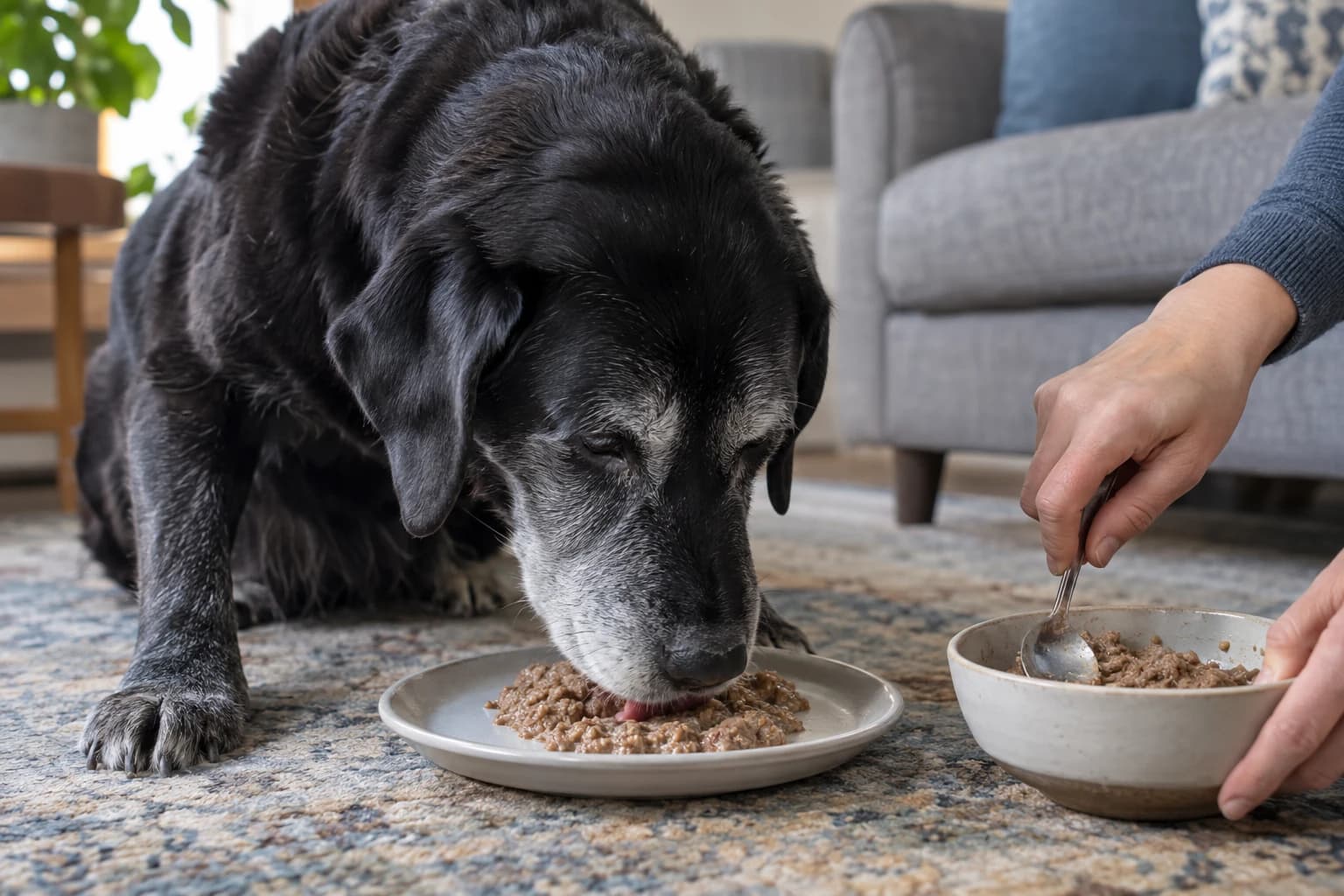
- Offer soft or soaked food. See soft dog food for senior dogs with bad teeth.
- Remove hard chews, bones and hard toys.
- Avoid very cold water or ice if your dog seems sensitive.
- Do not try to file or smooth the tooth yourself.
How to prevent broken teeth
Both VCA and Cornell advise against bones, antlers and hooves; VCA adds nylon chews and pizzle sticks, and Cornell adds ice cubes.
- Use the thumbnail test. Cornell: you should be able to make a dent in a chew with your fingernail.
- Choose chews that bend. VCA advises discarding chews or toys that do not readily bend.
- Pick the right size. Cornell advises choosing a chew sized for your dog.
- Look for the VOHC seal. The Veterinary Oral Health Council accepts dental products with trial evidence for plaque or tartar.
- Have the teeth checked every year, and twice a year for seniors.
Keeping the rest of the mouth healthy
Once the broken tooth is treated, daily care keeps plaque from building up on the others:
- Brushing is the most effective home method. See best dog toothpaste for bad breath.
- A dental powder is an easy option for dogs that resist brushing. In a 2018 trial of 60 dogs, a daily treat containing the brown seaweed Ascophyllum nodosum reduced plaque, tartar and bad breath over 90 days after a professional cleaning. Our Daily Dental Cleaning Powder combines 700 mg of that seaweed with sodium hexametaphosphate, kelp and probiotics per serving, mixed into food. It does not repair or protect a broken tooth.
- Safe chews that pass the thumbnail test. See best dog chews for bad breath.
See also tartar on dog teeth, senior dog dental care and how much dog teeth cleaning costs.
FAQ
What should I do if my dog breaks a tooth?
Look at the broken surface. If you see pink, red or a dark dot in the center, or there is swelling or bleeding, see a vet the same day. Otherwise book a dental check within a few days, feed soft food and remove hard chews.
Can a dog live with broken teeth?
With a small chip that does not expose the pulp, yes, after a vet check. A tooth with an exposed pulp becomes infected and painful and needs a root canal or extraction.
Do broken dog teeth hurt?
Yes, especially when the pulp is exposed, even if your dog keeps eating. VCA notes dogs are experts at hiding pain.
Why is my dog chewing weird all of a sudden?
Sudden changes in chewing usually mean pain, most often a broken or infected tooth or sore gums. A foreign object stuck in the mouth is another quick thing to check.
Can a dog chewing on one side be a jaw problem?
Yes, less commonly. VCA lists pain in the jaw joint and chewing muscles among the causes. Your vet can tell them apart.
Are antlers and bones safe for dogs' teeth?
VCA and Cornell both advise against them, because they are hard enough to break teeth. Use the thumbnail test instead.
Will a dental powder fix a broken tooth?
No. A broken or infected tooth needs treatment by a vet. Daily dental care helps keep the rest of the mouth healthy afterwards.
References
- Stepaniuk KS, et al. Oral examination in a random anesthetized canine population for the prevalence of periodontal disease and fractured teeth. Journal of Veterinary Dentistry. 2026. PMID: 42095652
- Hunter T, Bellows J. Fractured Teeth in Dogs. VCA Animal Hospitals.
- Cornell University College of Veterinary Medicine, Riney Canine Health Center. Risks from a fractured tooth, Periodontal disease.
- Elazegui E, et al. Vital pulp therapy in dogs maintains an 80% success rate independent of patient age: a 25-year retrospective study. Journal of the American Veterinary Medical Association. 2025. PMID: 40683315
- VCA Animal Hospitals. Anorexia in Dogs, Dental Disease in Dogs, Senior Dog Care.
- American Animal Hospital Association. 2019 AAHA Dental Care Guidelines for Dogs and Cats.
- Veterinary Oral Health Council. VOHC Accepted Products for Dogs.
- Gawor J, et al. Effects of edible treats containing Ascophyllum nodosum on the oral health of dogs. Frontiers in Veterinary Science. 2018. PMID: 30109236
For individual health questions, your veterinarian remains the best partner.