
We sell this powder. It was not the product tested in the studies discussed here.
TL;DR
Home remedies for dog bad breath are limited: fresh water, gentle tooth cleaning, and a consistent dental routine may support mouth care, but they should not be used to mask persistent odor. Skip human mouthwash, essential oils, improvised scrapers, and DIY dosing. New, strong, or ongoing bad breath needs a professional assessment because odor can reflect an oral problem or another health concern.
Start With the Breath, Not the Remedy
A dog’s breath can change after eating, but a persistent unpleasant smell is worth investigating. Look at the whole pattern rather than judging the odor alone:
- Is the smell new, worsening, or present every day?
- Are the gums red, swollen, bleeding, or unusually sensitive?
- Is your dog chewing more slowly, dropping food, avoiding hard food, or pawing at the mouth?
- Is there drooling, facial swelling, reduced appetite, vomiting, unusual thirst, or a change in energy?
These observations help separate a short-lived food smell from a change that should not be covered up. A dog may continue eating despite mouth discomfort, so normal appetite does not rule out a dental concern. For more context on persistent odor in older dogs, see why a senior dog's breath may smell bad.
Home Remedies: A Safety Checklist
Use this checklist before trying anything marketed or discussed as a home remedy for dog bad breath:
- Fresh water: Keep clean water available and note whether drinking changes. Do not add household ingredients to the bowl simply to change the smell.
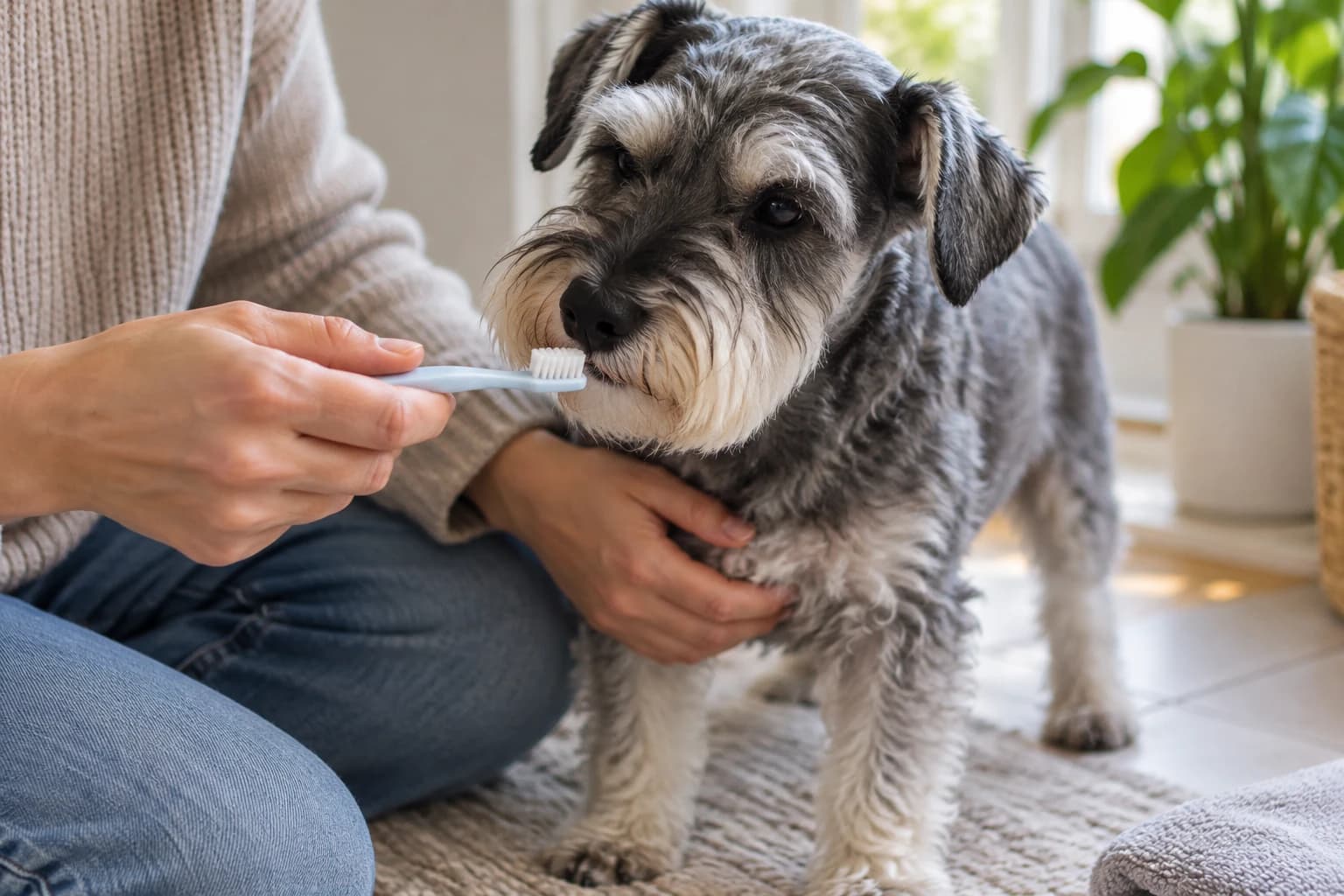
- Tooth cleaning: Use a dog-specific dental product according to its directions. Gentle, regular cleaning is more useful than an occasional aggressive attempt.
- Food and treats: Avoid treating a strong odor as a reason to add random chews, toppers, or supplements. A product can alter smell without addressing the mouth.
- Human products: Do not use human toothpaste, mouthwash, breath strips, or other oral products unless a professional has specifically directed you to do so.
- Kitchen ingredients and oils: Avoid garlic, concentrated salt mixtures, baking soda, essential oils, and improvised rinses. “Natural” does not mean appropriate for dogs.
- Scraping or picking: Do not remove tartar with household tools. This can injure the gums and does not provide a complete oral examination.
- DIY supplements: Do not copy a dose from a human product, online post, or another dog. Ingredient safety and serving directions depend on the exact product.
A remedy fails the checklist if it only makes the breath smell different, depends on an unverified dose, or makes it harder to notice pain, bleeding, or eating changes.
What a Practical Routine Looks Like
A useful routine is simple enough to repeat and gentle enough that your dog does not need to be restrained through every step.
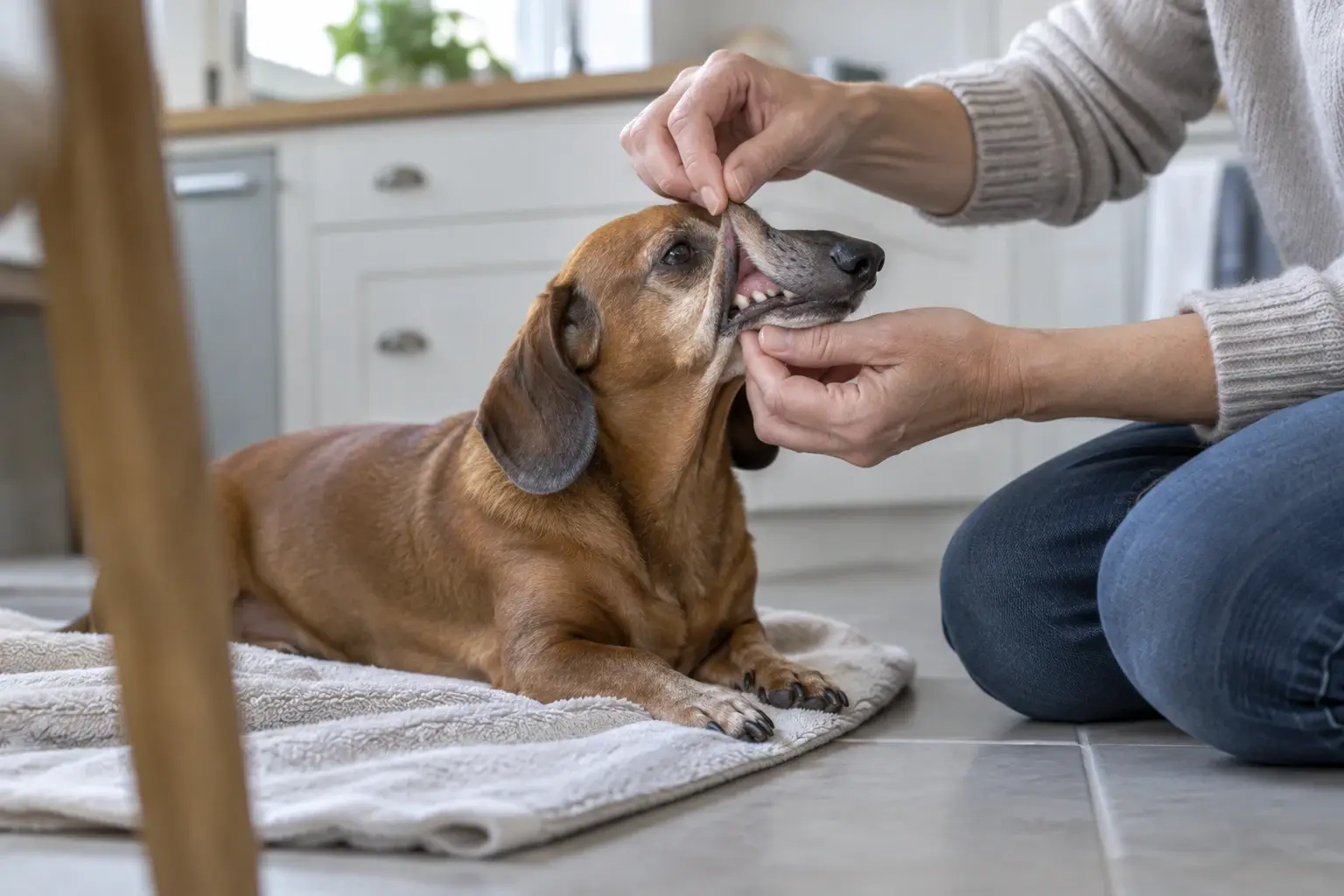
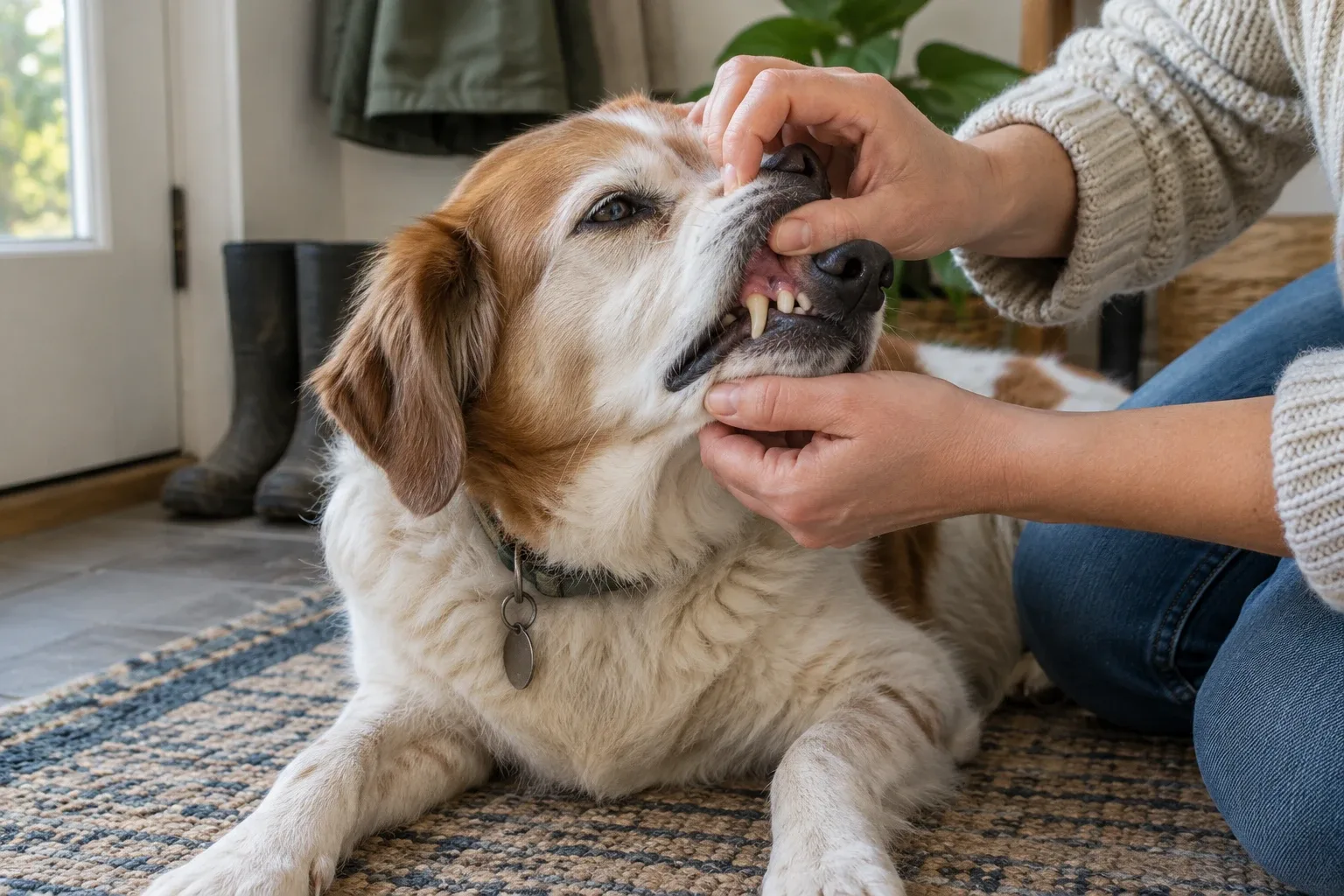
1. Choose a calm time when your dog is already relaxed. 2. Lift the lip briefly and look at the visible teeth and gum line. Do not force the mouth open. 3. Note odor, gum appearance, chewing comfort, and any change from the previous check. 4. Use the dental-care method your dog accepts, following the product directions exactly. 5. Record the date and any reaction, such as reluctance, drooling, stomach upset, or refusal of food.
If brushing is not tolerated, do not turn the routine into a struggle. Compare other dog-specific options by application, ingredient disclosure, directions, and the evidence for the finished product. The guide to cleaning dog teeth without brushing explains that home care has a different role from a professional oral examination.
Choosing Dental Products Carefully
When a home-care product is relevant, compare the actual label rather than the promise on the front of the package. Look for:
- Every active ingredient and its amount per serving, with no proprietary blend.
- Clear directions for the dog’s size and the complete product, without guessing a dose.
- Instructions for storage and what to do if your dog does not tolerate it.
- Evidence that applies to the finished product, not merely to one ingredient or a different format.
- A realistic routine your dog will accept consistently.
A powder mixed with food, a spray applied to the mouth, and a water additive do not create the same level of contact with the teeth or gums. Their practical use also depends on whether your dog eats the full serving or drinks normally. Compare dog dental spray and powder by routine fit and label clarity rather than by the word “natural” or a promise of fresh breath.
When Bad Breath Should Not Wait
Arrange prompt professional care for new or persistent bad breath, especially when it comes with mouth pain, bleeding, swelling, trouble chewing, reduced appetite, repeated vomiting, marked lethargy, or a sudden change in thirst or urination. Sudden facial swelling, breathing difficulty, collapse, or inability to eat or drink needs urgent attention.
Do not start several remedies at once. Keep the package, ingredient list, serving directions, and a short record of when the odor began. This gives the clinic useful information and makes it easier to identify what changed.
FAQ
Can I give my dog parsley for bad breath?
Do not rely on parsley or another kitchen ingredient as a treatment for persistent odor. It may change the smell without explaining why the breath changed, and homemade mixtures can introduce unnecessary ingredients.
Does fresh water cure dog bad breath?
Fresh water supports ordinary hydration, but it does not cure an underlying dental or medical problem. Track changes in drinking alongside the breath and other symptoms.
Can I use human toothpaste on my dog?
No. Human toothpaste and mouthwash are not appropriate substitutes for dog-specific dental products. Choose a product with clear dog directions and follow them exactly.
What if my dog hates tooth brushing?
Stop before the experience becomes a struggle. Build brief, calm handling practice and consider another dog-specific dental-care format while arranging professional advice for persistent odor. A home routine supports care, but it does not replace diagnosis or treatment.
For individual health questions, your veterinarian remains the best partner.