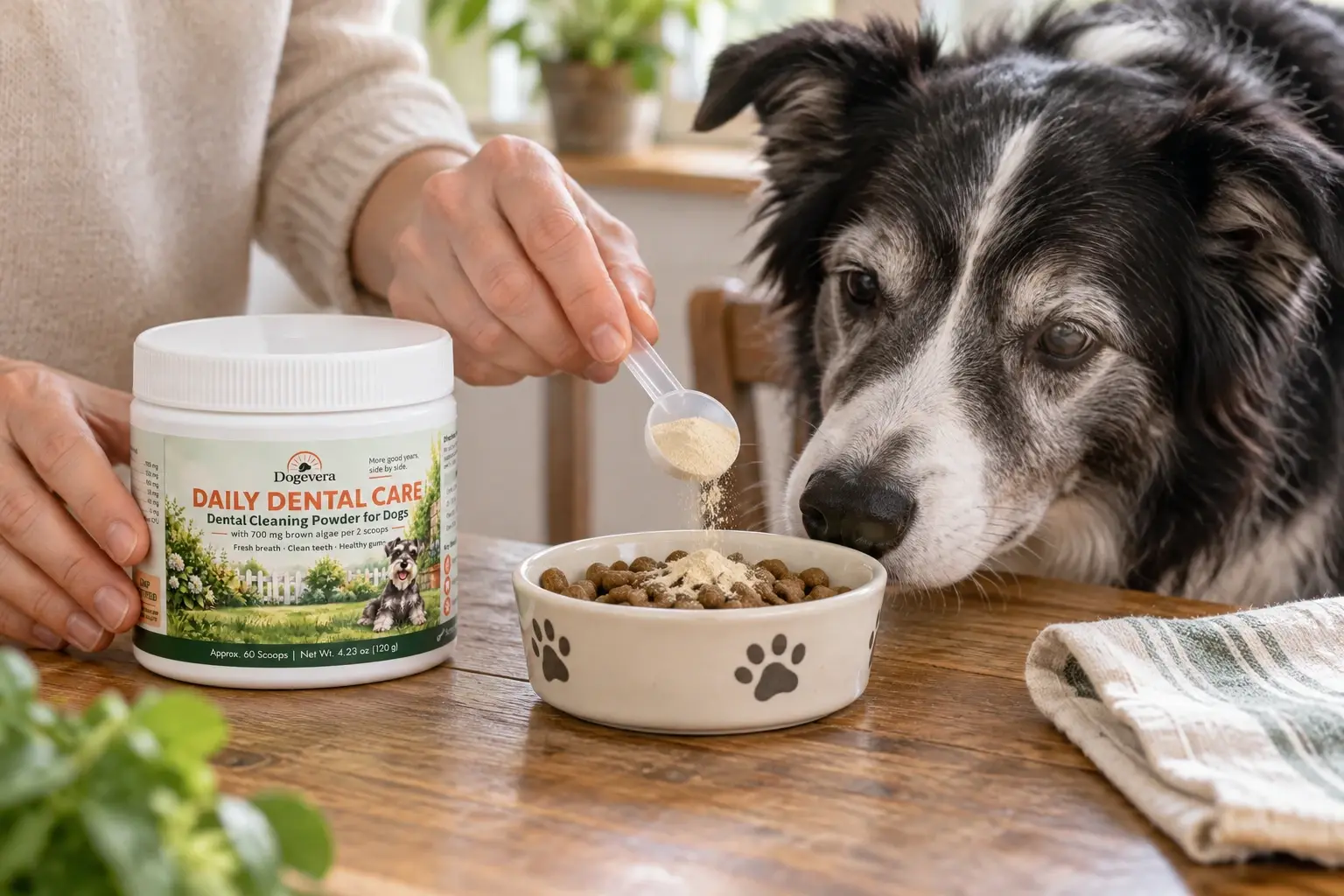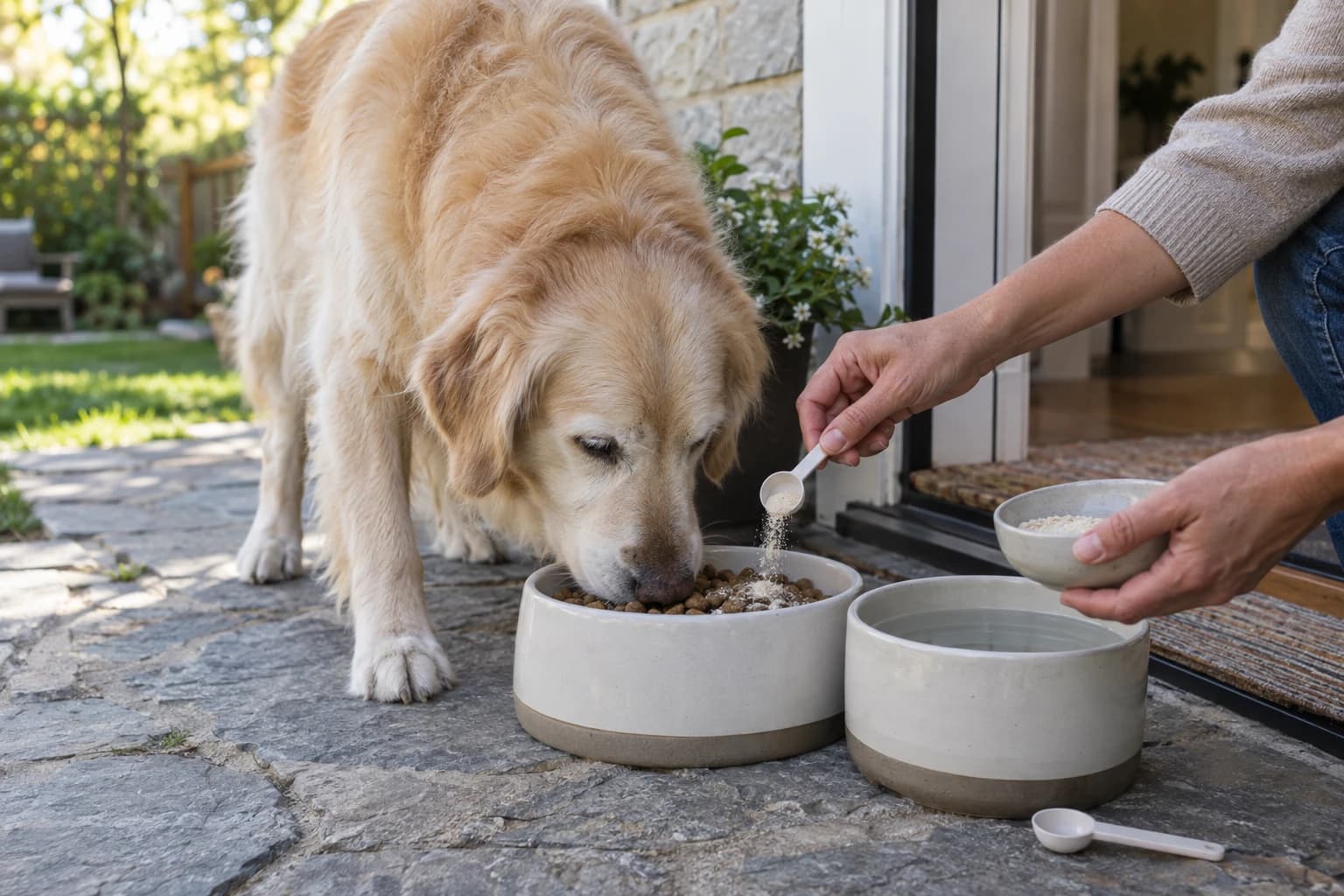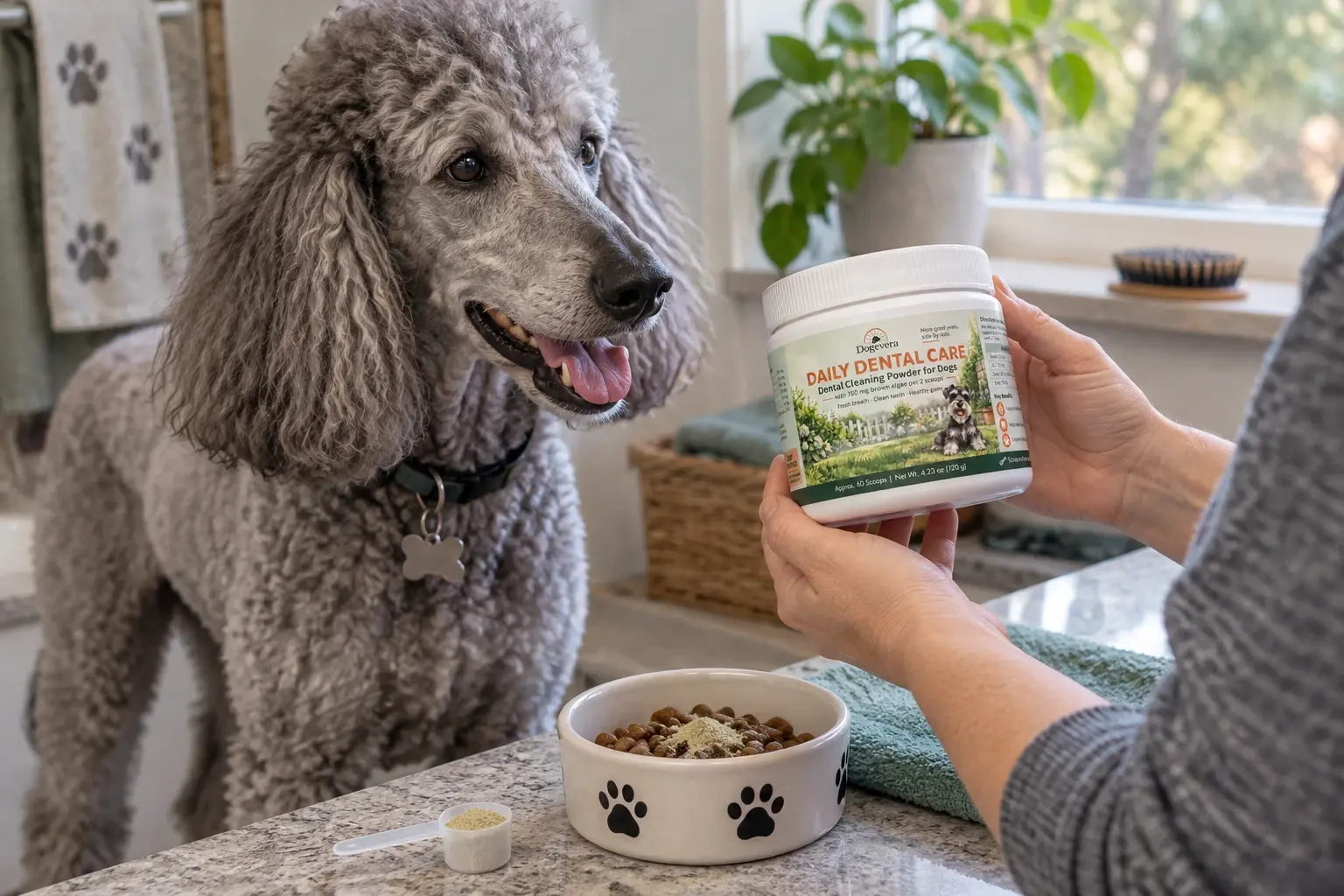
When your older dog turns away from tooth brushing, a dental spray may seem easier than a powder mixed into food. The better choice is usually the format your dog will calmly accept, paired with a clear label and realistic expectations. Neither format should be treated as a way to remove established tartar.
Dog dental spray vs powder at a glance
A dental spray is a contact format: you apply it in or around the mouth according to its label directions. A dental powder is added to food, so it depends on your dog eating the full prepared portion.
Choose a spray when:
- Your dog readily allows gentle handling around the mouth.
- You can follow the application directions without rushing or forcing the process.
- You want to know exactly when the product was applied.
- The label clearly identifies the ingredients and intended use.
Choose a powder when:
- Your dog reliably finishes the food portion it is mixed into.
- Adding one labeled product to meals feels easier than handling the mouth directly.
- You can keep the container dry, sealed, and used according to its directions.
- The ingredient list works with your dog’s existing diet and known sensitivities.
If your dog resists either format, do not turn daily dental care into a struggle. A routine that causes stress is unlikely to stay consistent.
Application tolerance matters more than convenience claims
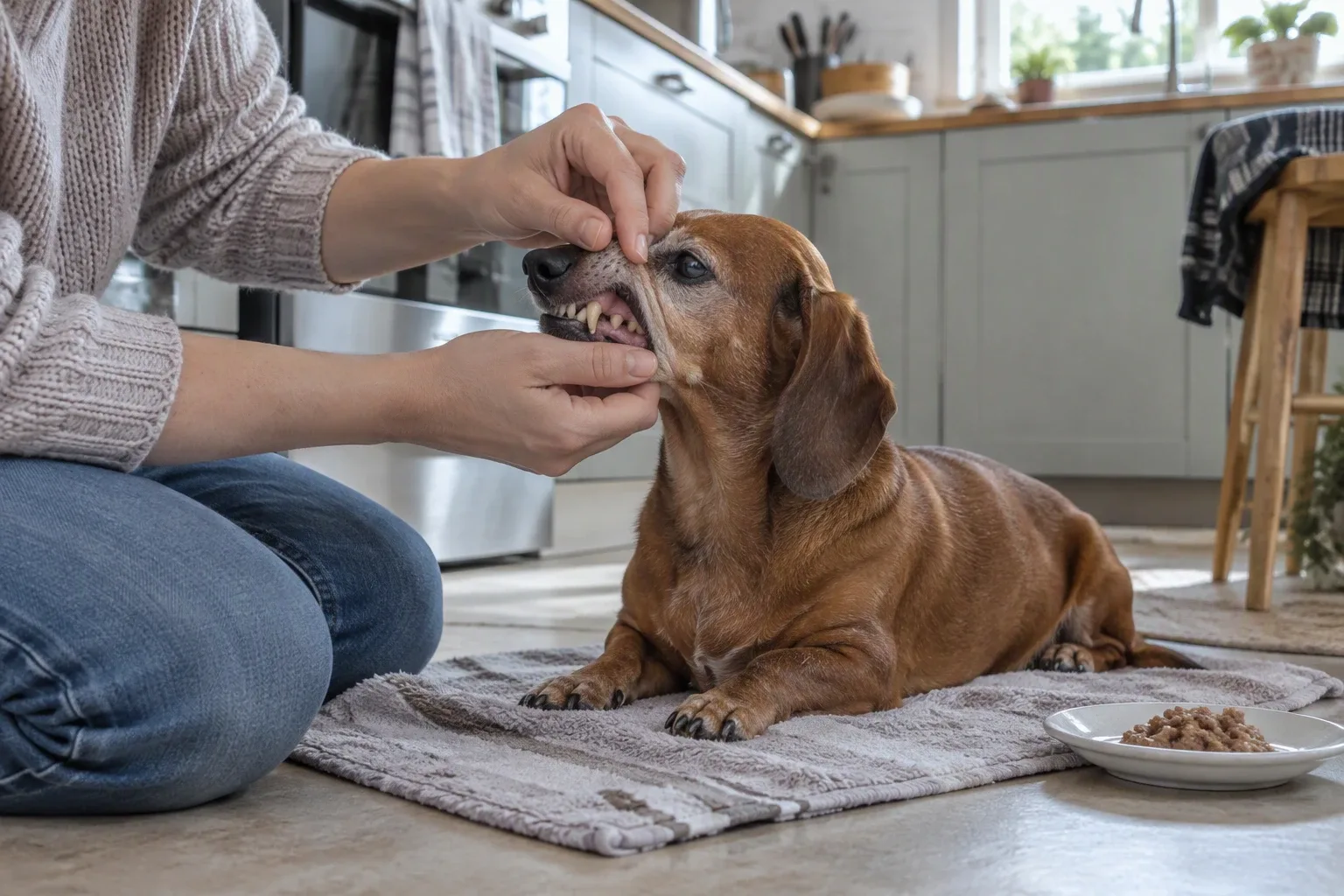
Sprays can look simple because there is no scoop or meal mixing. But the practical question is whether your dog is comfortable with the bottle, the sound of spraying, and brief mouth-area handling.
Powders avoid direct mouth application, but they create a different question: did your dog eat all of the food containing the labeled serving? If food is shared between dogs, leftovers are common, or appetite varies, it can be hard to know what was consumed.
Try this three-day routine-fit check before committing to a format:
1. Note whether your dog moves away, licks their lips repeatedly, or becomes tense when you bring a spray near the mouth. 2. If considering powder, mix only into a small portion of food first, following the package directions, and check whether that portion is fully eaten. 3. Record what made the process difficult: handling, smell, food refusal, timing, or storage. 4. Choose the format that creates the least friction for both of you.
For food powders, how to use dog dental powder covers the label-first habits that make a meal routine easier to track.
Compare ingredient disclosure, not just format
Spray and powder labels can be equally detailed or equally vague. Do not assume a spray is simpler because it has fewer visible ingredients, or that a powder is more thorough because it is added to food.
Look for these basics on either label:
- A complete ingredient list.
- Clear directions for the specific product.
- Storage instructions.
- The company name and a way to identify the product or lot.
- Claims that state what the finished product is intended to do, rather than broad dental language.
For powders, the order and identity of ingredients can matter when you are comparing products or checking for ingredients your dog should avoid. Use this guide to read dog dental powder ingredients before assuming two powders are comparable.
Ask what evidence applies to the exact product
Marketing language can make different dental formats sound interchangeable. They are not automatically equivalent just because they share a general dental purpose or include a similar-sounding ingredient.
When comparing a spray and a powder, ask:
- Is evidence described for this exact finished product, or only for one ingredient?
- Does the claim say what was measured, or is it only a general wellness statement?
- Is the product name and format clearly identified in any evidence or recognition being mentioned?
- Are you being asked to assume it will address visible buildup already present?
A dental product is not a substitute for care of established tartar. For a closer look at that distinction, see does dental powder remove tartar on dogs?.
Fit the format into your existing dental routine
A spray or powder can be one part of a broader routine, not a reason to stop noticing your dog’s mouth. Keep the routine small enough to repeat.
If you choose a spray
- Keep the bottle in a consistent, secure place.
- Use it only as its own label directs.
- Approach your dog calmly and stop if they pull away or become distressed.
- Do not substitute a spray for gentle brushing practice or mouth checks when those are otherwise manageable.
If you choose a powder
- Use the labeled serving directions rather than estimating.
- Mix it into food in a way that lets you see whether the prepared portion was eaten.
- Keep it separate from other powders so ingredients are not accidentally confused.
- Review the label whenever you change foods or add another supplement.
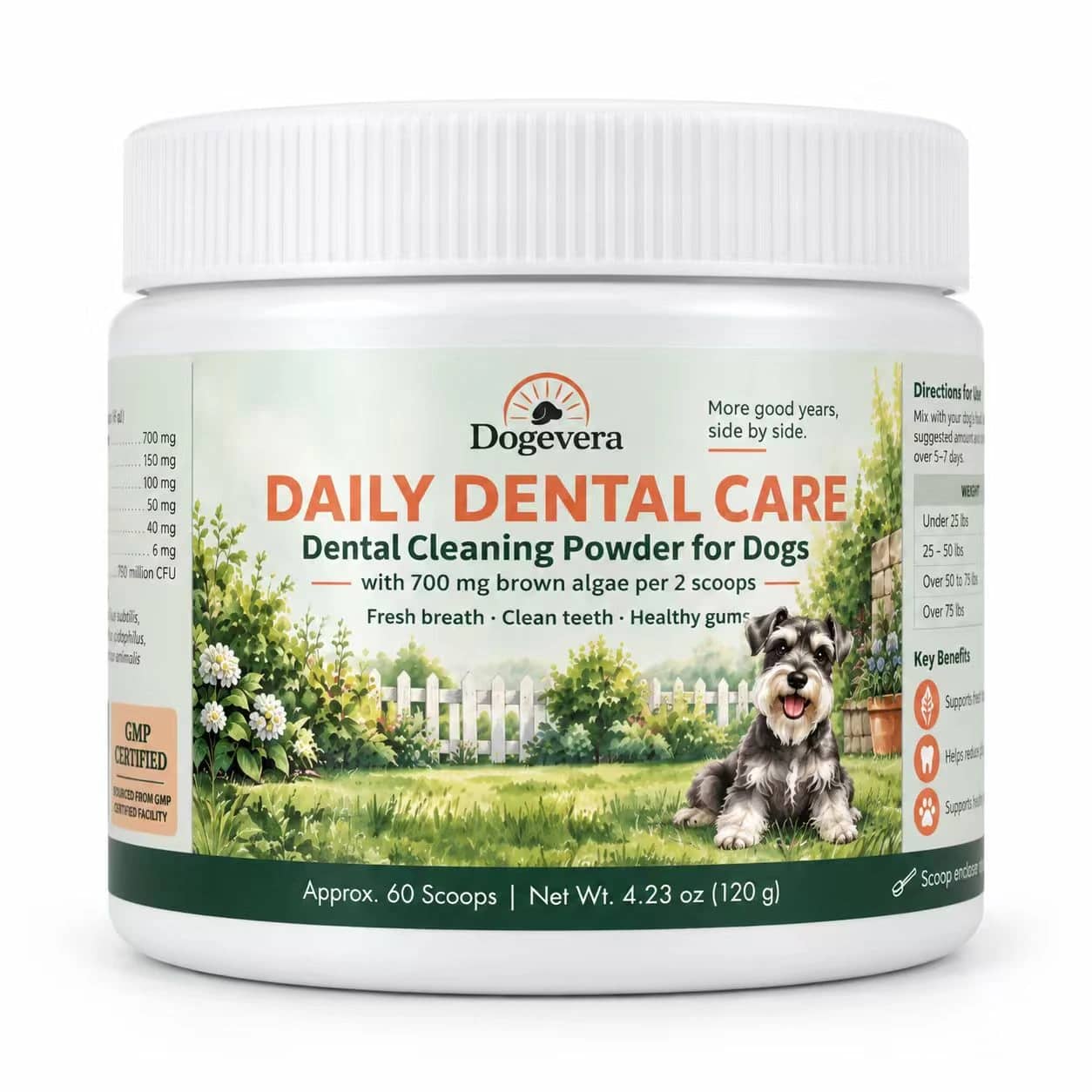
If a food-based routine is the best fit, Daily Dental Cleaning Powder for Dogs is a powder-format option to evaluate by its current label, ingredients, and directions.
Watch for changes that deserve attention
A new reluctance to eat, chewing on one side, pawing at the mouth, visible bleeding, or a sudden change in breath are useful observations to record. Do not use a spray or powder to cover up a new mouth concern while waiting to see if it passes.
Supplements and dental products do not replace diagnosis or treatment, and urgent or sudden mouth symptoms need prompt veterinary care.
FAQ
Is dog dental spray better than powder?
Not automatically. Spray may fit dogs comfortable with mouth-area handling, while powder may fit dogs that reliably eat a prepared food portion. Compare the exact label, ingredient disclosure, evidence, and your dog’s acceptance.
Can dental spray remove tartar?
Do not assume a dental spray or powder can remove established tartar unless the exact product provides clear, applicable support for that claim. Visible buildup or new mouth changes are reasons to arrange professional guidance.
What if my dog refuses food with dental powder?
Do not keep increasing or re-serving it. Check the product directions, note how much food was eaten, and consider whether a different format would be less disruptive to meals.
For individual health questions, your veterinarian remains the best partner.