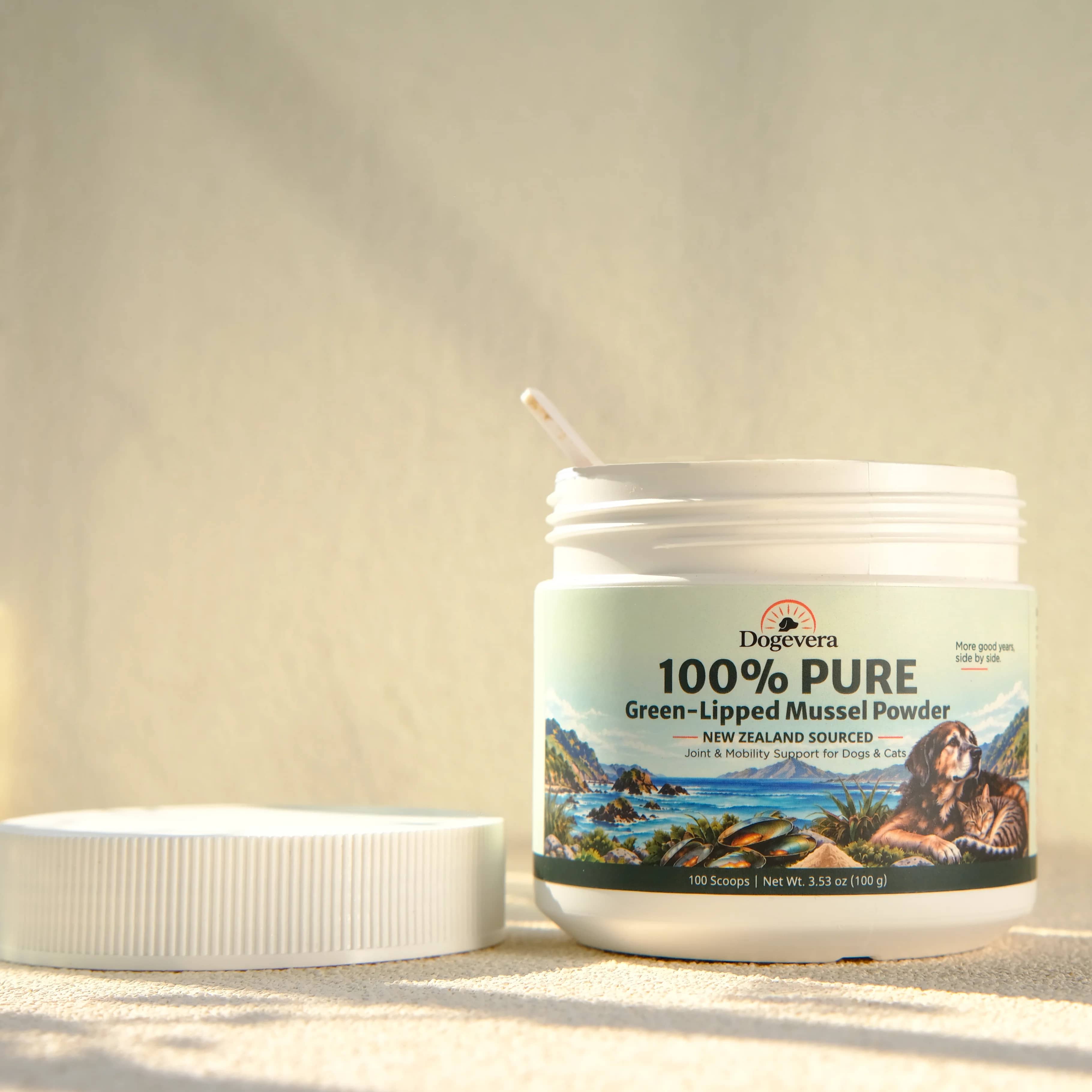
You've got a dental powder jar in one hand and your phone in the other, trying to work out whether the ingredient list on the back is actually worth the price. That's the right instinct. Labels carry more information than most marketing copy, but only if you know which lines to read closely. A brief note first: if your dog has red, bleeding gums or trouble eating, that needs a veterinary exam rather than a powder.
Here's the short version: judge a dental powder by what each ingredient is, how much of it the label actually declares, whether the bacteria count (if any) is stated at manufacture or at expiry, how the serving matches your dog's weight, and whether there's evidence for the finished product rather than just its parts.
Start With the Order: What the List Actually Tells You
In the US, ingredients are listed by weight, from most to least. That ordering is useful but easy to over-read. A seaweed meal listed first tells you the product is mostly seaweed. It doesn't tell you whether the amount is within the range used in the studies you may have read about, because the label lists a ranking, not a quantity.
So read the list in two passes:
- Pass one: identity. What is each ingredient? Kelp or brown algae, egg-derived lysozyme, probiotic strains, sodium hexametaphosphate, flavoring? If you can't tell what something is or why it's there, that's a question for the manufacturer.
- Pass two: declared amounts. Does the label give a milligram amount per serving for any active ingredient? Some do, many don't. A guaranteed analysis or a supplement facts panel with explicit quantities is easier to compare across brands than a bare list.
If you want a fuller walkthrough of the commonly used ingredients and the sensitivities some dogs have to them, our guide on dog dental powder side effects goes through seaweed, egg-derived lysozyme, probiotics, and sodium hexametaphosphate one by one.
Probiotics: Check the CFU Line
If a powder contains live microorganisms, look for a CFU (colony-forming unit) figure and, just as importantly, the point in time it applies to.
- CFU at time of manufacture means the count was true when the product was made. It tells you little about what's in the jar today.
- CFU at expiry is a stronger declaration, because the manufacturer commits to the count through the product's shelf life.
- Strain identification matters as well: a named strain (with a code, not just "probiotic blend") is easier to trace to research than an unnamed mixture.
If the label doesn't state a CFU count or an endpoint, that's not automatically disqualifying, but it does mean you're taking the probiotic content on faith.
Compare the Reference Serving to Your Dog's Label
Two things get confused here, and separating them makes comparison much easier:
- The reference serving is what the label defines as one serving. It's the denominator for every quantity on the panel.
- The dog-specific serving is the amount the directions tell you to give your dog, usually by weight band.
A product whose reference serving is 1 gram but whose directions give your 15 kg dog half a scoop needs converting before you compare it with anything. Write out the actual amount your dog gets per day, then compare like with like. Also check the weight bands themselves: a product with one blanket direction for all adult dogs gives you less to work with than one with several bands, especially if your dog is small or large enough to fall outside a typical range.
Batch Information and Traceability
Turn the jar over and look for a lot or batch number and a best-by date. These matter for three practical reasons:
- If your dog reacts to a product, the batch number is what you'll be asked for.
- Best-by dates let you check whether a CFU count is declared at expiry against the date you'll actually finish the jar.
- A manufacturer who can pull up batch records when asked has a traceability practice worth having.
If the label has neither a lot code nor a date, treat that as a significant gap.
Evidence for the Finished Product, Not Just the Ingredients
This is where labels are quietest. An ingredient list can name a well-studied component while the finished product itself has never been tested. The distinction matters, because combination effects, amounts, and processing can all change what an ingredient does in a specific product.
- Look for named research on the product itself, not generic claims about an ingredient category.
- Look for third-party evaluation, such as a listing in the VOHC accepted-products registry. Our guide to dog dental powder VOHC approval shows how to check the live list for the exact product and claim rather than trusting a badge on the packaging.
- Be wary of claims that outrun the label. Powders are daily-care products, not tartar removers. If you're weighing expectations, our article on whether dental powder removes tartar explains why established tartar isn't something a powder treats.
A One-Page Label Checklist
Before buying, or with a jar in hand, run through these:
- Ingredient list read twice: identity first, declared quantities second
- CFU count present, with strain names and whether it's stated at manufacture or expiry
- Reference serving identified, and your dog's actual daily amount calculated from the weight bands
- Lot number and best-by date present and legible
- Evidence checked for the finished product, ideally in the VOHC live list
- Allergens noted: egg, fish, shellfish, or chicken can hide in the fine print
- Your dog's known sensitivities compared against every listed ingredient
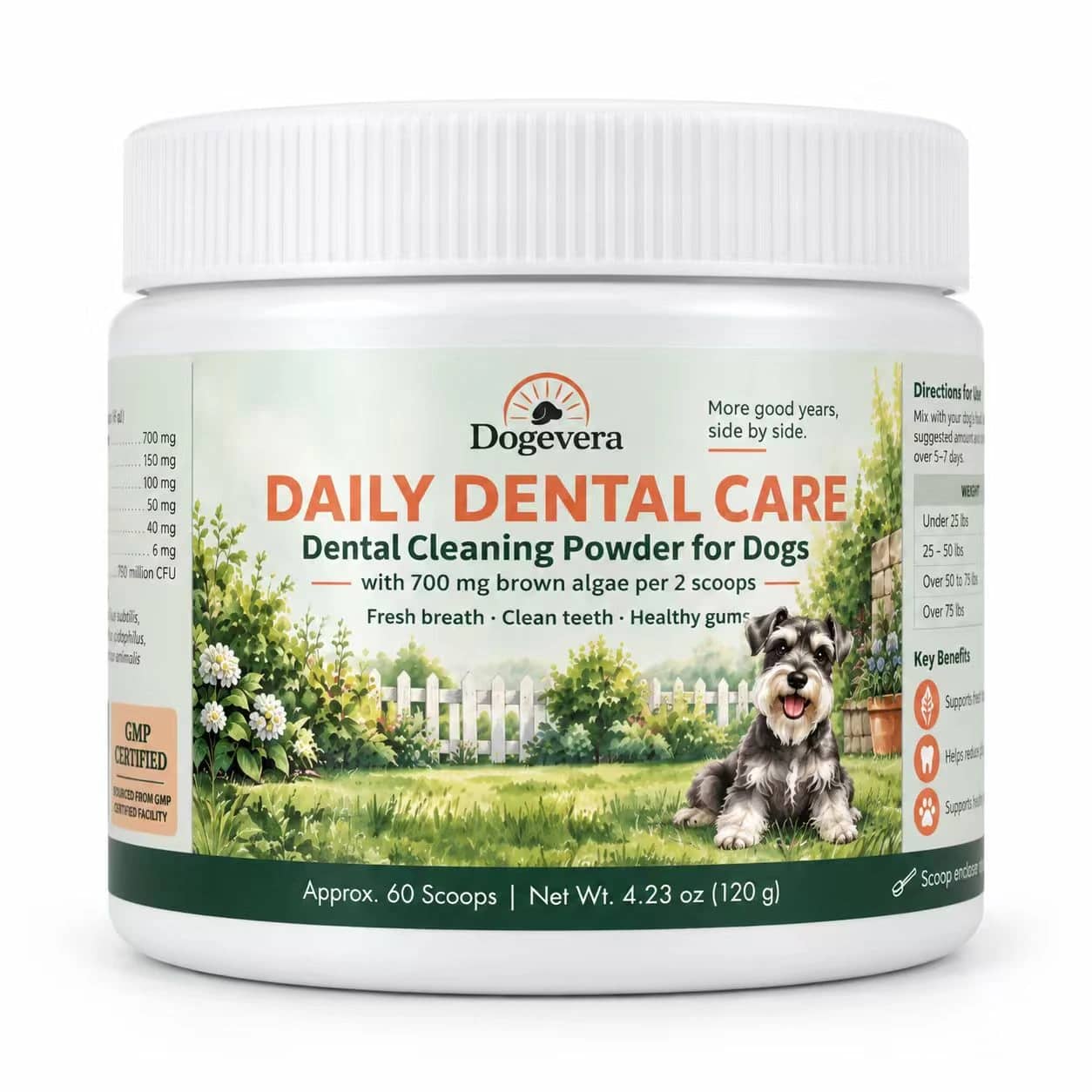
If you're comparing several products side by side, our dog dental powder buying guide walks through the same label questions across brands. And if a specific product has earned a place on your shortlist, our Daily Dental Cleaning Powder for Dogs product page lays out its label and serving directions in the same structure.
Your Next Step
Pick one powder you're considering, photograph the full label, and answer the checklist in writing. Ten minutes with the jar in front of you settles questions that marketing pages rarely address, and it gives you a concrete record to bring to your vet if anything in the ingredient list raises a question about your own dog.
FAQ
Are the first ingredients on the list the most important? They're the heaviest by weight, which tells you what the product is mostly made of. Importance depends on what's doing the work and at what amount, which is why declared quantities matter more than order.
What does CFU at expiry mean? That the manufacturer guarantees the stated bacterial count through the end of the shelf life, not just at the time of production. It's the more useful of the two declarations when comparing probiotic powders.
Does an untested combination mean a product is bad? No. It means the label gives you less to go on, so the decision rests more heavily on ingredient identity, declared amounts, and how the product fits your dog's diet and sensitivities.
Can I compare two powders directly from their labels? Yes, once you've converted each to your dog's actual daily serving. Comparing per reference serving instead of per dog serving is the most common way label comparisons go wrong.
For individual health questions, your veterinarian remains the best partner.