Your dog’s dental powder should go into food only after you confirm the serving instructions for that exact product. Check the label, measure the labeled serving, mix it into a portion your dog will finish, and avoid adding extra if some is missed or left behind.
This routine helps you make the product’s directions part of an ordinary meal without guessing a dose. A powder can support a home dental-care routine, but it does not replace professional dental care when that is needed.
1. Start with the exact product label
Do not copy a serving from another dental powder. Products can use different ingredients, serving units, weight ranges, and feeding instructions.
Before the first use, check:
- The product name and intended animal
- The serving unit used on the label
- Whether the serving is based on your dog’s weight or another category
- The recommended feeding frequency
- Ingredient and allergen information
- Storage instructions and any use-by or batch details
The serving figure on a label is a reference for that specific product. It is not a universal dog dental-powder dose. For more detail on what to look for, see Dog Dental Powder Ingredients: How to Read a Label.
2. Match the label to your actual dog
Find the label category that matches your dog today. Use the product’s stated serving rather than estimating from the jar size, another dog’s routine, or a different brand.
A simple pre-feeding checklist:
- [ ] I have the correct product in front of me.
- [ ] I know which label category applies to my dog.
- [ ] I can identify the serving unit.
- [ ] I have checked the product’s mixing and storage directions.
- [ ] I am not combining this serving with a missed serving from an earlier meal.
If the instructions are unclear, pause before feeding and ask the product maker or a qualified professional for clarification instead of guessing.
3. Mix the serving into food your dog will finish
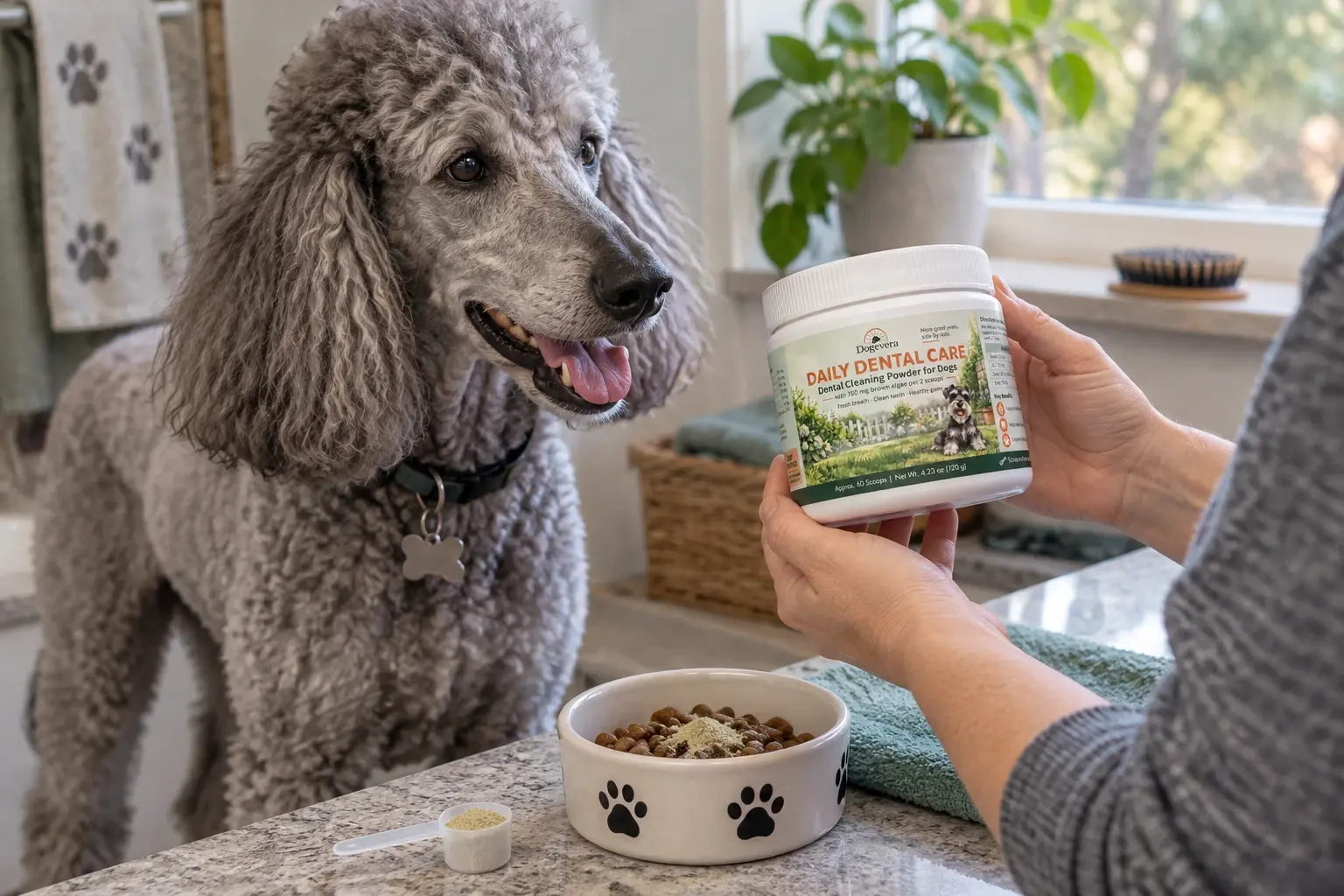
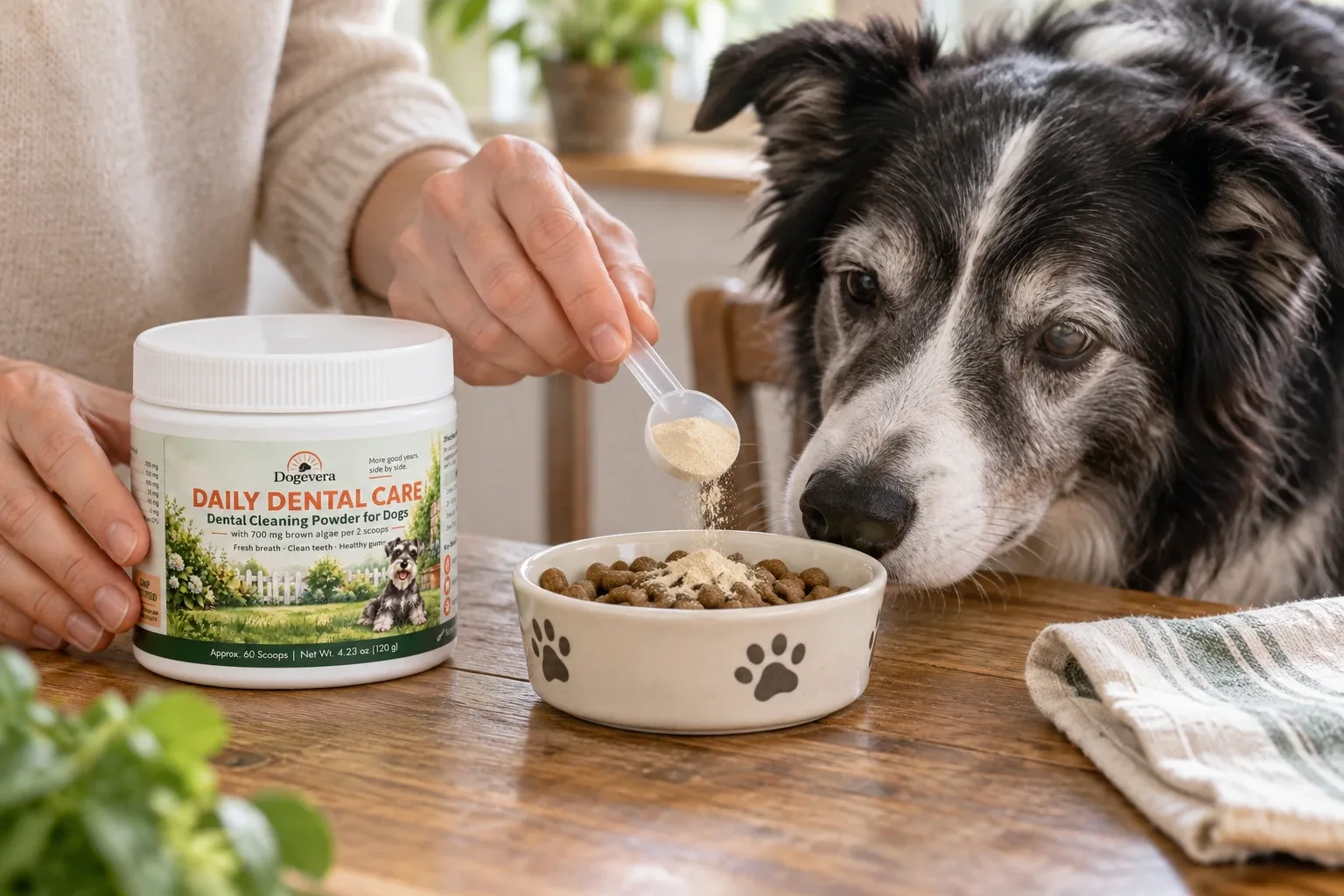
Measure the labeled serving and mix it into a portion of food that your dog is likely to eat completely. This makes it easier to know whether the intended serving was consumed.
Keep the first serving simple:
- Use food your dog already accepts.
- Mix the powder evenly into a small, separate portion.
- Watch to see whether your dog finishes that portion.
- Offer the rest of the meal afterward if needed.
Avoid sprinkling the powder across a full bowl when your dog often leaves food behind. If the powder changes the smell or texture and your dog refuses it, do not keep adding more to the same uneaten meal. Dog Won’t Eat Supplement? Change How You Feed It offers a practical way to rethink the mix without guessing at the serving.
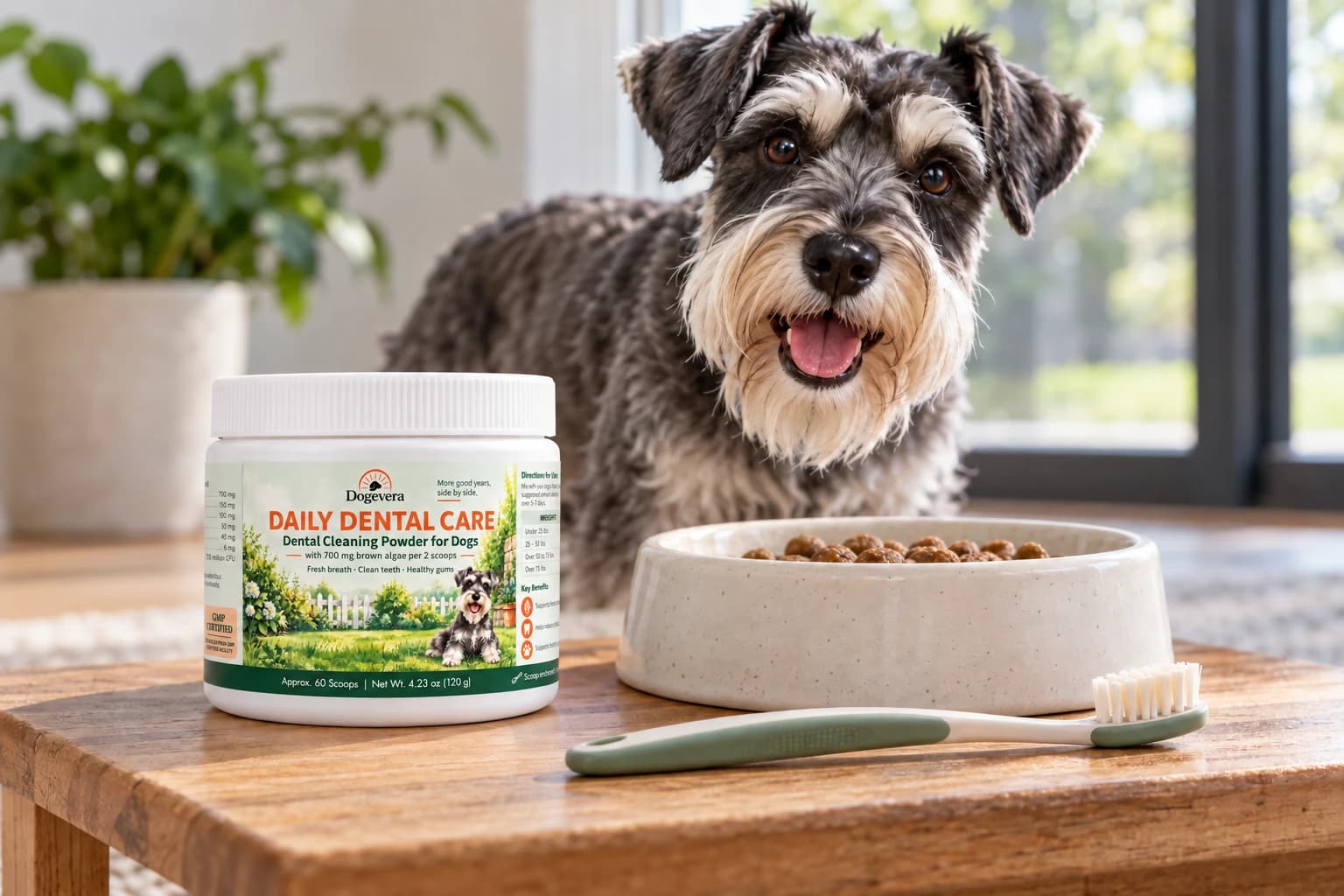
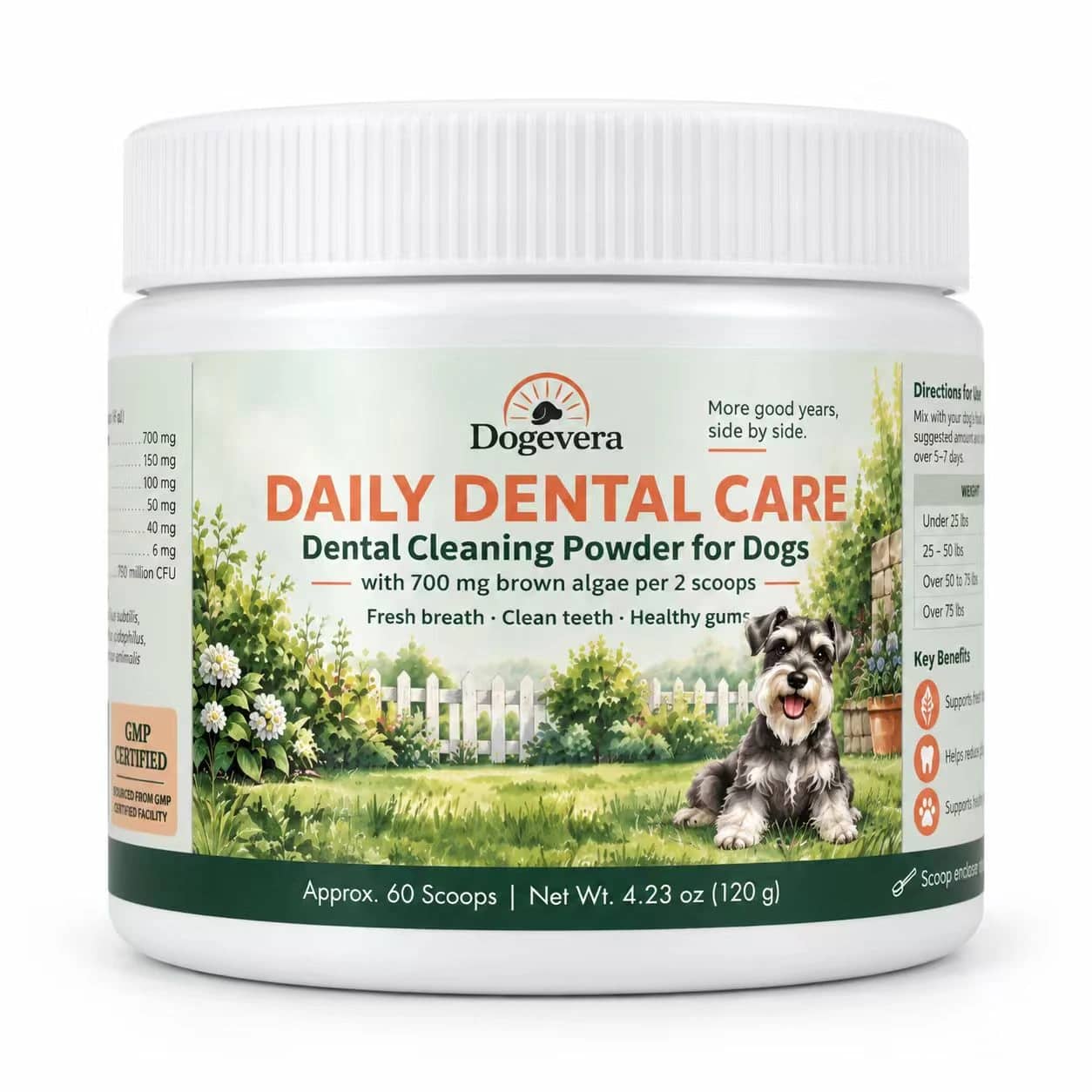
If you are choosing a product, review its own directions first. The Daily Dental Cleaning Powder for Dogs should be used according to the serving and storage instructions on its current label.
4. Handle missed or partly eaten servings carefully
A missed serving does not mean you should automatically double the next one. Continue with the product’s normal labeled routine rather than trying to make up what was missed.
If your dog eats only part of the mixed food, record what happened and follow the label’s instructions. Do not add another full serving to the same meal unless the product directions specifically tell you to do so.
Useful notes include:
- Date and meal
- Whether the full mixed portion was eaten
- Any refusal or unusual food reaction
- Whether the powder was mixed into the same food as usual
This record can help you distinguish a one-time feeding issue from a repeated problem.
5. Store the powder as directed
Close the container after each use and follow the product’s storage instructions. Keep the label or package available so you can check the serving, ingredients, batch details, and storage guidance later.
Do not transfer the powder to an unmarked container unless you also retain the original product information. A clear record is useful if you need to ask questions about the product or your dog’s response.
6. Track tolerance and keep dental care in perspective
For the first few uses, observe whether your dog accepts the food and whether the routine remains easy to repeat. You can keep a short three-day log with the meal, amount eaten, and any changes you notice.
Stop and seek appropriate advice if your dog has a concerning reaction or a sudden change in eating. Urgent concerns need prompt professional care. A dental powder is one part of home care, not a substitute for an examination or professional dental work when those are needed. For a broader routine, see Senior Dog Dental Care: A Simple Weekly Worksheet.
Quick decision guide
- The label is clear and your dog eats the mixed portion: Follow the labeled routine and keep monitoring acceptance.
- Your dog leaves part of the portion: Do not automatically add more. Record it and check the product directions.
- Your dog refuses the food: Change the mixing approach rather than increasing the serving.
- You are unsure which serving applies: Pause and confirm the product-specific instructions.
- Your dog has a concerning reaction or sudden eating change: Stop the routine and seek appropriate advice.
FAQ
Can I use another dog dental powder’s serving as a guide?
No. Use the serving instructions for the exact product you are feeding. Reference figures are product-specific and should not be treated as universal doses.
Should I double the next serving if I forget one?
No. Avoid doubling a missed serving unless the product’s own directions specifically say otherwise.
What if my dog does not finish the food?
Do not automatically add another full serving. Note how much was eaten, check the label, and adjust the feeding method without guessing.
Does dental powder replace professional dental care?
No. Keep professional dental care in the routine when it is needed, and seek prompt advice for urgent concerns or a sudden change in eating.
For individual health questions, your veterinarian remains the best partner.