Your dog’s dental powder label lists every ingredient, but the choice is not simply “with” or “without” sodium hexametaphosphate. A powder that excludes it may suit your preferences, yet exclusion alone does not prove that the product is safer or more effective. Compare the complete label, the product-specific evidence, and the routine you can use consistently.
A veterinarian can help if your dog has new mouth pain, trouble eating, or another concerning change.
Start with the exact ingredient list
Look for “sodium hexametaphosphate” in the ingredient panel rather than relying on a product name, front-label phrase, or a retailer’s short description. Check the current package label before buying because formulations and labeling can change.
Use this quick label check:
- Ingredient present: Record that sodium hexametaphosphate is included, then continue reviewing the full formula.
- Ingredient not listed: Treat that as a formulation preference, not proof of a safer or more effective powder.
- Label unclear: Set the product aside until you can confirm the complete ingredient list.
- Other ingredients present: Review those individually instead of judging the product by one omission.
The dog dental powder ingredients guide explains how to read ingredient identity, quantities, serving information, and finished-product details together.
Compare formulations with and without the ingredient
When two powders differ mainly on this point, use a side-by-side checklist rather than a “best” assumption.
Formulation that includes sodium hexametaphosphate
- Confirm that the ingredient appears on the exact label.
- Review the other ingredients and any stated serving directions.
- Check whether the available evidence applies to this finished product or only to an individual ingredient.
- Decide whether the formula fits your household preferences and your dog’s routine.
Formulation that excludes sodium hexametaphosphate
- Confirm the omission on the complete, current ingredient list.
- Do not treat the absence as evidence that the powder is safer, gentler, or more effective.
- Check which other ingredients make up the formula.
- Look for product-specific information rather than assuming that an alternative ingredient has the same evidence.
The useful question is not “Which side is automatically better?” It is “What does this exact product contain, and what can its evidence actually support?”
Separate ingredient preference from evidence
An ingredient list tells you what a product contains. It does not, by itself, establish what the finished powder can do.
Keep these comparisons separate:
- Formulation evidence: Information about the exact finished product, including its complete formula and use instructions.
- Ingredient evidence: Information about one ingredient that may not transfer to a different blend, amount, or format.
- Label transparency: The practical ability to identify ingredients, quantities, serving information, and other product details.
- Personal preference: A decision to avoid or include a particular ingredient for non-clinical reasons.
If a product makes a dental claim, check what the claim refers to and whether it identifies the finished product. The VOHC verification guide can help you check an exact product and claim in the live accepted-products list rather than assuming that a general dental statement means approval.
Use a repeatable buying checklist
Before purchasing a dog dental powder without sodium hexametaphosphate, save or photograph the product label and work through these questions:
- Is the complete ingredient list visible?
- Is sodium hexametaphosphate clearly absent, or is the information incomplete?
- Are the other ingredients identified clearly?
- Are quantities or serving details provided where expected by the label?
- Does the evidence refer to the finished product, an ingredient, or neither?
- Can you follow the product’s own directions without guessing?
- Does the format fit how your dog eats and how you manage daily care?
- Is the product’s claim narrower than the conclusion you are tempted to draw?
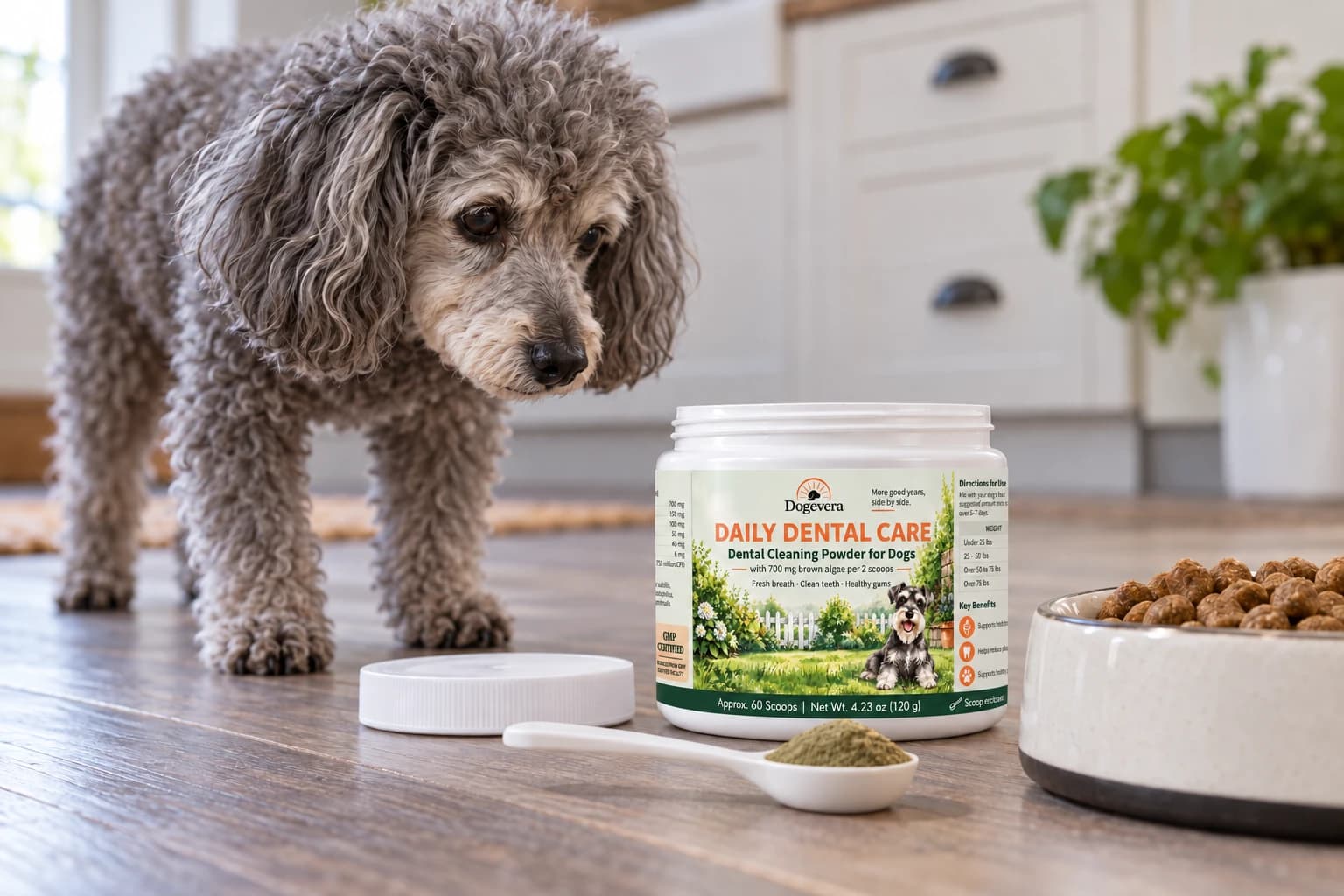
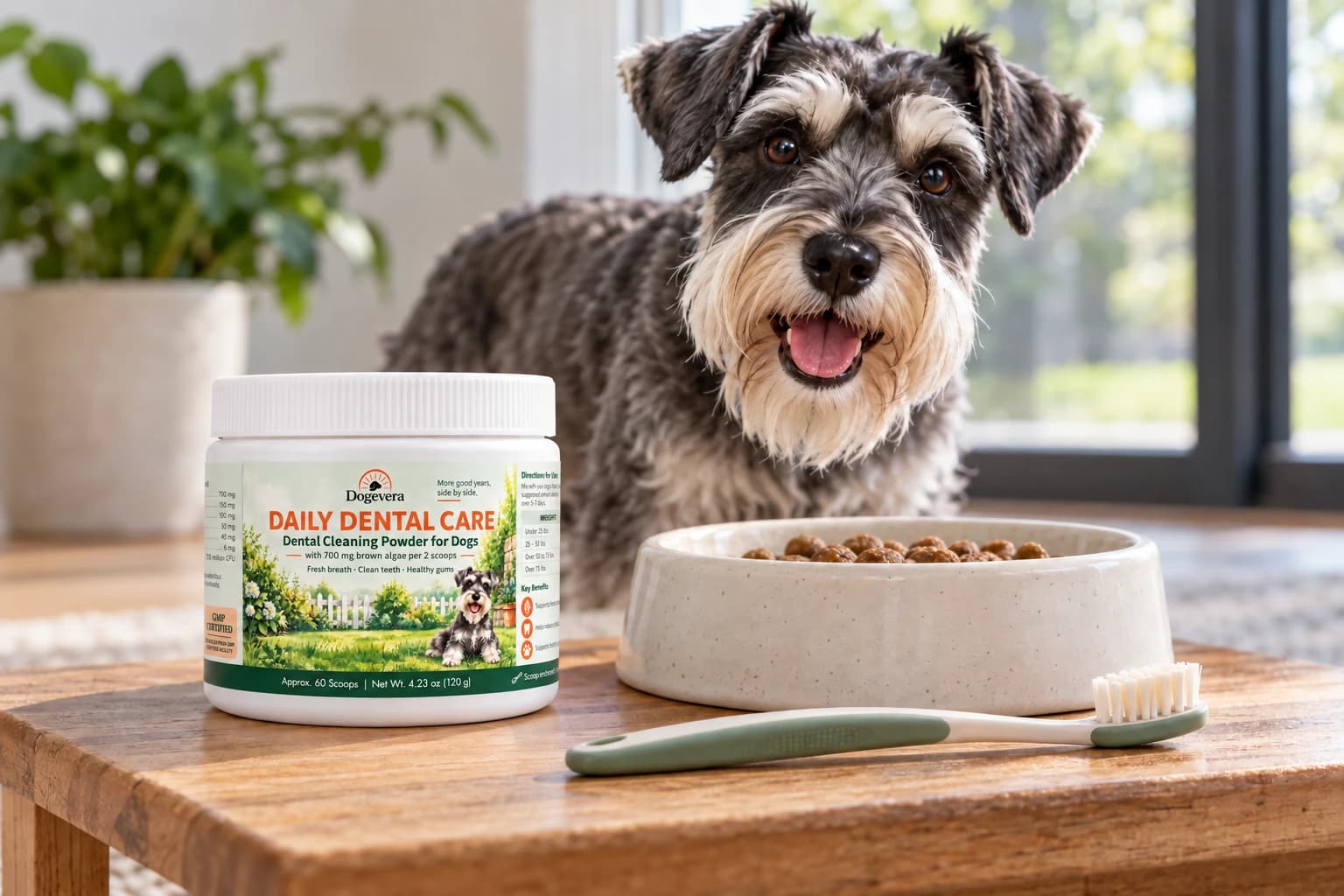
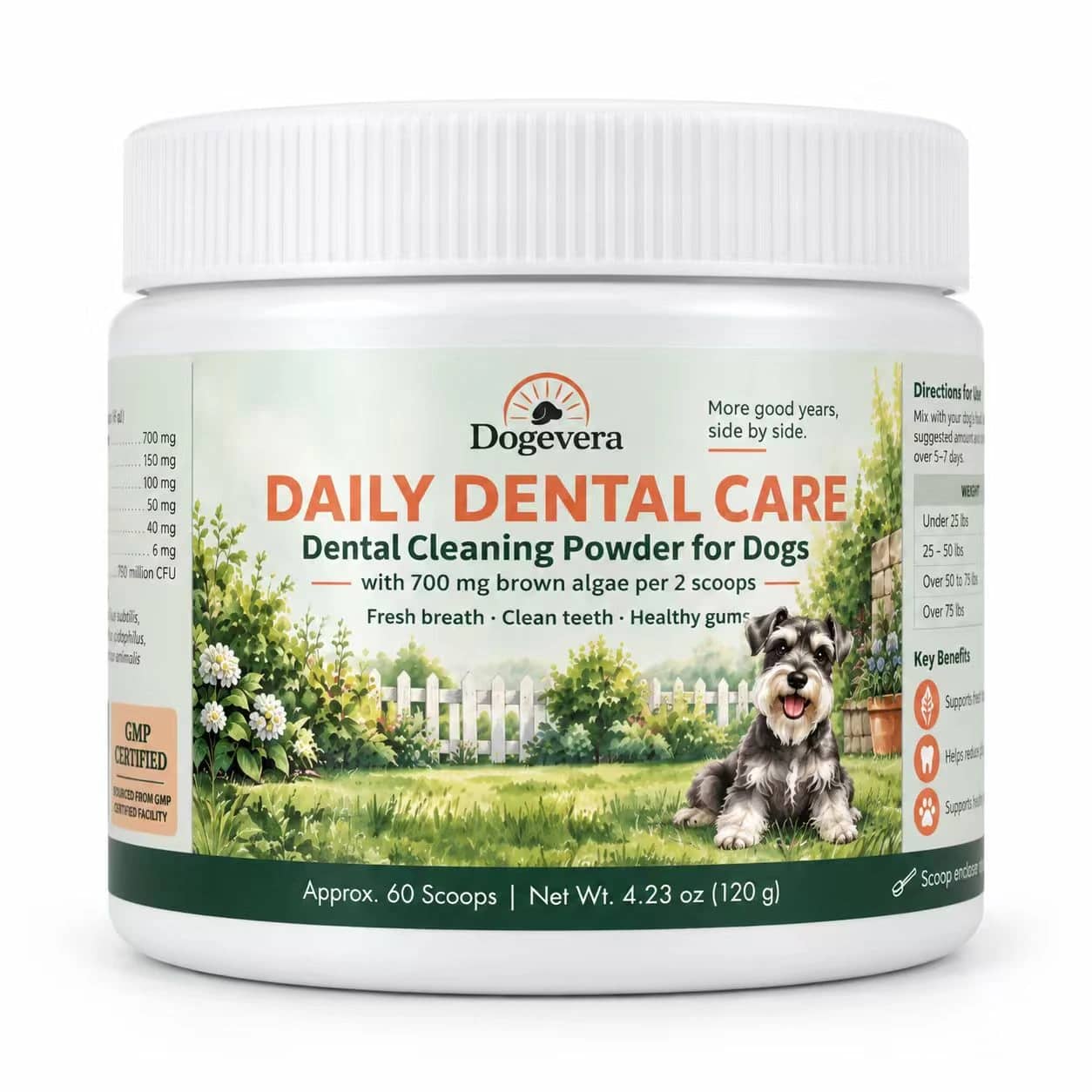
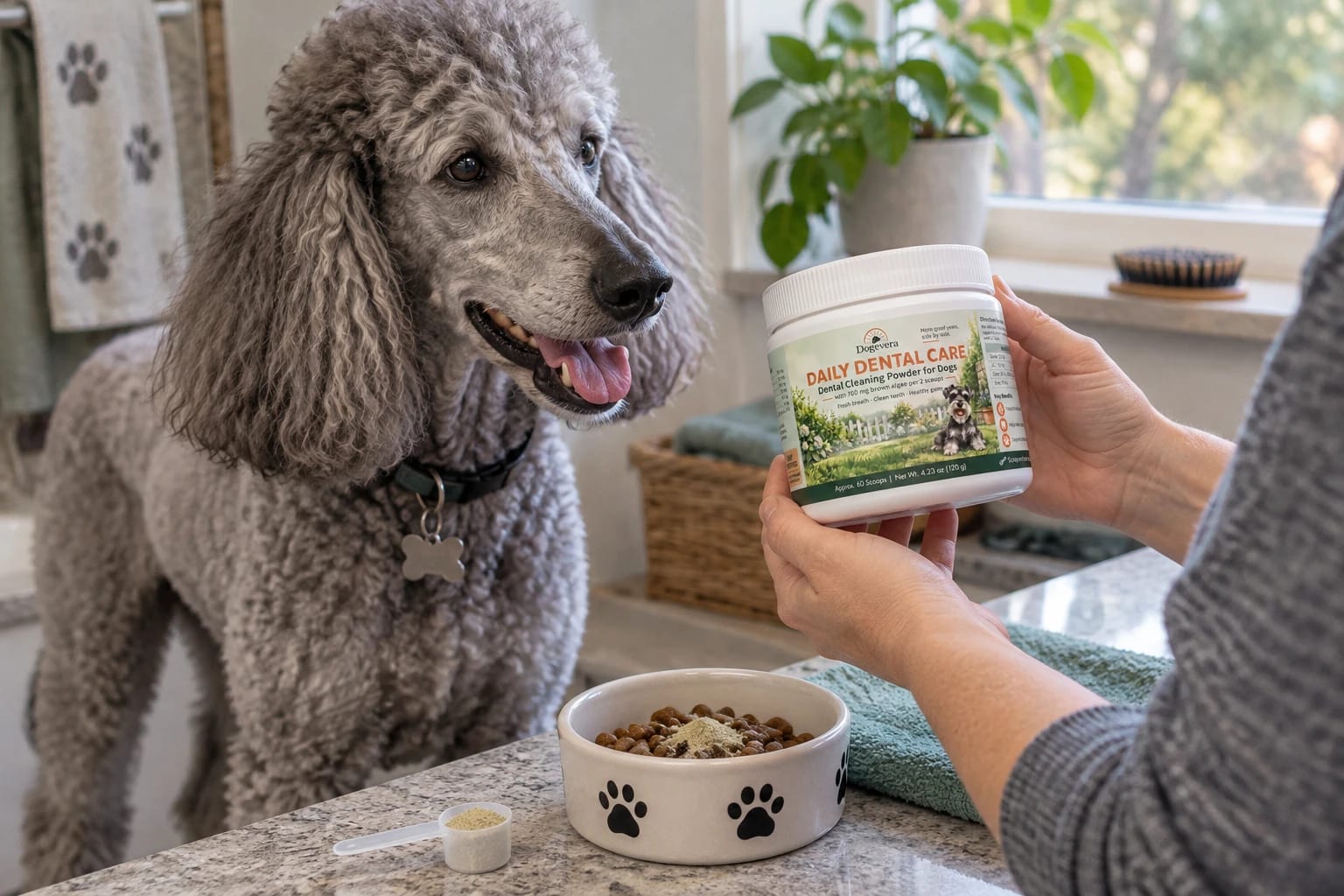
For a product you are considering, compare the saved label with the current Daily Dental Cleaning Powder for Dogs page and rely on the current product information rather than an old listing. This is a label-checking step, not a claim that the product excludes sodium hexametaphosphate or has a particular dental effect.
Watch the whole routine, not one ingredient
Once you choose a product, keep the routine simple and observable. Note whether your dog accepts the food or mixture, whether the full portion is eaten, and whether anything changes after introducing it. Avoid treating an unfinished portion as a completed serving, and do not make up a replacement amount.
If your dog refuses food with powder, develops a new reaction, or seems uncomfortable, pause the new routine and keep the package and ingredient list available. The guide to dog dental powder side effects covers what label details to record when a new powder may be involved.
A powder also does not replace attention to an obvious mouth problem. New bad breath, difficulty eating, bleeding, swelling, or pain needs professional advice rather than repeated product changes.
FAQ
Is dog dental powder without sodium hexametaphosphate automatically safer?
No. Excluding one ingredient is a preference, not proof that the complete formula is safer or more effective. Review every ingredient and the evidence for the finished product.
How can I confirm that a powder does not contain it?
Read the current complete ingredient list and check for the exact name “sodium hexametaphosphate.” If the label is incomplete or unclear, do not assume it is absent.
Should I choose a powder with or without it?
Choose based on the exact label, evidence scope, clear directions, and a routine your dog will accept. Do not make the decision from the omission alone.
Can a dental powder replace professional dental care?
A product label cannot establish that. If your dog has mouth pain, trouble eating, swelling, bleeding, or another new concerning sign, seek professional advice.
For individual health questions, your veterinarian remains the best partner.