You're comparing two dental powders online. Both show a green sprinkle on kibble, both mention seaweed, and one lists Ascophyllum nodosum in the ingredients while the other just says "seaweed meal." The labels don't tell you what that difference means, or whether iodine should factor into your choice. If that sounds familiar, here's the short version: Ascophyllum nodosum is a specific, named brown algae, and a named species on a label gives you more to verify than a generic term. What matters most is not the seaweed itself but whether the company has evidence for the exact finished product you'd buy.
A brief, calm note before anything else: if your dog has a diagnosed thyroid condition or takes thyroid medication, that conversation belongs with your veterinary clinician, and this article is here to help you prepare for it.
Why seaweed appears in dog dental powders at all
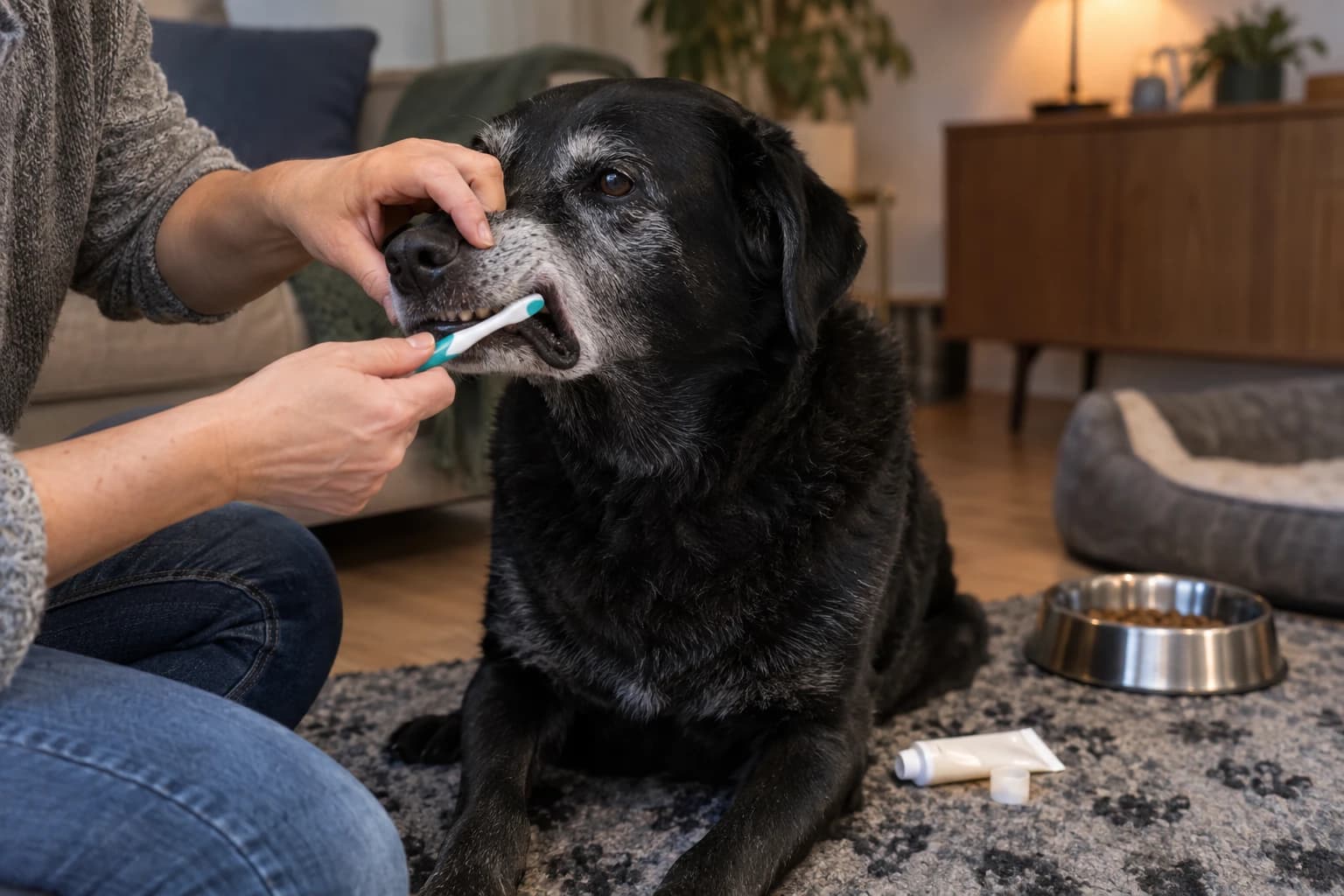
Dental problems are common and often hard to see. In a large Swedish survey of dog owners, almost four in ten reported dental calculus on their dog, and one in four owners said they had difficulty inspecting their dog's teeth at all. That last number matters for powders: if you can't easily look inside your dog's mouth, you're relying on routines and products rather than your own inspection.
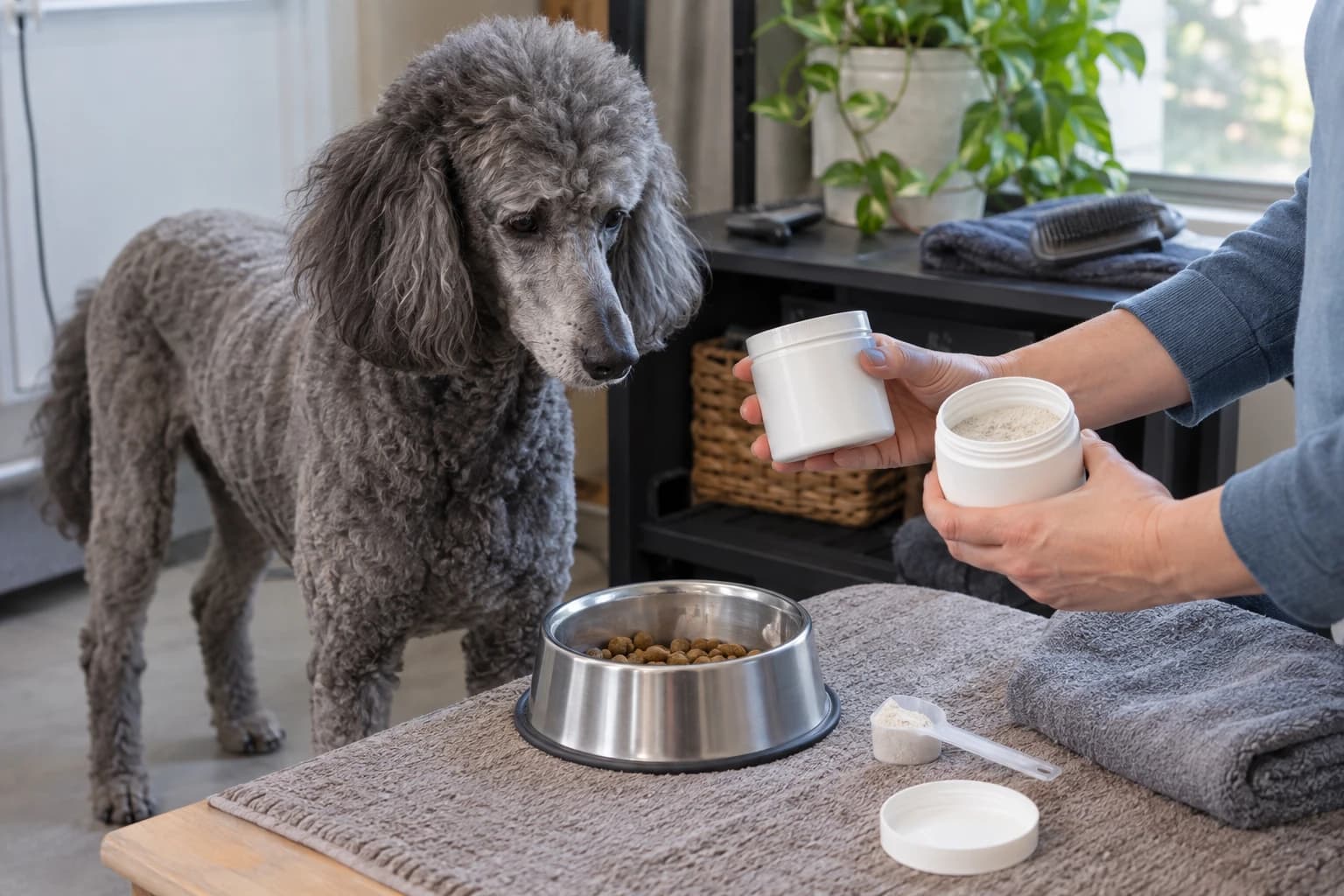
Brown algae powders are sprinkled on food and are meant to work once swallowed, which makes them appealing for dogs who resist brushing. The key thing to keep straight from the start is the difference between:
- An ingredient: Ascophyllum nodosum, a brown seaweed species that has been studied in canine dental research
- A finished product: a specific jar with its own formulation, serving directions, and its own testing or evidence
Research on the ingredient does not automatically transfer to every product that contains it. That distinction is the backbone of everything below.
What to look for on an Ascophyllum nodosum label
A label that names the species is doing more work than one that says "seaweed." Use this comparison when you're reading options side by side:
- Species name: Look for Ascophyllum nodosum written out, ideally in Latin, rather than "seaweed meal," "kelp," or "marine algae."
- Position on the label: Ingredient lists are ordered by amount, so a seaweed listed first is different from a seaweed listed after several other items.
- Origin or harvest information: Some brands name the harvest region or source. Vagueness here is common, so treat named sourcing as a bonus, not a given.
- Serving directions: The label should state how much to use per meal and for which weight bands, in the product's own units.
- Iodine disclosure: Some products state iodine content or note that iodine levels naturally vary between batches. Some don't. Either way, the label tells you what you can and can't verify.
- Batch and contact details: A lot number and a way to ask the company questions are basic markers of a serious label.
For a fuller walkthrough of label structure, from ingredient identity to batch details, our guide on how to read a dog dental powder label covers each section in order.
Iodine and thyroid questions: what to ask your clinician
Brown seaweeds naturally contain iodine, and the amount can vary between harvests and batches. You don't need a health-claim number to act on this. What you need is a short, specific conversation with your veterinary clinician if any of the following apply:
- Your dog has a diagnosed thyroid condition or takes thyroid medication
- Your dog is a senior with other ongoing conditions or medications
- You plan to use a seaweed powder long-term rather than short-term
- The label doesn't disclose iodine content and you want clarity before starting
A useful way to frame it: bring the label or a photo of it, and ask two questions. First, is iodine intake from this product a concern for my dog specifically? Second, if we use it, what changes should I watch for that would prompt us to stop? This takes one appointment or one email and replaces guesswork entirely.
Our article on dog dental powder side effects explains how to check seaweed and other ingredients on a label and what to record if your dog seems to react to a new product.
Ingredient evidence versus finished-product evidence
This is the single most useful filter when comparing brands. Canine studies on brown algae show what the tested material did in that study's conditions. They don't guarantee the same result for a different brand's formulation, harvesting batch, or serving size. When you evaluate a product, separate the two questions:
- Does the ingredient have research behind it? Ascophyllum nodosum has been the subject of canine dental research. That's a reason the ingredient appears in products.
- Does this finished product have evidence of its own? That's a higher bar: testing on the exact formulation the company sells, not a general reference to studies on seaweed.
You can read our summary of what brown-algae dental studies actually show to see both what they support and where they stop.
A related expectation to set honestly: powders are not a fix for tartar that's already hardened onto teeth. Established calculus needs professional dental care, and our article on whether dental powder removes tartar explains that limit plainly. Powders fit into a daily routine, not a replacement for it.
A practical checklist before you buy
Work through these in order. If a company can't answer a question, that itself is information.
1. Confirm the species. Does the label name Ascophyllum nodosum specifically? 2. Check the iodine story. Is iodine content disclosed, or is natural variation at least acknowledged? 3. Ask about finished-product testing. Ask whether testing or evidence applies to the exact product, not just the ingredient category. 4. Read the serving directions. Can you follow them exactly as written for your dog's weight? 5. Flag thyroid or medication concerns. If they apply, resolve them with your clinician before starting. 6. Plan your own observation window. Decide in advance how long you'll try the product and what you'll watch, such as acceptance at mealtime and any change in breath or appetite. 7. Keep the packaging. Lot numbers and labels are what you'll need if you ever have a question or a reaction to report.
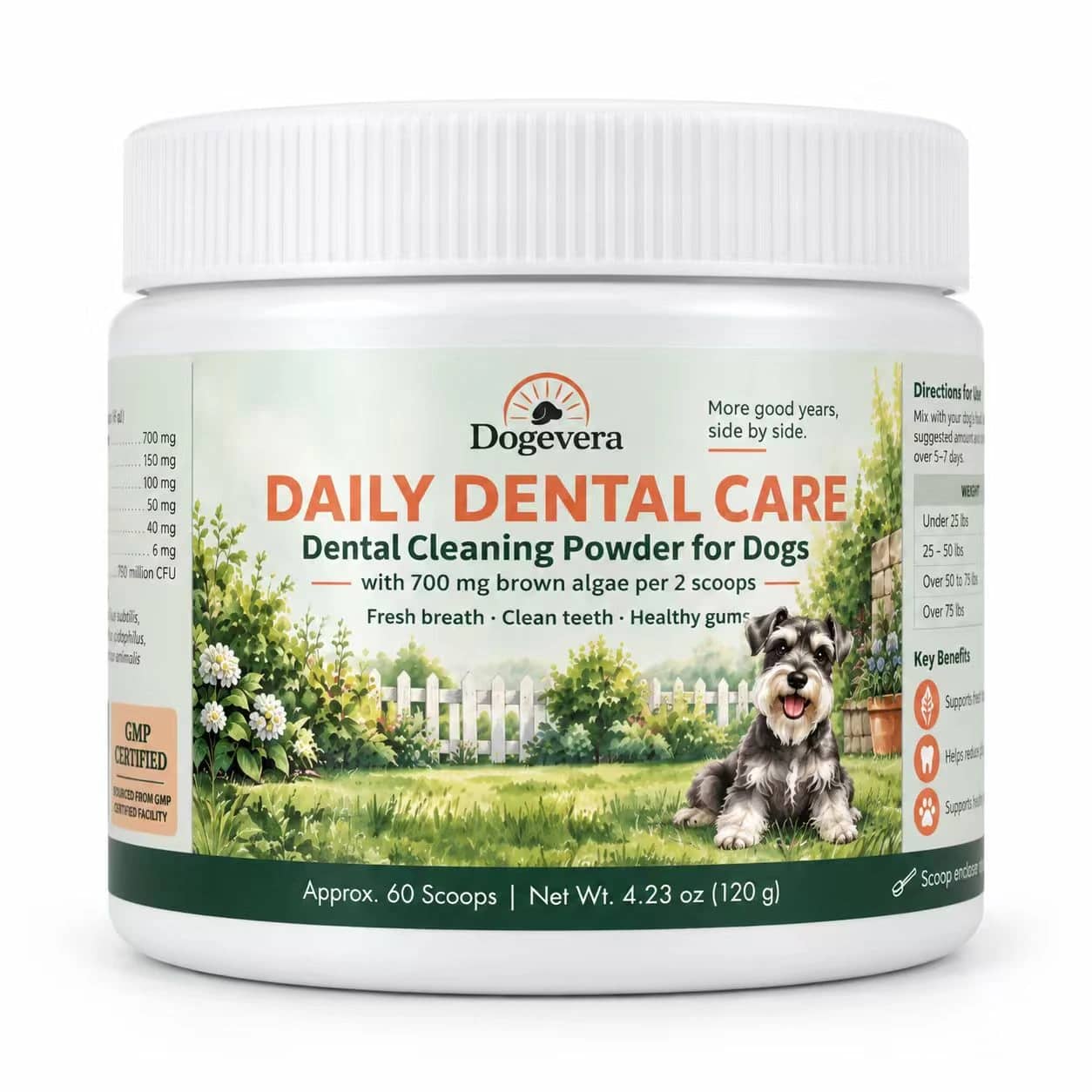
If you want a specific product to run this checklist against, our Daily Dental Cleaning Powder for Dogs product page lists its own formulation, serving directions, and current availability.
What to do in the first days of use
Once you've chosen a product and cleared any thyroid questions, the first stretch is about observation, not expectation:
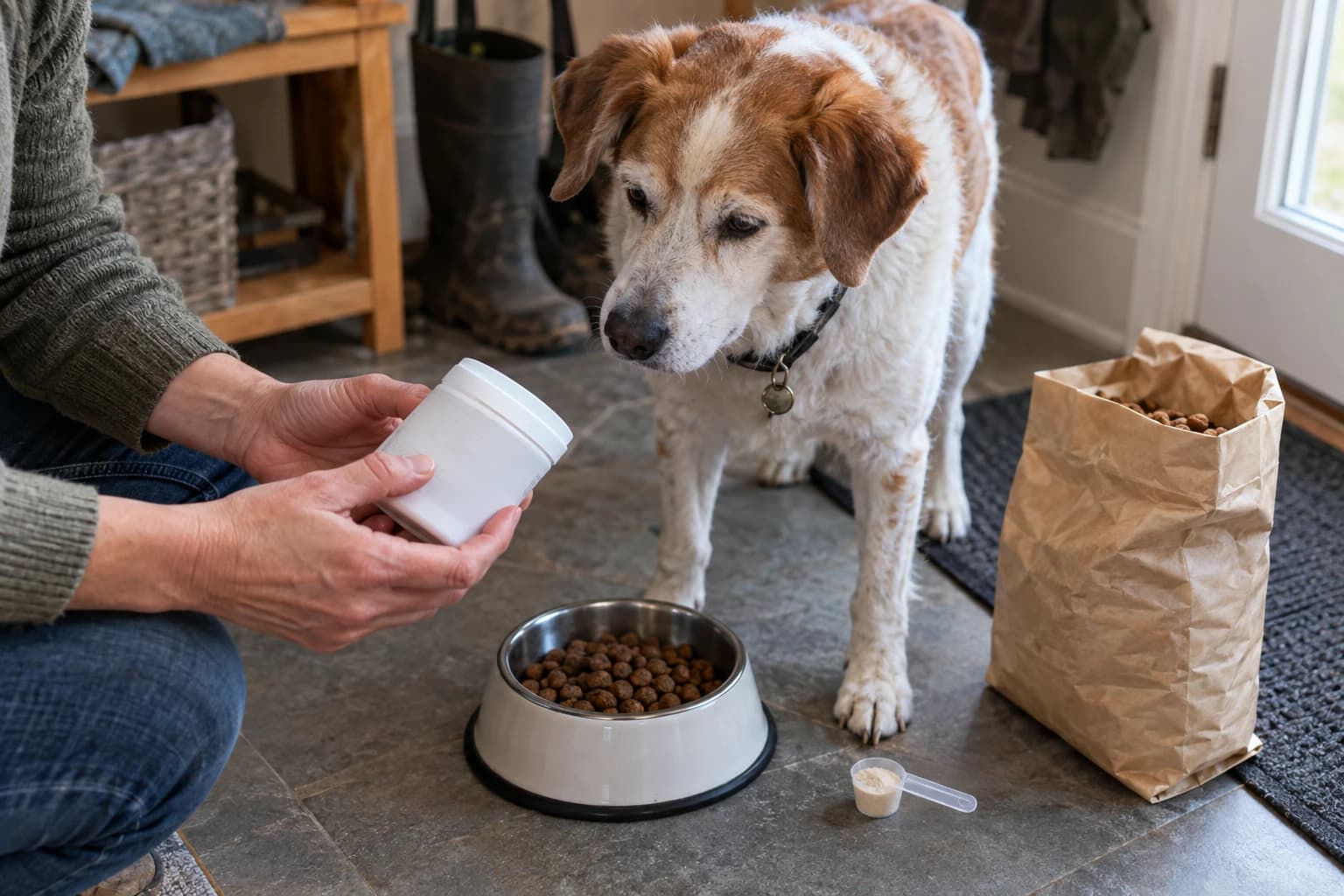
- Mix it as directed. Follow the label exactly rather than adjusting the amount based on how things look.
- Watch acceptance. Some dogs notice a change in flavor. If yours refuses the food, our guide on what to do when a dog refuses food with powder on it covers mixing adjustments.
- Note anything new. Changes in appetite, stool, or behavior in the first days are worth recording, even if they turn out to be unrelated.
- Book the bigger picture. A powder is one part of dental care. Professional dental assessment remains the way to know what's happening inside the mouth, especially for a senior dog.
FAQ
Is Ascophyllum nodosum the same as kelp? Ascophyllum nodosum is one specific species of brown seaweed. "Kelp" is a broader, looser term that can refer to several species. A label that names the species tells you exactly what you're getting; a label that says only "kelp" leaves it open.
Should I worry about iodine in seaweed dental powder? Brown seaweeds naturally contain iodine, and levels can vary between batches. Whether that matters depends on your individual dog, especially any thyroid condition or medication. The right step is to show the label to your veterinary clinician and ask directly, rather than judging by feel.
How do I know if a product actually works? Look for evidence attached to the finished product, not just studies on the seaweed ingredient. Then track your own dog's response over the period you planned, and keep in mind that home observation is not the same as a controlled trial. Hardened tartar, in particular, is not something a powder removes; that needs professional care.
Can I use a seaweed powder alongside brushing? Many owners do, since the two approaches work at different points: brushing acts on the teeth directly, while a food-sprinkled powder is swallowed and works from there. Ask your clinician what combination makes sense for your dog's mouth and health history.
The takeaway: a seaweed dental powder label is only as useful as what it names and what the company can back up. Name the species, ask about iodine and the finished product, and let your clinician weigh in where thyroid questions exist. That's a routine you can feel steady about.
Related reading
For individual health questions, your veterinarian remains the best partner.