TL;DR
Hardened tartar on a dog's teeth cannot be dissolved or brushed off at home. It has to be removed by a professional cleaning under anesthesia; what you do at home decides how fast it comes back. Tartar (calculus) is plaque that has mineralized, and it starts forming within days. Popular shortcuts do not work: in a 2026 study, an ultrasonic toothbrush sold for at-home tartar removal produced no visible reduction in tartar on dogs' teeth, and anesthesia-free scraping left dogs with gum-disease scores of 4.35 out of 5, almost unchanged. Prevention, though, works well. Coating food with sodium hexametaphosphate cut tartar formation by about 60% to 80% in laboratory Beagles, daily brown seaweed (Ascophyllum nodosum) gave significantly less plaque and tartar than placebo over 90 days in a randomized trial of 60 small dogs, and daily brushing was more than three times as effective at controlling plaque as a dental chew or dental diet. So: one proper cleaning, then daily plaque control to keep tartar from rebuilding.
Plaque vs tartar
| Plaque | Tartar (calculus) | |
|---|---|---|
| What it is | Soft, sticky film of bacteria | Plaque hardened with minerals from saliva |
| Look | Pale, creamy, wipes off | Yellow to brown, hard, rough crust near the gumline |
| Can you remove it at home? | Yes: brushing, wiping | No: needs scaling by a vet |
| Can you slow it? | Yes | Yes, by controlling plaque every day |
Tartar itself is mostly a problem because its rough surface holds more plaque against the gums, driving gum disease below the gumline. That is why removing visible tartar without cleaning under the gums does not fix the disease. See healthy dog gums.
Things that do not remove tartar
Ultrasonic toothbrushes
These are marketed as a way to remove tartar from an awake dog. A 2026 study tested this:
- Beagles with tartar had a single session of 6 minutes per tooth.
- No visible reduction in tartar was seen.
- On extracted teeth, even 6 to 28 minutes of use only loosened small pieces, and only 2 of 10 teeth improved enough to lower their tartar score.
The authors concluded that ultrasonic brushes are useful for daily prevention but not for removing tartar once it has formed.
Anesthesia-free scraping
Scraping an awake dog's teeth removes some visible tartar but leaves the disease under the gums. In a 2025 study, dogs cleaned this way in the previous 6 weeks still scored 4.35 out of 5 on a gum-disease saliva test, against 0.09 after a cleaning under anesthesia. See dog teeth cleaning without anesthesia.
Scraping at home
Picking at tartar with a scaler or fingernail risks cutting the gums, scratching the enamel and missing everything below the gumline. Leave it to your vet.
How vets remove tartar
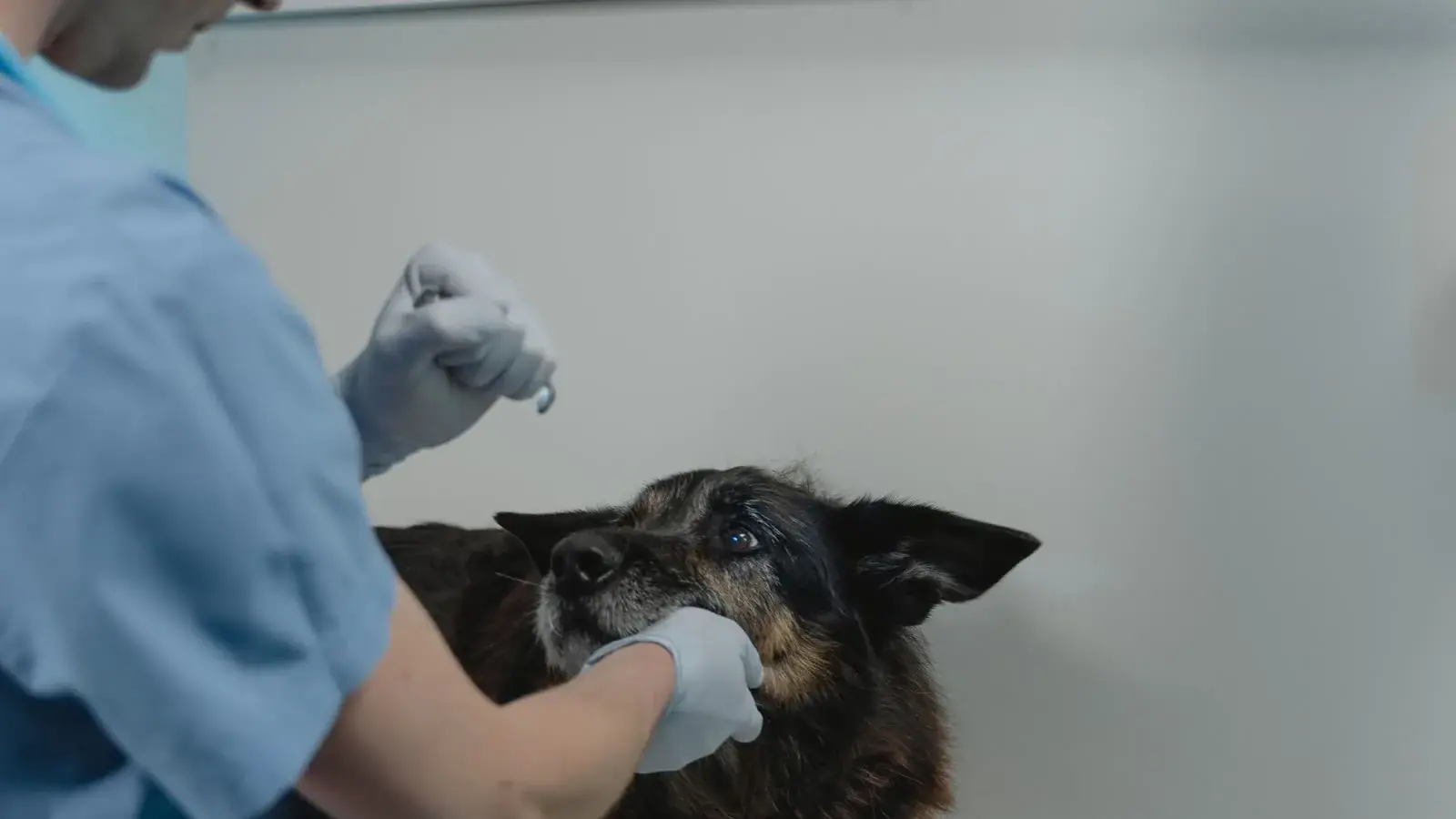
A professional cleaning under anesthesia includes:
- A full mouth exam and dental X-rays to find hidden problems.
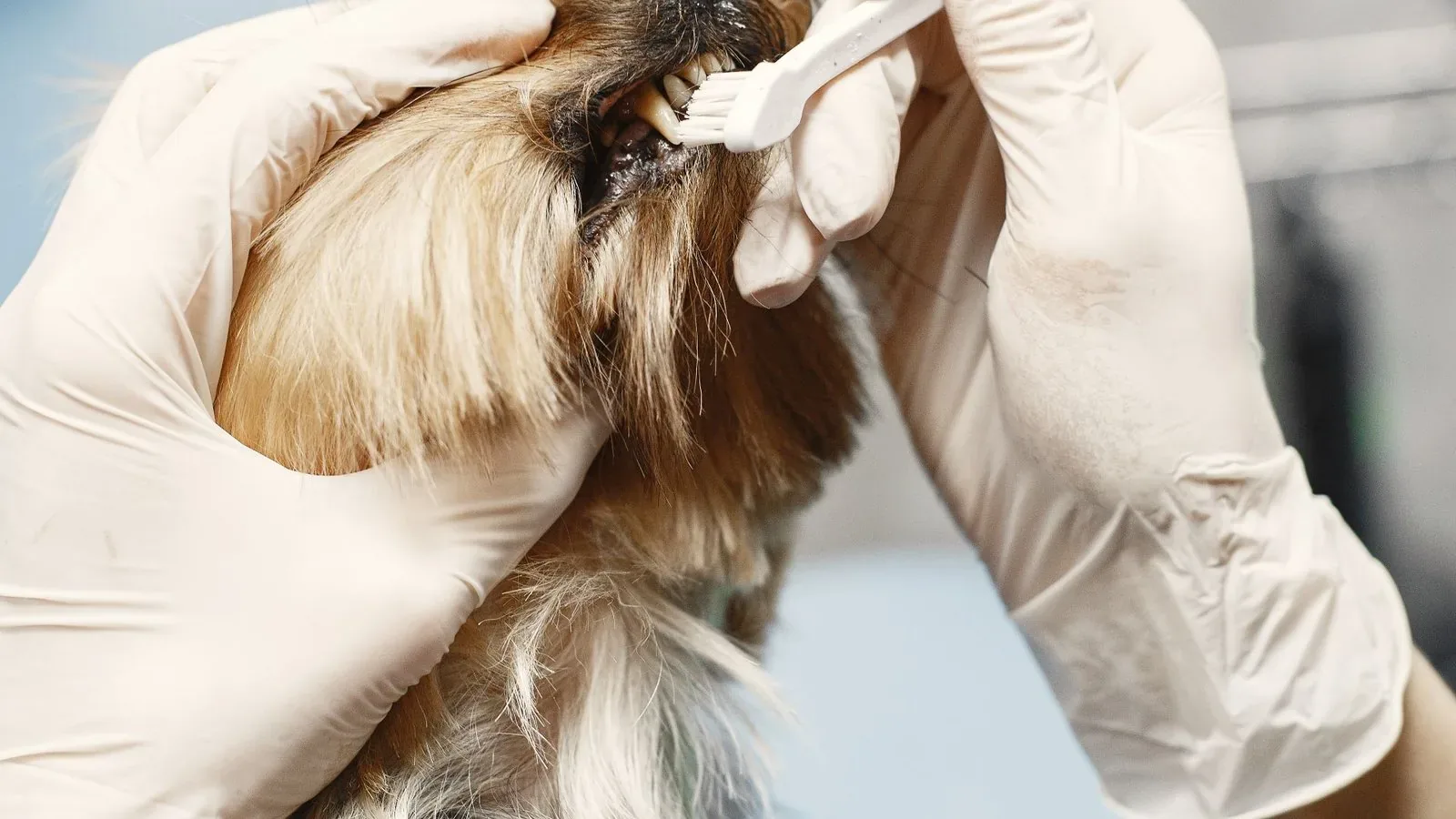
- Scaling above and below the gumline with ultrasonic and hand instruments.
- Polishing to smooth the tooth surface so plaque sticks less.
- Treating any diseased teeth, which may mean extractions.
How to stop tartar coming back
Start these right after a professional cleaning, when the teeth are clean. That is when prevention works best.
1. Brush daily
In a randomized, blinded trial starting from freshly cleaned teeth, daily brushing was more than three times as effective at controlling plaque over 6 weeks as a daily dental chew or a prescription dental diet. See how to brush your dog's teeth.
2. Add a tartar-control ingredient to food
Two ingredients have solid study support:
- Sodium hexametaphosphate (HMP): binds the calcium that turns plaque into tartar. In 27 laboratory Beagles, coating dry food or biscuits with HMP reduced tartar formation by about 60% to 80%, and two HMP-coated biscuits a day cut it by nearly 80%.
- *Brown seaweed (Ascophyllum nodosum): in a double-blind, randomized, placebo-controlled trial, 60 small dogs given daily seaweed after a cleaning had significantly lower plaque and tartar scores, fresher breath and less gum bleeding* than placebo at 90 days.
Our Daily Dental Cleaning Powder puts both in one scoop: *700 mg Ascophyllum nodosum and 100 mg sodium hexametaphosphate per 4 g serving*, plus kelp, probiotics, decaffeinated green tea, lysozyme and perilla seed extract. You stir it into food once a day, which suits older dogs that will not tolerate a toothbrush. It is now available to pre-order. See dental powder for dogs: the evidence and how to use dog dental powder.
3. Choose chews carefully
Some dental chews help, but they were less effective than brushing in the trial above. Avoid very hard chews such as antlers and bones, which break teeth. See broken tooth in dogs and dog treats for dental health.
4. Check the mouth weekly
Lift the lips and look at the back teeth, where tartar builds fastest on the outer surfaces. Catching new buildup early means your vet can deal with it before gum disease sets in.
Which dogs build tartar fastest?
Small and toy breeds, flat-faced breeds and older dogs. In a UK study of 22,333 dogs, Toy Poodles had nearly 4 times the odds of gum disease compared with crossbreeds, and the smaller the dog, the higher the odds. See Poodle lifespan.
FAQ
How do I remove hardened tartar from my dog's teeth?
You cannot safely remove it at home. A professional cleaning under anesthesia removes tartar above and below the gumline. At home, focus on stopping it from forming again.
Can anything dissolve dog tartar?
No product has been shown to dissolve existing tartar. Ingredients such as sodium hexametaphosphate and brown seaweed reduce new tartar formation.
Do ultrasonic toothbrushes remove tartar from dogs' teeth?
Not in a 2026 study, which found no visible reduction after a session on dogs. They may help with daily prevention.
How fast does tartar come back after a dental cleaning?
Plaque starts forming within days and can harden into tartar soon after. How fast it builds up depends on your dog and your daily home care.
What is the best way to prevent tartar on dog teeth?
Daily brushing is the most effective. For dogs that will not be brushed, a daily food-mixed powder with sodium hexametaphosphate and brown seaweed is the easiest option.
References
- Enlund KB, et al. A pilot study on the novel use of an ultrasonic toothbrush in dogs: limited effect on dental calculus following a single treatment. Acta Veterinaria Scandinavica. 2026. PMID: 41872912
- Niemiec BA, Kangas KB, Ribka EP. Anesthesia-free dentistry does not provide any demonstrable medical benefit for the control of periodontal disease in dogs. Journal of the American Veterinary Medical Association. 2025. PMID: 41160977
- Stookey GK, Warrick JM, Miller LL. Effect of sodium hexametaphosphate on dental calculus formation in dogs. American Journal of Veterinary Research. 1995. PMID: 7574160
- Gawor J, et al. Effects of edible treats containing Ascophyllum nodosum on the oral health of dogs: a double-blind, randomized, placebo-controlled single-center study. Frontiers in Veterinary Science. 2018. PMID: 30109236
- Allan RM, Adams VJ, Johnston NW. Prospective randomised blinded clinical trial assessing effectiveness of three dental plaque control methods in dogs. Journal of Small Animal Practice. 2019. PMID: 30575038
- O'Neill DG, et al. Epidemiology of periodontal disease in dogs in the UK primary-care veterinary setting. Journal of Small Animal Practice. 2021. PMID: 34374104
For individual health questions, your veterinarian remains the best partner.