TL;DR
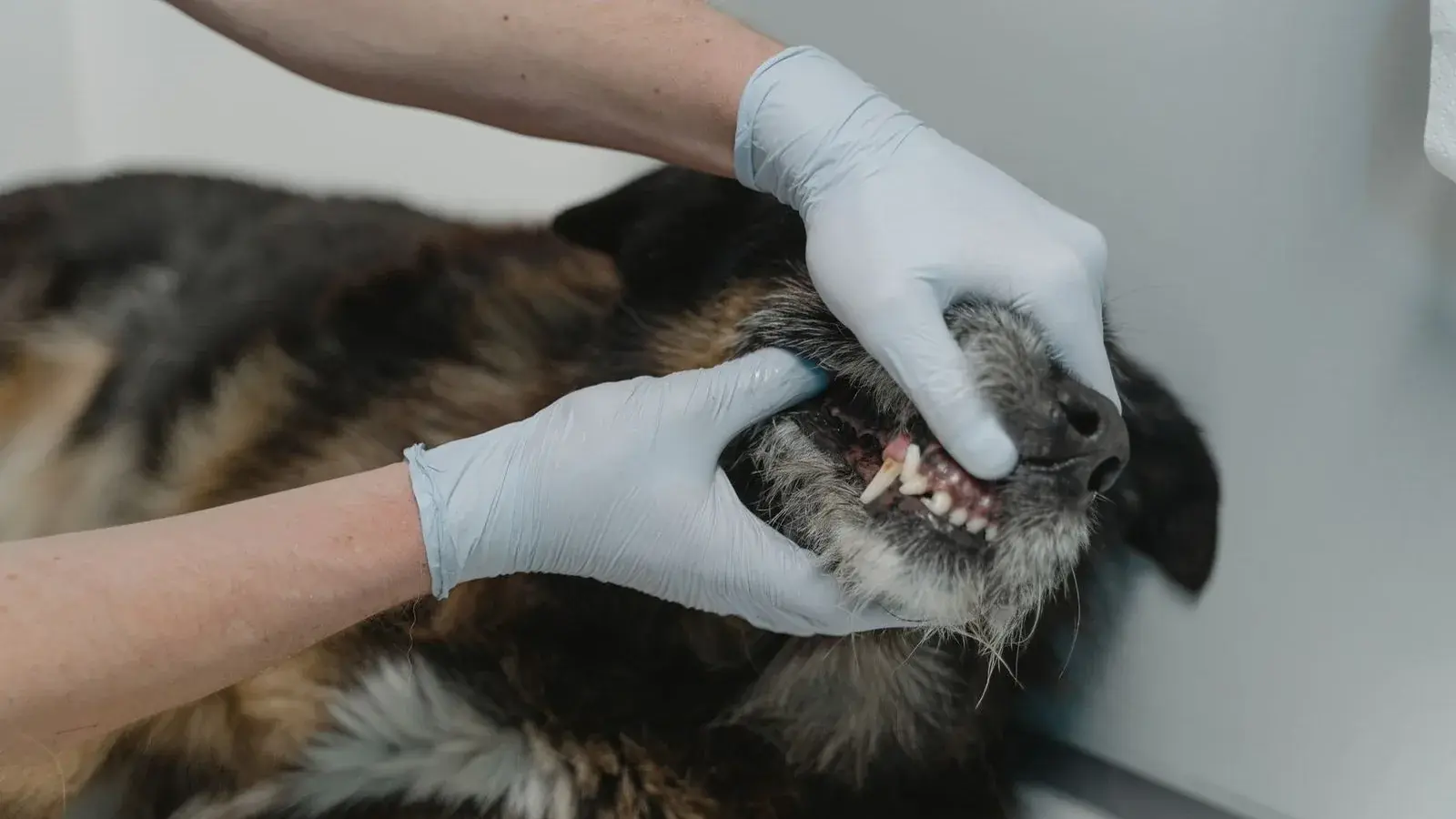
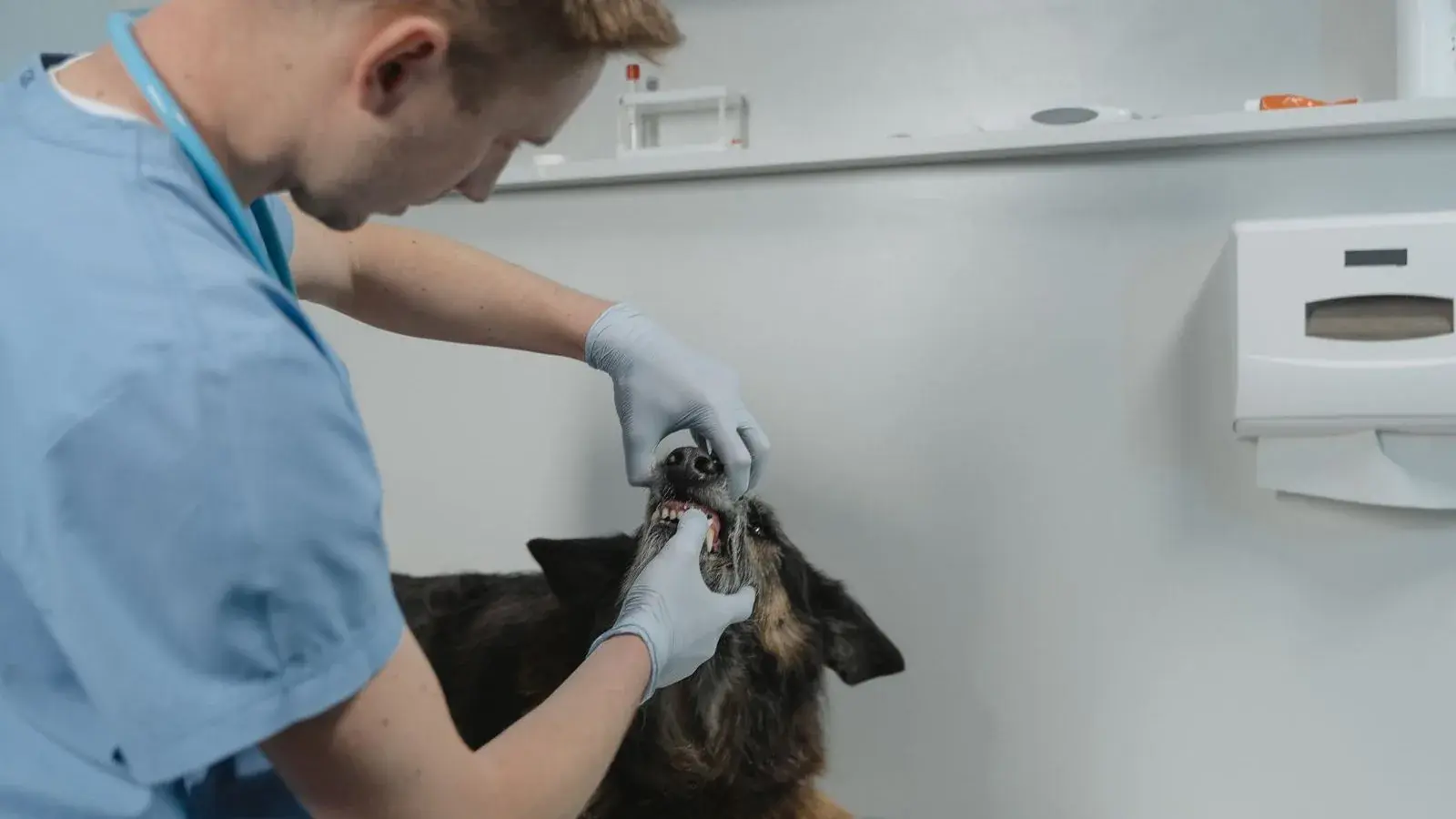
A broken tooth in a dog needs a vet check even if your dog seems fine, because a fracture that exposes the pink or dark center of the tooth (the pulp) lets bacteria in, and the tooth usually dies and becomes infected. Dogs hide dental pain well and keep eating. The most commonly broken teeth are the big upper chewing tooth (upper fourth premolar) and the canines, usually from chewing hard objects: in a lab test, the upper fourth premolar broke under an average force of about 1,281 newtons, within a dog's chewing power, and the most common break was one that exposed the pulp. Treatment saves many teeth: root canal treatment was successful or showed no sign of failure in 96% of 281 teeth, and fresh fractures treated with vital pulp therapy succeeded in 80%, regardless of the dog's age. Otherwise the tooth is extracted. A tooth that has turned pink, purple, grey or brown without an obvious break is also a warning sign: 88% of discolored teeth examined in one study were dead inside.
Types of broken teeth
| Type | What you see | What it means |
|---|---|---|
| Enamel chip | Small chip, no pink or dark spot | Often minor; vet check and X-ray |
| Uncomplicated crown fracture | Larger break, tooth center not exposed | Can be sensitive; may need sealing; X-ray to check pulp |
| Complicated crown fracture | Pink spot (fresh) or dark dot (older) in the middle of the break | Pulp exposed; needs root canal, vital pulp therapy or extraction |
| Crown-root fracture | Break extends below the gumline | Often needs extraction or specialist repair |
| Worn teeth | Flat, brown, smooth surfaces from chewing | Usually slow; check for exposed pulp |
| Discolored tooth | Pink, purple, grey or brown tooth after a knock | Often a dead tooth; X-ray needed |
Signs of a broken or dead tooth
- Chewing on one side, dropping food or avoiding hard treats.
- Pawing at the face or rubbing the muzzle.
- Drooling, sometimes with a little blood.
- Bad breath from one side.
- Swelling under the eye or on the jaw if an abscess has formed. See dog tooth abscess.
- Teeth chattering. See dog teeth chattering.
- Often nothing at all, which is why a weekly look in the mouth helps.
Why a broken tooth cannot be left
The pulp contains nerves and blood vessels. Once exposed, bacteria enter and the pulp dies, then infection spreads to the root tip and jawbone. This is painful even if your dog keeps eating, and it can lead to an abscess.
Discolored teeth
A tooth that changes color after a knock is a strong sign of trouble. In a study of 102 discolored teeth in 69 dogs:
- 87.6% were nonvital (dead) under the microscope.
- More than half (53.9%) showed no visible injury to the crown.
- X-rays showed root-tip disease in 57%, and 18.6% looked normal on X-ray, so a normal X-ray does not prove the tooth is alive.
So a pink, purple or grey tooth usually needs a root canal or extraction even if it looks intact.
Treatment options
Root canal treatment
The dead or infected pulp is removed, the canal disinfected and sealed, and the tooth often capped. It keeps strategically important teeth, such as the canines and the upper fourth premolar, in the mouth. In a study of 281 teeth in 204 dogs:
- 71% were fully successful on follow-up X-rays.
- 25% showed no evidence of failure.
- Only 4% failed.
Vital pulp therapy
For a fresh fracture, a veterinary dentist can remove the top layer of pulp and seal the tooth so it stays alive. In a 25-year study, it succeeded in 80% of 79 teeth, and the dog's age did not affect success.
Extraction
Removing the tooth ends the pain and infection for good. It is often the right choice for small teeth, badly damaged teeth or when a dentist is not available. See senior dog tooth extraction recovery and soft dog food for senior dogs with bad teeth.
What not to do
- Do not wait to see if it gets better. An exposed pulp does not heal.
- Do not rely on antibiotics alone. They do not save the tooth.
- Do not give human painkillers, several of which are toxic to dogs.
How to prevent broken teeth
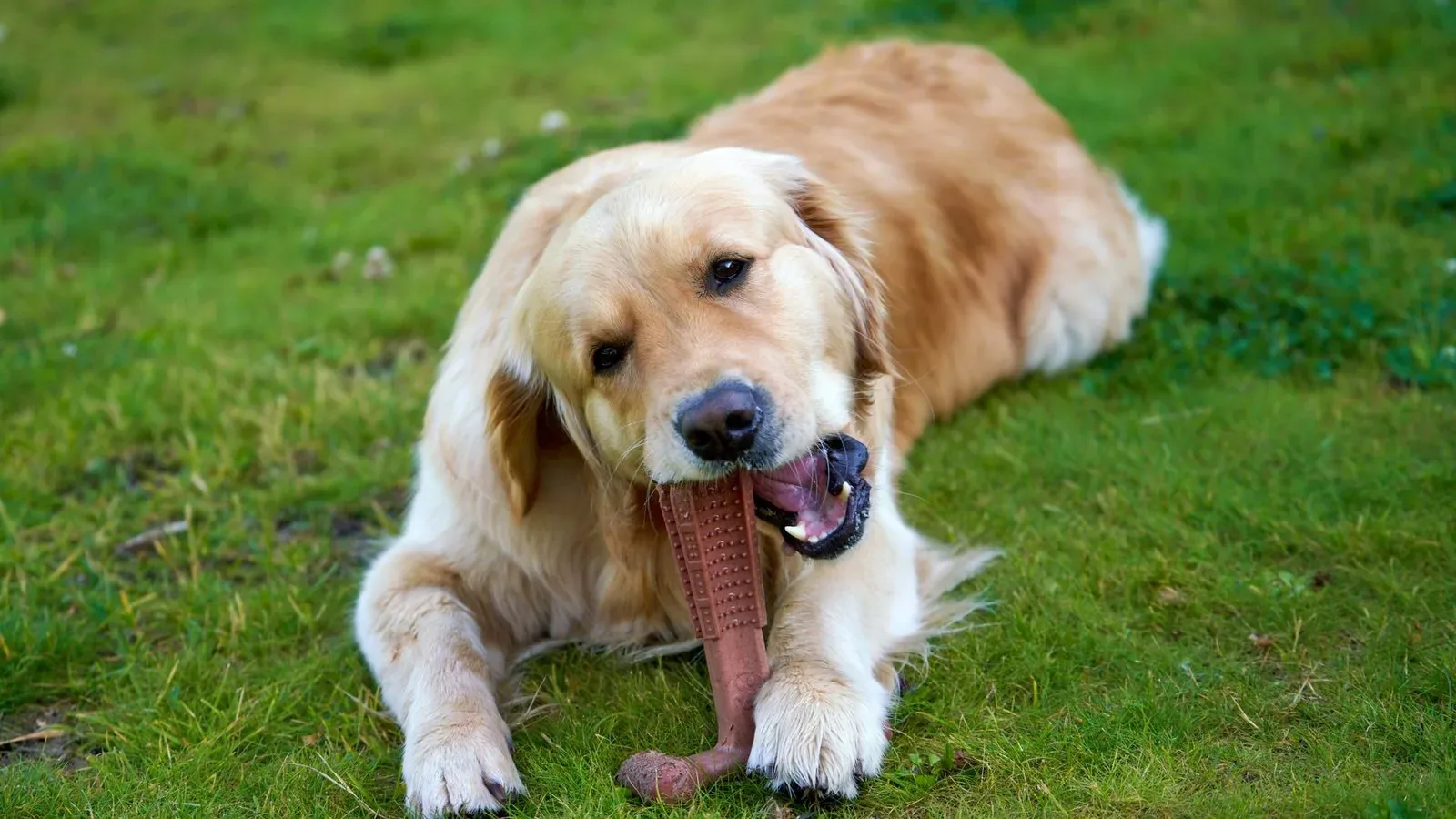
Hard chews are a common cause of broken chewing teeth. The lab study found the upper fourth premolar breaks within the range of a dog's chewing force, most often in the way that exposes the pulp.
Chews and toys to avoid or limit:
- Antlers, real bones and hooves.
- Hard nylon chews and very hard compressed chews.
- Ice cubes, rocks and cage bars.
A practical rule many vets use: if you cannot dent it with your thumbnail or bend it, it is too hard.
Older teeth weakened by gum disease are also more fragile. Keep plaque under control with daily brushing, or a daily food-mixed powder for dogs that will not be brushed. Our Daily Dental Cleaning Powder contains *700 mg Ascophyllum nodosum and 100 mg sodium hexametaphosphate per 4 g serving*, now available to pre-order. See dental powder for dogs: the evidence and healthy dog gums.
FAQ
Is a broken dog tooth an emergency?
It is not usually a same-day emergency unless there is heavy bleeding or severe pain, but a fracture that shows a pink or dark spot in the middle needs a vet within a few days. For vital pulp therapy, the sooner the better.
Does a broken tooth hurt my dog?
Yes, especially when the pulp is exposed, even if your dog keeps eating. Dogs hide dental pain well.
Can a dog's broken tooth be saved?
Often. Root canal treatment succeeded or showed no sign of failure in 96% of 281 teeth, and vital pulp therapy for fresh fractures succeeded in 80%.
What should I do if my dog's tooth changed color?
See your vet. In one study, nearly 88% of discolored dog teeth were dead inside, even though half showed no visible injury.
What chews break dogs' teeth?
Antlers, bones, hooves, hard nylon chews and other items too hard to dent with a thumbnail. Choose chews with some give.
References
- Soltero-Rivera M, et al. Fracture limits of maxillary fourth premolar teeth in domestic dogs under applied forces. Frontiers in Veterinary Science. 2018. PMID: 30761310
- Lee DB, et al. Radiographic outcome of root canal treatment in dogs: 281 teeth in 204 dogs (2001-2018). Journal of the American Veterinary Medical Association. 2022. PMID: 34986112
- Elazegui E, et al. Vital pulp therapy in dogs maintains an 80% success rate independent of patient age: a 25-year retrospective study. Journal of the American Veterinary Medical Association. 2025. PMID: 40683315
- Feigin K, et al. Analysis and assessment of pulp vitality of 102 intrinsically stained teeth in dogs. Journal of Veterinary Dentistry. 2022. PMID: 34825611
For individual health questions, your veterinarian remains the best partner.