TL;DR
After a senior dog has a tooth extraction, the first three to five days call for soft food, rest, careful medication timing, and watching the extraction site for swelling or bleeding. Most older dogs recover without trouble when you keep the routine calm and check their mouth daily.
Your older dog came home from a dental procedure quieter than usual, a little groggy, and with post-operative instructions that mention soft food, medication timing, and signs to watch. The next few days matter, and a clear home routine makes recovery easier for both of you.
Any surgery carries risk, and older dogs may take longer to bounce back, so keep your veterinarian's contact details close and call when something looks or feels wrong.
What happens in the first 24 hours
Your dog may still be drowsy from anesthesia. Offer a small amount of water when they are alert enough to stand steadily, then wait an hour before trying a tablespoon of soft food. If they eat that without vomiting, you can offer a little more.
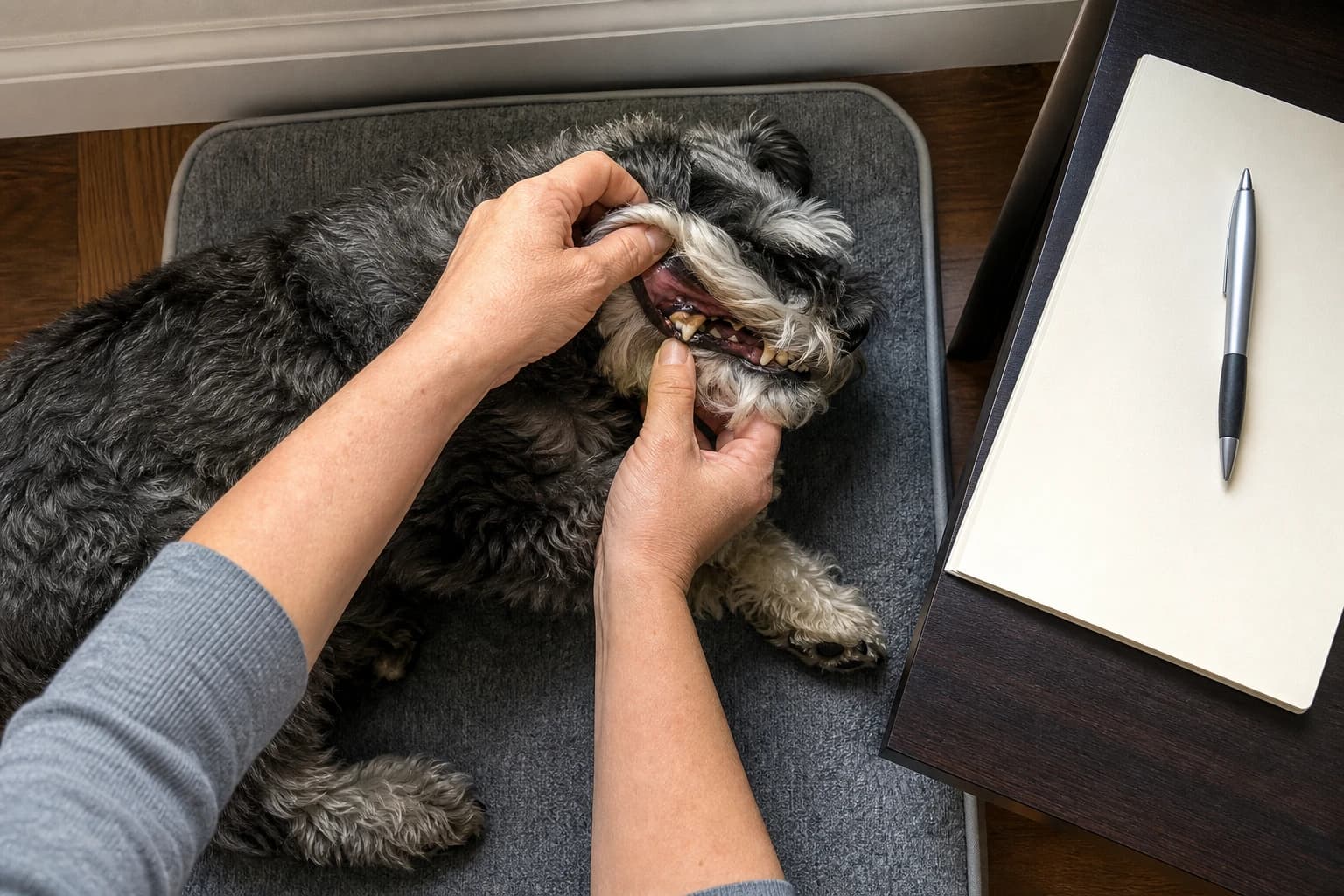
Keep them in a quiet room with comfortable bedding and dim lighting. Avoid stairs, jumping, and other dogs until the grogginess clears. Check the extraction site gently by lifting the lip; some blood-tinged saliva is normal, but active bleeding or a swollen, hot gum needs a same-day call.
Organizing medication and timing
Most extractions come with pain relief and sometimes an antibiotic. Write down each medication name, dose, and schedule on a simple chart and tick off each dose as you give it. Set phone alarms for doses that fall during work hours or overnight.
If a tablet is too hard for a sore mouth, ask your veterinarian whether you can crush it and mix it into a soft food vehicle such as plain canned pumpkin or low-sodium broth-soaked kibble. Never split, crush, or hide medication without checking the label or calling the clinic first.
Soft food that works
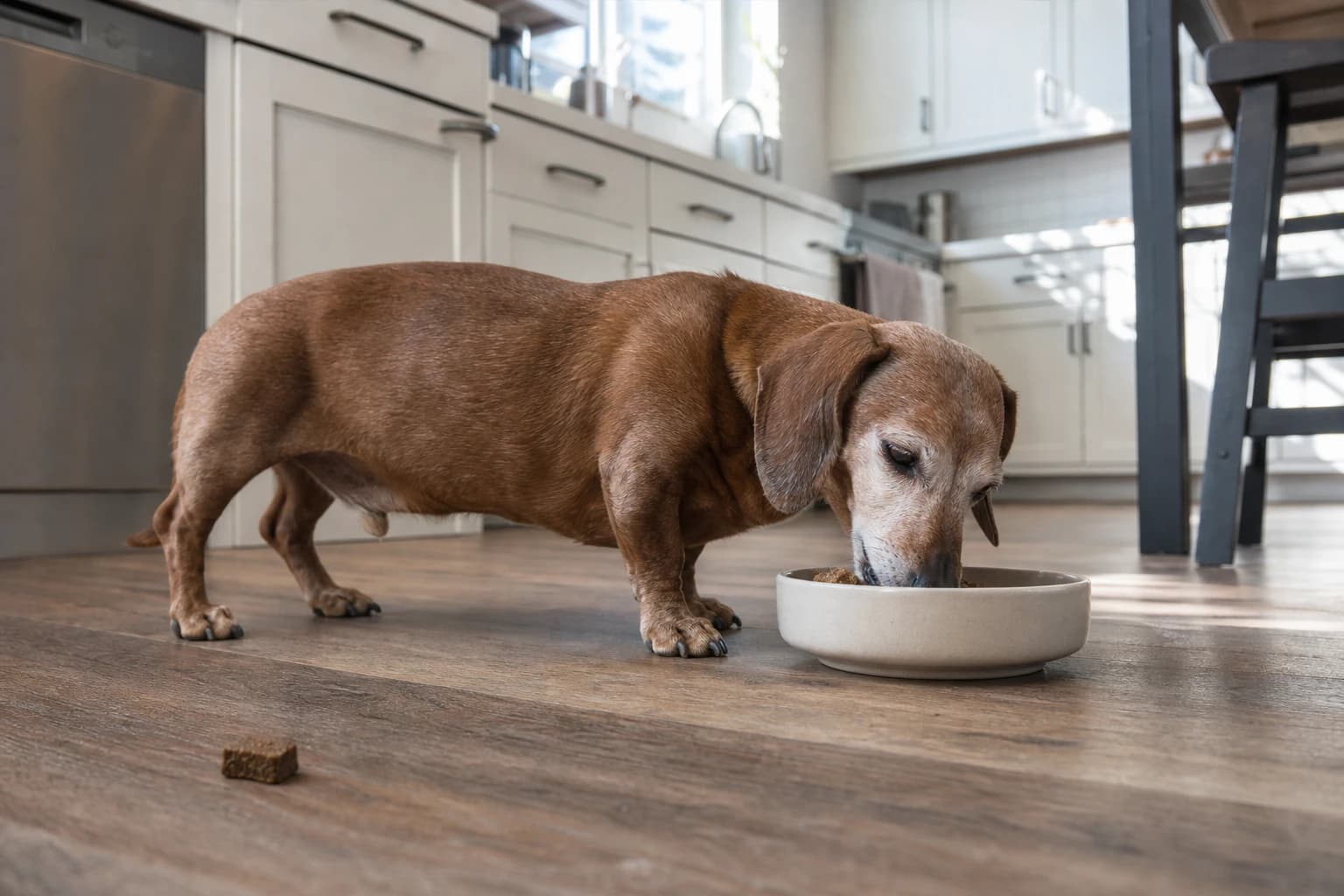
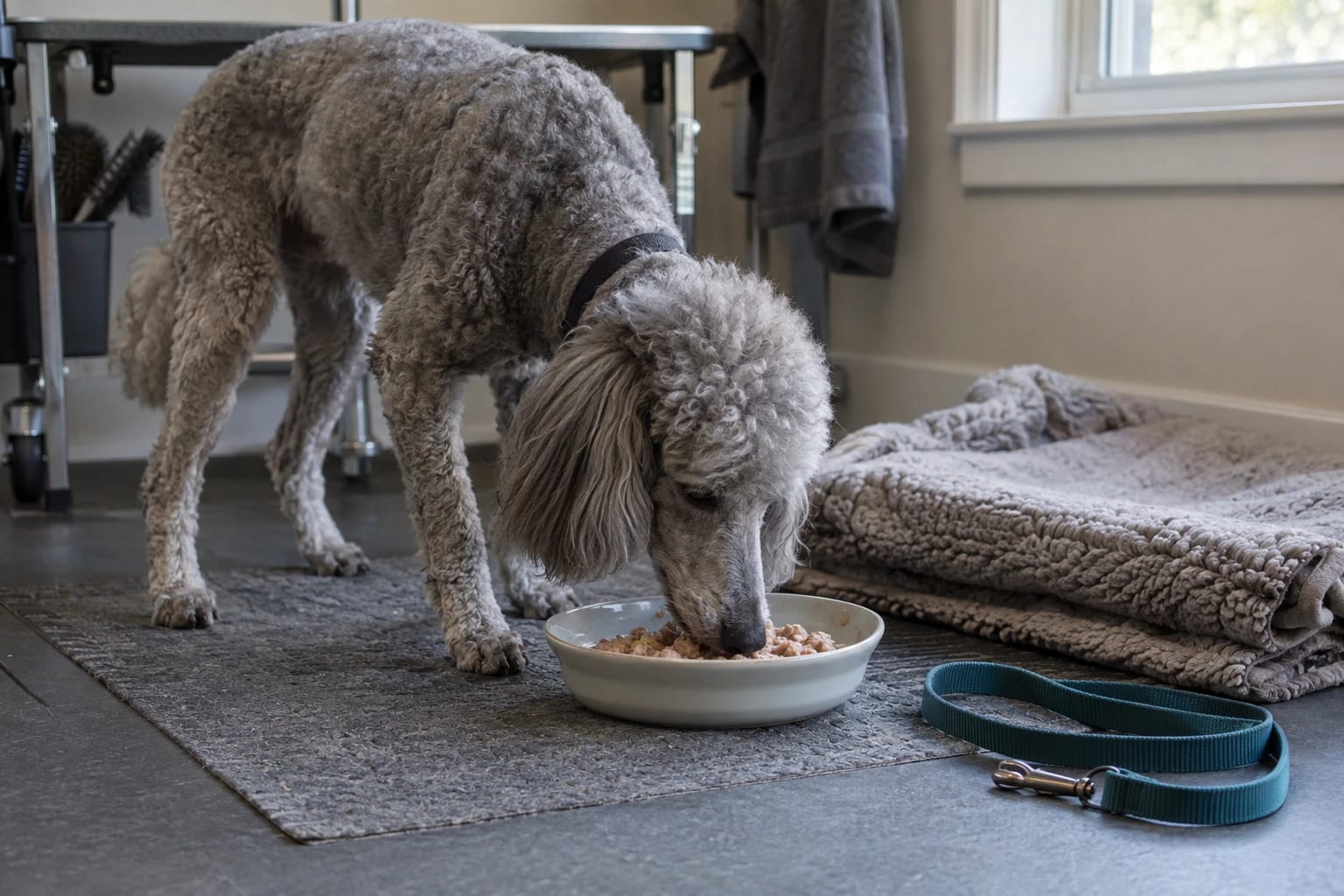
Switch to soft food for at least five days, or longer if your veterinarian advised it. Canned food, kibble soaked in warm water until mushy, plain cooked rice with boiled chicken, or a veterinary recovery diet all work. Serve it at room temperature in a shallow, wide bowl so your dog does not have to work hard to reach it.
If your dog refuses the first meal, wait two hours and try a smaller portion. A dog who skips two meals in a row, or who tries to eat but then stops and paws at their mouth, needs a veterinary call. When normal appetite returns and the extraction site looks calm, you can slowly reintroduce regular food by mixing it with the soft option over three days. For more help with eating changes, see dog suddenly not eating hard treats.
Rest and safe activity
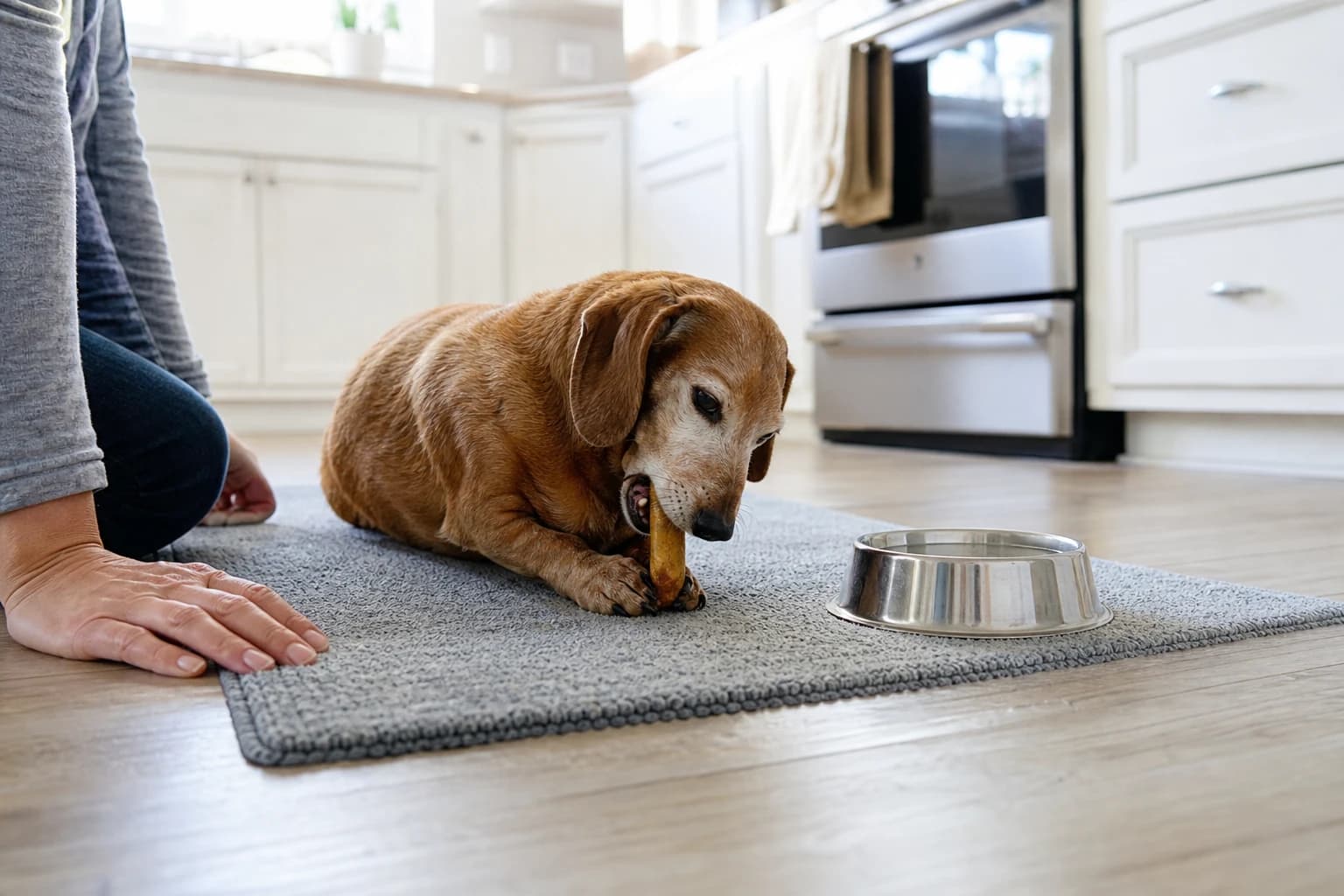
Limit activity to short, slow leash walks for bathroom breaks only during the first three days. No running, wrestling, tug toys, or hard chew items until your veterinarian clears them, usually after a recheck at 10 to 14 days. Boredom is real, so offer a soft toy they can carry or a quiet lap session instead of physical games.
If your dog shares a home with other pets, separate them at mealtimes and during rest periods so no one jostles the healing mouth.
What to check daily
Look at the extraction site once a day by gently lifting the lip in good light. The gum may look red or slightly swollen for the first two days; that is expected. You should not see a growing lump, green or yellow discharge, a foul smell, or bleeding that restarts after the first day.
Watch appetite, water intake, and bathroom habits. A dog who stops drinking, strains to urinate, or becomes noticeably more lethargic than the first evening home needs a call. For older dogs, any mouth discomfort can worsen existing issues; if bad breath was a concern before surgery, track whether it improves after healing. Learn more in why does my senior dog breath smell bad.
When to call the veterinarian
Call the same day if you see active bleeding that lasts more than a few minutes, a swollen face or muzzle, difficulty breathing, vomiting after medication, refusal to drink water for more than 12 hours, or a fever (hot ears, shivering, or a rectal temperature above 102.5°F if you can measure it safely).
Call within 24 hours if your dog refuses all food for two meals, paws repeatedly at their mouth, or becomes far more withdrawn than the first post-anesthesia evening.
FAQ
How long does a senior dog take to recover from tooth extraction? Most older dogs feel noticeably better within three to five days and return to normal energy and appetite within two weeks, though gum healing continues for several more weeks.
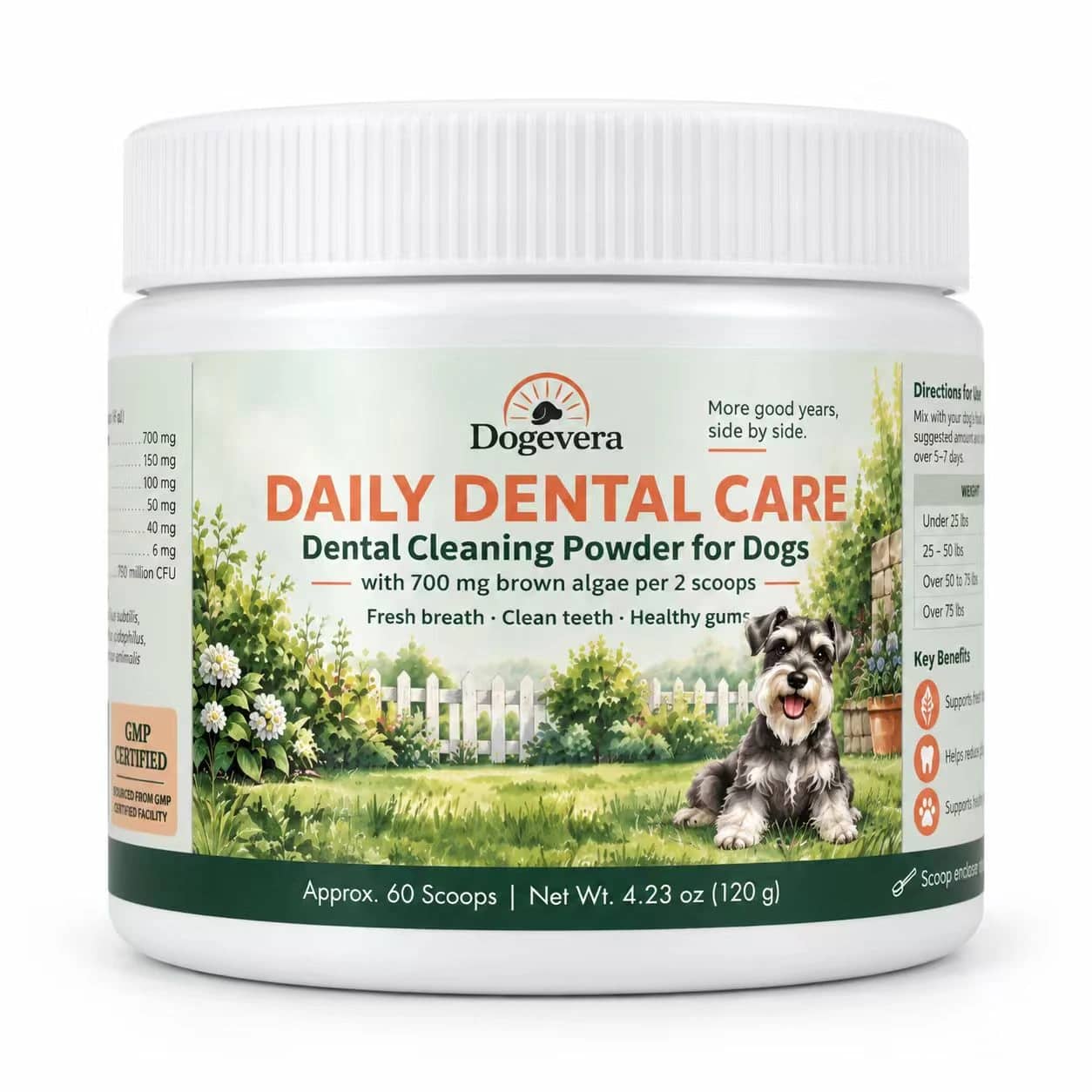
Can I brush my dog's teeth after extraction? No. Wait until your veterinarian clears you to resume brushing, usually after the recheck appointment. For daily care after healing, see how to clean dog teeth without brushing for alternatives that suit older dogs.
What if my dog refuses all soft food options? Try a different protein, warm the food slightly to increase aroma, or use a small amount of low-sodium broth as a topper. If they still refuse two consecutive meals, call your veterinarian.
Is it normal for my senior dog to sleep more after extraction? Yes, for the first 24 to 48 hours. After that, energy should gradually return. If lethargy continues past three days or worsens, call the clinic.
When can my dog go back to regular kibble and chew toys? Wait for your veterinarian's approval at the follow-up appointment, typically 10 to 14 days post-surgery, before reintroducing hard food or chew items.
For individual health questions, your veterinarian remains the best partner.