TL;DR
Soft dog food for senior dogs with bad teeth should be moist, easy to pick up, and comfortable for your dog to eat without prolonged chewing. Choose a food with a clear nutrition statement, serve it at a manageable consistency, and watch for changes in how your dog approaches the bowl.
A new refusal to eat, one-sided chewing, dropping food, or visible mouth changes deserves a prompt conversation with your veterinarian.
What soft food is easiest for a senior dog with bad teeth?
When breakfast takes much longer than it used to, the best starting point is usually a food your dog can lap or press apart with minimal effort. Canned food, refrigerated fresh food, and dry food softened with water can all create a gentler meal texture.
Look beyond the word “soft” on the package. A chunky stew may still contain firm pieces, while a pate-style formula may be easier to flatten with a fork. Before serving a full meal, put a small amount on a plate and see whether it breaks apart easily with gentle pressure from the back of a spoon.
Avoid assuming that a food marketed for dental health is the right choice during dental discomfort. Some dental-focused foods depend on a firmer texture or chewing action. Our guide to dental health dog food for senior dogs explains why the right everyday food choice depends on your dog’s current ability to eat comfortably.
A quick bowl-side check
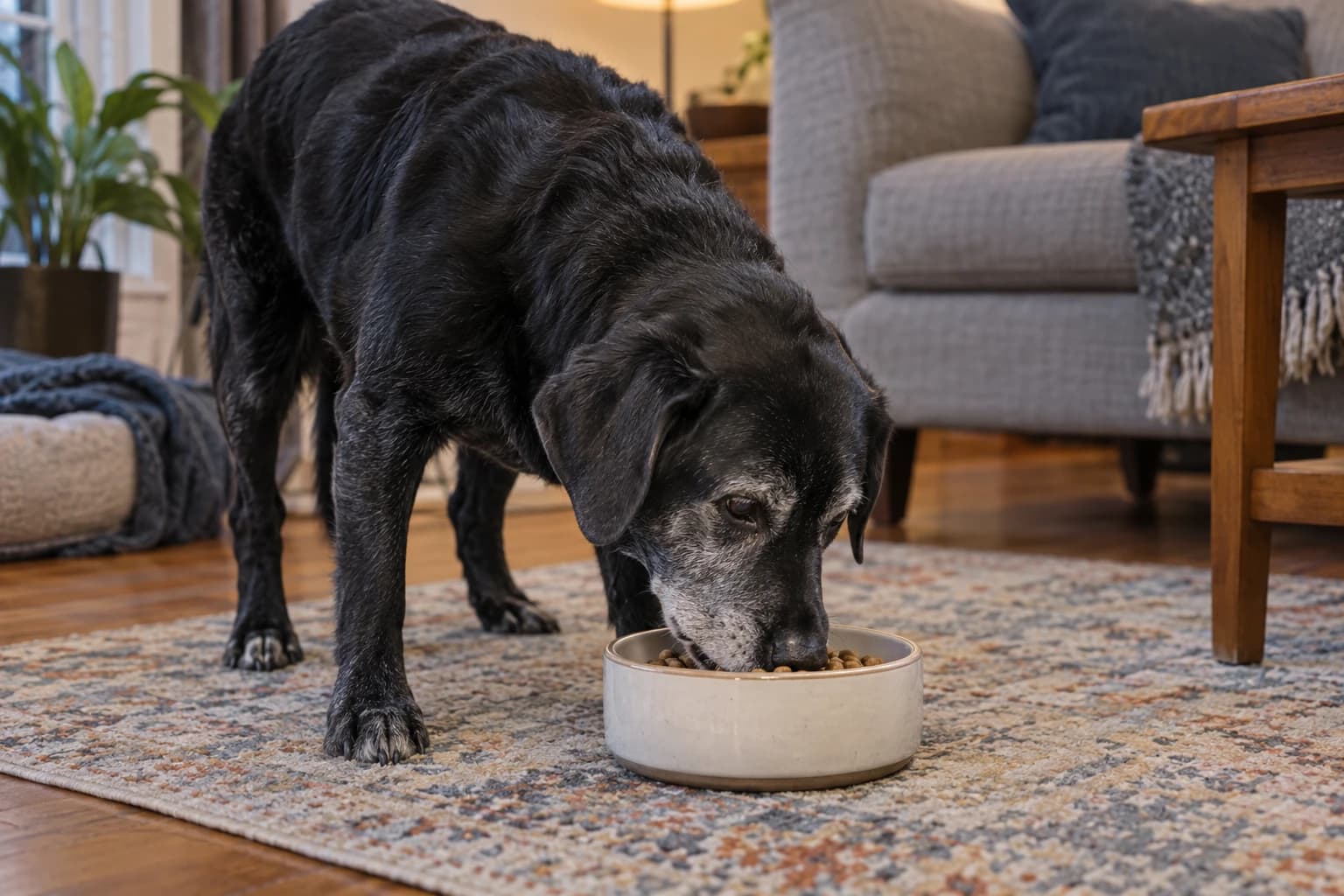
During a few ordinary meals, note whether your dog:
- Walks to the bowl willingly
- Takes food without repeatedly dropping it
- Chews on both sides rather than favoring one side
- Finishes at their usual pace
- Leaves only larger or firmer pieces behind
Write down the pattern for three days. This gives you a clearer basis for adjusting texture or discussing the change with your veterinarian.
Texture and temperature can make meals more manageable
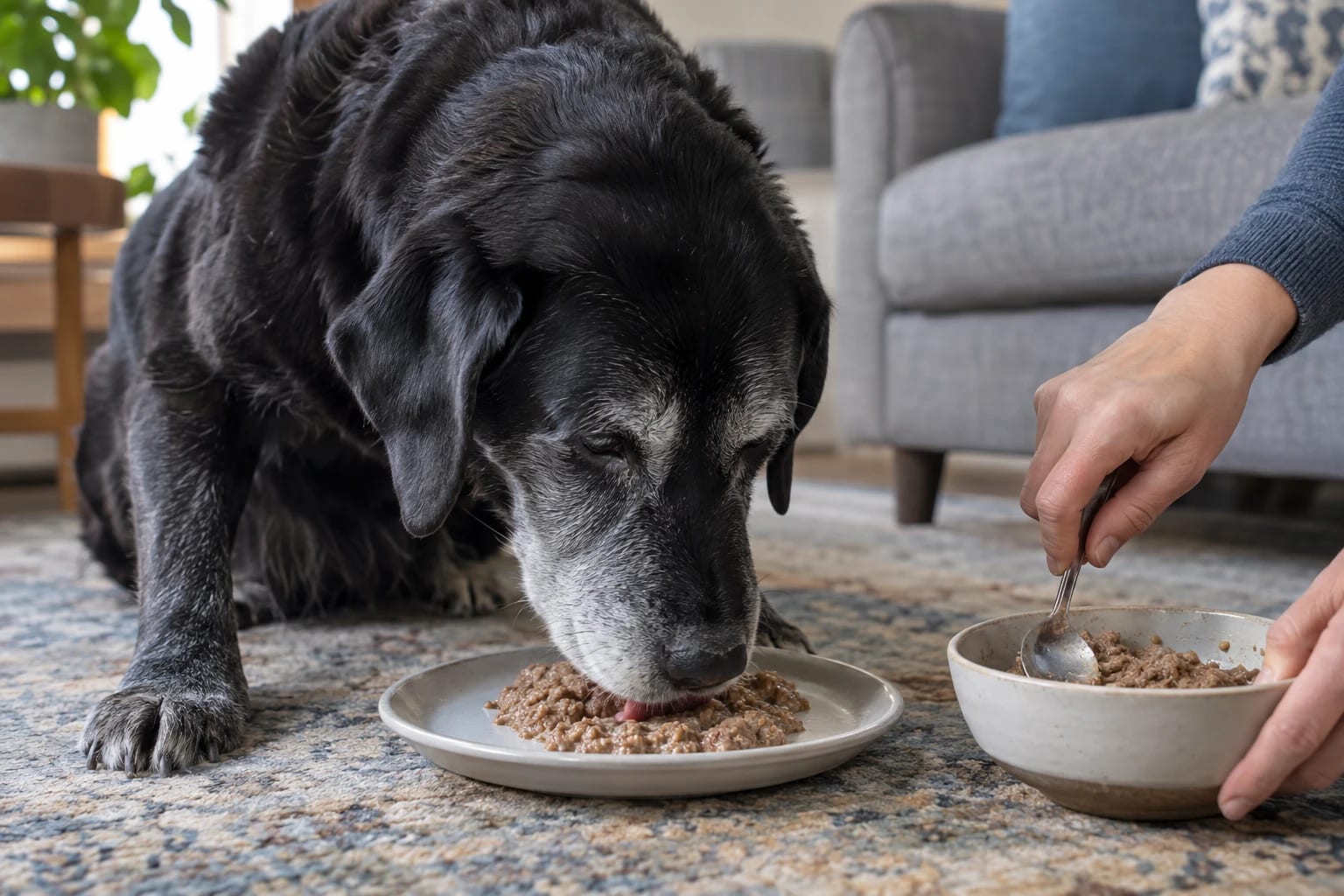
A smooth, moist texture is often easier to handle than hard kibble, brittle treats, or dense chunks. If your dog normally eats canned food, use a fork to mash large pieces into a more even consistency. Serve it in a shallow bowl or plate so food is easier to reach without pushing the muzzle deeply into a narrow dish.
Food served directly from the refrigerator may be less appealing to some dogs. Letting it sit briefly to lose the chill, while following package storage guidance, can make the smell more noticeable without changing the recipe.
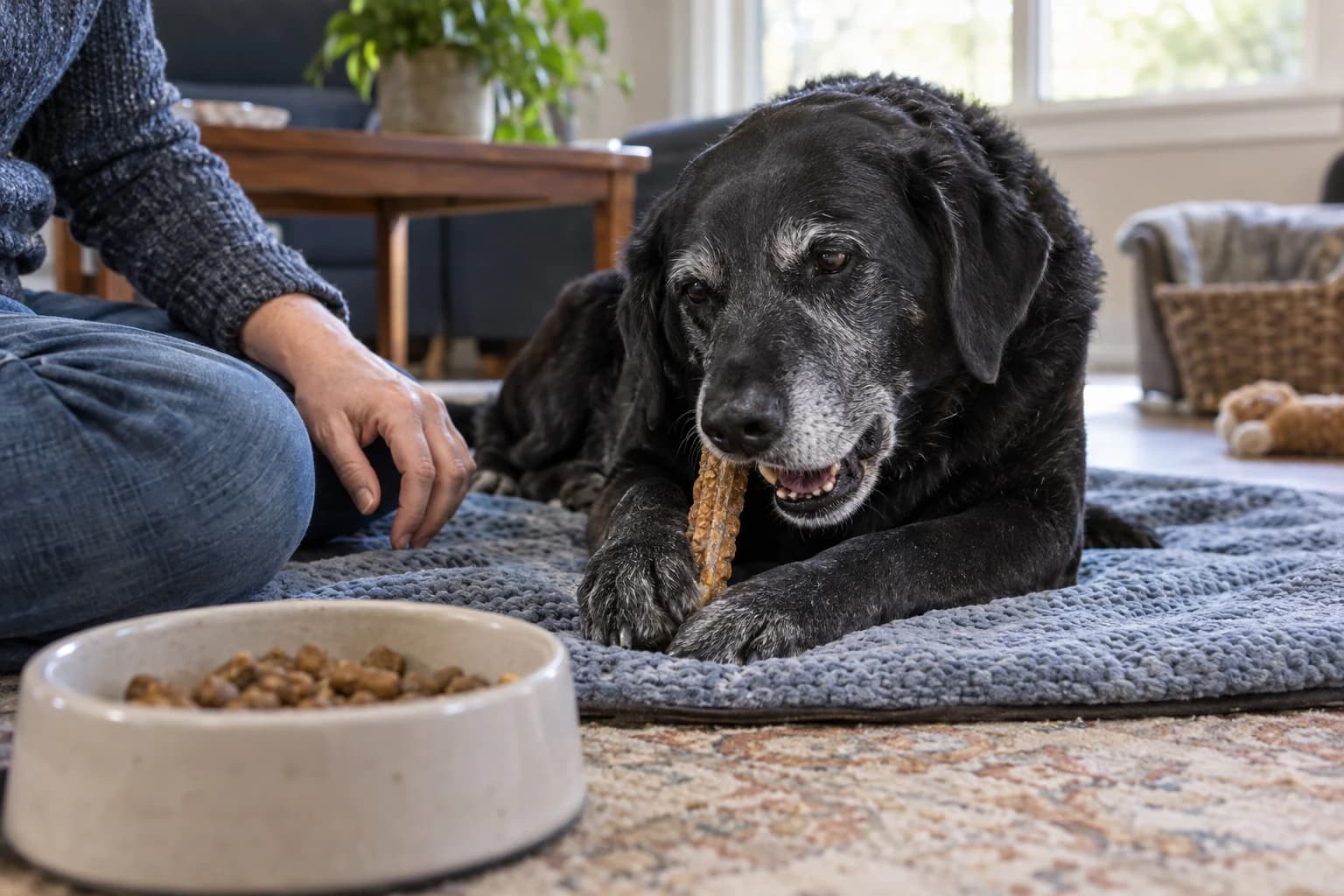
Keep hard chews and crunchy treats separate from the meal decision. If your dog has started avoiding hard treats, that change can be useful to record. See what to check when a dog suddenly will not eat hard treats before trying to persuade them with a different chew.
Does wet food provide enough nutrition for an older dog?
Softness and nutrition are separate checks. A wet or fresh food can be a main meal when its label says it is complete and balanced for your dog’s appropriate life stage. A topper, broth, or complementary food may improve texture or interest, but it may not be intended to replace a full meal.
When comparing options, read the label for:
- Whether the food is meant for daily feeding or supplemental use
- The life stage listed on the package
- Feeding directions for your dog’s current size
- Storage instructions after opening
- A complete ingredient list, especially if your dog has known sensitivities
If you are changing from one main food to another, follow the package transition guidance and keep the rest of your dog’s routine steady. This makes it easier to notice whether they accept the new texture and finish meals normally.
How can you soften dry dog food safely?
If your dog has otherwise done well on dry food, softening it may be a practical short-term texture adjustment. Add plain water, allow the kibble to absorb it, and press a piece with a fork before serving. The goal is soft, hydrated pieces, not a bowl with hard centers and standing water.
Prepare only what your dog will eat at that meal, and do not leave moistened food sitting out for long periods. Wash the bowl after meals, since softened food can cling to corners and rims.
For dogs recovering from a dental procedure, feeding instructions may be more specific than a general texture change. The senior dog tooth extraction recovery guide can help you organize a calm home setup and keep notes for the care team.
Feeding comfort is more than the food itself
Make the meal area quiet and easy to access. A non-slip mat under the bowl can reduce skidding, and a stable feeding spot helps your dog focus on eating rather than adjusting their footing. Offer water nearby in a bowl that is easy to reach.
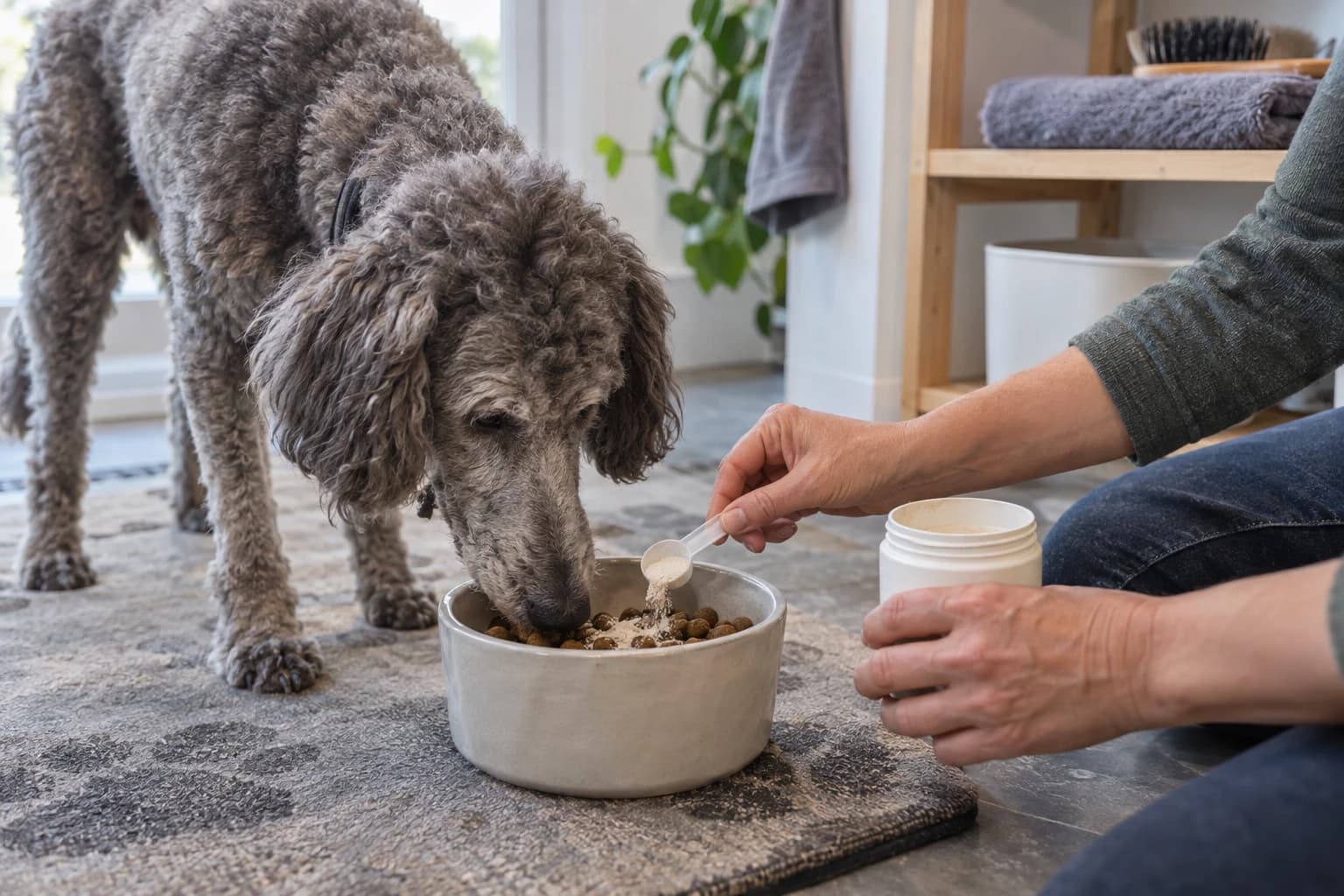
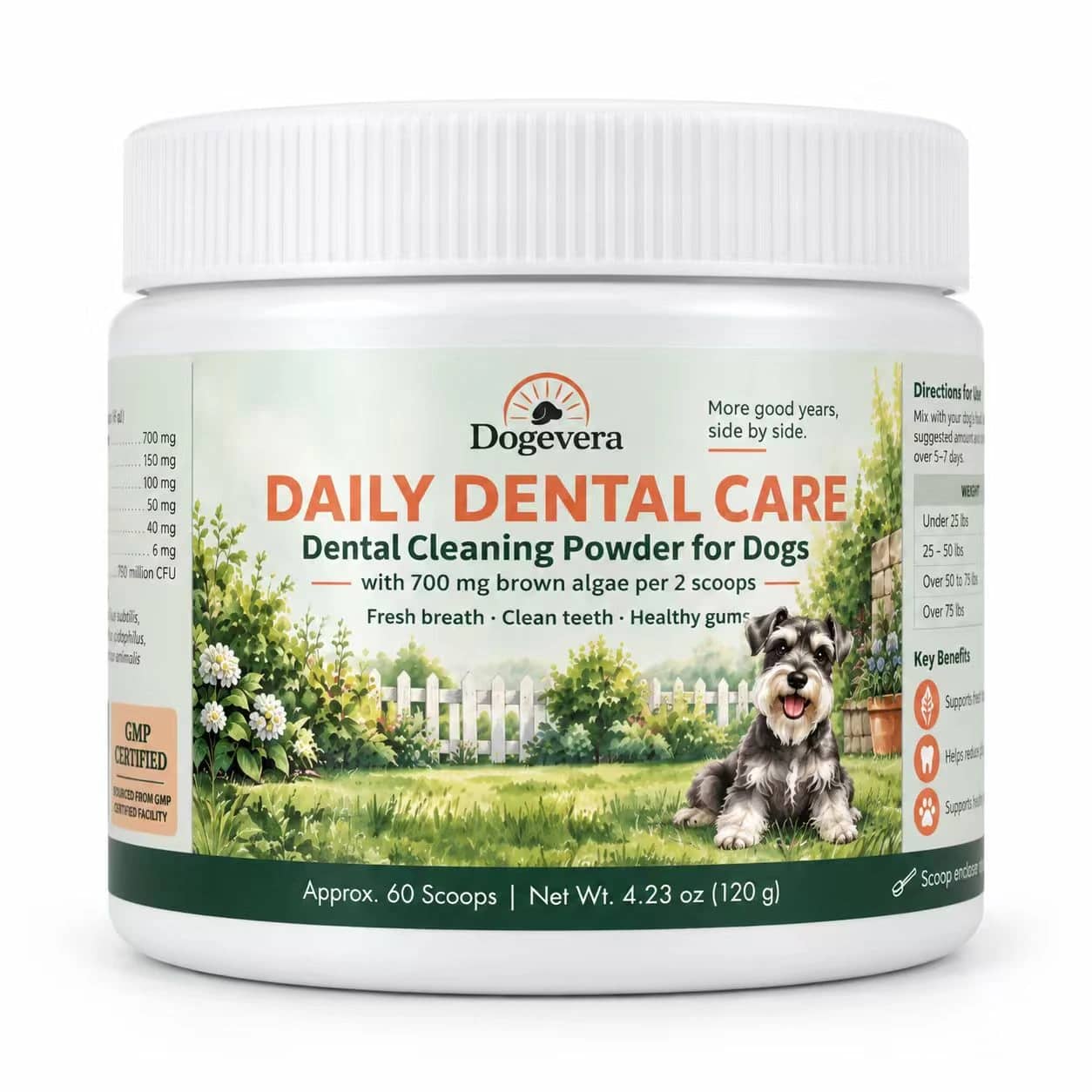
If you use a mix-in product as part of an existing oral-care routine, first make sure your dog is happy to eat their softened meal without it. Then follow the package directions and mix it into a small portion of food before combining it with the rest. Daily Dental Cleaning Powder for Dogs is one powder-format option to evaluate by its label and whether it fits your dog’s established feeding routine.
Do not use a powder, chew, or food texture change to delay attention to clear mouth discomfort. Soft food can make meals easier to manage, but it does not explain why eating became difficult.
FAQ
Should I blend my senior dog’s food?
Blending may be useful when a fork-mashed food still has pieces your dog leaves behind. Use a small amount of water if needed, make a smooth consistency, and serve a fresh portion. Check the food’s storage directions before preparing extra.
Can I feed only soft food to my senior dog?
A soft food can be a regular diet when the label indicates it is complete and balanced for your dog’s life stage. If you are unsure whether a product is a meal or a topper, check the package before making it the main food.
What if my dog will eat soft food but refuses kibble?
Record when the change began, what textures they avoid, and whether they drop food or chew on one side. Choose the gentler food your dog can manage for now, then contact your veterinarian to discuss the change.
For individual health questions, your veterinarian remains the best partner.