TL;DR
A dental abscess in a dog is a pocket of infection at the root of a tooth, usually caused by advanced gum disease or a broken tooth that let bacteria into the pulp. The classic sign is a swelling under the eye (from the upper fourth premolar, the big chewing tooth), sometimes bursting as a draining wound on the cheek, along with bad breath, chewing on one side, pawing at the face and not wanting hard food. Antibiotics alone do not cure it: the infected tooth has to be extracted or root-canal treated under anesthesia. Gum disease is the main driver and it is extremely common: 12.5% of UK dogs were diagnosed in a single year from a quick look in the mouth, and exams under anesthesia find it in 44% to 100% of dogs. Toy Poodles had nearly 4 times the odds, and smaller dogs had more of it. Daily plaque control is how you stop the next abscess.
Signs of a tooth abscess in dogs
| Sign | What you might notice |
|---|---|
| Swelling under the eye | A soft or firm lump below one eye, often on one side only |
| Draining wound | A small hole on the cheek or chin that oozes, heals, then returns |
| Bad breath | Stronger or more rotten than usual |
| Eating changes | Chewing on one side, dropping food, refusing kibble or hard treats |
| Pain | Pawing at the face, flinching when the head is touched, rubbing the face on the floor |
| Discolored tooth | A tooth turned pink, purple, grey or brown, usually after an injury |
| Broken tooth | A chipped or fractured crown, especially the big upper chewing tooth or a canine |
| Nasal discharge or sneezing | From an upper tooth whose root is near the nose |
| Eye discharge | From an upper back tooth whose root sits under the eye |
Many dogs keep eating despite a painful abscess, so a lack of complaint does not mean a lack of pain. See dog chewing on one side of the mouth.
What causes dental abscesses in dogs?
Advanced gum disease
Plaque hardens into tartar, bacteria push under the gumline, and the bone and ligament holding the tooth break down. Once infection tracks down to the root tip, an abscess can form.
In the UK study of 22,333 dogs:
- 12.52% were diagnosed with periodontal disease in one year, the most common diagnosis of any kind.
- Toy Poodles (3.97 times the odds), King Charles Spaniels (2.63), Greyhounds (2.58) and Cavalier King Charles Spaniels (2.39) were most at risk compared with crossbreeds.
- Flat-faced breeds had 1.25 times the odds and spaniel types 1.63 times.
- The smaller the adult dog, the higher the odds.
A review of the research adds that quick checks in awake dogs found gum disease in 9.3% to 18.2% of dogs, while detailed exams under anesthesia found 44% to 100%. Most cases are hidden below the gumline until they are advanced.
Gum disease that eats through to the nose
A small-animal vet Morty has known for years, who asked us not to use their name, sees the severe end of this in small Poodles almost every week: "Toy Poodles get periodontitis and oronasal fistulas all the time. Keep their mouths clean." An oronasal fistula is a hole between the mouth and nose, usually where an upper canine tooth's root has been destroyed by infection. Dogs with one sneeze, have a runny nose on one side, or sneeze while eating and drinking. See Poodle lifespan.
Broken and dead teeth
A fractured tooth that exposes the pulp lets bacteria in, and the pulp dies. So can a hard knock that never visibly breaks the tooth. In a study of small dogs under 10 kg previously diagnosed with dead (nonvital) teeth, 9.3% of all incisors examined on X-rays were nonvital, upper incisors were 2.1 times more likely to be affected than lower ones, and periodontitis raised the risk. Left untreated, these teeth can cause infection and pain.
Hard chews such as antlers, bones and hard nylon are a common cause of broken chewing teeth.
How vets treat a tooth abscess
- Pain relief and often antibiotics to control swelling first.
- Dental X-rays under anesthesia, because the problem is in the root and bone, invisible from outside.
- Treating the tooth:
- Extraction is the most common treatment.
- Root canal therapy can save a strategically important tooth, such as a canine or the big upper chewing tooth, at a veterinary dentist.
- Cleaning the rest of the mouth, because a dog with one abscess often has other diseased teeth.
Antibiotics alone usually only quiet the infection for a while. If the cause stays, the swelling comes back.
For aftercare, see senior dog tooth extraction recovery and soft dog food for senior dogs with bad teeth. For what a professional cleaning costs, see dog teeth cleaning cost.
Is a tooth abscess an emergency?
See a vet within a day or two for any facial swelling. Go the same day if the swelling is growing fast, the eye is affected, your dog will not eat or drink, or has a fever and is lethargic. Infection near the eye can spread behind it.
There is no safe home treatment for an abscess. Do not try to drain it yourself or give human painkillers, several of which are toxic to dogs.
Preventing the next abscess
Gum disease is preventable with daily plaque control, and it matters most for small breeds, flat-faced breeds and spaniels.
- Brush daily with dog toothpaste. See how to brush your dog's teeth.
- Add a daily plaque-control product if brushing is hard. In a double-blind, randomized, placebo-controlled study, daily treats containing the brown seaweed Ascophyllum nodosum led to significantly less plaque and tartar and fresher breath over 90 days after a professional cleaning. Our Daily Dental Cleaning Powder contains 700 mg of Ascophyllum nodosum plus sodium hexametaphosphate per 4 g serving, stirred into food, and is now available to pre-order. See how to clean dog teeth without brushing.
- Avoid very hard chews. A rough rule many vets use: if you cannot dent it with a thumbnail, it is too hard for teeth.
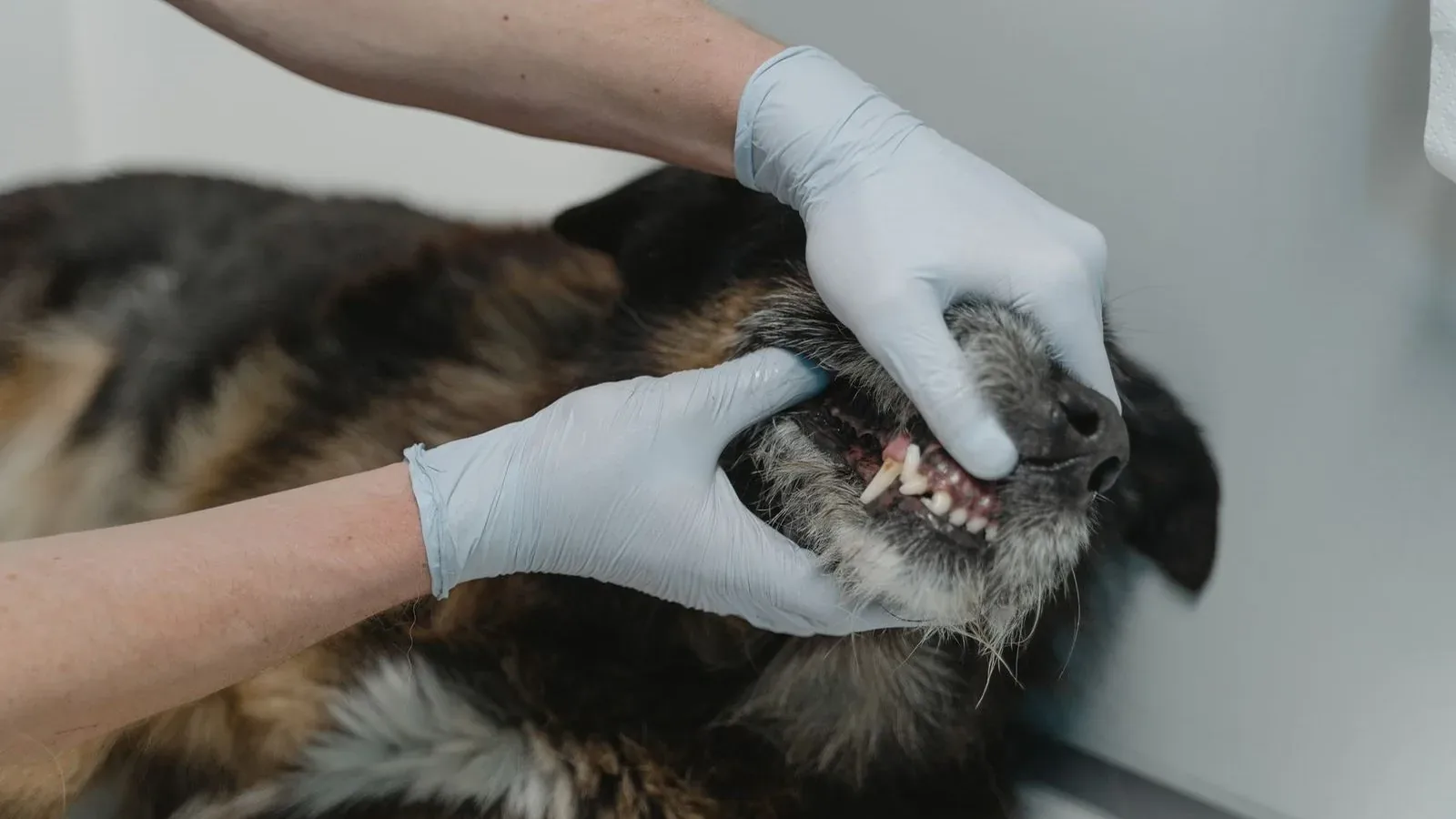
- Have the mouth checked at every visit and get cleanings under anesthesia when your vet recommends, with X-rays.
- Know your dog's teeth. See how many teeth does a dog have.
FAQ
What does a tooth abscess look like in a dog?
Most often a swelling under one eye or on the cheek, sometimes with a small draining hole. Inside the mouth you may see a broken or discolored tooth, red gums or heavy tartar.
Can a dog's tooth abscess heal on its own?
No. Antibiotics may calm it for a while, but the infected tooth must be extracted or root-canal treated, or the abscess returns.
Is a dog tooth abscess an emergency?
It needs a vet within a day or two, and the same day if the swelling grows fast, involves the eye, or your dog stops eating or seems unwell.
Which dogs get tooth abscesses?
Dogs with advanced gum disease and dogs with broken teeth. Toy Poodles, King Charles and Cavalier King Charles Spaniels, Greyhounds and small dogs in general had the highest odds of gum disease in a UK study.
How can I prevent tooth abscesses in my dog?
Daily brushing or a daily plaque-control product, avoiding very hard chews, and regular dental checks and cleanings.
References
- O'Neill DG, et al. Epidemiology of periodontal disease in dogs in the UK primary-care veterinary setting. Journal of Small Animal Practice. 2021. PMID: 34374104
- Wallis C, Holcombe LJ. A review of the frequency and impact of periodontal disease in dogs. Journal of Small Animal Practice. 2020. PMID: 32955734
- Ha JM, et al. Radiographic prevalence of nonvital incisor teeth in small breed dogs: a retrospective study (2017-2021). Journal of Veterinary Dentistry. 2026. PMID: 42206998
- Gawor J, et al. Effects of edible treats containing Ascophyllum nodosum on the oral health of dogs: a double-blind, randomized, placebo-controlled single-center study. Frontiers in Veterinary Science. 2018. PMID: 30109236
For individual health questions, your veterinarian remains the best partner.