TL;DR
A lump along a female dog's belly, in or near the nipples, may be a mammary (breast) tumor, and it should be checked and removed while it is small. Mammary tumors are among the most common tumors in female dogs, especially those left unspayed or spayed later in life. Roughly half are cancer: in a review of 771 mammary tumors from 797 dogs, 56% were malignant and 44% benign, and larger masses were more likely to be malignant. Size matters for survival too: in 99 dogs with mammary carcinoma, tumors 3 cm or smaller had a significantly better outlook, as did tumors that had not spread at diagnosis. Surgery is the main treatment and is often curative for small and benign tumors. One thing that may surprise you: a systematic review found the evidence that spaying prevents mammary tumors is weaker than commonly claimed, so even spayed dogs deserve a monthly belly check.
Signs of a mammary tumor in dogs
| Sign | What you might notice |
|---|---|
| Lump near a nipple | A firm nodule, from pea-sized to large, under the skin of the belly or chest |
| More than one lump | Several nodules in one or both mammary chains |
| Nipple changes | Swelling, discharge or redness of a nipple |
| Ulceration | Skin over the lump breaks open or bleeds |
| Fast growth | A lump that grows over weeks |
| Swollen, hot, painful area | Possible inflammatory carcinoma, an aggressive type |
| Swollen leg or lymph node | In the armpit or groin, near the lump |
| Cough or breathing changes | Late sign if cancer has spread to the lungs |
Dogs have two rows of mammary glands from the chest to the groin, usually five on each side, so check the whole length of both rows.
In the review of 797 dogs, 87.8% had a single nodule and 12.2% had several. Dogs with one tumor can develop more over time, so the whole chain needs checking at each visit.
Is a mammary lump always cancer?
No, but it is a coin toss. Among the 771 tumors in the review:
| Type | Share |
|---|---|
| Malignant | 56.0% |
| Simple carcinoma | 20.8% |
| Complex carcinoma | 7.0% |
| Ductal carcinoma | 4.2% |
| Benign | 44.0% |
| Benign mixed tumor | 16.6% |
| Complex adenoma | 13.6% |
Large masses were much more likely to be malignant, and tumors were more common in purebred than crossbred dogs. A small number of lumps in the mammary area are not tumors at all, such as cysts, inflammation or fatty lumps. The only way to know is to look at the tissue under a microscope.
How vets diagnose mammary tumors
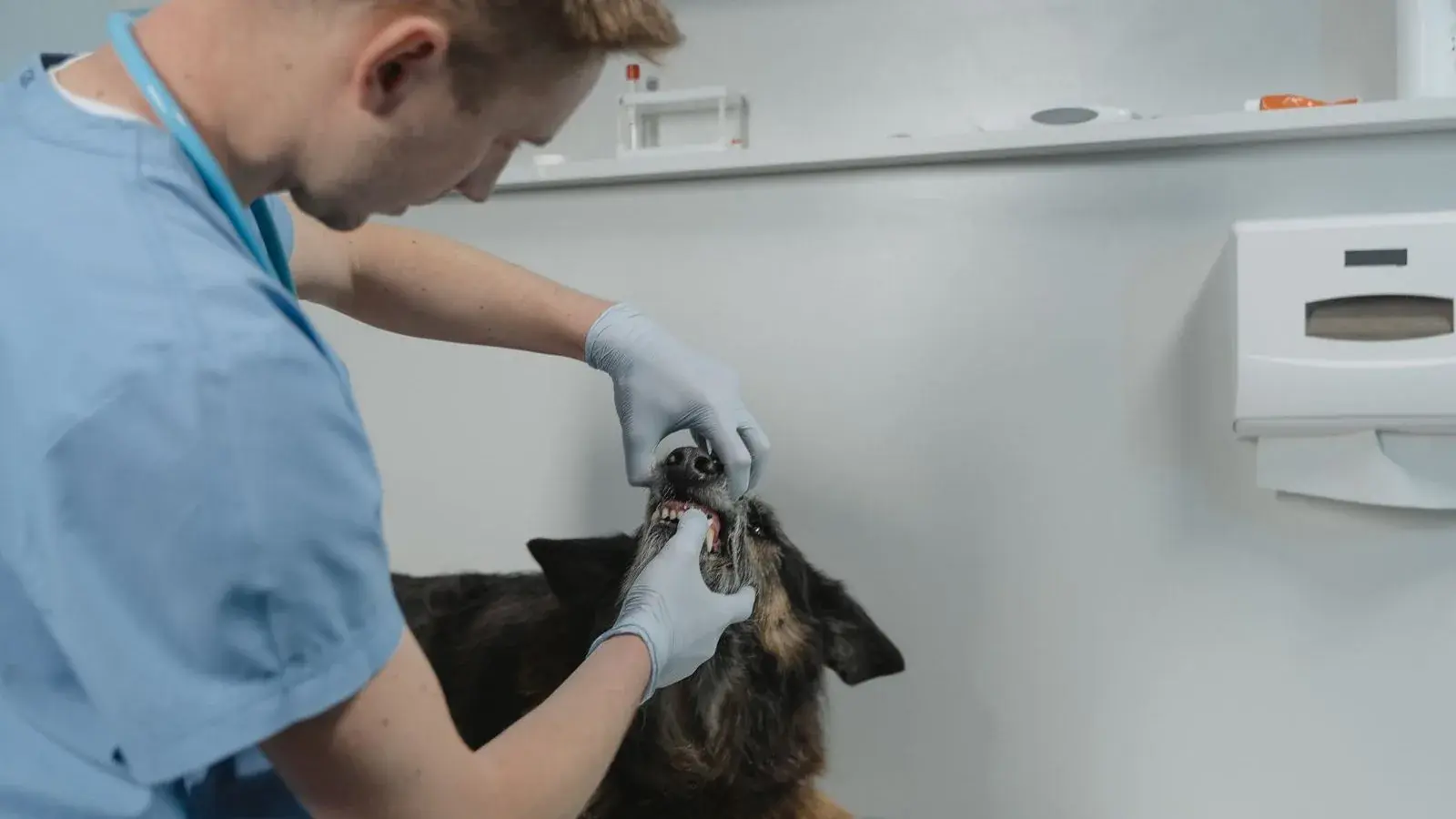
- Feeling both mammary chains and the lymph nodes in the armpits and groin.
- Needle sample, which can rule out a fatty lump or cyst but cannot reliably tell benign from malignant mammary tumors.
- Chest X-rays or CT to look for spread to the lungs.
- Abdominal ultrasound in some cases.
- Removal and histopathology, which gives the final answer and the grade.
Treatment and outlook
Surgery
Removing the tumor is the main treatment. Depending on the number and location of lumps, the vet may remove:
- Just the lump, for a small, single nodule.
- The affected gland or part of the chain.
- A whole mammary chain if there are several lumps.
Many vets spay an intact dog at the same time; discuss the pros and cons for your dog.
What decides the outlook
In the study of 99 dogs with mammary carcinoma:
- Tumor size of 3 cm or less, early stage and no spread at diagnosis were linked to longer survival.
- The aggressive anaplastic subtype had a worse outlook.
- Age, obesity and spay status at diagnosis did not affect survival.
This is why finding and removing lumps small matters more than anything else you can do at home. Benign tumors and small, low-grade carcinomas are often cured by surgery alone. Larger, high-grade or spread tumors may need chemotherapy on top.
Inflammatory carcinoma
A rapidly spreading, hot, red, painful swelling across the belly may be inflammatory carcinoma. It is not usually treated with surgery, and the outlook is poor. It needs prompt assessment.
Does spaying prevent mammary tumors?
You will often read that spaying before the first heat almost eliminates the risk. The evidence behind that is thinner than it sounds. A systematic review of 13 studies found that 9 had a high risk of bias, and of the 4 better-quality studies, only one found a clear protective effect of spaying. The authors judged the evidence that spaying or the age of spaying reduces mammary tumor risk to be weak and not a sound basis for firm recommendations.
Spaying decisions involve many other factors, including joint health, incontinence and other cancers, so discuss timing with your vet. Whatever you decide, regular checks are the best protection.
How to check your dog for mammary lumps
Once a month, with your dog lying on its back or side:
- Run your fingers gently along both rows of nipples, from the armpit to the groin.
- Feel between and around each nipple for any firm nodule, even pea-sized.
- Note the size and position of anything you find, with a photo and a coin for scale.
- See your vet within a couple of weeks for any new lump, and sooner if it is growing fast, ulcerated or painful.
For other lumps and bumps, see skin tags on dogs, fatty lumps on dogs and signs of cancer in dogs.
FAQ
What does a mammary tumor look like in a dog?
A firm lump under the skin near one of the nipples, from pea-sized to large. There may be one or several, and the skin over a larger one can break open.
Are mammary tumors in dogs cancerous?
About half are. In a review of 771 tumors, 56% were malignant and 44% benign. Larger tumors were more likely to be malignant.
How long can a dog live with a mammary tumor?
It depends on the type, size and whether it has spread. Benign and small, low-grade tumors are often cured by surgery. Tumors of 3 cm or less had a better outlook in one study.
Can spayed dogs get mammary tumors?
Yes. A systematic review found the evidence that spaying prevents mammary tumors is weak, so spayed dogs should also have their mammary chains checked.
Should a mammary lump be removed?
Generally yes, and while it is small. Removal gives the diagnosis and is the main treatment.
References
- Ariyarathna H, et al. Canine mammary gland disease in New Zealand: a review of samples from 797 dogs. New Zealand Veterinary Journal. 2022. PMID: 34756151
- Philibert JC, et al. Influence of host factors on survival in dogs with malignant mammary gland tumors. Journal of Veterinary Internal Medicine. 2003. PMID: 12564734
- Beauvais W, Cardwell JM, Brodbelt DC. The effect of neutering on the risk of mammary tumours in dogs: a systematic review. Journal of Small Animal Practice. 2012. PMID: 22647210
For individual health questions, your veterinarian remains the best partner.