TL;DR
A fatty lump on a dog is usually a lipoma, a benign tumor of fat cells that feels soft and moves under the skin. They are common in older and heavier dogs: in a UK study of 384,284 dogs, 1.94% were diagnosed with a lipoma in a single year, dogs aged 9 to 12 had 17.5 times the odds of dogs aged 3 to 6, and dogs at or above their breed's average weight had almost twice the odds. Labradors, Dobermanns, Weimaraners and Springer Spaniels are most prone. But a soft lump is not always a lipoma: mast cell tumors can feel exactly the same, so the Merck Veterinary Manual says appearance alone cannot make the diagnosis. Have every new lump checked with a quick fine needle sample, which agreed with the full lab result in 90.9% of skin lumps in one study. Most lipomas can simply be watched; removal makes sense if one grows fast, sits in the armpit or groin, or gets in the way.
What is a fatty lump on a dog?
A lipoma is a lump made of fat cells, usually wrapped in a thin capsule. The Merck Veterinary Manual describes them as:
- Benign and common in dogs
- Most often found in older, overweight females
- Usually on the trunk (chest, belly, sides) and the tops of the legs
- Soft, rounded lumps that move freely under the skin when you push them
- Multiple in more than 5% of affected dogs
They grow slowly, do not spread to other organs, and do not usually bother the dog.
Which dogs get fatty lumps?
In the UK VetCompass study of 384,284 dogs, 2,765 had a lipoma diagnosed in one year (1.94%).
| Breed | Share with a lipoma in a year |
|---|---|
| Weimaraner | 7.84% |
| Dobermann Pinscher | 6.96% |
| German Pointer | 5.23% |
| Springer Spaniel | 5.19% |
| Labrador Retriever | 5.15% |
| All dogs | 1.94% |
Other risk factors in the same study:
- Age: dogs aged 9 to 12 years had 17.52 times the odds of dogs aged 3 to 6.
- Weight: dogs at or above the average weight for their breed and sex had 1.96 times the odds, and the odds rose as body weight rose. The authors suggest being overweight may be a predisposing factor.
- Neutering: neutered males (1.99 times) and neutered females (1.62 times) had higher odds than entire females.
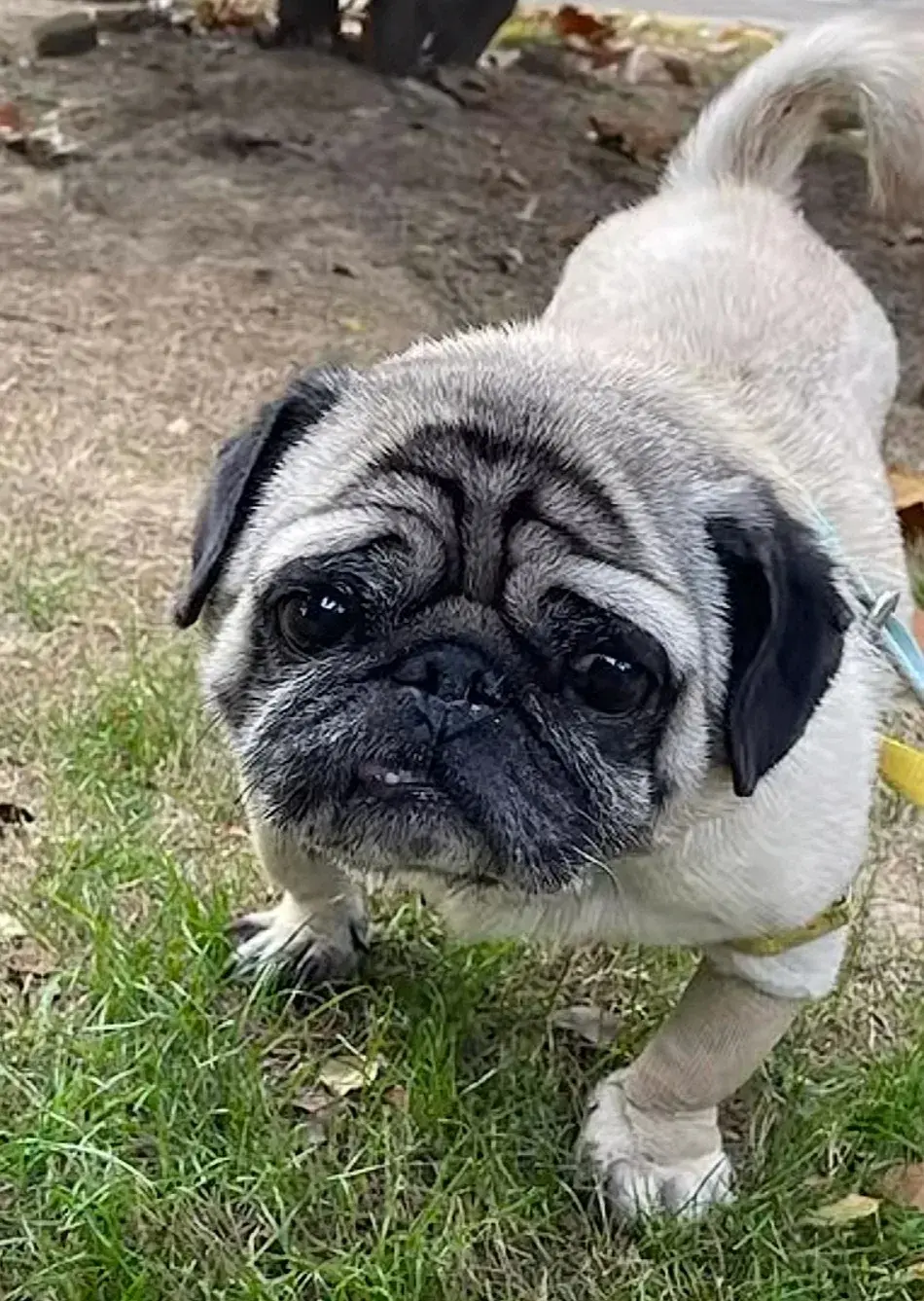
Some breeds get fewer: in UK records, pugs had about a quarter of the odds of lipomas of other dogs, which is one reason a new lump on a pug should never be assumed to be fat. See pug lifespan.
Lipoma or something worse?
This is the important part. A lipoma and a mast cell tumor, the most common malignant skin tumor in dogs, can feel almost identical: soft, rounded and under the skin. The Merck Veterinary Manual notes that mast cell tumors can mimic lipomas, so visual signs alone cannot establish a diagnosis.
The answer is a fine needle aspirate (FNA): your vet pushes a thin needle into the lump and looks at the cells. It is quick and usually done without sedation. Fat cells look very different from mast cells under the microscope. In a study of 243 skin and under-skin lumps, the needle sample agreed with the full lab diagnosis in 90.9% of cases.
Also see a vet promptly if a lump:
- grows quickly or changes shape
- feels firm, fixed or attached to deeper tissue
- is red, ulcerated, bleeding or itchy
- swells and shrinks, or reddens after being handled
- appears in a breed prone to mast cell tumors, such as Boxers, pugs and Staffordshire Bull Terriers
See skin tags and lumps on dogs for the full guide to telling lumps apart, including a 5 cm tumor our founder Morty's pug had removed from its leg.
Types of lipoma
- Simple lipoma: the common, soft, movable lump just under the skin. Usually harmless.
- Intermuscular lipoma: grows between muscles, most often in the armpit or the back of the thigh. These can press on nerves and muscles and cause lameness. In a study of 17 dogs, surgical removal had an excellent prognosis, with rare complications and no recurrence.
- Infiltrative lipoma: a benign but invasive form that grows into muscle and surrounding tissue. It does not spread to other organs but is hard to remove completely, and may need wide surgery or radiation therapy.
- Liposarcoma: a rare malignant fatty tumor. A needle sample or biopsy tells them apart.
Should a fatty lump be removed?
Most confirmed simple lipomas can be monitored. Removal is usually worth discussing if a lipoma:
- grows quickly or becomes very large
- sits in the armpit, groin or between muscles, where it can restrict movement
- rubs, ulcerates or gets in the way of walking or lying down
- is an infiltrative type
Removal is easier and safer while a lump is small. Options include conventional surgery, which removes the whole lump and capsule, and liposuction for some simple lipomas. In a study of 20 dogs with 76 lipomas, liposuction removed 96% of them, but 28% grew back within 9 to 36 months, so regrowth is more likely than after full surgical removal.
Can you shrink a fatty lump?
There is no proven supplement, diet or home remedy that dissolves a lipoma. What the evidence does show is that heavier dogs are more likely to have them, so keeping your dog lean is sensible for its joints, lifespan and skin alike. See senior dog food for weight loss.
Keep a lump map
- Feel your dog all over once a month, including armpits, groin, chest and the backs of the thighs.
- For each lump, note where it is, its size (use a ruler, or compare with a pea, grape or walnut), and whether it is soft or firm, movable or fixed.
- Take a photo with a coin beside it.
- Ask your vet to needle every new lump once, and recheck any that change.
FAQ
What does a fatty lump on a dog feel like?
Usually soft, rounded and smooth, and it moves under the skin when you push it gently. But mast cell tumors can feel the same, so a vet should check every new lump with a fine needle sample.
Are fatty lumps on dogs dangerous?
Simple lipomas are benign and usually harmless. They become a problem if they grow very large, press between muscles or in the armpit, or are the infiltrative type. The bigger risk is assuming a lump is fatty when it is actually a mast cell tumor.
Why does my old dog have so many fatty lumps?
Lipomas become much more common with age: dogs aged 9 to 12 had 17.5 times the odds of dogs aged 3 to 6 in a UK study. Heavier dogs and certain breeds, such as Labradors and Dobermanns, are also more prone, and more than 5% of affected dogs have more than one.
How much does it cost to remove a fatty lump from a dog?
It depends on the size, location and type of lump and where you live. A fine needle sample costs much less than surgery. Removing a small simple lipoma is a short procedure; a large, deep or infiltrative one is a bigger operation. Ask your vet for an estimate.
Can fatty lumps turn into cancer?
A simple lipoma does not usually become cancer, but liposarcoma, a rare malignant fatty tumor, exists, and mast cell tumors can look like lipomas. A lump that changes, grows quickly or becomes firm should be rechecked.
References
- O'Neill DG, et al. Lipoma in dogs under primary veterinary care in the UK: prevalence and breed associations. Canine Genetics and Epidemiology. 2018. PMID: 30279993
- Merck Veterinary Manual, Pet Owner Version. Villalobos AE. Tumors of the Skin in Dogs. Last updated 2026.
- Merck Veterinary Manual. Connective Tissue Tumors in Animals. 2026.
- Ghisleni G, et al. Correlation between fine-needle aspiration cytology and histopathology in the evaluation of cutaneous and subcutaneous masses from dogs and cats. Veterinary Clinical Pathology. 2006. PMID: 16511787
- O'Neill DG, et al. Health of Pug dogs in the UK: disorder predispositions and protections. Canine Medicine and Genetics. 2022. PMID: 35581668
- Case JB, MacPhail CM, Withrow SJ. Anatomic distribution and clinical findings of intermuscular lipomas in 17 dogs (2005-2010). Journal of the American Animal Hospital Association. 2012. PMID: 22611214
- Hunt GB, Wong J, Kuan S. Liposuction for removal of lipomas in 20 dogs. Journal of Small Animal Practice. 2011. PMID: 21797873
- Shoop SJ, et al. Prevalence and risk factors for mast cell tumours in dogs in England. Canine Genetics and Epidemiology. 2015. PMID: 26401329
For individual health questions, your veterinarian remains the best partner.