TL;DR
Anesthesia-free teeth cleaning scrapes visible tartar off the crowns while the dog is held awake, but it cannot clean under the gumline, where gum disease actually does its damage. A 2025 study put this to the test: 23 dogs that had an anesthesia-free cleaning within the previous 6 weeks still had gum-disease test scores averaging 4.35 out of 5, almost the same as untreated dogs, while dogs cleaned under anesthesia dropped to 0.09. The authors concluded anesthesia-free dentistry gave no medical benefit. Anesthesia does carry some risk, and it rises with age: in 3,210 dogs anesthetized at specialist dental practices, 0.37% died within two weeks, and older age was the only significant risk factor. The smart plan for most older dogs is to keep anesthetic cleanings as rare as possible by controlling plaque every day at home, with brushing, which was more than three times as effective as a dental chew or dental diet in a randomized trial, or a daily plaque-control powder for dogs that will not accept a toothbrush.
What happens in an anesthesia-free cleaning?
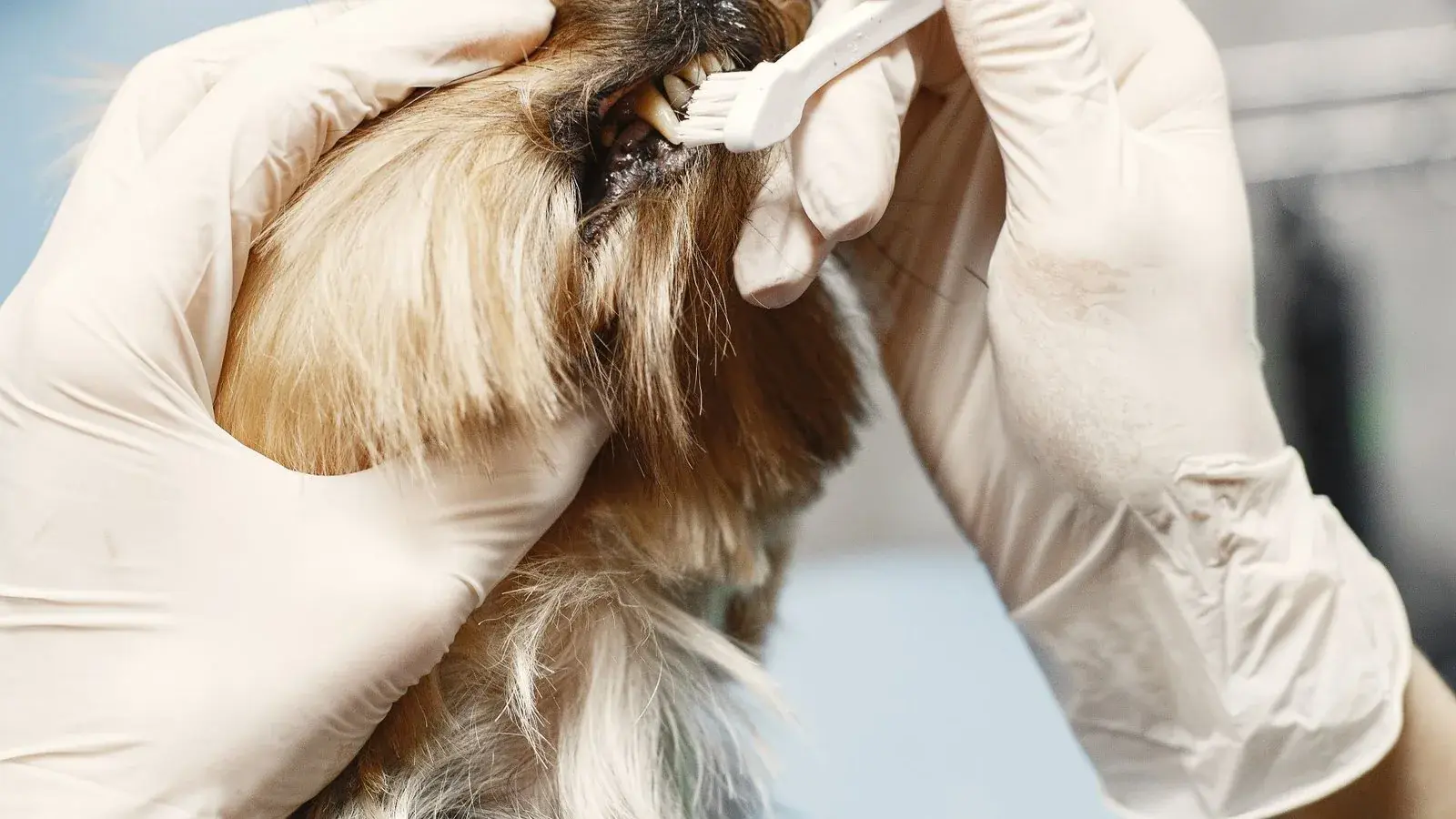
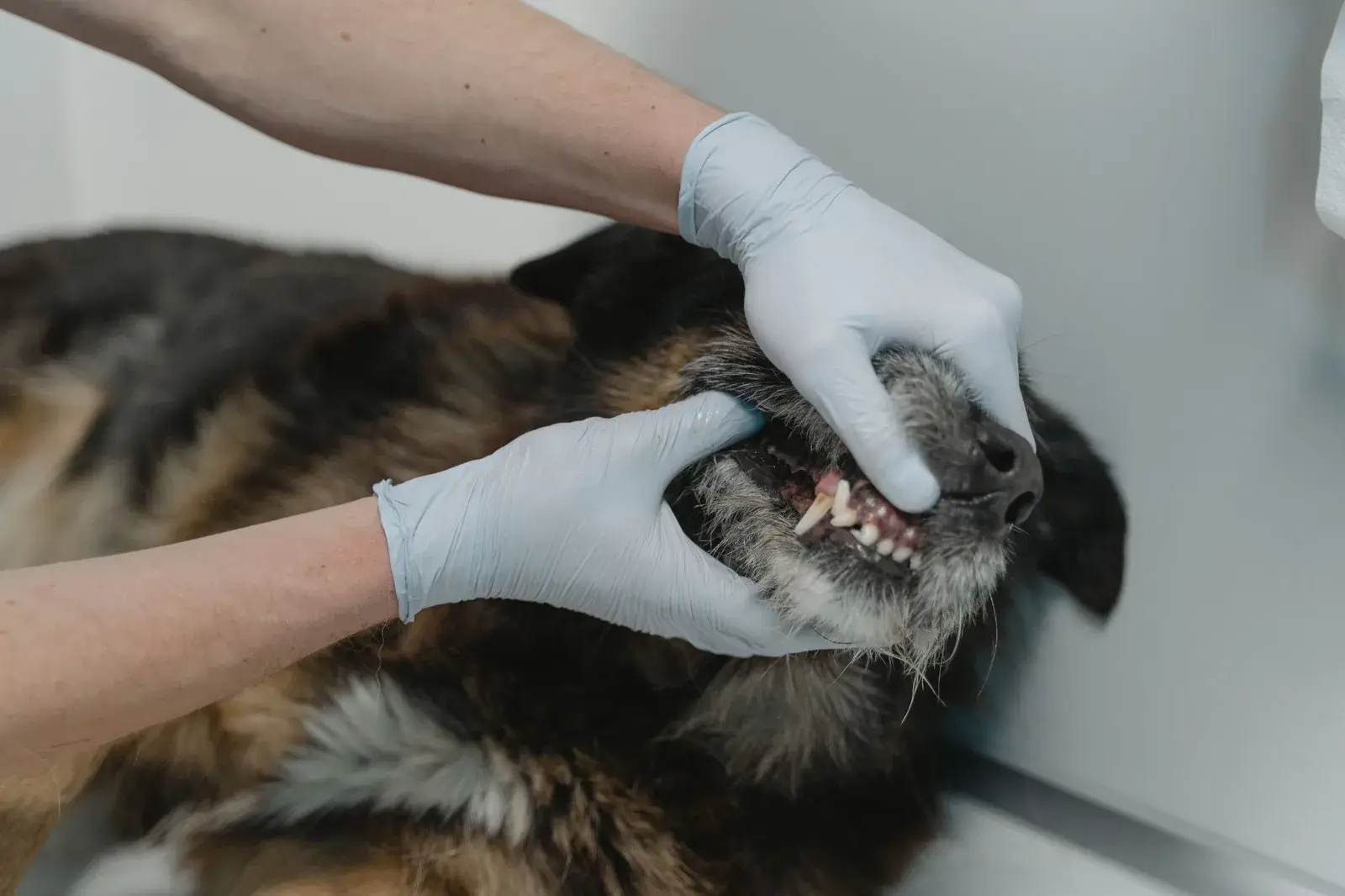
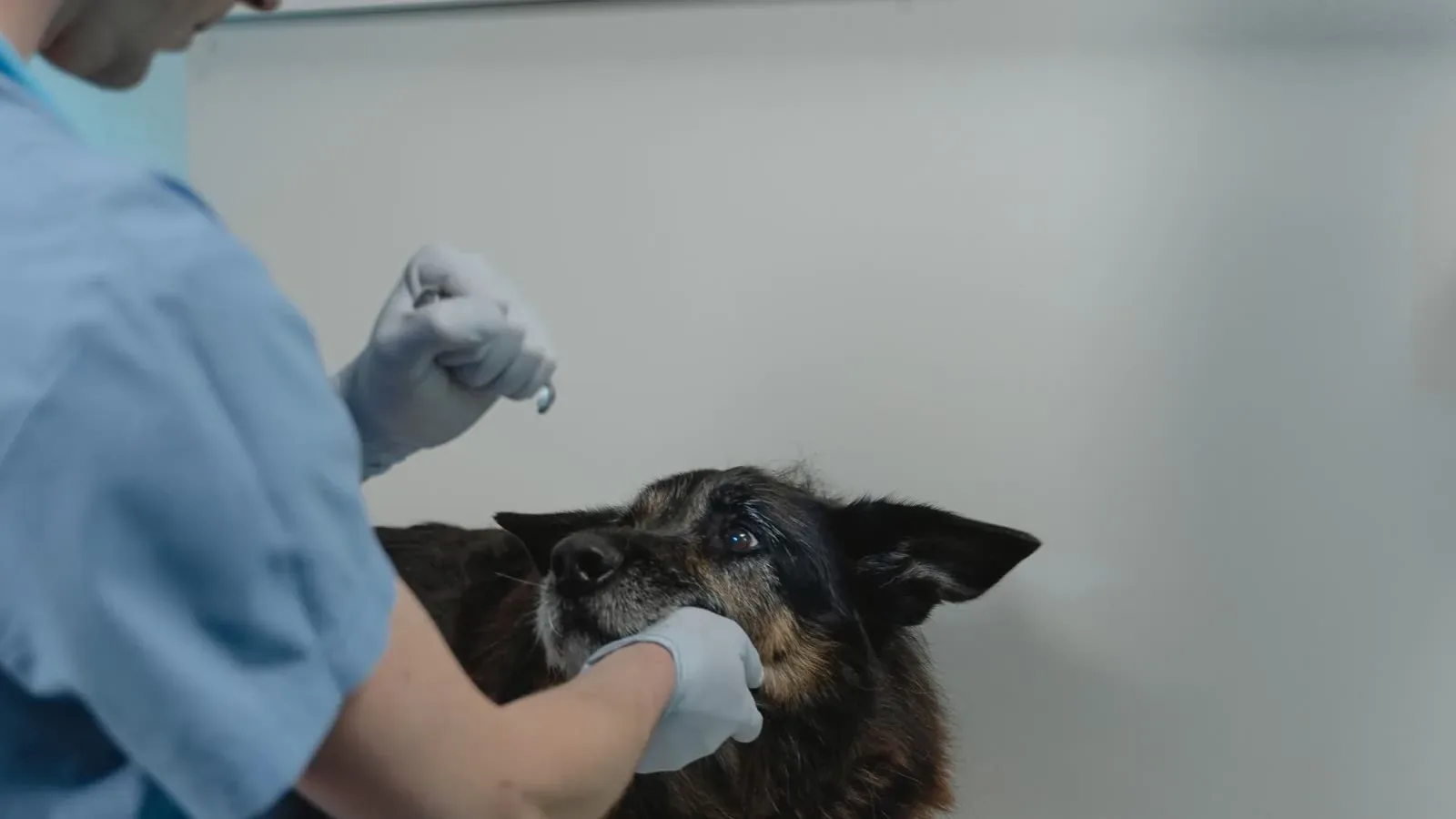
A groomer or technician holds the dog still and scrapes tartar off the visible tooth surfaces with hand instruments. The teeth look whiter afterward, which is why it is popular.
What it cannot do:
- Clean below the gumline, where bacteria destroy the bone and ligament holding the teeth.
- Probe the gum pockets or take dental X-rays, so hidden problems such as abscesses and dead teeth are missed.
- Polish the scraped surfaces, which leaves them rougher and quicker to collect new plaque.
- Clean the inner surfaces of the teeth well, since most dogs will not hold still for that.
The study
In the 2025 study of 46 dogs:
| Group | Gum-disease test score afterward (0 = none, 5 = severe) |
|---|---|
| Dogs cleaned under anesthesia | 0.09 on average |
| Dogs with an anesthesia-free cleaning in the past 6 weeks | 4.35 on average |
The test strips measure sulfur compounds in saliva that come from the bacteria of gum disease. Despite the clean-looking teeth, the anesthesia-free group still had the chemistry of active gum disease. When these dogs then had a full cleaning under anesthesia, their scores fell too.
Why cleaning under the gumline matters
Gum disease is the most common diagnosis in dogs: 12.5% of UK dogs were diagnosed in a year from a quick look in the mouth, and detailed exams under anesthesia find it in 44% to 100% of dogs. Most of it is hidden below the gumline. Left alone, it leads to loose teeth, abscesses and, in small breeds, holes between the mouth and nose. See dog tooth abscess.
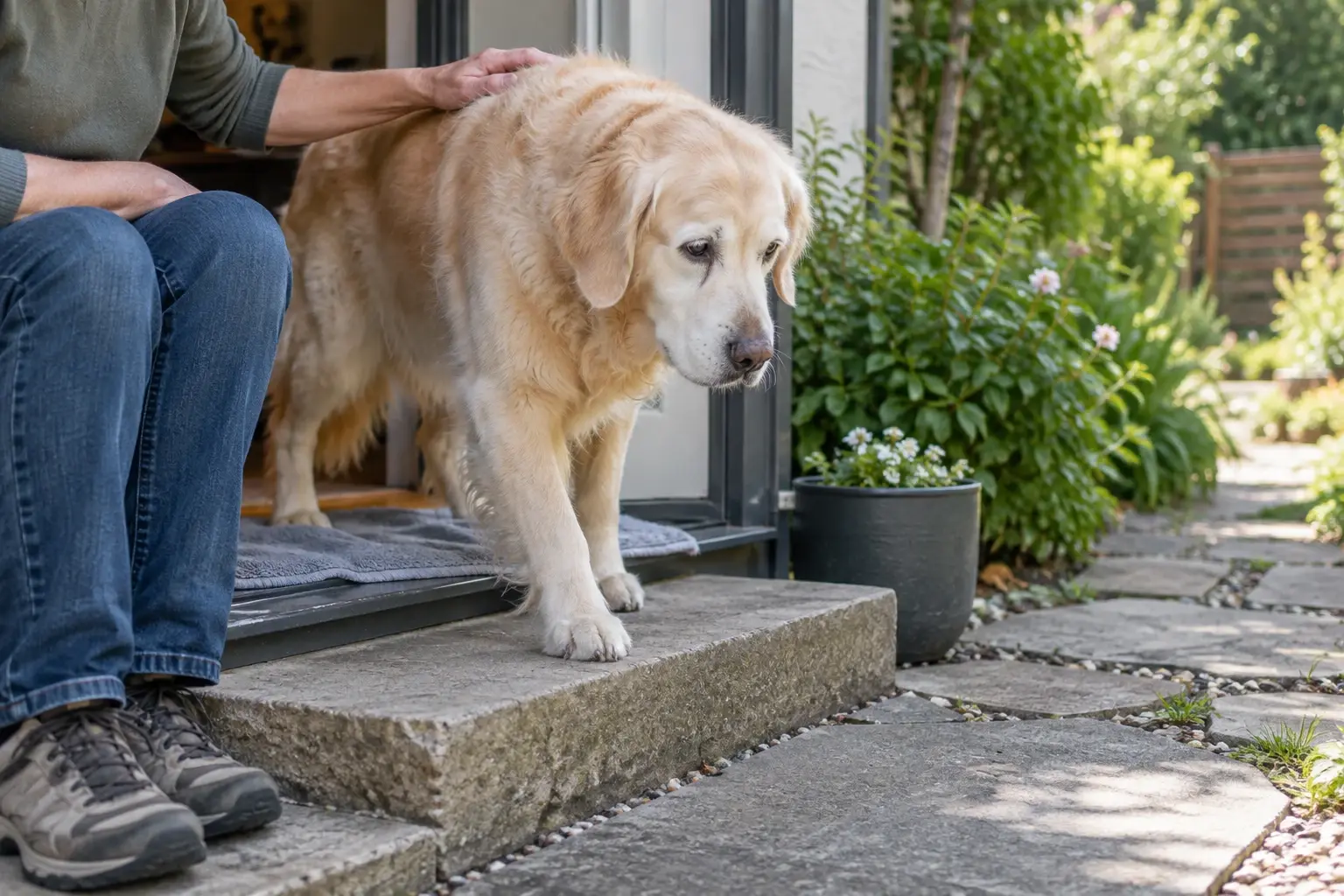
Is anesthesia safe for an older dog?
Anesthesia is never risk-free, and age matters. In the specialist dental study of 3,210 dogs:
- 0.37% died within 14 days of anesthesia.
- Dogs that died had a median age of 12, against 7 for those that survived.
- Older age was the only factor that stayed significant; weight, sex and the anesthesia risk grade did not.
Those dogs were having advanced imaging or oral surgery at referral practices, so many had more serious problems than a routine cleaning. Still, the numbers explain why you should keep anesthetic procedures to the ones that are needed, and why prevention at home pays off most in seniors.
Questions to ask before your senior dog's dental
- Will you run blood tests (and urine tests) first?
- Will my dog have IV fluids and monitoring of blood pressure, oxygen and temperature?
- Who watches the anesthesia throughout?
- Will you take full-mouth X-rays?
- What pain relief will my dog have afterward?
See dog teeth cleaning cost and senior dog tooth extraction recovery.
How to need fewer cleanings: daily plaque control
Tartar forms from plaque within days, so what you do every day decides how soon the next cleaning is due.
Brushing: the most effective single step
In a randomized, blinded trial that started from freshly cleaned teeth, daily brushing was more than three times as effective at controlling plaque over 6 weeks as a daily dental chew or a prescription dental diet. See how to brush your dog's teeth.
A daily powder for dogs that will not be brushed
Many older dogs will not accept a toothbrush. Ingredients mixed into food are the next option:
- *Brown seaweed (Ascophyllum nodosum): in a double-blind, randomized, placebo-controlled trial of 60 small dogs, daily seaweed led to significantly less plaque, tartar and bad-breath compounds, and less gum bleeding*, over 90 days after a professional cleaning.
- Sodium hexametaphosphate: in laboratory Beagles, coating food or biscuits with it cut tartar formation by about 60% to 80%.
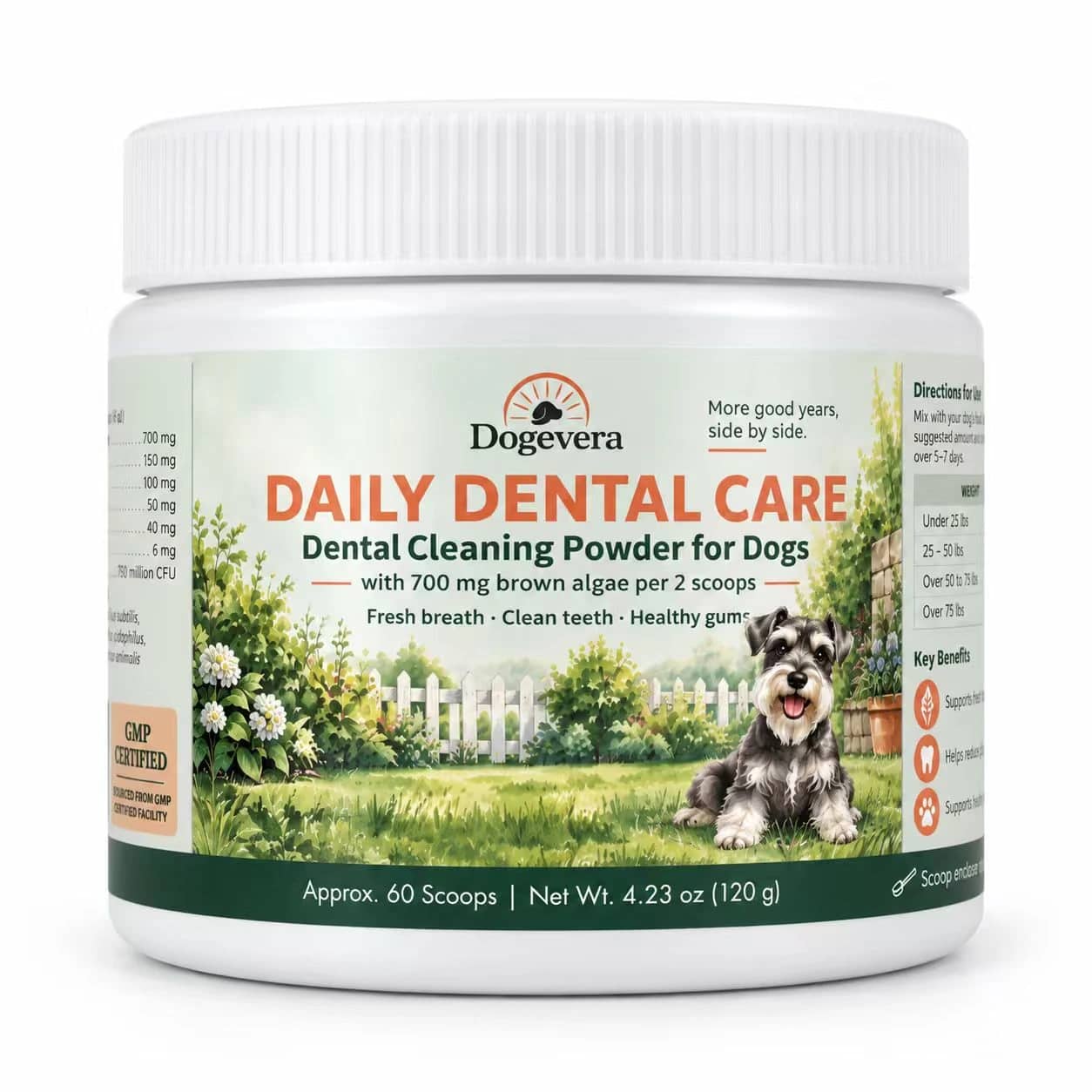
Our Daily Dental Cleaning Powder combines both: *700 mg Ascophyllum nodosum and 100 mg sodium hexametaphosphate per 4 g serving*, stirred into food once a day, and is now available to pre-order. Start it right after your dog's next professional cleaning, when the teeth are clean. See dental powder for dogs: the evidence and how to clean dog teeth without brushing.
FAQ
Can a dog's teeth be cleaned without anesthesia?
The visible tartar can be scraped off, but the area under the gumline cannot be cleaned or checked. A 2025 study found anesthesia-free cleaning gave no medical benefit for gum disease.
Is anesthesia-free dental cleaning safe?
It avoids anesthesia risk, but it leaves gum disease untreated and hides problems behind clean-looking teeth. Scraping an awake dog's teeth can also be stressful and cause injury if the dog moves.
Is my dog too old for a dental cleaning under anesthesia?
Age raises the risk, but many old dogs have safe dentals with blood tests, fluids and careful monitoring. Untreated mouth pain and infection carry their own risks.
How can I avoid frequent dental cleanings for my dog?
Daily plaque control: brushing is the most effective, and a daily seaweed-based powder or other plaque-control product helps dogs that will not be brushed.
How often does a dog need a professional cleaning?
It depends on the dog. Small breeds, which have more gum disease, and dogs with no home care tend to need them more often; dogs with good daily plaque control usually need them less. Your vet will advise at each check.
References
- Niemiec BA, Kangas KB, Ribka EP. Anesthesia-free dentistry does not provide any demonstrable medical benefit for the control of periodontal disease in dogs. Journal of the American Veterinary Medical Association. 2025. PMID: 41160977
- Spaar Weiss MR, et al. Risk factors associated with increased mortality within 14 days of general anesthesia in specialty veterinary dentistry and oral surgery practices. Veterinary Anaesthesia and Analgesia. 2025. PMID: 40350333
- Allan RM, Adams VJ, Johnston NW. Prospective randomised blinded clinical trial assessing effectiveness of three dental plaque control methods in dogs. Journal of Small Animal Practice. 2019. PMID: 30575038
- O'Neill DG, et al. Epidemiology of periodontal disease in dogs in the UK primary-care veterinary setting. Journal of Small Animal Practice. 2021. PMID: 34374104
- Wallis C, Holcombe LJ. A review of the frequency and impact of periodontal disease in dogs. Journal of Small Animal Practice. 2020. PMID: 32955734
- Gawor J, et al. Effects of edible treats containing Ascophyllum nodosum on the oral health of dogs: a double-blind, randomized, placebo-controlled single-center study. Frontiers in Veterinary Science. 2018. PMID: 30109236
- Stookey GK, Warrick JM, Miller LL. Effect of sodium hexametaphosphate on dental calculus formation in dogs. American Journal of Veterinary Research. 1995. PMID: 7574160
For individual health questions, your veterinarian remains the best partner.