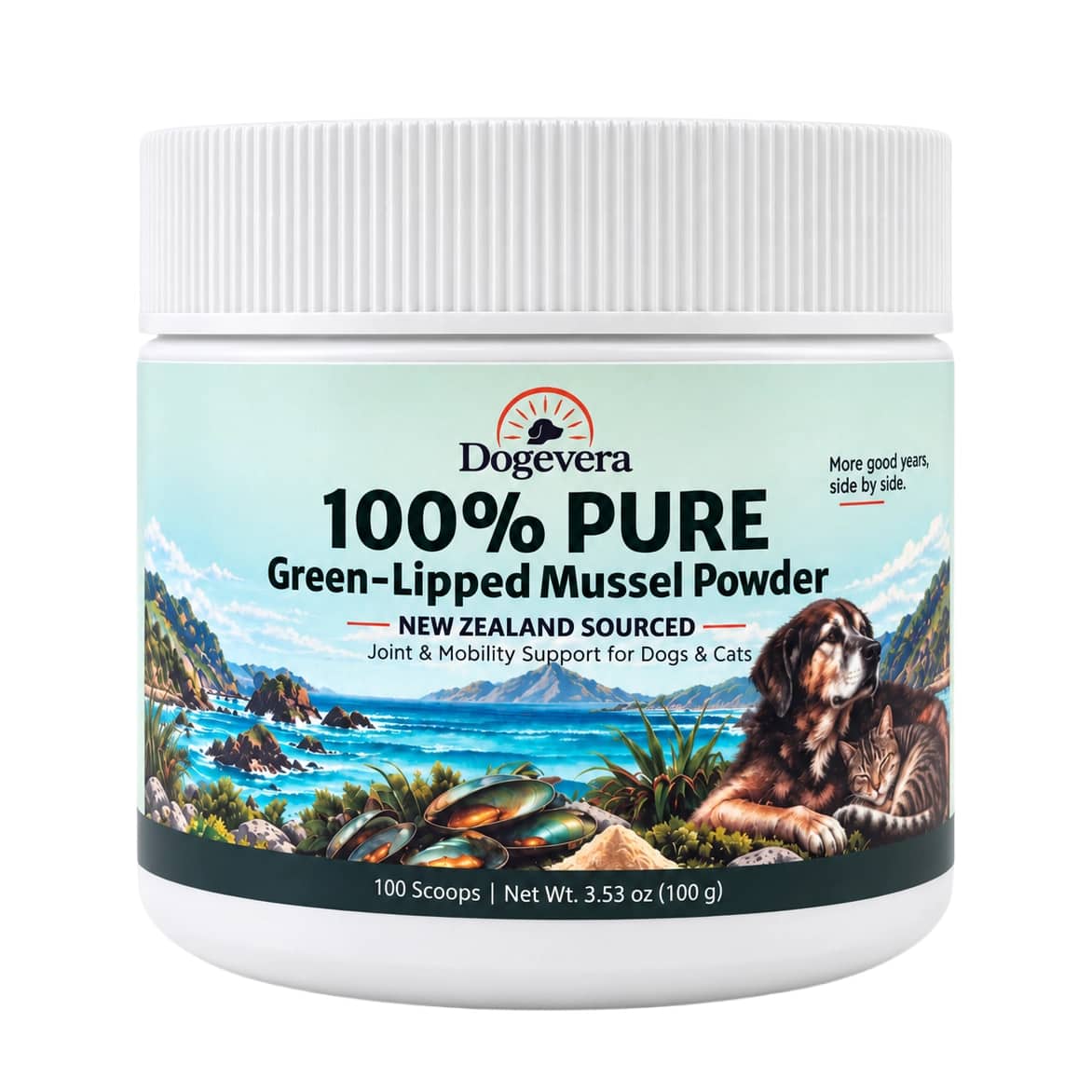
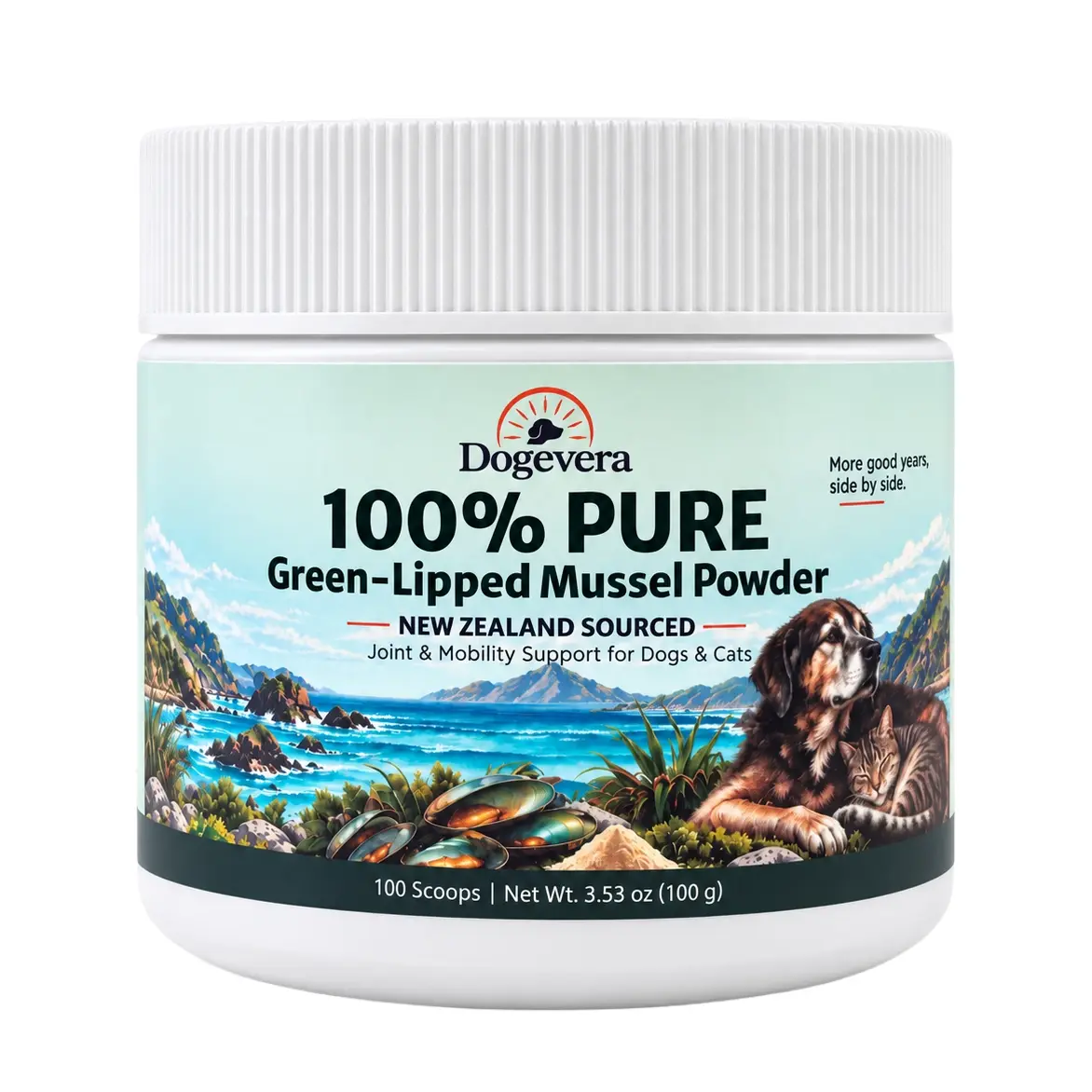
We sell this powder. It was not the product tested in the studies discussed here.
TL;DR
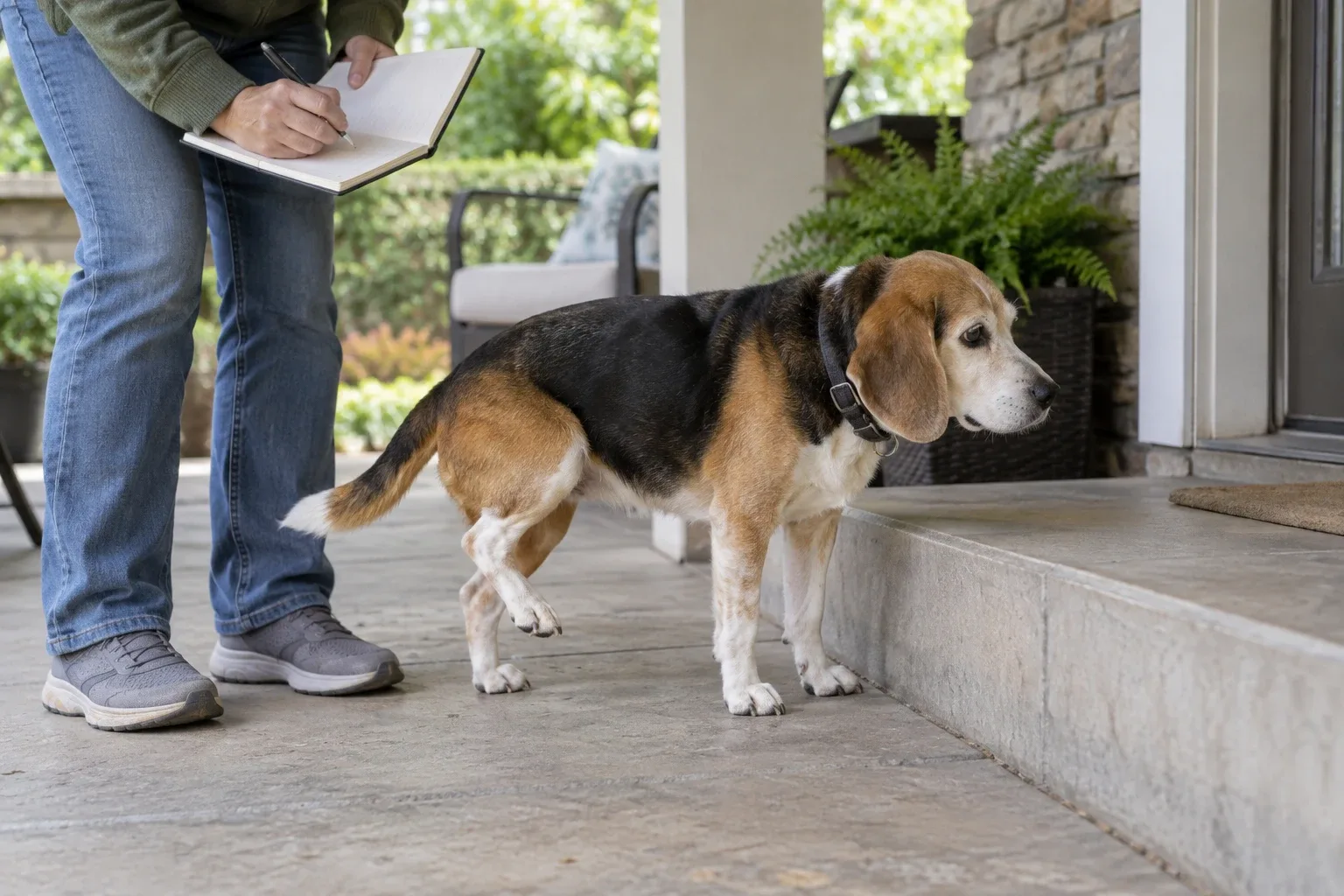
Your senior dog gets up from bed and favors a leg: before choosing support products, record when the limping started, which leg seems affected, whether your dog puts weight on it, and what has changed in everyday activities. Contact your veterinary clinic about the new limp and share those observations; choosing a supplement is a separate decision from establishing the cause. Supplements do not replace diagnosis or treatment, and sudden or severe symptoms need prompt veterinary care.
Senior dog limping: record the change before naming it
A limp tells you that your dog's movement has changed. It does not tell you why. Age alone is not an explanation, and a familiar-looking pattern does not establish a diagnosis.
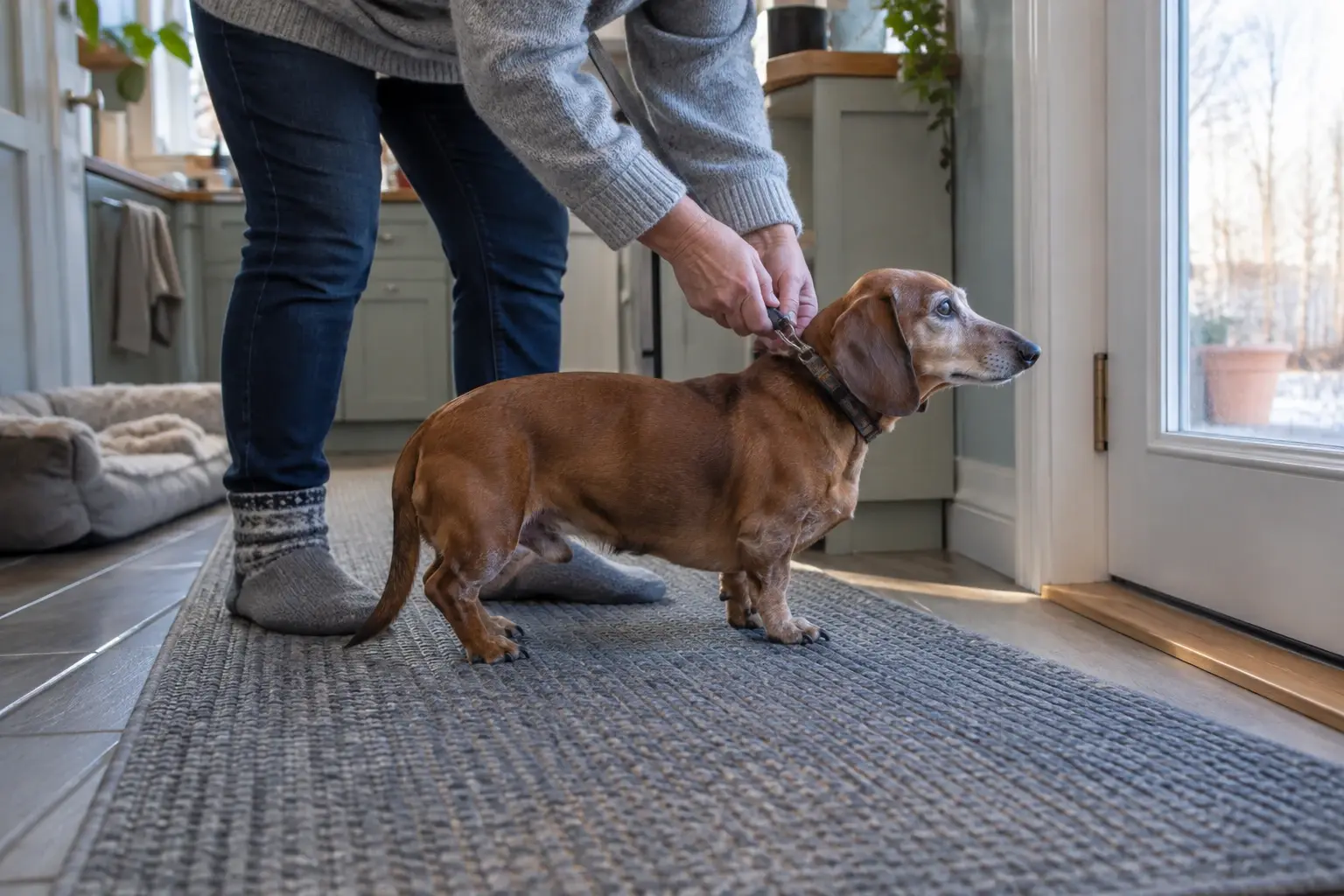
The useful starting point is your dog's usual routine. Perhaps the first steps after a nap look different, a familiar walk has become shorter, or your dog now hesitates at the back door. Dogs cannot explain where something hurts, so these ordinary moments deserve attention.
Write down what you saw in plain language. “Held the left back foot off the floor while standing” is more useful than “bad hips.” If you cannot identify the leg, say that. An uncertain observation is still useful when it is described accurately.
Start with these details:
- Onset: When did you first notice the limp? Was the change sudden, gradual, or unclear?
- Leg or side: Which limb seems affected? Does that appear consistent?
- Weight bearing: Does your dog place the foot down, briefly touch it to the floor, or hold it up?
- Pattern: Is the change present whenever you notice movement, or only in certain situations?
- Direction of change: Does it look similar, more noticeable, or less noticeable than when you first saw it?
Record what happened before you noticed the limp, without assuming that event caused it. A walk, a nap, or a trip outside provides context, not proof.
Capture ordinary movement without staging a test
A short video of movement that is already happening can help you show the clinic what you mean. Film only when doing so is comfortable for your dog and does not delay contact. Keep the original clip with its date and a brief note about the setting.
Do not repeatedly ask your dog to get up, climb stairs, or walk farther to reproduce the limp. You do not need to demonstrate the worst version of the problem.
During normal daily care, note the setting alongside the movement:
- After rest: Describe getting up and the first steps, if you naturally see them.
- On different surfaces: Note whether the observation happened on carpet, a smooth floor, grass, or another surface.
- During routine outings: Record hesitation, pauses, turning back, or a change in the usual pace.
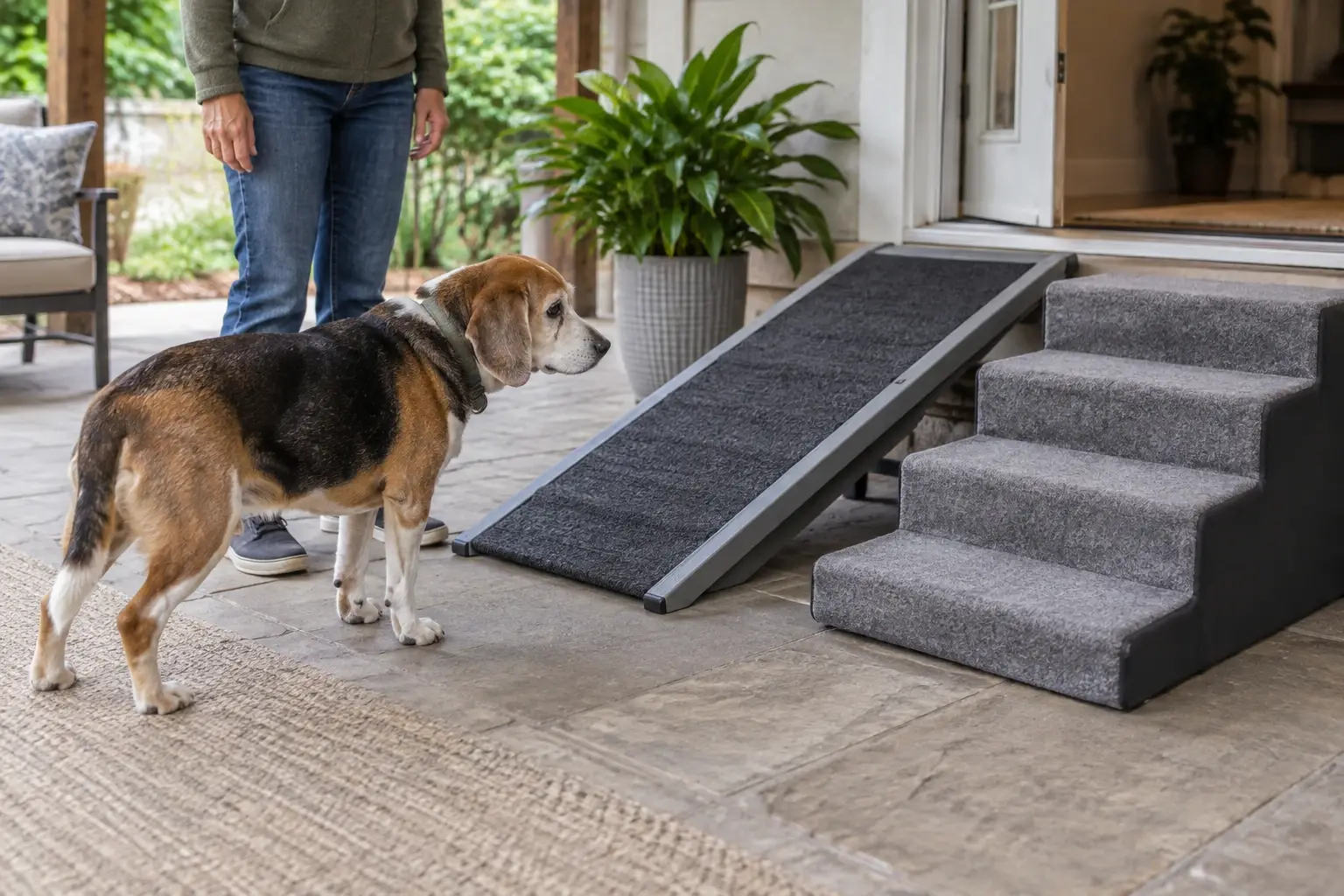
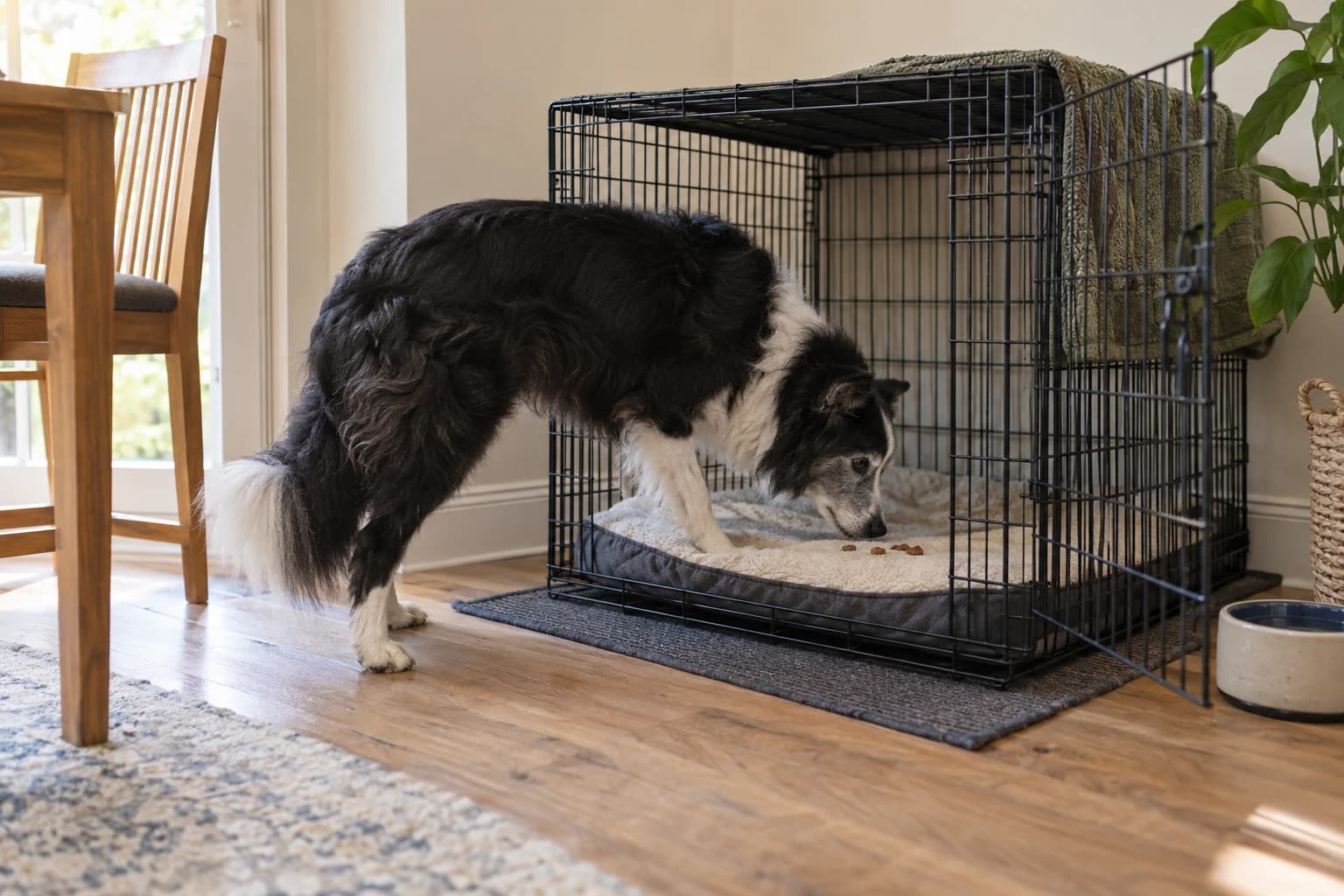
- At everyday access points: Note difficulty reaching the usual sleeping area, doorway, or bathroom route.
If rising after rest is part of the pattern, the guide to a senior dog being slow to get up after lying down expands on that specific observation. Keep “slow to rise” and “limping once upright” as separate notes when both occur.
Also record changes in appetite, sleep, willingness to interact, or bathroom routines. These details give the clinic a fuller account than a description of the leg alone.
Make contact before your notes are complete
An observation log is a communication tool, not a waiting period. You can call with an incomplete account and add details afterward.
When you contact the clinic, lead with when the limp started, whether your dog is putting weight on the limb, and whether the change is worsening. Mention any known fall or other incident, along with changes elsewhere in your dog's routine. Ask how soon your dog should be seen and whether the clinic would like your video.
If your dog cannot stand or walk, suddenly cannot use a limb, appears in severe pain, or has had a significant accident, seek urgent veterinary help rather than continuing to collect observations.
For a less dramatic change, avoid treating “still eating” or “still wants a walk” as an answer to what is causing the limp. Include those observations, but let the clinic assess their significance.
Keep a simple handoff note
Use a phone note or a sheet of paper that another caregiver can update. Keep descriptions consistent rather than creating a score that may mean different things to different people.
Copy this template:
- First noticed: Date, approximate time, and what was happening.
- Movement observed: Leg or side, foot placement, and a plain description of the limp.
- Setting: Surface, activity, and whether your dog had just been resting.
- Daily changes: Getting up, walking, eating, sleeping, and bathroom access.
- Current routine: Food, medicines, supplements, and any recent changes, with package photos where useful.
- Clinic contact: When you called, the advice received, and the next agreed step.
- Video: File name or location, if you captured one without prompting extra movement.
For example: “Tuesday morning, after getting off the usual bed. Right back leg seemed affected; foot touched the floor while standing. Paused at the kitchen doorway. No video.” This preserves useful details without turning a household observation into a diagnosis.
Give each support purchase a separate job
Once the clinical next step is clear, define the practical problem a purchase would address. “Help my dog” is understandable, but too broad to compare products usefully.
- Access problem: Your dog hesitates at a particular step or doorway. Record the location and discuss an appropriate access change. The guide to a senior dog struggling with stairs explores that specific difficulty.
- Handling problem: You need help with an everyday transfer. Clarify what assistance is appropriate before choosing equipment by appearance or size alone.
- Ongoing joint-support goal: Consider a supplement separately from the assessment of the limp, with a clear purpose and an understanding of the evidence limits.
For supplements, compare every active ingredient and its amount per serving in plain text. A proprietary blend conceals information you need to compare products and identify overlap with the existing routine. Clear disclosure helps comparison; it does not establish that a product will help your dog's limp.
If you are considering New Zealand Green Lipped Mussel Powder for Dogs, apply those same checks to the current label rather than assuming that the ingredient name answers the suitability question. Follow only the product's stated serving directions if it becomes part of the agreed routine.
Early attention to changing movement is part of maintaining comfort as a dog ages. It is the right thing for the dog and an economical choice for the owner: identifying the need before buying helps avoid spending on products that do not address it. No longevity pill replaces that everyday attention.
FAQ
Should I wait until I have several days of notes?
No. Contact the clinic when you notice the new limp. Share what you know, including any uncertainty, and continue recording only as appropriate while following the advice you receive.
What if the limp disappears before the appointment?
Keep the appointment arrangements unless the clinic advises otherwise. Report when the limp was visible and when you stopped noticing it. Save any video rather than trying to recreate the movement.
Can I use a supplement to see whether the limp is joint related?
A response to a supplement cannot establish the cause. Movement may change while other parts of the routine also change. Keep the assessment of the limp separate from deciding whether a joint-support supplement has a useful place in ongoing care.
For individual health questions, your veterinarian remains the best partner.